



 Home
Home
Modular vs. Containerized BESS: How to Choose the Right Battery Energy Storage System
Choosing between a modular and a containerized battery energy storage system is not simply a question of which product is larger. The correct architecture depends on the project's power profile, required storage duration, available space, installation schedule, expansion plan, environmental conditions and long-term operating strategy.
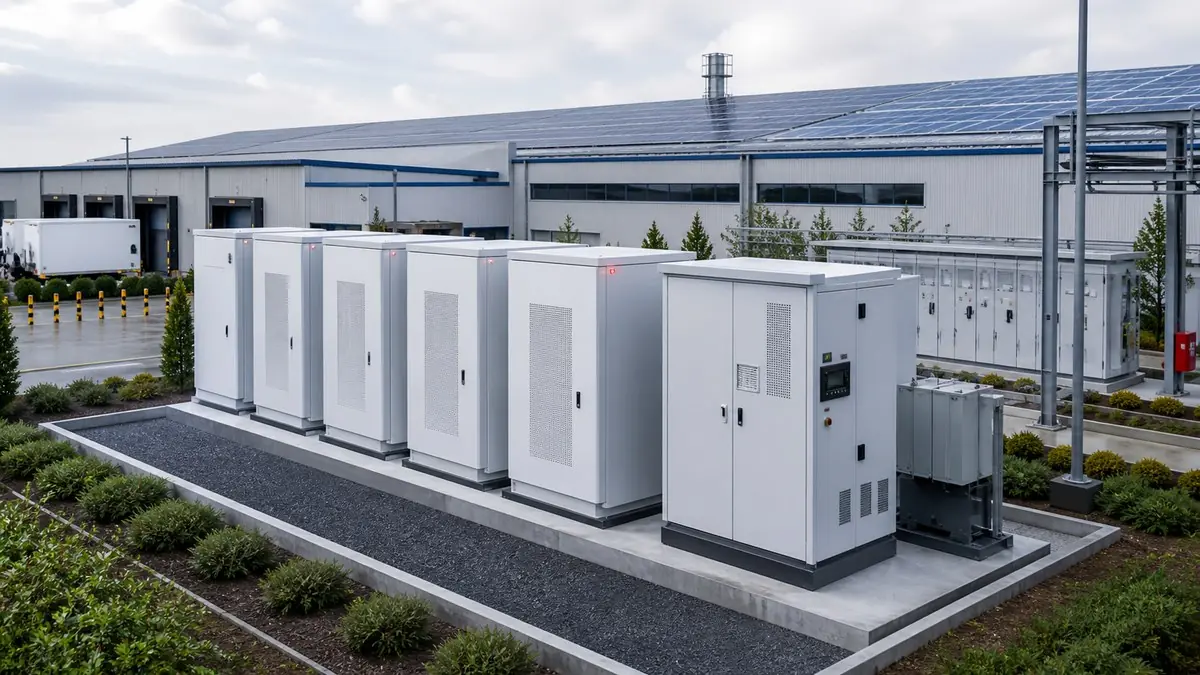
A complete battery energy storage system (BESS) is more than a group of battery cells. It combines battery racks or modules, thermal management, fire protection, a power conversion system (PCS), electrical distribution, controls and an energy management system. These elements must be engineered around the site's loads, generation assets, grid requirements and operating objectives.
This guide explains the practical differences between modular and containerized BESS designs, where each format fits best, and what project owners, EPC contractors and integrators should evaluate before selecting equipment.
What Is a Modular Energy Storage System?
A modular energy storage system uses one or more compact outdoor cabinets that can be configured as building blocks. Each cabinet contains a defined amount of energy storage and supporting thermal and safety systems. Multiple cabinets can be installed in parallel to reach the required project capacity.
Hoyinno's current modular portfolio includes cabinet-based configurations from 61 kWh up to 522 kWh per listed system, including liquid-cooled and all-in-one designs. This format is especially suitable when a project requires flexible capacity, distributed installation or phased expansion.
Typical Advantages of Modular BESS
- Flexible project sizing: Capacity can be assembled from multiple cabinet units instead of forcing the project into one large block.
- Phased investment: A site may install an initial system and reserve foundations, switchgear capacity and communication interfaces for later expansion.
- Distributed layout: Cabinets may fit around existing buildings, transformer rooms, access roads and fire-safety clearances.
- Serviceability: Individual cabinets or subsystems can often be isolated for inspection while the system design preserves partial availability.
- Strong fit for behind-the-meter projects: Modular systems are often practical for factories, commercial buildings, industrial parks, charging sites and community microgrids.
Modularity does not remove the need for engineering. As cabinet quantities increase, cable routing, voltage drop, communication topology, protection coordination, thermal spacing and EMS control become more important. A scalable layout must therefore be planned from the beginning rather than created by adding cabinets without a system-level design.
What Is a Containerized Battery Energy Storage System?
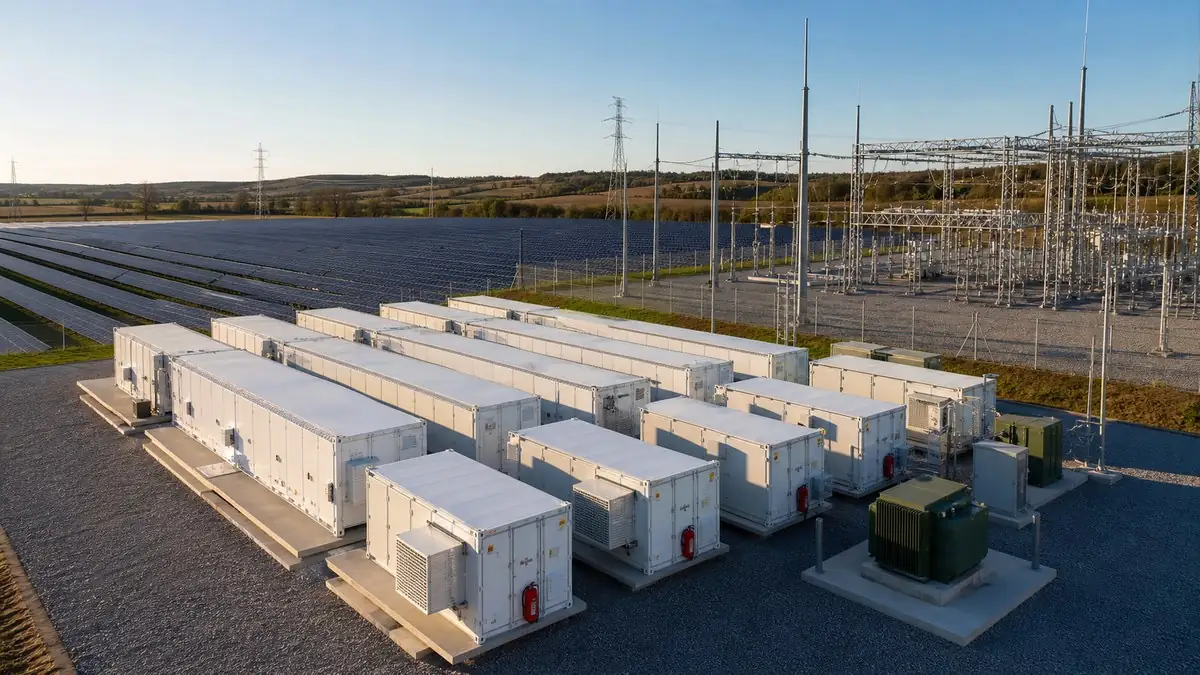
A containerized energy storage system integrates a large amount of storage equipment into a standardized enclosure. The container can include battery racks, cooling, detection and fire-suppression equipment, local controls and auxiliary power. Depending on the system architecture, PCS and medium-voltage equipment may be integrated or installed in adjacent units.
Hoyinno's listed containerized systems include 1 MWh, 2 MWh, 3.354 MWh, 3.762 MWh and 5.016 MWh configurations. These systems are designed for projects where higher energy capacity, repeatable block design and efficient large-scale deployment are central requirements.
Typical Advantages of Containerized BESS
- High energy density at project level: Large storage capacities can be organized into repeatable megawatt-hour blocks.
- Factory integration: Major subsystems can be assembled and tested before shipment, reducing part of the on-site integration workload.
- Standardized expansion: Utility projects can repeat container, PCS and transformer blocks across the site.
- Efficient logistics for large projects: The container format supports coordinated transport, lifting, positioning and commissioning plans.
- Strong fit for front-of-meter applications: Common use cases include renewable-energy integration, power stations, frequency support and grid capacity management.
A container is not automatically a plug-and-play power station. Civil works, drainage, grounding, auxiliary power, communication, transformer selection, grid studies, protection settings and commissioning remain project-specific. Transport route limitations, crane access and site fire codes must also be confirmed during the design stage.
Modular vs. Containerized BESS: Key Differences
| Decision factor | Modular BESS cabinets | Containerized BESS |
|---|---|---|
| Typical project scale | Small to multi-cabinet C&I and microgrid projects | Megawatt-hour-scale and utility projects |
| Capacity flexibility | Fine increments using additional cabinets | Larger repeatable energy blocks |
| Site layout | Flexible placement around existing facilities | Requires planned container pads, access and clearances |
| Expansion strategy | Well suited to phased expansion when reserved in the design | Well suited to repeating standardized power blocks |
| Transport and lifting | Smaller units may simplify constrained-site handling | Requires container transport route and suitable lifting plan |
| Common applications | Peak shaving, demand management, backup and solar self-consumption | Renewable integration, grid services and power-station storage |
These are practical tendencies, not absolute rules. A large industrial park may use containerized systems, while a utility or island microgrid may prefer distributed modular cabinets because of transport or terrain constraints. The final decision should be based on total project performance and lifecycle cost, not enclosure format alone.
Seven Questions to Answer Before Selecting a BESS Architecture
1. What Problem Must the System Solve?
Peak shaving, demand-charge control, backup power, solar self-consumption, diesel reduction, frequency regulation and renewable smoothing require different power-to-energy ratios. Define the operating priority before choosing a cabinet or container. A commercial and industrial energy storage solution, for example, should be designed around the facility's load profile and tariff structure rather than a generic battery capacity.
2. How Much Power and Energy Are Required?
Power, measured in kW or MW, determines how much the BESS can charge or discharge at a given moment. Energy, measured in kWh or MWh, determines how long that output can be sustained. A project requiring 1 MW for two hours needs a different architecture from one requiring 250 kW for eight hours, even though both represent 2 MWh of nominal energy.
Usable energy must also consider operating state-of-charge limits, conversion losses, expected degradation, ambient conditions and the performance level required at the end of the design life. This is why early load data and operating simulations are more valuable than selecting equipment from nameplate capacity alone.
3. What Are the Site's Physical Constraints?
Review the available footprint, bearing capacity, flood level, drainage, salt or dust exposure, ambient temperature, access roads, crane position, cable distance and safety separation requirements. Compact modular cabinets may suit an operating factory with limited free space. Containerized blocks may be more efficient on a greenfield solar or power-station site with planned equipment rows.
4. Will the Project Expand Later?
Future expansion requires more than empty ground. The first-phase design should reserve busbar and switchgear ratings, transformer capacity, communication addresses, EMS licenses, protection settings and thermal clearances. Modular cabinets provide smaller expansion increments, while containerized projects can scale by repeating larger standardized blocks.
5. How Will the BESS Interact with Solar, Diesel and the Grid?
For a remote-area off-grid solution, the BESS must coordinate solar production, critical loads, generator minimum loading, black start and transitions between operating modes. Grid-connected projects may require export limitation, power-factor control, demand management or dispatch commands from a plant controller.
The energy management system (EMS) is therefore a central selection factor. It monitors energy flows and equipment status, applies operating strategies, manages alarms and coordinates the BESS with PV, PCS, charging infrastructure, generators and the grid. Hardware capacity without the correct control logic may fail to deliver the project's intended savings or reliability.
6. What Environmental and Safety Conditions Apply?
High temperature, humidity, dust, salt mist, altitude and unstable grid conditions influence cooling capacity, enclosure protection, component derating and maintenance intervals. The system design should include coordinated detection, alarm, shutdown and fire-protection logic. Safety must be evaluated across the complete installation, including DC equipment, PCS, transformer, cabling, communication and emergency response procedures.
7. Who Will Operate and Maintain the System?
Remote monitoring, spare-parts planning, preventive maintenance, fault response, software support and performance reporting affect long-term availability. The preferred enclosure format should match local service capability and access conditions. Planning operation and maintenance services during the design stage helps avoid equipment layouts that are difficult to inspect or repair.
A Practical Selection Guide
Choose a modular BESS when:
- The site needs flexible capacity increments.
- Space is divided around existing buildings or electrical rooms.
- The project may expand in several smaller phases.
- The main use cases are C&I peak shaving, backup, solar self-consumption or charging support.
- Transporting or positioning a full-size container would be difficult.
Choose a containerized BESS when:
- The project requires several megawatt-hours of storage.
- Repeatable power blocks are preferred for engineering and construction.
- The site has sufficient access, foundations and safety clearances.
- The project supports a solar plant, grid service, power station or large industrial load.
- Factory-integrated large enclosures simplify the overall deployment plan.
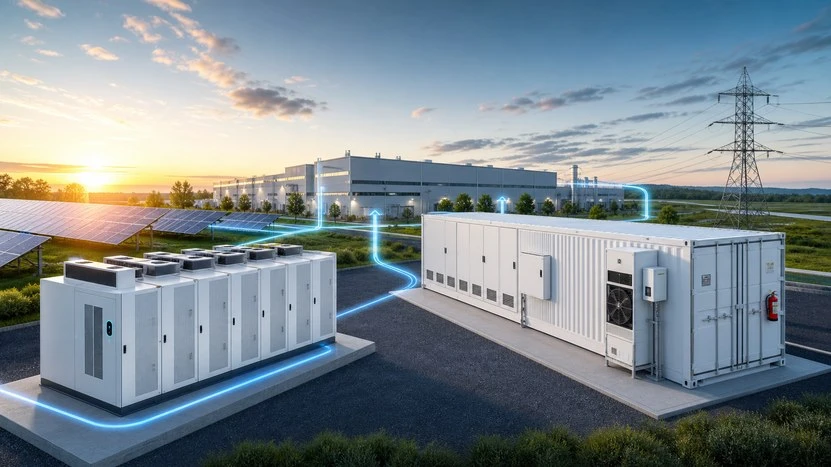
Consider a hybrid architecture when: Different zones have different load profiles, criticality or space limitations. A central containerized BESS can serve the main bus while modular cabinets support remote loads or specialized functions. The feasibility of this approach depends on the electrical topology and control strategy.
Why System Engineering Matters More Than the Enclosure
The enclosure is visible, but project value is created by the complete system design. Battery chemistry and capacity must be coordinated with PCS power, transformer rating, cooling, protection, EMS logic and operating schedules. The same nominal BESS can produce very different results when deployed under different tariffs, load shapes or environmental conditions.
Hoyinno combines modular and containerized BESS products with power conversion and control, independently developed EMS capabilities, project analysis, engineering and lifecycle support. Reviewing energy storage project cases can also help project teams compare architectures used in real C&I, hybrid solar and microgrid applications.
Before requesting a proposal, prepare at least 12 months of interval load data when available, electricity bills and tariff rules, a single-line diagram, critical-load requirements, PV or generator data, site drawings, ambient conditions, grid-connection requirements and the expected operating objective. These inputs allow engineering and project analysis to determine an appropriate power rating, energy capacity and system architecture.
Frequently Asked Questions
Is a Modular BESS Only Suitable for Small Projects?
No. Multiple cabinets can form a larger system. The practical limit depends on site layout, electrical architecture, communication design, maintenance access and project economics. At some scale, a containerized design may become simpler, but the crossover point is project-specific.
Is a Containerized BESS Always Less Expensive per kWh?
Not necessarily. Equipment capacity is only one part of total installed cost. Transport, lifting, foundations, PCS and transformer configuration, cable distance, fire-safety design, commissioning and long-term service all affect project economics.
Can a Modular BESS Be Expanded After Installation?
Yes, if expansion was considered in the original design. New cabinets must be compatible with the existing DC/AC architecture, control system and operating strategy. Switchgear, transformer, EMS and site capacity must also support the additional equipment.
Can the Same EMS Control Modular and Containerized Systems?
A capable EMS can coordinate different storage blocks, but equipment interfaces, communication protocols, metering and dispatch logic must be engineered and tested. Compatibility should be verified during system design, not assumed during commissioning.
What Information Is Needed for an Initial BESS Design?
Useful inputs include interval load data, electricity tariffs, critical loads, operating hours, PV and generator information, site layout, ambient conditions, grid requirements, backup duration and expansion plans. Better input data produces a more reliable technical and financial design.
Need Help Selecting the Right BESS Architecture?
Hoyinno provides customized modular and containerized energy storage systems, EMS integration, engineering analysis and project support for C&I, off-grid and utility applications.
Contact Hoyinno for a project-specific BESS recommendation .
 What Evidence Distinguishes A Battery Energy Storage System Manufacturer?
  Address: A401, Junxu Junchuang Park, 03A Qingyi Road, Nanhai District, Foshan City, Guangdong Province, China