



 Home
Home
What Evidence Distinguishes A Battery Energy Storage System Manufacturer?
A Battery Energy Storage System Manufacturer should be evaluated through design ownership, integration controls, safety documents, testing, commissioning, and lifecycle support. A brochure is only the starting point; decisive evidence shows who controls the complete system boundary from requirement capture to field service.
Start With the Manufacturer’s System Boundary
First establish what the company manufactures, integrates, tests, and supports. Battery storage combines cells, modules, racks, BMS, PCS, EMS, thermal management, fire protection, switchgear, communications, enclosure, and site controls. Clear ownership of those interfaces matters more than a list of individual components.
Separate System Integration From Cabinet Assembly
A true battery system integrator should identify the engineering owner for every major interface: DC voltage, protection, PCS control, BMS limits, cooling, alarms, shutdown, and site communication. Ask for interface-control documents, wiring diagrams, cause-and-effect matrices, and revision histories. Where third parties share responsibility, the proposal must assign interface failures and the system warranty.
Check Whether the Architecture Matches the Offered Scope
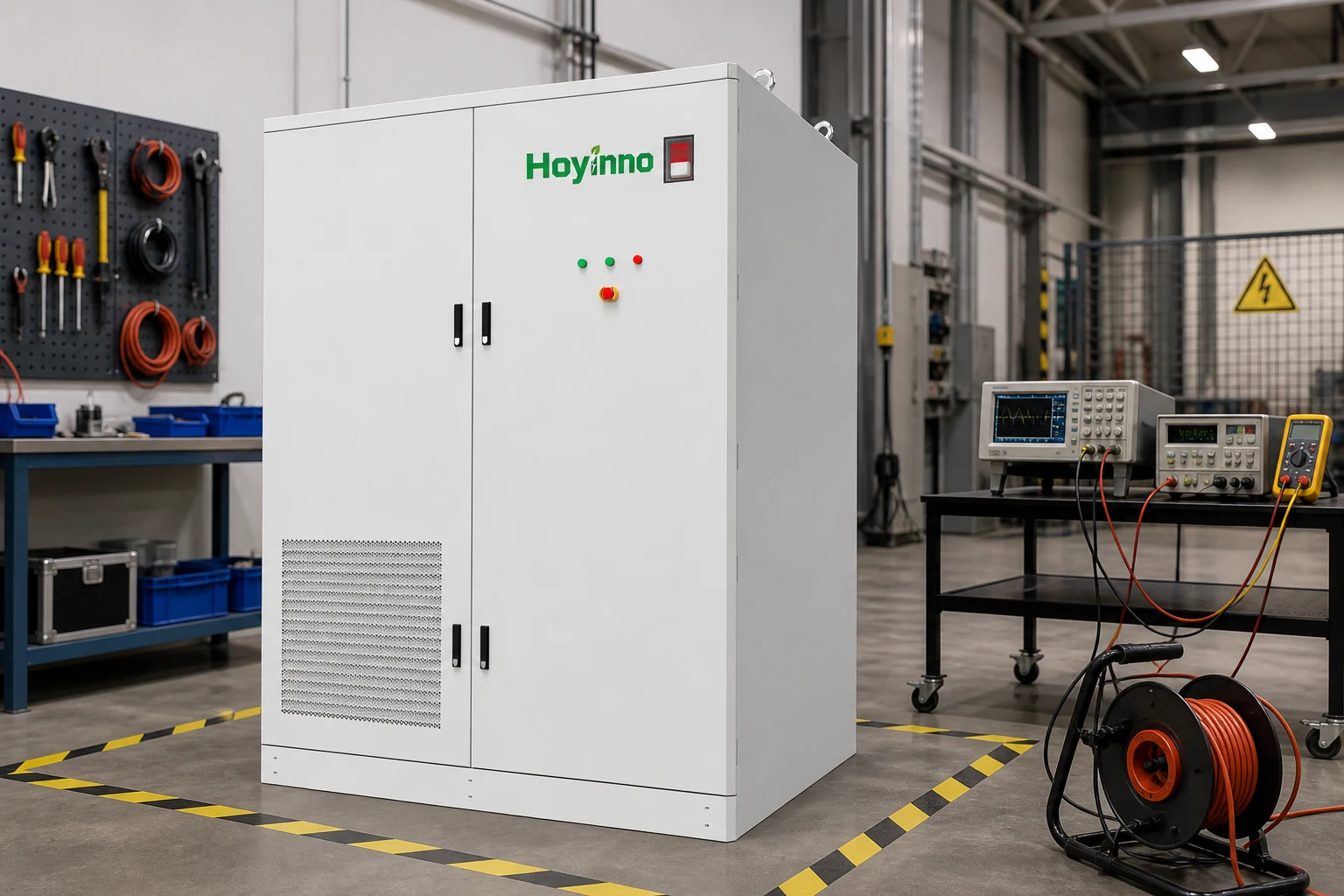
Capacity alone does not define a deliverable system. The site’s 522 kWh liquid-cooled cabinet, for example, lists integrated BMS, PCS, EMS, fire protection, thermal management, PV MPPT, and communications. Those published elements provide useful questions, but a project still needs a signed equipment list, single-line diagram, operating modes, auxiliary-load estimate, and exclusions. The same logic applies to the larger containerized energy storage range.
Verify Engineering Against the Actual Duty Cycle
Engineering evidence should connect the site load, renewable profile, grid conditions, environment, and commercial objective to a traceable system design. In a rigorous BESS supplier evaluation, a standard brochure cannot replace the assumptions behind energy capacity, power rating, usable state-of-charge window, degradation allowance, redundancy, and availability.
Require Inputs, Assumptions, and Sensitivity Cases
A sizing report should identify data quality, critical loads, demand peaks, outage duration, charging opportunities, tariff rules, dispatch constraints, and ambient conditions. Microgrids may require black start, generator synchronization, and reserves; peak-shaving projects may prioritize demand control and cycling economics. Missing data must remain an open assumption.
Test the Control Philosophy Before Hardware Selection
The site’s EMS description includes PV, storage, PCS, charging equipment, grid-connected and off-grid switching, alarms, historical analysis, and remote operation. During technical due diligence, those functions should be converted into testable sequences: which controller has authority, how setpoints are limited by the BMS, what happens after communications loss, and how the plant returns from an abnormal state. A demonstration should use project-relevant scenarios rather than a generic dashboard tour.
| Evaluation Area | Evidence to Request | Warning Sign |
|---|---|---|
| Architecture | Single-line, interfaces, approved components, responsibility map | Brochures or unsigned diagrams only |
| Performance | Inputs, assumptions, usable energy, auxiliary loads, degradation | Nameplate capacity treated as delivered energy |
| Controls | Operating narrative, alarm matrix, communications, scenario tests | Screenshots without control authority |
| Safety | Hazard analysis, applicable reports, protection, response inputs | Certificates without model or scope match |
| Acceptance | FAT, SAT, commissioning, criteria, and records | Unwitnessed internal testing only |
| Support | Warranty, response path, spares, data access, training | Warranty headline without conditions or remedy |
Audit Manufacturing Control and Traceability
An energy storage factory audit should follow the product record from incoming materials to shipment. The test is whether the manufacturer can reproduce the approved design, isolate deviations, and link a delivered serial number to materials, software, tests, and authorized changes.
Follow One Unit Through the Production Route
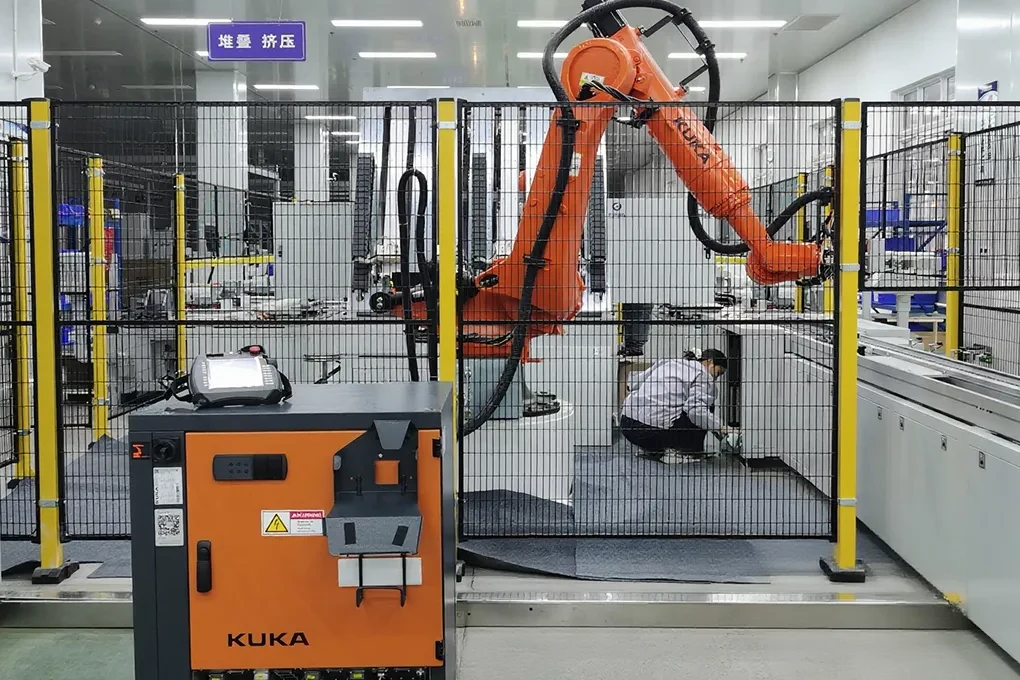
Choose a real work order and trace identification, incoming inspection, storage, torque, insulation, harness routing, cooling work, firmware, and final inspection. Automation supports repeatability only when parameters, calibration, error handling, and operator authorization are controlled. Compare written instructions with actual floor activity.
Review Nonconformance and Engineering Change Control
Ask for anonymized examples showing how a failed inspection, substituted component, or software revision moves through containment, root-cause analysis, approval, rework, and verification. A strong energy storage factory audit also checks whether changes are flowed into drawings, bills of material, work instructions, FAT scripts, spare-parts records, and installed-system documentation. Uncontrolled substitutions can invalidate performance assumptions even when the cabinet looks unchanged.
Require Safety Evidence at System and Site Level
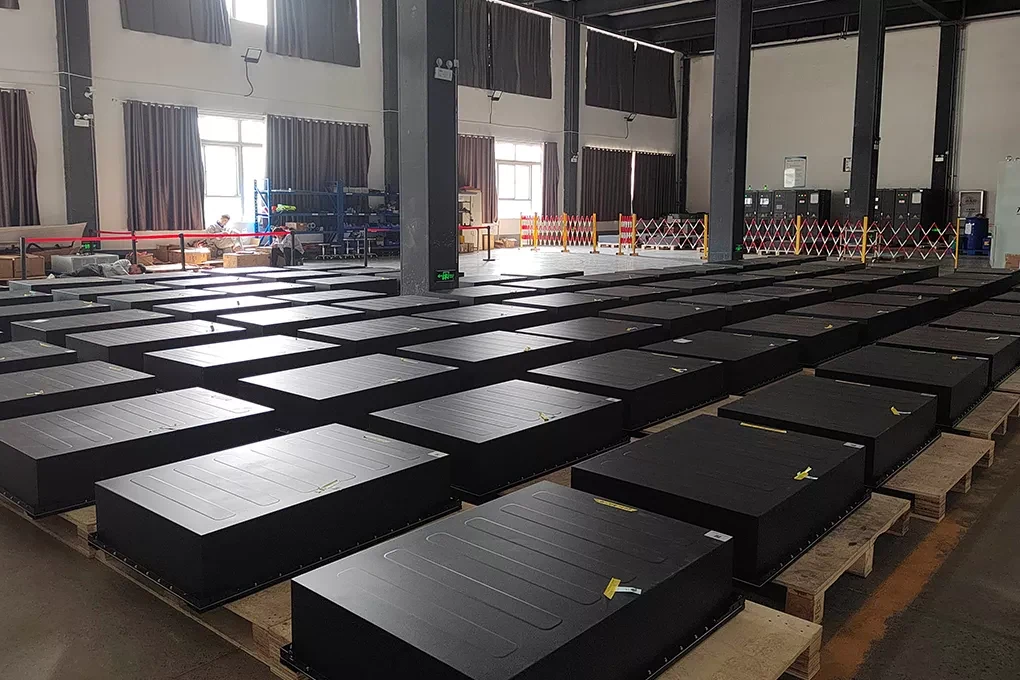
Safety review must distinguish component certificates from evidence covering the assembled system and installation. Requirements vary by jurisdiction, size, chemistry, enclosure, and use. Confirm the applicable editions of UL 9540, UL 9540A, NFPA 855, or IEC 62933 for the project.
Match Every Report to the Offered Configuration
Request the full report or verifiable listing reference, the tested model and configuration, battery and PCS combination, enclosure arrangement, software version where relevant, limitations, and installation instructions. Thermal-runaway evidence should not be accepted because a similar module was tested somewhere in the supply chain. Technical due diligence asks whether the evidence applies to the exact system, layout, ventilation, detection, suppression, and separation assumptions being proposed.
Convert Hazards Into Design and Operating Controls
A hazard analysis should address isolation, arc and shock exposure, thermal runaway, flammable gas, fire propagation, ventilation, water ingress, cooling failure, communications loss, site conditions, and emergency access. Connect each hazard to detection, prevention, mitigation, shutdown, inspection, and response. Local authorities and insurers also need permitting and emergency information.
Make Acceptance Testing Contractual
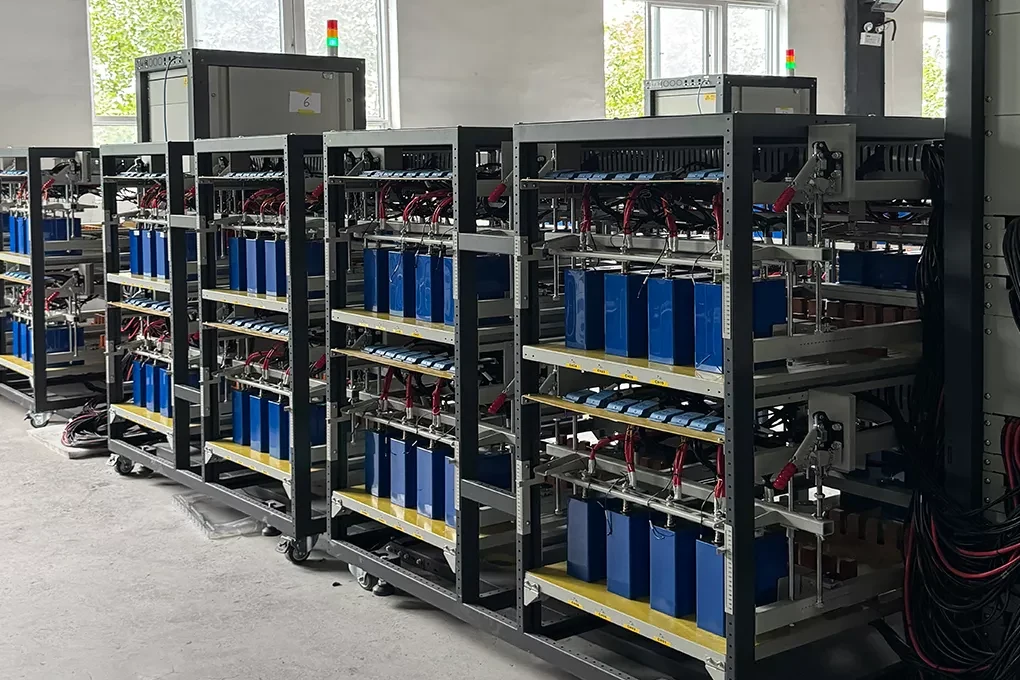
Testing becomes useful when the contract defines the procedure, instruments, tolerances, witnesses, data format, failure handling, and retest rules. A credible Battery Energy Storage System Manufacturer should be prepared to link factory and site tests to the performance obligations in the proposal rather than treating acceptance as a ceremonial inspection.
Build the FAT Around Interfaces and Failure Responses
A factory acceptance test can cover construction, insulation, protection settings, BMS-to-PCS limits, communications, alarm priorities, emergency shutdown, auxiliary-power loss, sensor faults, cooling, metering, and operating-mode simulations. The FAT must identify conditions deferred to site acceptance and how they will be tested.
Define Commissioning, Handover, and Baseline Data
Site commissioning should verify installation, grounding, protection coordination, network settings, utility or generator interfaces, operating modes, dispatch response, metering, safety interlocks, and operator procedures. The handover package should include as-built drawings, settings, firmware records, test data, manuals, training, spares, and an agreed performance baseline. The site’s published engineering services and operation and maintenance scope are appropriate starting points for clarifying responsibility.
Evaluate Delivery, Warranty, and Field Support
Cross-border projects expose weaknesses that a factory inspection may miss. Assign packaging, dangerous-goods documents, customs, installation supervision, remote connectivity, spare parts, and time-zone coverage before shipment. Check published project cases for comparable climate, grid condition, capacity, and service scope.
Warranty comparison also needs a common basis. Record covered equipment, start date, calendar term, energy throughput, cycle and state-of-charge assumptions, temperature limits, availability commitments, exclusions, diagnostic access, response time, repair logistics, and remedy. A BESS supplier evaluation should score the enforceable warranty document, not the largest number in a marketing table. Data ownership and access matter because the operator needs alarm history, state-of-health trends, and maintenance records to demonstrate correct use.
Supplier claims become decision-grade evidence only when they are model-specific, current, independently verifiable where appropriate, and tied to contractual acceptance or support obligations.
Use a Comparable Evidence-Based Shortlist
A practical shortlist gives every candidate the same requirements, evidence request, deadline, and scoring method. Weight criteria by project risk: controls for complex microgrids, thermal evidence for dense installations, environmental capability for harsh sites, and service logistics for remote assets. Normalize price against usable energy, exclusions, auxiliary consumption, degradation, warranty, and lifecycle service.
- Issue a common technical schedule and responsibility matrix.
- Record every assumption, exception, and proposed substitution.
- Verify documents directly with issuing bodies when certification or listing is material.
- Witness a relevant production route, FAT scenario, or remote demonstration.
- Score evidence quality separately from the supplier’s stated capability.
- Close high-risk gaps before price becomes the deciding factor.
This method keeps technical due diligence neutral: a Battery Energy Storage System Manufacturer earns confidence by closing evidence gaps, not by repeating broad claims. A technical support review can focus on unresolved items affecting approval, commissioning, and operation.
Frequently Asked Questions
What is the difference between a BESS manufacturer and an integrator?
A manufacturer produces components or systems. An integrator combines subsystems, controls interfaces, validates performance, and accepts system-level responsibility. One company may do both, but the contract must identify its duties.
Which documents should be requested before a factory audit?
Request the equipment list, single-line, responsibility matrix, process flow, quality plan, inspection records, calibration list, change-control procedure, FAT outline, certifications, warranty draft, and service plan. Review them before the audit.
Does a UL or IEC reference prove that the offered BESS is compliant?
No. Confirm the jurisdiction, edition, tested or listed model, configuration, component combination, limitations, installation conditions, report ownership, and issuing body. Site-level fire, electrical, interconnection, and environmental approvals may still be required.
What should a witnessed BESS FAT demonstrate?
The FAT should demonstrate construction, protection, communications, control limits, alarms, emergency functions, thermal responses, and abnormal scenarios. Require time-stamped data, signed results, tolerances, deviations, and a list of tests deferred to site.
How can proposals from different manufacturers be compared fairly?
Use one schedule to normalize usable energy, power, environment, auxiliary loads, degradation, availability, testing, exclusions, delivery, warranty, spares, and service. Score evidence separately and price unresolved assumptions as risk.
For a project-specific review, the Hoyinno inquiry channel can be used to request a configuration list, system boundary, applicable safety documents, FAT outline, commissioning scope, warranty assumptions, and service plan against one defined duty cycle.
 A Commercial And Industrial Energy Storage System Balances Load, Controls, And Risk
  Address: A401, Junxu Junchuang Park, 03A Qingyi Road, Nanhai District, Foshan City, Guangdong Province, China