



 Home
Home
A Commercial And Industrial Energy Storage System Balances Load, Controls, And Risk
A Commercial and Industrial Energy Storage System coordinates site loads, batteries, power conversion, controls, safety, and operating objectives as one engineered asset.
A battery cabinet alone does not determine project performance. A useful installation needs a clear site objective, verified electrical boundaries, dispatch logic, environmental controls, protection settings, and operating procedures. Stored energy must move through a real facility without disrupting production, violating interconnection limits, or consuming a higher-priority reserve.
This guide is for project decision-makers, EPC teams, procurement leaders, energy managers, engineers, and investors. In Southeast Asia, Africa, and the Middle East, heat, humidity, dust, grid variability, and approval pathways can materially change the design assumptions.
A Storage Project Has Two Connected Architectures
The Power Path Links Cells, Conversion, And Site Switchgear
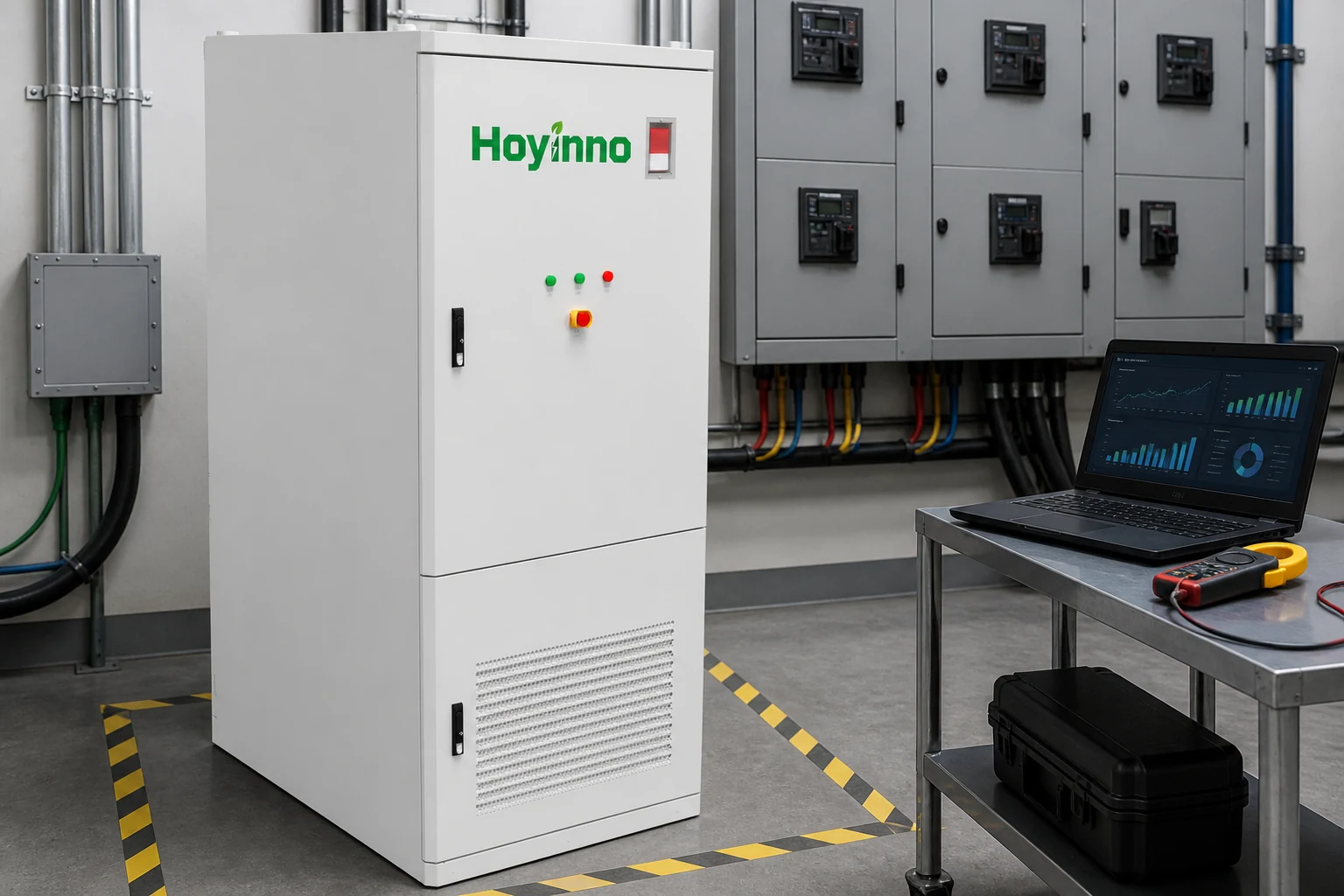
Battery modules are arranged into racks or cabinet assemblies and supervised by a battery management system. Direct-current energy then passes through protection equipment to a power conversion system, which produces alternating current compatible with the facility. Transformers, switchgear, metering, and the point of common coupling complete the site interface. The battery energy storage system range shows that the enclosure format may vary, but the same functional chain must be engineered as a coordinated electrical system.
The Data Path Turns Measurements Into Safe Dispatch
Meters and sensors report site demand, voltage, frequency, temperatures, cell status, equipment alarms, and state of charge. Battery controls protect cells and packs, while the site controller or EMS applies the operating strategy. The energy management system may coordinate schedules, thresholds, forecasts, alarm handling, and historical analysis. Reliable communications and correct timestamps are essential because a controller cannot make a sound decision from delayed, missing, or mismatched data.
Good energy storage controls define permissions as well as commands: charge and discharge limits, reserve bands, ramp rates, interlocks, and responses to lost communications. They also establish which layer has authority when battery limits, site limits, and commercial schedules conflict. The hierarchy should be documented and confirmed through witnessed functional tests.
Begin With The Load And The Operating Objective
A Load Profile Reveals Power, Duration, And Timing
Load profile analysis uses time-stamped measurements to identify when peaks occur, how long they persist, how repeatable they are, and how much energy lies above a chosen threshold. One short spike and one broad afternoon plateau can share the same maximum demand but require very different battery energy. Seasonal production cycles, shift changes, motor starts, cooling loads, and weekend behavior should be separated so the design is not optimized for an unrepresentative week.
A Priority Stack Prevents Competing Uses From Consuming The Same Energy
A battery can support several functions, but its stored energy cannot be promised twice at the same moment. Peak demand management may seek to discharge during a tariff window, solar shifting may reserve space for midday charging, and resilience may require a minimum state of charge before an outage. A ranked operating stack tells the controller which objective prevails and gives commercial models a realistic basis.
| Objective | Key Input | Control Action | Common Limitation |
|---|---|---|---|
| Demand control | Interval load and tariff rule | Discharge above a forecast threshold | Peak duration exceeds usable energy |
| Solar shifting | PV forecast and export limit | Reserve charging capacity near midday | Cloud variation or insufficient headroom |
| Resilience | Critical-load list and outage case | Maintain an energy reserve | Transfer boundary or starting current |
| Grid support | Interconnection requirement | Follow active or reactive power commands | PCS rating and connection agreement |
Translate Functions Into Testable Control Sequences
Demand Control Needs Forecasting And Reserve Discipline
Simple threshold control waits for site demand to cross a limit and then discharges. That can work for predictable loads, but it may react too late to a steep rise or exhaust energy before the billing interval ends. Forecast-based control estimates the remaining interval and adjusts discharge accordingly. The method needs guardrails for forecast error, maximum cycling, state-of-charge limits, and the next expected charging opportunity.
Resilience Changes The Electrical Boundary
Backup operation requires more than reserving energy. The design must define which loads remain energized, how the system separates from the grid, which device establishes voltage and frequency, and how the facility reconnects. Motor starting, transformer inrush, protection behavior, and generator coordination can create brief power requirements much larger than the steady critical load.
If island operation is required, the single-line diagram and sequence should show normal, transition, islanded, fault, and restoration states. An energy storage engineering review can connect those states to protection settings, switchgear, controller permissions, and site procedures. Each mode should be tested before it is treated as available.
Size The Physical System For Real Conditions
Usable Energy Is More Important Than Nameplate Energy
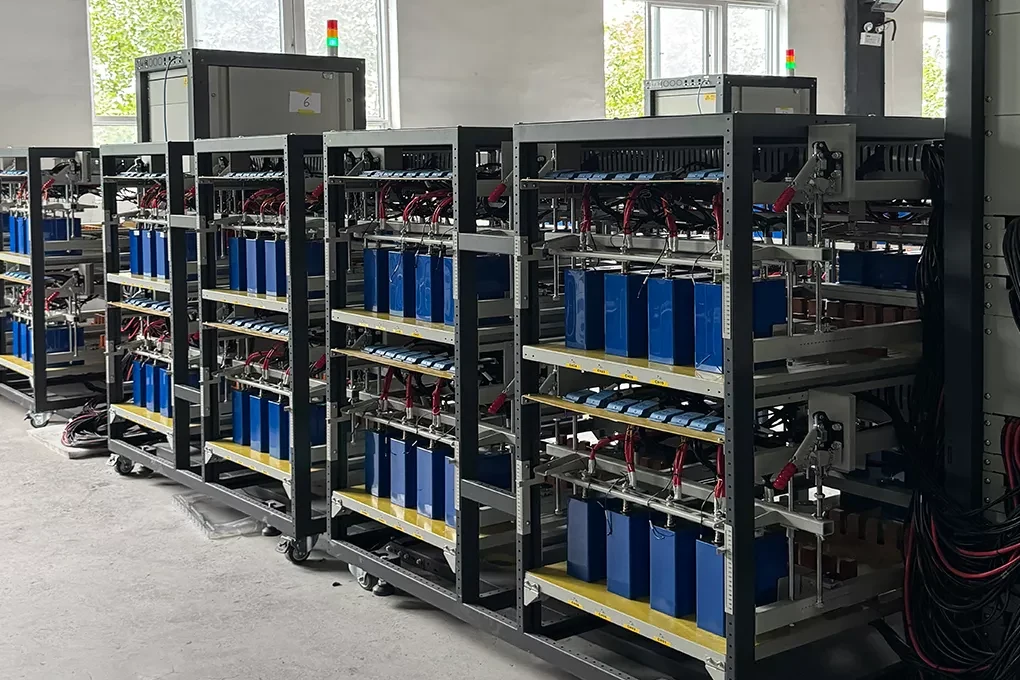
The usable window is the part of stored energy available between control limits under defined conditions. It can shrink when resilience reserve is protected, temperature limits are reached, modules age, or high discharge power reduces practical duration. A Commercial and Industrial Energy Storage System should therefore be evaluated against an end-of-life duty case as well as beginning-of-life capacity. The model should state efficiency, degradation, availability, cycling, and reserve assumptions separately.
Modularity can simplify phased deployment and service, but it raises questions about parallel operation, protection, communications, and future compatibility. A 233 kWh liquid-cooled cabinet illustrates how batteries, BMS, PCS, EMS, fire protection, and thermal management can share an enclosure. Suitability still depends on site duty and interfaces.
Climate, Access, And Auxiliary Loads Belong In The Model
Ambient temperature, solar exposure, humidity, salt, dust, flooding risk, altitude, ventilation, and clearances influence equipment selection and layout. Hot climates can increase cooling demand and accelerate degradation if thermal limits are not maintained. Dust or salt can affect filters and corrosion protection. Flood levels and drainage can change plinth height, cable routing, and emergency access.
Treat Safety As A System-Level Lifecycle
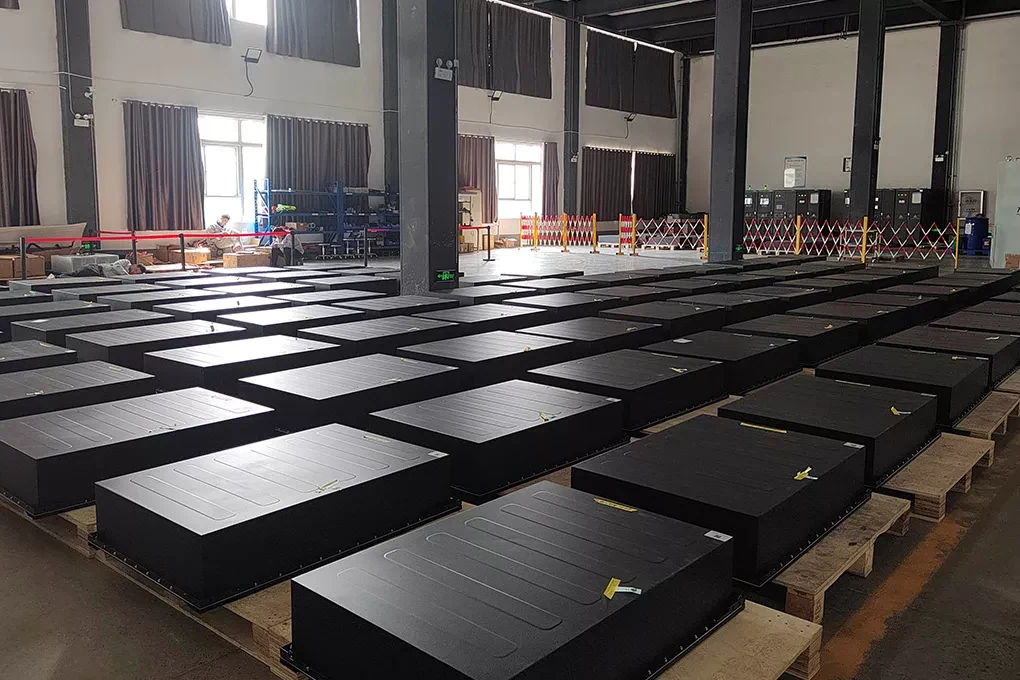
Safety evidence is not a single certificate. It spans cells, modules, enclosure design, detection, suppression strategy, electrical protection, ventilation, separation, emergency response, installation quality, and procedures. The code path depends on the jurisdiction and configuration, so current requirements must be confirmed with the relevant authorities.
Map Evidence To The Installed Configuration
A project team should create a compliance matrix that links each requirement to the responsible party, document, test, and approval stage. Product certifications, fire-propagation test reports, hazard analyses, single-line diagrams, protection studies, equipment layouts, commissioning records, and emergency plans answer different questions. Their model, enclosure, installation, and firmware scope should match the equipment actually delivered.
Change control is equally important. Substituting a cell, module, inverter, coolant arrangement, enclosure, firmware, or spacing assumption can affect prior evidence. Procurement documents should define which changes require review and which records form the handover package. Site personnel need role-based training for alarms, isolation, escalation, and return-to-service decisions.
Connect Economics To Measurement And Operations
A credible financial model traces each value stream to a measurable rule. Demand reduction depends on the tariff definition and actual interval response. Solar shifting depends on available surplus and avoided energy value. Resilience may be expressed through avoided downtime scenarios rather than a guaranteed annual payment. Revenue should not be stacked when two functions require the same power, energy, or time window.
Costs include engineering, equipment, civil and electrical works, communications, permitting, financing, insurance, service, auxiliary energy, replacement assumptions, and end-of-life obligations. Sensitivity cases for load growth, tariff change, degradation, downtime, and delayed commissioning are more informative than one precise result. A documented project analysis should keep technical and financial assumptions synchronized.
Operational readiness determines whether modeled value persists. Handover should include drawings, settings, asset registers, warranty conditions, alarms, maintenance intervals, spares, cybersecurity responsibilities, and performance definitions. Planned operations and maintenance can distinguish routine inspections from corrective work. For C&I battery storage, reporting should compare commands, actual power, site demand, state of charge, temperatures, alarms, availability, and auxiliary use.
FAQ
What Components Are Typically Included?
A typical system includes battery modules or packs, a BMS, DC protection, a PCS, thermal management, fire-safety functions, meters, communications, and an EMS or site controller. Transformers and switchgear may be integrated or supplied separately. The project boundary should state who provides each item and who is responsible for interface testing.
Can Storage Eliminate Every Demand Peak?
No. The result depends on peak magnitude, duration, forecastability, usable battery energy, PCS power, response time, state of charge, and tariff calculation. Broad or repeated peaks can exhaust the available energy. Modeling should replay the proposed control logic against interval data and include imperfect forecasts and reserved capacity.
Does A Grid-Connected Battery Automatically Provide Backup?
No. Backup requires an intentional islanding design, a defined critical-load boundary, suitable switching and protection, a grid-forming source where needed, and tested transition and reconnection sequences. A standard grid-following installation may shut down during an outage even when the battery contains energy.
How Should Project Options Be Compared?
Compare options on a common duty cycle and project boundary. Record usable energy over life, power at relevant conditions, efficiency definition, auxiliary consumption, environmental rating, safety evidence, controls scope, warranties, service response, spares, commissioning tests, and included balance-of-system work. The technical support scope should be evaluated alongside equipment specifications.
The most useful view of a Commercial and Industrial Energy Storage System is therefore not a cabinet with a capacity label, but a controlled site asset with measurable objectives and explicit limits. When load data, architecture, control sequences, environmental assumptions, safety evidence, economics, and operating responsibilities agree, the project can be assessed against evidence instead of optimism. That shared design basis also makes later commissioning results and operational changes easier to interpret.
 How Does A Containerized Energy Storage System Turn Cells Into A Deployable Asset?
  Address: A401, Junxu Junchuang Park, 03A Qingyi Road, Nanhai District, Foshan City, Guangdong Province, China