



 Home
Home
How Does A Containerized Energy Storage System Turn Cells Into A Deployable Asset?
A Containerized Energy Storage System combines battery, conversion, thermal, control, safety, and enclosure functions into a project-ready electrical asset. The container is therefore more than weather protection around battery cells. It is an engineered boundary in which energy is stored, monitored, conditioned, isolated, cooled, and made available to a site or grid under defined operating rules.
The Container Creates a Defined System Boundary
From Cell Behavior to Rack-Level Control
Electrochemical cells are the smallest active units, but projects do not operate individual cells directly. Cells are assembled into modules, modules into racks, and racks into controlled direct-current sections. Mechanical support, current paths, sensing, protection, and maintainability have to scale with that hierarchy. A cell's voltage and temperature are local conditions; the system must turn thousands of such observations into safe operating limits for the complete installation.
The Boundary Also Defines Project Interfaces
A container may arrive with internal racks, cabling, thermal equipment, controls, detection, suppression, lighting, and auxiliary distribution, but that does not make every site interface automatic. Foundations, drainage, clearances, access, grounding, medium-voltage equipment, protection coordination, network connectivity, emergency planning, and local permitting still have to align. A clear responsibility matrix should identify the termination point and acceptance evidence for each interface.
The same principle applies to performance. Energy capacity, power, duration, response, efficiency, degradation, and availability describe different attributes. The company overview, containerized product category, and consultancy context can frame early questions, while the project definition must connect equipment to site duty, environmental conditions, grid rules, and the intended control strategy.
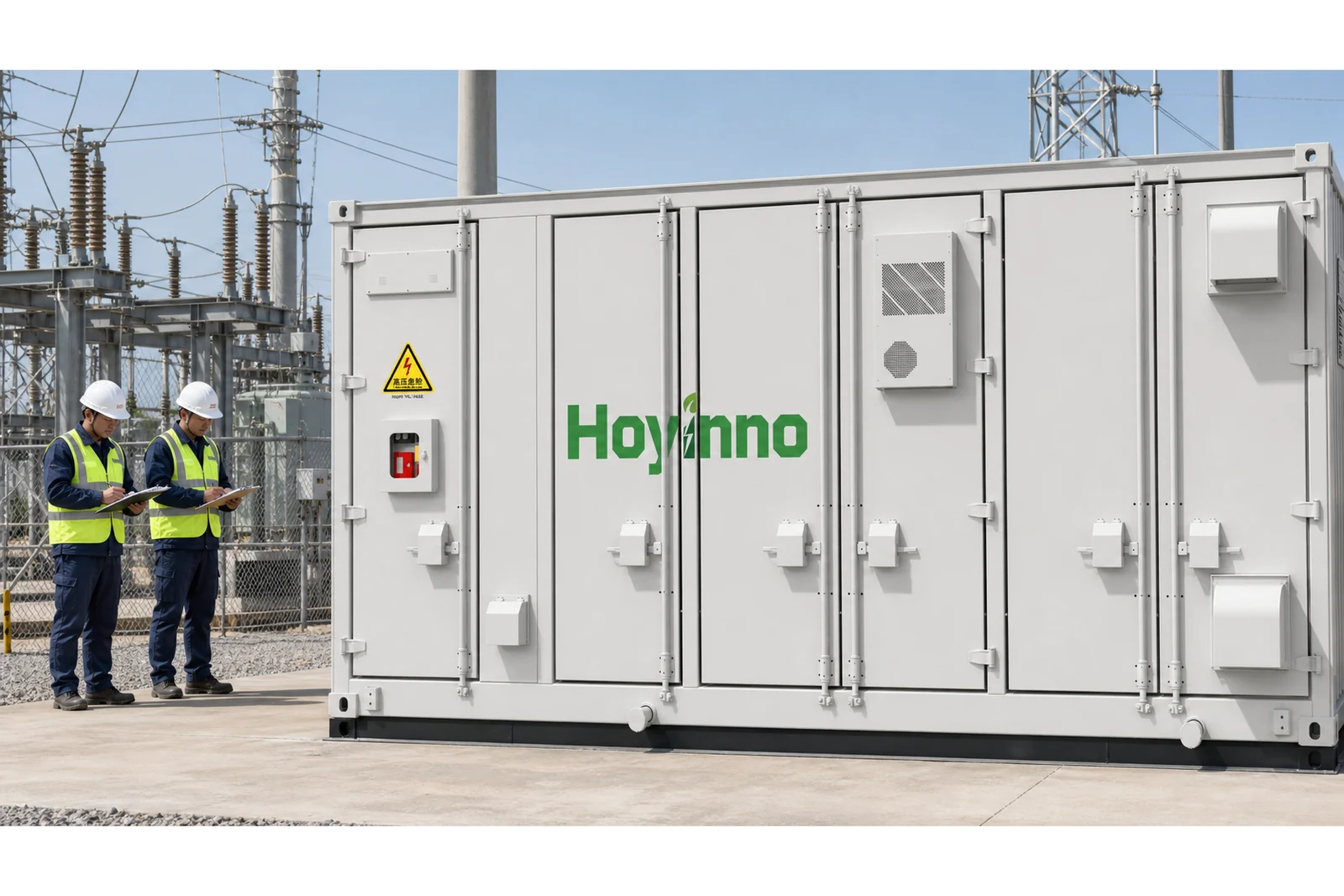
Architecture Links Stored Energy to the Grid
Trace the DC and AC Paths Separately
A readable BESS container architecture starts with an energy path. On the direct-current side, cell strings feed modules, racks, collection points, disconnects, protection, and a DC interface. On the alternating-current side, a power conversion system creates a controlled waveform, after which switchgear and transformers may connect the asset to the site voltage. The exact arrangement can be integrated, split across enclosures, or distributed across multiple blocks.
Control Hierarchy Turns Hardware Into a Service
Hardware stores and converts energy; controls decide when and how that capability is used. At the equipment level, the battery system enforces electrochemical limits and the converter regulates electrical behavior. At the plant level, a controller coordinates blocks, manages setpoints, respects site limits, and handles availability. An energy management system may optimize schedules against tariffs, renewable output, load, market instructions, or reserve requirements.
Those layers need explicit precedence. Safety limits must override commercial dispatch, local protection must act even if communications are unavailable, and the plant should enter a defined state after data loss or controller restart. Hoyi's energy management system information describes the supervisory context. A project control narrative should additionally define setpoint ownership, modes, alarms, fallback logic, time synchronization, data retention, and cybersecurity responsibilities.
| Layer | Primary Function | Typical Project Evidence |
|---|---|---|
| Cell, module, and rack | Store energy and measure local operating conditions | Configuration, limits, sensing map, balancing and isolation logic |
| DC collection and protection | Combine circuits and interrupt abnormal current | Schematics, ratings, coordination and safe-isolation procedure |
| Power conversion | Control bidirectional power between DC and AC systems | Capability curves, grid functions, protection and test records |
| Thermal and auxiliary systems | Maintain operating environment and support essential loads | Heat-load basis, zoning, auxiliary single line and failure modes |
| Plant controls and EMS | Coordinate assets and translate objectives into setpoints | Control narrative, point list, modes, fallback states and data plan |
| Site and grid interface | Connect the asset safely to civil and electrical infrastructure | Interface matrix, protection study, grounding, network and acceptance plan |
Thermal Management Protects Performance and Consistency
Design Around the Complete Heat Path
Battery cells generate heat during operation, and ambient conditions influence the ability to remove it. Effective battery thermal management therefore begins with duty cycle, cell characteristics, rack density, airflow or coolant distribution, enclosure heat gain, and allowable temperature range. A cooling-device rating by itself cannot show whether every cell region receives comparable treatment under peak conditions.
Account for Auxiliary Loads and Failure States
Cooling, heating, pumps, fans, controls, communication equipment, detection, lighting, and other auxiliaries consume power. Their operating modes affect net energy, standby behavior, and black-start requirements. The auxiliary architecture should show normal supply, backup supply where required, restart sequence, low-temperature preparation, and behavior during a site outage. It should also identify which functions remain available when the main converter is isolated.
Safety Is a Layered Engineering Process
Connect Each Hazard to Detection, Mitigation, and Evidence
Layering is essential because no single component covers every scenario. Cell and module selection, electrical protection, thermal control, fault detection, ventilation, separation, enclosure behavior, suppression, shutdown logic, signage, access control, and emergency coordination contribute different functions. The U.S. Department of Energy's energy-storage safety strategy emphasizes validation, codes and standards, incident preparedness, and learning. IEC 62933-5-1 addresses hazard identification, risk assessment, and mitigation for grid-integrated electrical energy storage systems. Applicable editions and local requirements still need project-specific confirmation.
Make Emergency Response Site-Specific
Coordination cannot wait until energization. Local authorities, the asset owner, integrator, contractor, operator, and equipment suppliers may hold different pieces of the response plan. Early review can influence spacing, gates, roads, hydrants, drainage, communication equipment, and shutdown access. Hoyi's technology support context can help define supplier inputs, while the owner retains responsibility for a complete site-level plan.
Commissioning Proves the Integrated Asset
Use Progressive Verification Instead of One Final Test
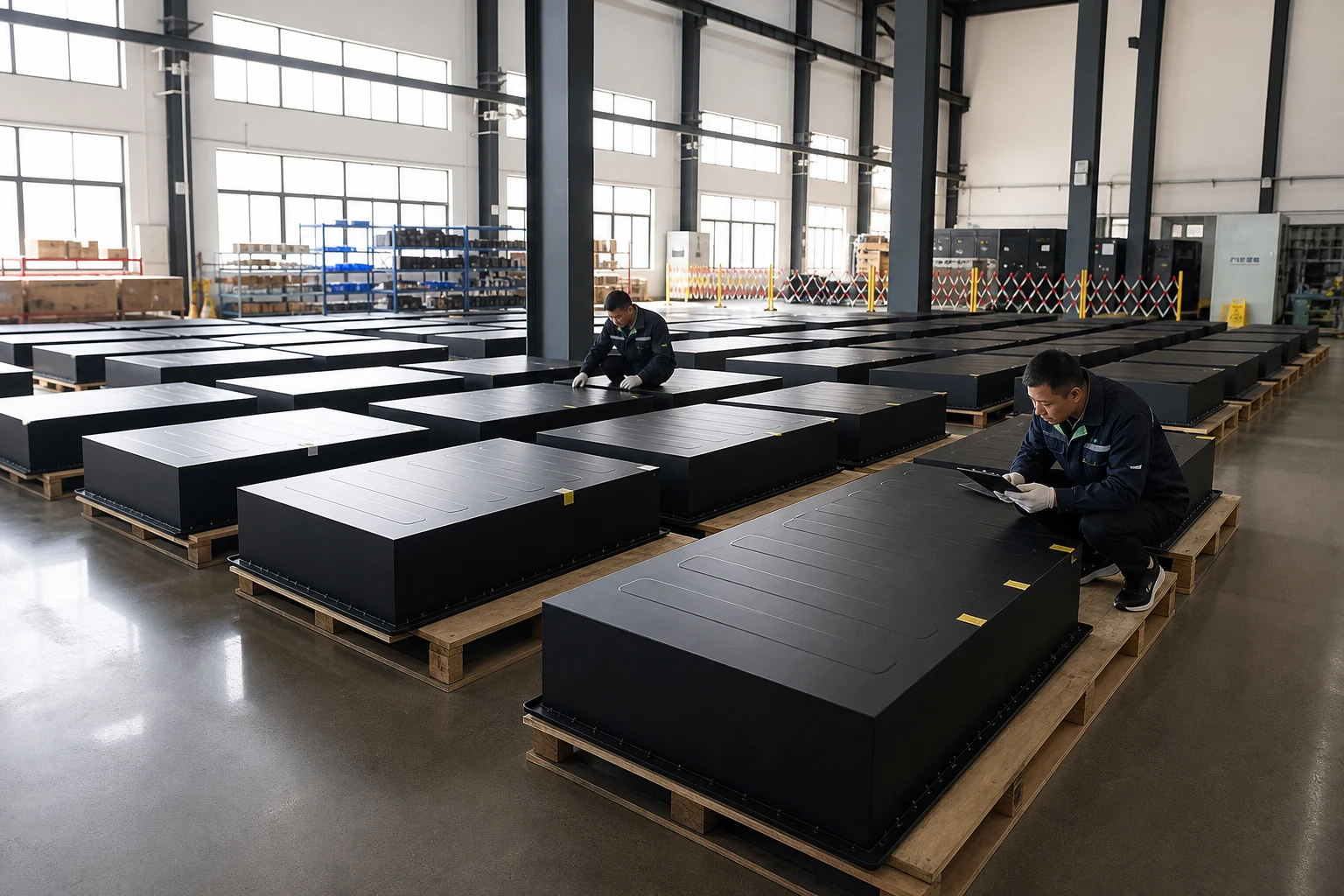
Effective energy storage commissioning starts before equipment arrives. Design reviews confirm interfaces and acceptance criteria; factory tests establish configured equipment behavior; receiving inspections document transport condition; installation checks confirm mechanical and electrical completion; pre-energization tests verify protection, grounding, communications, and auxiliaries. Functional testing then exercises modes and interlocks before performance tests evaluate agreed outcomes.
Each stage should have prerequisites and hold points. For a Containerized Energy Storage System, energization should proceed only when required evidence is complete and open items have an accepted disposition. Test records need configuration identifiers, conditions, expected and actual results, anomalies, corrective actions, and approval. That discipline creates a known operating baseline.
Test Normal, Transition, and Abnormal Modes
A system can pass steady-state charge and discharge tests yet fail during transitions. The plan should include startup, shutdown, standby, mode changes, communication loss, controller restart, auxiliary interruption, block unavailability, alarm acknowledgment, emergency stop, protection trips, and recovery. Setpoint ramps and limits should be observed at the plant interface rather than inferred from an internal display.
Data quality also belongs in acceptance. Confirm point names, units, sign conventions, timestamps, quality flags, historian retention, alarm priorities, and access control. A site's engineering design process can establish the interface basis, and analysis services can support system studies. Commissioning closes the loop by showing that the installed configuration behaves according to the approved documents.
Application Fit Determines the Useful Design
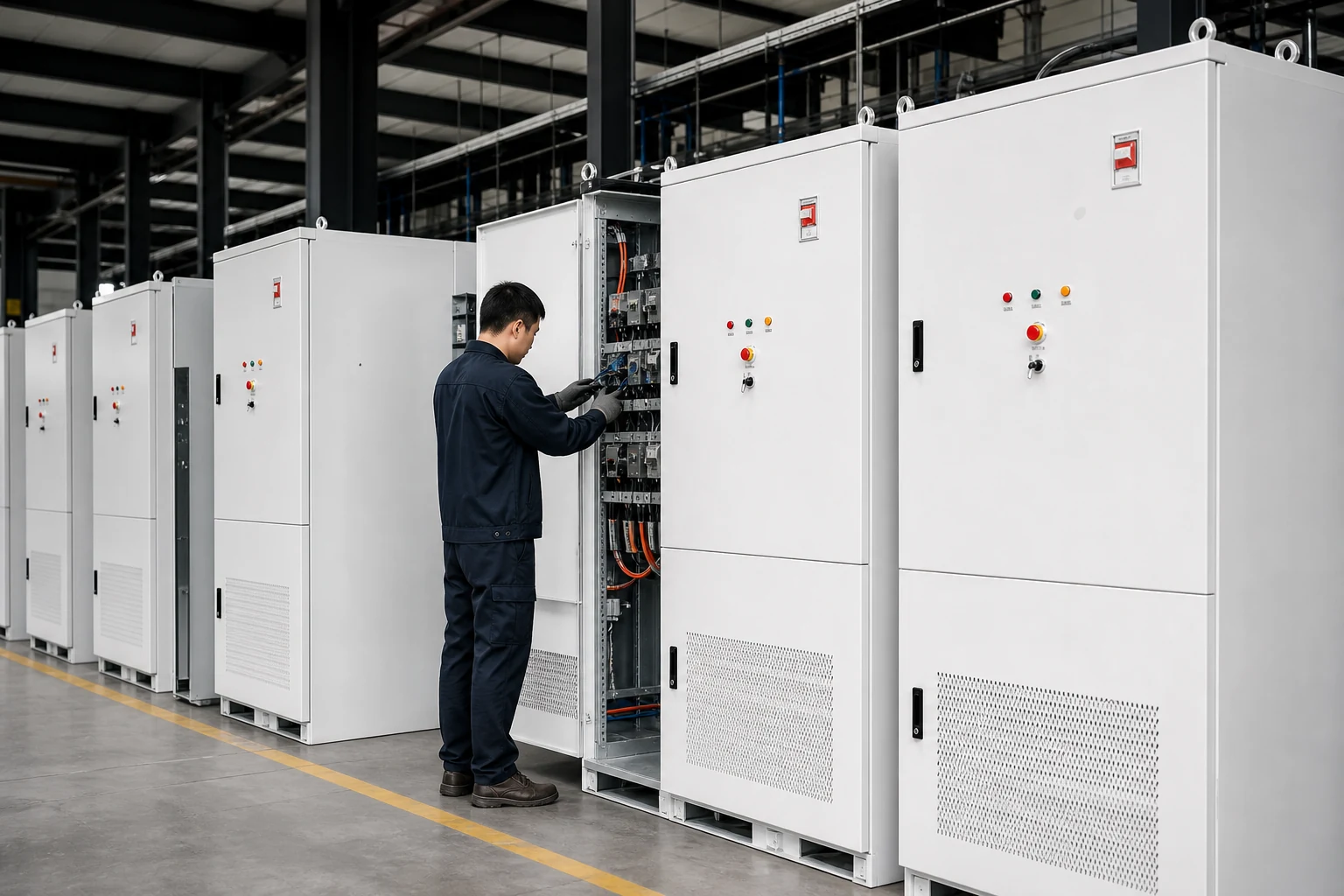
Application requirements should be expressed as operating scenarios and acceptance tests. For a renewable project, the controller may need to manage forecast error, ramp limits, curtailment, and interconnection limits. For a critical facility, transition behavior, reserve policy, load priority, and restoration may dominate. The energy storage solutions overview helps frame potential use cases without replacing a site study.
A sound early comparison therefore asks what is integrated, what is optional, and what remains site work. It examines the electrical architecture, thermal basis, safety evidence, control ownership, cybersecurity boundary, commissioning scope, and long-term service model together. A Containerized Energy Storage System becomes deployable when those parts are matched to one duty and documented as one controlled asset, not merely when a container is delivered.
Frequently Asked Questions
Is Everything Inside One Container?
Not necessarily. A Containerized Energy Storage System may place batteries, thermal equipment, controls, and safety functions in one enclosure while converters, transformers, switchgear, or plant controls remain separate. The single line and interface matrix should define the actual boundary.
What Is the Difference Between Power and Energy?
Power describes the rate at which electricity can be charged or discharged, commonly expressed in kilowatts or megawatts. Energy describes the stored quantity available over time, commonly expressed in kilowatt-hours or megawatt-hours. Both need operating-condition definitions.
Why Does Temperature Uniformity Matter?
Cells exposed to different temperatures can age and perform differently. Managing both absolute temperature and gradients helps keep limits consistent across racks, supports predictable available energy, and reduces the chance that one hot or cold region constrains the entire system.
When Does Commissioning Begin?
Commissioning planning begins during design, when responsibilities, testable requirements, data points, protection behavior, and acceptance criteria can still be shaped. Field testing is one phase of a process that also includes design review, factory evidence, receiving, installation, and turnover.
Which Documents Matter First?
Early reviewers usually benefit from a system block diagram, single line, equipment boundary, operating scenarios, responsibility matrix, control narrative, thermal basis, safety approach, communications architecture, and commissioning outline. These documents reveal missing interfaces before detailed procurement begins.
The container format creates a repeatable physical platform, but project readiness comes from verified interfaces and coordinated behavior. Architecture, heat control, layered safety, site integration, and staged testing must all support the same operating objective. That systems view is the practical bridge between battery cells and a dependable electrical asset.
 Why Does A Liquid Cooled BESS Cabinet Need Layered Thermal Control?
  Address: A401, Junxu Junchuang Park, 03A Qingyi Road, Nanhai District, Foshan City, Guangdong Province, China