



 Home
Home
A Solar And Battery Storage System Needs An Agreed Control Sequence
A solar and battery storage system needs an agreed control sequence that defines charging, discharge, grid interaction and responses to unavailable equipment. Compatible hardware is only part of the selection. The operating rules must match the intended service, the electrical boundary and the battery's permitted conditions before a project can judge whether the arrangement will behave as expected.
Choose The Operating Objective Before The Controls
The intended service determines which decisions the controller must make. Increasing the use of on-site solar, reducing a demand peak and supporting selected loads during an outage are different objectives. They may compete for the same stored energy. A system selection should state the priority between them rather than assuming that every advertised function can operate at full value at the same time.
Describe The Service As An Observable Outcome
An objective should be something the project can observe and evaluate. A request to use more solar needs a defined electrical boundary and an understanding of when generation exceeds demand. A backup objective needs named loads and a defined operating condition during loss of utility supply. A statement such as intelligent energy management is too broad to become an acceptance criterion without those details.
The Department of Energy's solar-plus-storage overview explains storage as a way to move solar energy to a different time and support services beyond immediate generation. That background does not establish a particular product's controls or backup capability. For a solar and battery storage system, the project still has to translate the desired service into equipment requirements and testable behavior at the actual site.
Identify The Priority When Objectives Conflict
A battery held in reserve for an outage has less energy available for another service. Conversely, discharging for normal operation can reduce the remaining reserve. The control sequence should identify who sets that priority and which limits take precedence. A project can then compare arrangements on the same operating assumptions instead of comparing one supplier's unrestricted example with another supplier's conservative reserve case.
Separate Storage Hardware From Its Operating Capability
A storage cabinet's nominal energy describes one part of the equipment. It does not identify the supported power at every condition, the conversion arrangement or the behavior during a transition. The selection should connect the cabinet to its compatible converter, controls and required external interfaces. Those relationships matter more than the apparent size of the enclosure in a photograph.
Keep Energy, Power And Interface Requirements Separate
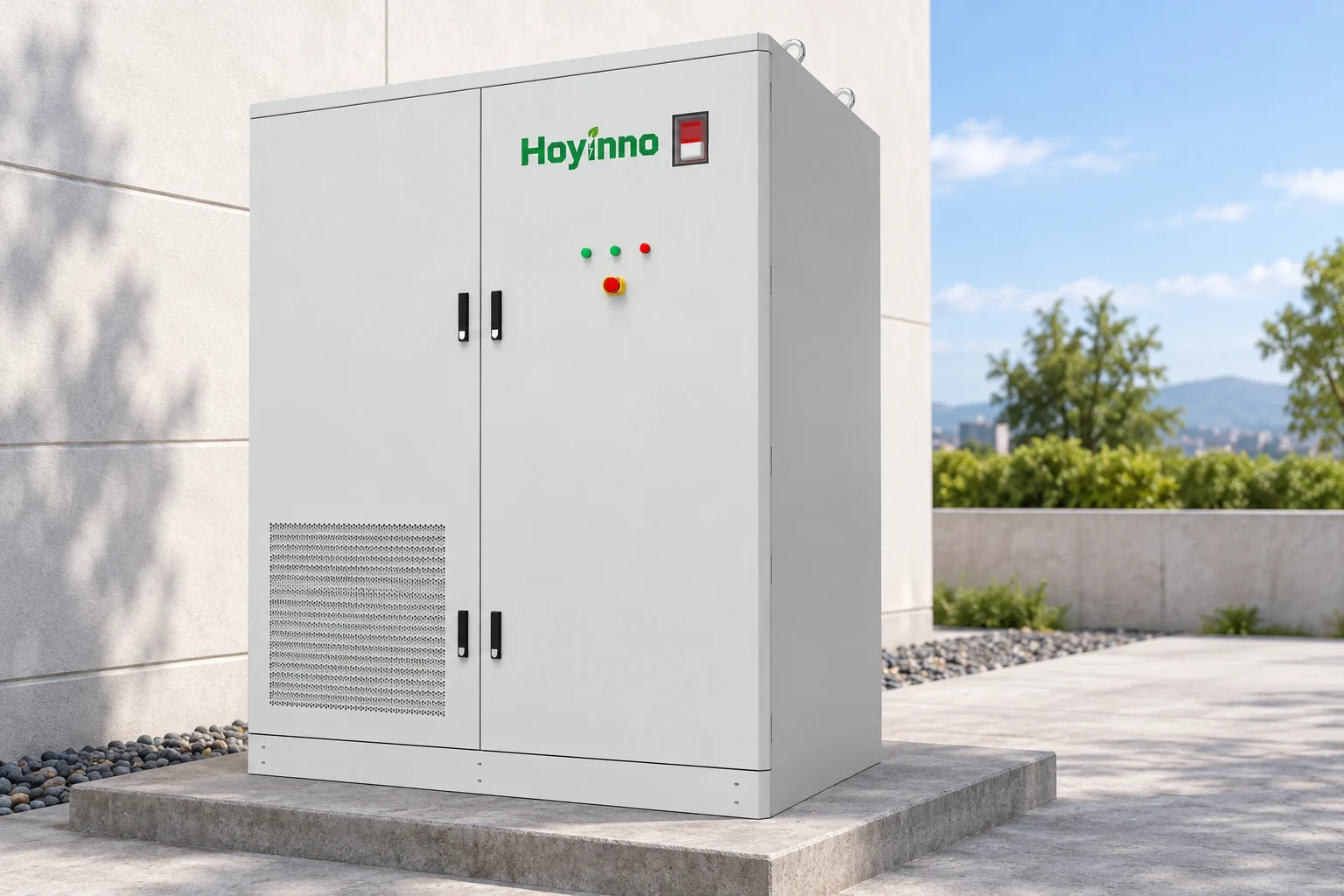
The site's 522 kWh cabinet page identifies a particular storage product within the BESS catalogue. The energy figure should remain attached to that model. It is not a promise of a specific discharge duration for an unspecified load. The available power, usable energy and operating conditions need separate confirmation for the proposed configuration.
A solar and battery storage system also needs a defined connection between the energy storage equipment and the rest of the installation. The project should identify the electrical interface, metering points and supported control communication. Compatible connection hardware does not automatically establish compatible commands, feedback or fault handling. Each interface should have a responsible party and a document describing what information crosses it.
Distinguish Supervisory Requests From Equipment Limits
A supervisory controller can request an operating action, but the equipment's permitted conditions may limit what can occur. Battery protection, converter capability and other required controls must retain their intended authority. The project should know how a refused or limited request is reported and how the higher-level control responds. An unexplained difference between requested and actual power makes both operation and acceptance more difficult.
Define The Electrical Boundary For Each Mode
An operating mode should describe where electrical power can flow and which equipment maintains the required conditions. The boundary includes the relevant connection to the utility and the loads inside the controlled installation. A project should avoid treating the presence of a battery as evidence that the installation can continue operating during loss of grid supply.
Confirm Grid-Connected And Islanded Roles Independently
Grid-connected operation and islanded operation have different control requirements. If islanded service is intended, the proposed configuration must identify how voltage and frequency are established within the island, which resources are permitted to participate and how the utility boundary is managed. These functions need engineering evidence for the installation. A general statement that a converter is hybrid or that a cabinet stores energy is insufficient.
NREL's controller hardware-in-the-loop evaluation describes testing of a microgrid management system with multiple grid-forming resources under dynamic conditions. It is an example of evaluating coordinated control behavior rather than inferring it from individual equipment ratings. It does not certify the Hoyinno configuration or guarantee that every solar and battery storage system supports the same transitions.
Write Down The Conditions For Entering And Leaving A Mode
The control sequence should identify the conditions for a transition, the required checks and the permitted outcome. If a required device or signal is unavailable, the alternative behavior should also be stated. That makes it possible to evaluate whether a mode change was intentional and authorized. A diagram that only shows arrows between normal states leaves these important exceptions unexplained.
| Condition | Control question | Evidence for selection |
|---|---|---|
| Normal generation | What determines charging or curtailment? | Priority rule, measurements and equipment limits |
| Discharge request | What restricts the requested output? | Permitted conditions and feedback definitions |
| Utility unavailable | Is intended island operation supported? | Defined boundary and compatible engineering design |
| Signal unavailable | What happens without reliable feedback? | Documented fallback and indication to the operator |
| Restoration | Who authorizes the return to normal service? | Agreed transition procedure and recorded result |
Coordinate Variable Generation With Available Storage
Solar generation and demand change while the battery's available operating range also changes. The controller needs current, meaningful inputs to decide what action is permitted. A solar and battery storage system should therefore be compared through the rules that connect those inputs to action. A nominal capacity comparison alone cannot reveal how the arrangement handles a full battery, limited converter or unavailable generation resource.

State What Happens When A Request Cannot Be Met
A control request may be unavailable because the battery has reached a permitted boundary, equipment is limited or a required resource is absent. The selection should identify the response: limit the action, select another permitted mode, report an alarm or stop the affected service as appropriate to the design. The controller should not silently present a requested outcome as an achieved outcome.
Treat Measurements And Communication As Part Of The Selection
The control arrangement depends on measurements having a defined meaning. A sign convention, measurement location or stale value can change the interpretation of power flow. The documentation should identify these details alongside the supported protocol and signal list. Merely stating that two devices communicate does not prove that they interpret the same information consistently.
Identify Missing, Stale And Contradictory Inputs
The project should ask how the controller detects unavailable or stale information and which actions remain permitted. It should also know what happens when different measurements do not agree. The purpose is to select an arrangement with a documented operating response, not to prescribe a universal timeout or fallback. Those settings require the actual equipment capabilities and project requirements.
A solar and battery storage system can look healthy on an overview screen while an important feedback path is unavailable. Operators need indications that distinguish actual measured state, requested state and communication status. The handover should show how those indications are interpreted and which issue requires technical escalation rather than a routine change of schedule.
Make The Commissioning Plan Test The Agreed Behavior
A commissioning test should connect a defined starting condition and action to the expected result. The plan should identify what must be recorded to judge that result and how an exception is handled. A demonstration that the battery charges once is narrower than evidence that the complete control arrangement behaves as agreed across its intended operating states.

The project's responsible engineers can select suitable tests for normal operation, agreed limits, transitions and unavailable inputs. The evidence should identify the equipment configuration, relevant settings and observed outcome. A failed commissioning test should remain visible until the responsible parties agree on correction and retesting; a general statement that the controls are intelligent is not a disposition.
Keep The Operating Agreement Usable After Handover
The handover should leave the owner with the current operating rules, configuration references and test evidence needed to understand later behavior. A clear control sequence explains the normal priorities and the conditions that limit them. It should be understandable enough for operators to distinguish an expected restriction from an unresolved issue and to know which responsible team can investigate.
The next useful selection step is to compare a proposed signal list, mode description and commissioning outline against the intended service. A solar and battery storage system is easier to assess when every requested outcome has a defined condition, compatible equipment and an observable result. The remaining engineering assumptions can then be identified before they become operational surprises.
FAQ
Does A Large Cabinet Guarantee Backup Operation?
No. Energy capacity is only one requirement. Backup behavior depends on the compatible conversion and control arrangement, electrical boundary, supported operating roles and required engineering design. The intended service must be established for the actual configuration.
Can One Priority Rule Cover Every Service?
One rule may be too simple when services compete for energy or power. The arrangement should explain which objective takes priority under each relevant condition. A reserve decision, for example, should be understood before normal-operation discharge is evaluated.
What Is The Purpose Of A Mode Description?
It explains the permitted power paths, responsible equipment and conditions for entering or leaving that state. A useful description also identifies exceptions, so the operator is not forced to infer behavior from a diagram containing only normal transitions.
What Should A Failed Control Test Produce?
It should produce a recorded discrepancy, an agreed disposition and appropriate correction or retesting. The evidence should preserve the configuration and observed outcome. It should not be replaced by an unsupported statement that the intended behavior was achieved.
How Can An Owner Preserve The Acceptance Basis?
Keep approved configuration references, operating rules and test records together, and document changes. Later behavior can then be compared with the current acceptance basis.
 Which Coupling Route Fits PV Panel Battery Storage In An Existing Plant?
  Address: A401, Junxu Junchuang Park, 03A Qingyi Road, Nanhai District, Foshan City, Guangdong Province, China





