



 Home
Home
An Off Grid Solar Power Plant Is Designed Around Energy Recovery, Not Peak Sun
An off grid solar power plant should be sized and controlled around the hardest credible energy-recovery sequence, not peak solar output. A midday array can look generous while the plant still fails after a cloudy evening, a motor start, a delayed generator, or a battery that reaches its operating limit before renewable production recovers.
This recovery-first method is for EPC project managers, procurement leaders, energy managers, electrical engineers, and investors planning remote systems in Southeast Asia, Africa, and the Middle East. It turns the design question into a chronological test: after a difficult event, can the plant protect critical service, restore reserve, and return to normal without assuming perfect weather?
Define The Service That Must Survive The Low-Resource Window
Begin with the electrical boundary and the service consequence. List the buses, critical loads, controllable loads, auxiliaries, solar generation, storage, conversion equipment, backup sources, protection, communications, and operators that must work together. DOE materials describe microgrids as interconnected loads and distributed energy resources within defined electrical boundaries that can act as one controllable entity; that framing makes the plant testable.
Translate Connected Load Into A Priority Schedule
A nameplate total does not show which loads run together or what can wait. Build a schedule with baseline demand, shifts, pumps, refrigeration, communications, water systems, safety functions, motor starts, and restoration steps. Assign each load a priority, maximum interruption, start behavior, controllability, and consequence. This critical load schedule should govern sizing, control, and acceptance.
Include The Energy Needed To Operate The Plant
Cooling, controls, communications, fire protection, heaters, pumps, and standby consumption reduce usable energy. Their demand can rise when the climate is most difficult or when equipment is recovering. Model them in normal, night, fault, maintenance, and restart states instead of hiding them in a single percentage loss.
Use A Chronological Solar Generation Profile
Monthly energy totals cannot show whether generation arrives when the plant can use it. A chronological solar generation profile should use a defensible time step and include seasonal resource, cloud sequences, temperature, clipping, soiling, shading, degradation assumptions, array availability, and conversion losses. Compare it with the load schedule rather than with annual consumption alone.
Test Sequences, Not Just Typical Days
Model a demanding but credible sequence: low battery state at sunset, overnight critical demand, a weak morning, delayed maintenance, and the next available solar window. Then vary cloud duration, temperature, load growth, unavailable strings, and forecast error. The design case should be named, versioned, and traceable to evidence so a later proposal cannot quietly replace it with a friendlier day.
Separate Curtailed Energy From Recoverable Energy
Large midday production is useful only if loads can consume it, storage can accept it, or it can be shifted to another service. State-of-charge limits, charge power, thermal derating, converter limits, and full batteries can turn available sunlight into curtailment. Recovery calculations should count energy that can actually enter the system within those limits.
Design The Battery Recharge Window Around The Next Event
Battery energy should not be assessed only by autonomy hours. The model must show state of charge before the event, usable operating range, discharge power, efficiency, temperature, aging allowance, reserve floor, and the energy needed to return to an acceptable state. The battery recharge window ends when the next critical event could begin, not when the sun eventually returns.
Budget Energy For Service And Recovery Separately
During recovery, solar energy may need to serve loads, power auxiliaries, charge storage, and sometimes support source transition at the same time. Allocate these uses chronologically. If the model assumes load shedding, record exactly which loads, how long, who authorizes it, and what happens if a customer or operator refuses the assumed interruption.
Keep Reserve Tied To A Named Purpose
A reserve percentage without an event is difficult to defend. Define whether reserve protects a night load, a forecast error, a generator start delay, a black start, a safety function, or the loss of one device. State when reserve may be used, who can change it, and how it is rebuilt. This makes control priorities visible to investors and operators.
Coordinate Conversion, Protection, And Source Transition
An off-grid plant has no external grid to absorb imbalance. Inverter current limits, voltage and frequency control, reactive power, motor starts, transformer energization, cable impedance, harmonics, and protection coordination can determine whether a feasible energy plan survives a real transition. The power conversion and control overview provides product context, while project studies must use the selected equipment and site network.
Assign Grid-Forming Responsibility In Every State
Normal solar operation, battery-led night service, generator support, maintenance bypass, and restoration may place different devices in charge of voltage and frequency. Define control authority, synchronization, transition sequence, communications dependency, fallback, timeout, and manual action for each state. Avoid two devices competing to form the system or a state in which none does.
Verify Protection Under Low Fault Current
Inverter-based resources may supply fault current differently from conventional rotating machines. Protection settings, selectivity, earth-fault behavior, breaker capability, isolation, and restoration need project-specific studies and tests. A system that remains energized but cannot isolate a fault safely has not met the service objective.
Use Backup Energy As A Recovery Resource
Backup generation can reduce battery size or protect long low-resource periods, but only if availability assumptions are credible. In an off grid solar power plant, include start reliability, warm-up, minimum loading, fuel storage, delivery access, maintenance, emissions or noise constraints, and simultaneous failure scenarios. Fuel quantity is not the same as usable recovery energy when transport or start systems are unavailable.
Define The Start Trigger Before The Crisis
Starting too late can consume protected reserve; starting too early can waste fuel and increase cycling. Use observable triggers such as forecast, state of charge, load state, equipment availability, and required recovery target. The same-site EMS overview explains supervisory functions, but the project must document priority order, permissions, fallback, and manual override.
| Recovery Layer | Required Input | Hidden Failure | Acceptance Evidence |
|---|---|---|---|
| Service boundary | Priority loads and interruption limits | Essential auxiliary omitted | Approved one-line and load schedule |
| Solar sequence | Chronological resource and losses | Monthly total masks weak mornings | Time-series cases and sensitivities |
| Storage recovery | Usable range, power, reserve, temperature | Battery cannot recharge before next event | State-of-charge trajectory |
| Source transition | Control ownership and protection | No stable grid-forming device | Transition and fault tests |
| Backup resource | Start, fuel, maintenance, logistics | Nominal generator unavailable in practice | Start history and endurance test |
Commission The Full Recovery Cycle
Factory tests can confirm components, but site acceptance must demonstrate the installed system. Use approved procedures, calibrated instruments, synchronized data, safe test boundaries, and defined pass criteria. Replay representative load steps, renewable changes, reserve thresholds, communications loss, alarms, source transitions, shutdown, and restoration.
Prove Black Start And Return To Normal
A black start sequence should identify the initiating source, auxiliary power, breaker order, control checks, inrush limits, load pickup blocks, unavailable-device response, and the condition that declares recovery complete. If black start is outside scope, state the alternative recovery path and what external service it depends on.
Leave operators with a repeatable baseline.
Handover should preserve approved drawings, models, assumptions, settings, software versions, signal lists, test data, alarm responses, maintenance plans, spares, and change authority. Trend the recovery indicators that matter: reserve at event start, critical load served, minimum state of charge, source-start performance, recharge time, curtailed energy, and unresolved deviations.
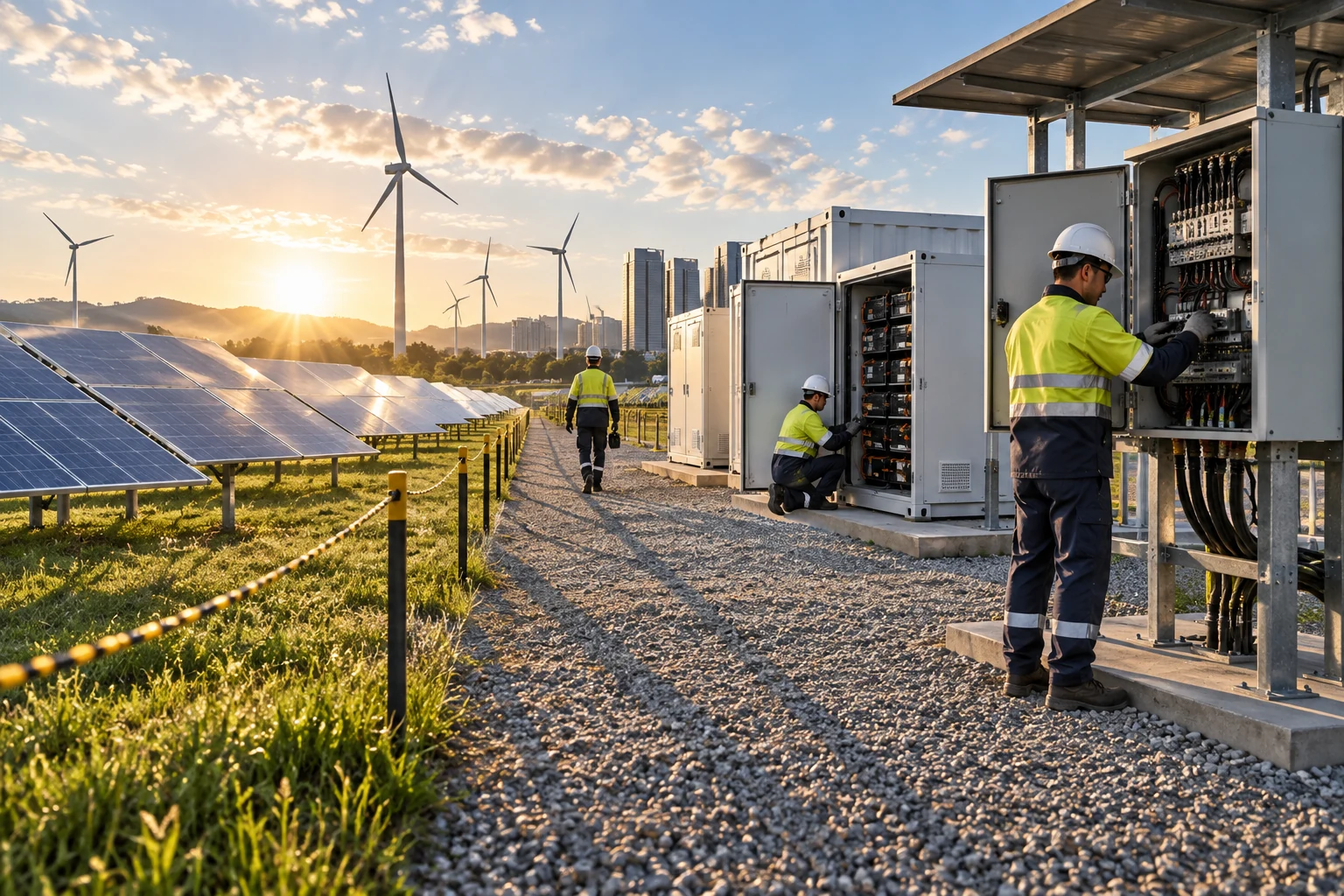
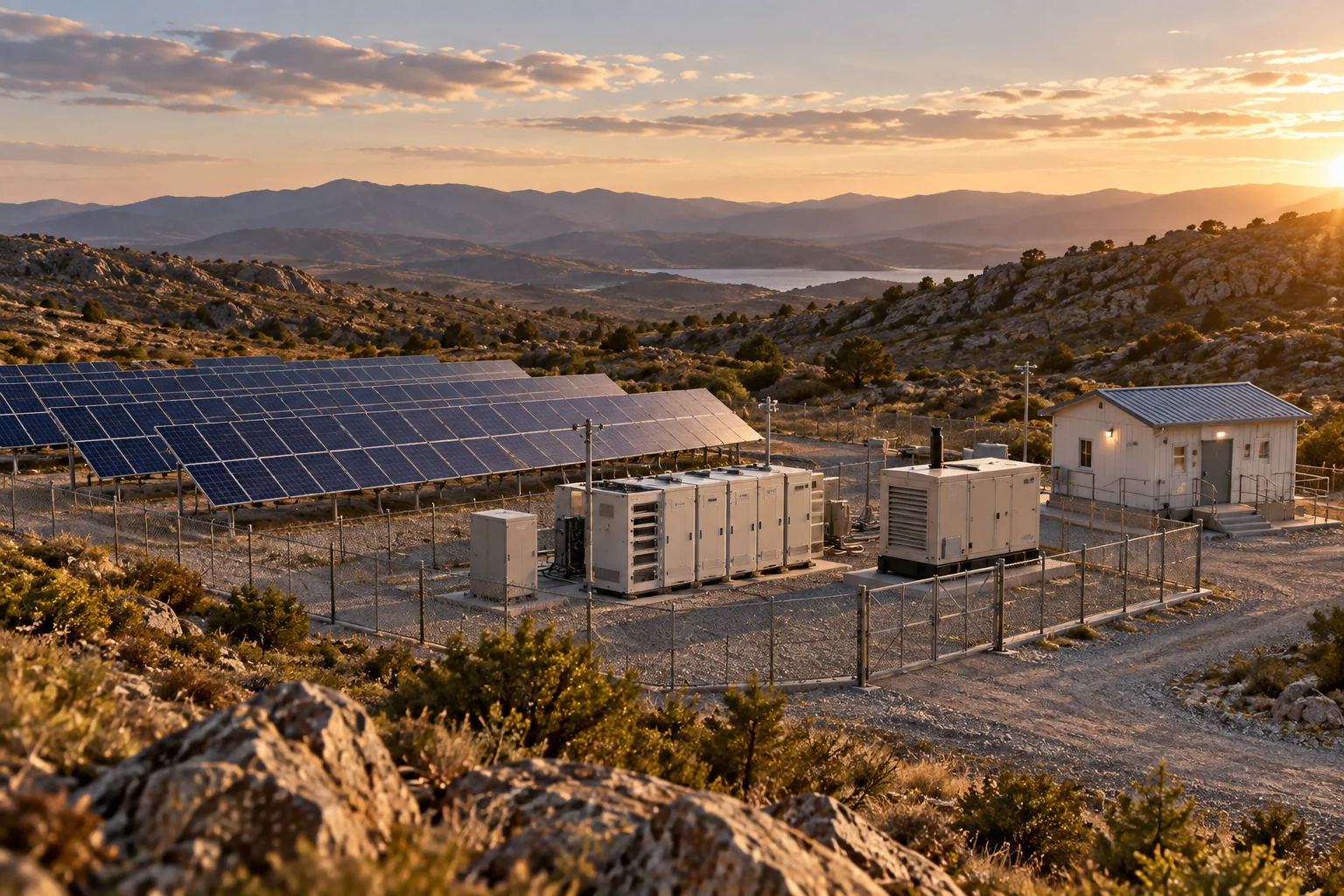
The remote-area solution page illustrates the application setting. The engineering and operations and maintenance pages describe supporting capabilities. Project contracts should still define boundaries, exclusions, witnesses, data ownership, training, response time, and post-handover responsibility.
Frequently Asked Questions
Why Is Peak Solar Capacity A Weak Sizing Basis?
Peak capacity describes output under specified conditions, not the timing of usable energy. Loads, weather, temperature, conversion limits, curtailment, battery state, and recovery deadlines determine whether the plant can maintain service.
How Many Low-Solar Days Should The Plant Cover?
There is no universal number. Use site resource data, load consequence, backup availability, forecast error, recovery time, fuel logistics, maintenance access, and the acceptable probability and duration of unmet demand.
Can A Larger Battery Solve Every Recovery Problem?
No. Converter power, charge acceptance, thermal limits, protection, aging, generation shortfall, control conflicts, and unavailable equipment can remain limiting. The whole sequence must be checked.
What Evidence Should Investors Request Before Acceptance?
Request the approved boundary, chronological model, assumptions, equipment ratings, protection study, control narrative, state diagrams, test procedures, synchronized results, deviations, recovery trends, training records, maintenance plan, and ownership of future changes.
In summary, an off grid solar power plant is resilient when its hardest credible sequence ends with protected loads served and reserve restored. Recovery evidence is more decision-useful than a peak-power figure because it connects weather, equipment, controls, operators, and time.
 Which Off Grid Electricity Solutions Protect Service Through The Full Recovery Cycle?
  Address: A401, Junxu Junchuang Park, 03A Qingyi Road, Nanhai District, Foshan City, Guangdong Province, China





