



 Home
Home
Battery Energy Storage Solutions Require A Project-Level Evidence Chain
Battery energy storage solutions should be compared through verified load, safety, controls, integration, service, and lifecycle evidence before project award. They are not interchangeable boxes of kilowatt-hours; their value depends on the load profile, connection point, climate, controls, safety case, commissioning plan, and service model. The useful comparison is an evidence chain that shows how each assumption becomes a specification, how each specification is verified, and who remains accountable after energization.
Start With the Service the Project Must Protect
The first procurement task is to define the service, not the enclosure. Peak shaving, renewable firming, backup power, diesel displacement, frequency response, and energy arbitrage impose different demands on duration, ramp rate, reserve margin, cycling, and controls. The resulting requirement should state which loads may be shed, how long critical loads must remain supplied, and what recovery condition must be achieved before the next event.
Build an interval load and duty-cycle model
A useful load model preserves time. Fifteen-minute data may be sufficient for demand-charge analysis, while islanded operation often requires one-minute or event-level resolution to expose motor starts, inverter steps, and protection interactions. At minimum, record peak power, daily energy, seasonal variation, load priority, allowable interruption, expected cycles, and growth assumptions. A credible BESS project design identifies missing data instead of hiding it behind a single annual consumption figure.
Separate site constraints from equipment preferences
Ambient temperature, altitude, humidity, salinity, dust, flood exposure, seismic conditions, access roads, acoustic limits, and fire-service routes can all change the design. Record the grid voltage, fault level, transformer capacity, earthing arrangement, communications protocol, point of common coupling, and available footprint before shortlisting hardware. Where civil works or transport impose a module-size limit, make that constraint visible in the evaluation matrix.
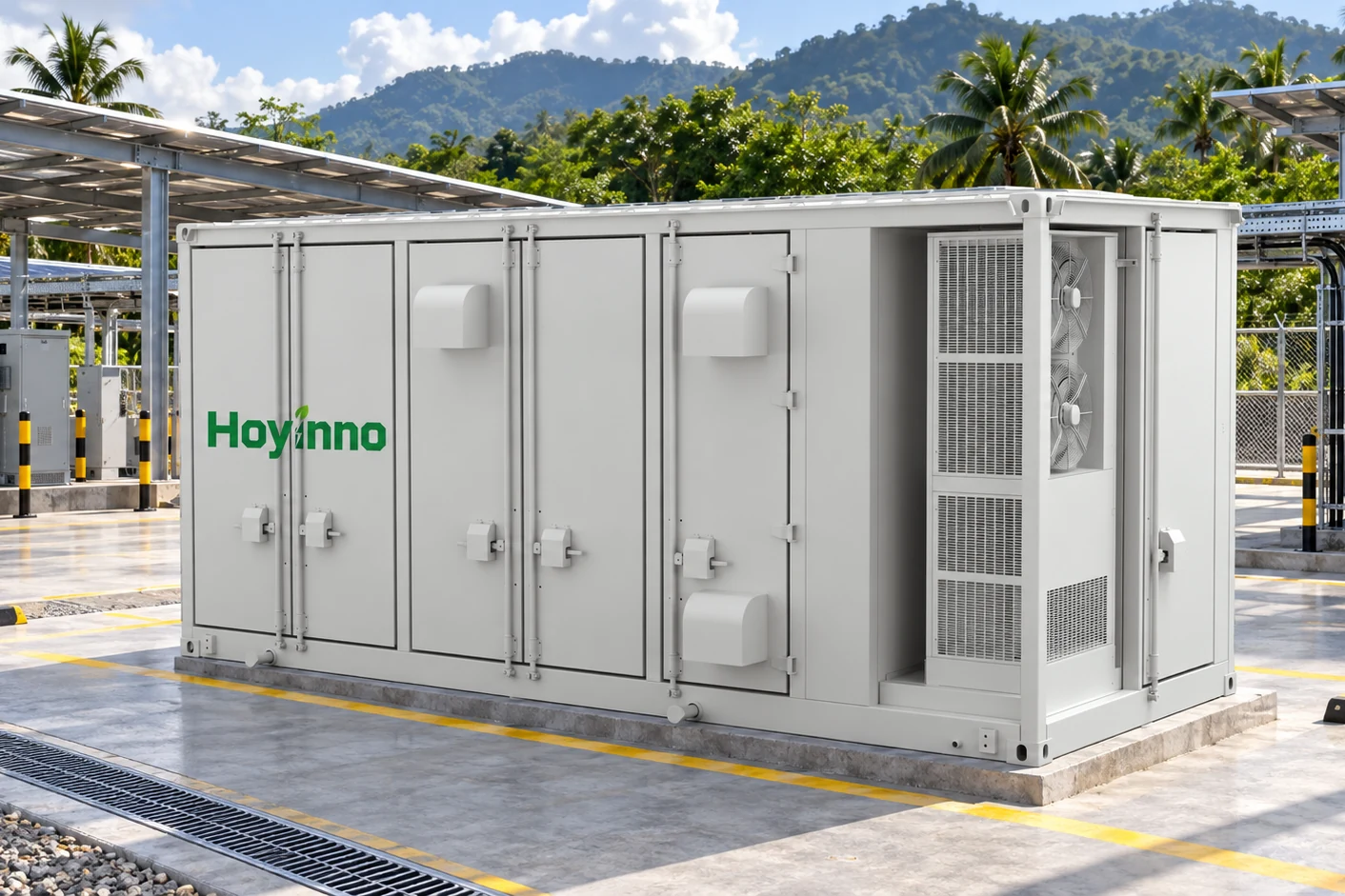
Map drainage, ventilation recirculation, emergency egress, crane access, cable routes, and expansion space to drawings. Hoyinno's remote-area off-grid solutions page is one application reference, but each arrangement still requires project-specific survey evidence.
Translate Requirements Into a Verifiable System Architecture
Once the service and constraints are known, the integrator can propose cell chemistry, racks, battery management system, power conversion system, energy management system, thermal control, fire detection, enclosure, transformer, switchgear, and supervisory communications. The proposal should show interfaces and ownership boundaries. A block diagram without ratings, protocols, protection zones, and failure behavior is not yet an engineering basis.
Size usable energy, power, and degradation together
Nameplate energy is not usable energy. The calculation should account for state-of-charge window, conversion efficiency, auxiliary loads, temperature derating, end-of-life capacity, availability reserve, and the minimum power required at the end of the warranty term. Review both beginning-of-life and end-of-life cases. If augmentation is proposed, specify its timing, compatible module generation, isolation method, and impact on warranty and controls.
A transparent model shows energy balance, peak power, C-rate, throughput, cycles, downtime, and load-growth sensitivity. Comparing a 233 kWh liquid-cooled system, 107 kWh cabinet, and larger containers is meaningful only after these inputs are normalized.
Define control modes and transition behavior
Use a cause-and-effect matrix for abnormal conditions. For each loss of sensor, network, auxiliary supply, cooling circuit, or protection signal, state the expected alarm, derating, trip, isolation, and restart path. This makes battery energy storage solutions comparable at the behavior level instead of merely at the component level.
Treat Safety as a Documented Lifecycle Function
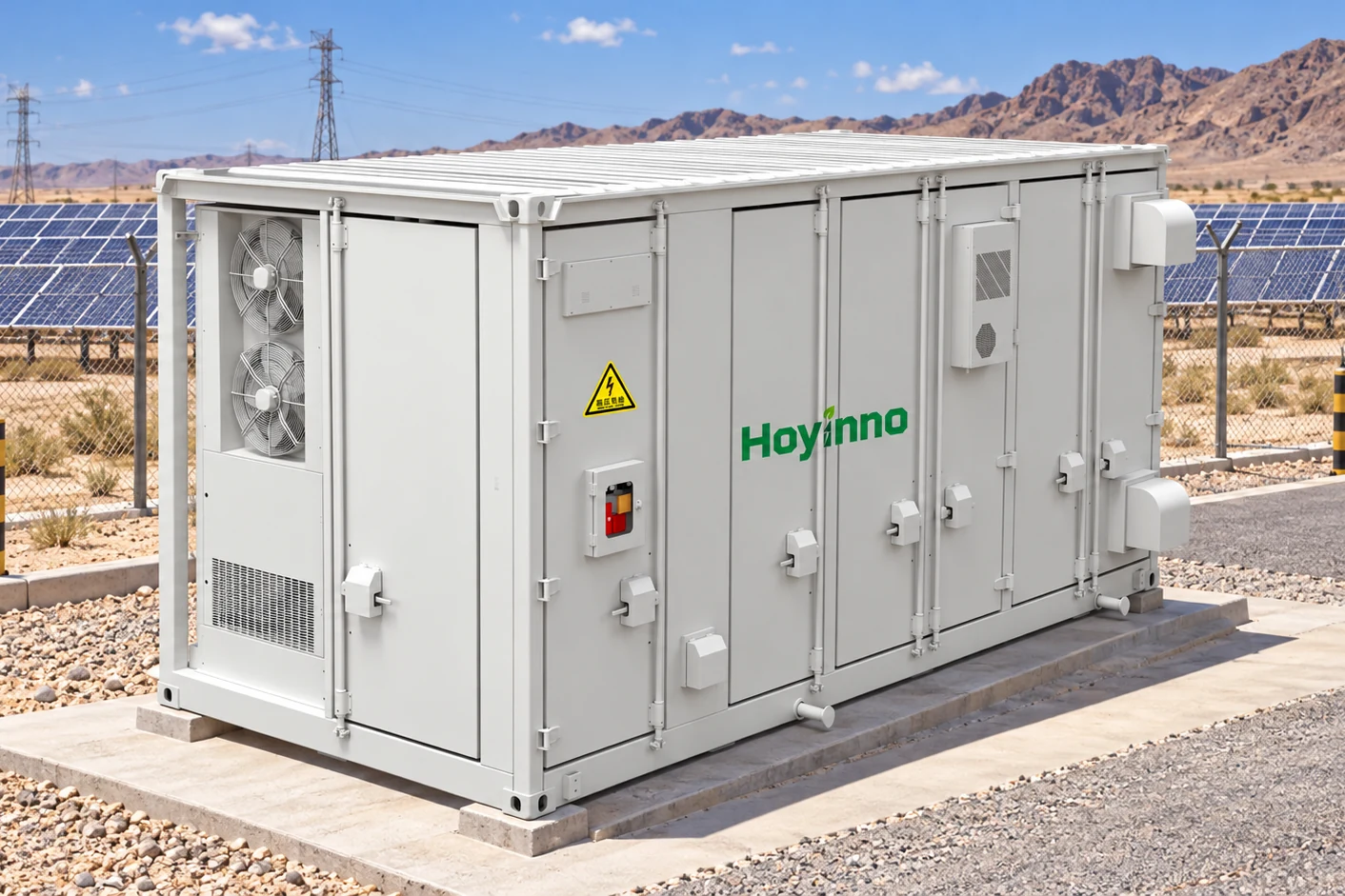
Safety cannot be reduced to one certificate. It begins with cell selection and propagation behavior, continues through rack and enclosure design, and extends to transport, installation, commissioning, operations, emergency response, and end-of-life handling. The ASEAN Centre for Energy has noted fragmented adoption and enforcement of battery safety requirements across the region, making jurisdiction-specific reconciliation essential rather than optional.
Map standards to the actual supplied configuration
Request a standards matrix that lists the applicable edition, tested model, report issuer, test scope, deviations, and relationship between the tested sample and the offered configuration. Relevant frameworks may include IEC 62619, IEC 63056, IEC 62933-5-2, local electrical codes, fire requirements, grid codes, and transport rules. Standards must be checked against the authority having jurisdiction; a globally recognized report does not automatically settle local permitting.
Effective battery storage safety evidence also includes hazard analysis, separation distances, ventilation or gas management, detection architecture, emergency stop philosophy, isolation points, signage, personal protective equipment, and responder access. Ask who approved each assumption and whether later design substitutions trigger a new assessment.
Connect prevention, detection, mitigation, and response
A strong safety case explains layers. Prevention addresses cell quality, electrical protection, temperature control, and operating limits. Detection covers cell voltage and temperature, smoke or off-gas signals, cooling faults, insulation monitoring, and communications health. Mitigation addresses propagation barriers, shutdown, ventilation, suppression where applicable, and safe separation. Response addresses alarms, remote isolation, site access, responder information, re-entry, evidence preservation, and recovery.
Compare Suppliers Through Deliverables, Not Adjectives
Request the same deliverable register from every bidder to expose exclusions before price comparison. Include the design basis, single-line diagram, arrangement, interface matrix, protection inputs, communications map, test plan, warranty, degradation model, and service commitments.
Normalize total cost around the guaranteed service
Compare capital cost only after normalizing usable end-of-life energy, warranted power, availability, throughput, auxiliary consumption, augmentation, preventive maintenance, software fees, spares, travel, taxes, and expected replacement work. A lower upfront price can be misleading if it shifts commissioning, civil scope, transformer supply, network integration, or capacity maintenance back to the EPC contractor.
For energy storage procurement, tie payment milestones to reviewable outputs: approved drawings, witnessed factory tests, delivered documentation, site acceptance, performance verification, and handover. The manufacturer's 3,354 kWh container system can be considered as a product-family reference, while the broader BESS portfolio helps frame alternatives. Neither page replaces the project-specific compliance matrix.
| Decision area | Evidence to request | Common comparison error |
|---|---|---|
| Performance | End-of-life usable energy, power curve, efficiency method, auxiliary load | Comparing nameplate capacity alone |
| Controls | Functional description, cause-and-effect matrix, protocol list, failure states | Assuming every EMS performs the same functions |
| Safety | Test reports, hazard analysis, layout basis, emergency response inputs | Treating one certificate as the entire safety case |
| Delivery | Scope matrix, document register, schedule logic, acceptance criteria | Leaving interface work implicit |
| Lifecycle | Degradation model, warranty exclusions, service coverage, spares, augmentation | Ignoring the cost of retained capacity |
Adapt the Evidence Package to Regional Conditions
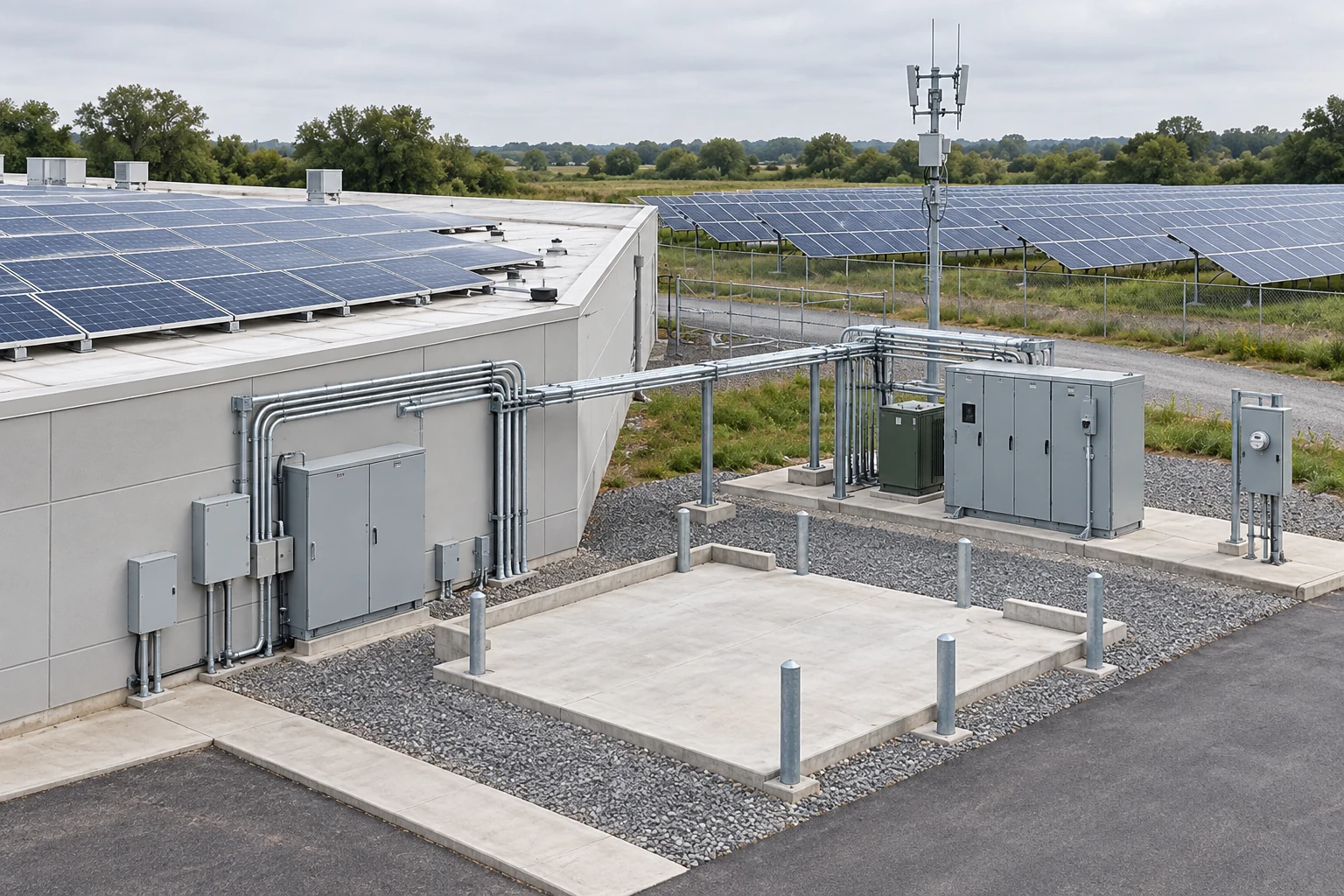
For each jurisdiction, prepare a compliance register with the approving authority, required study, document owner, submission date, dependency, and closure evidence. The register should cover electrical permits, fire review, environmental conditions, telecom permissions, cybersecurity rules, import requirements, and grid-connection studies. The company's project cases may help generate due-diligence questions, but verified site references and client-approved evidence should govern acceptance.

Use Stage Gates From Data Room to Handover
A repeatable process reduces late design churn. Gate one confirms load, service, survey, and grid data. Gate two approves the design basis, commercial assumptions, and interfaces. Gate three closes safety studies, permits, drawings, and factory-test procedure. Gate four witnesses tests and shipping records. Gate five completes installation checks, site acceptance, training, and the as-built data room. The same-site news archive can provide additional project questions, while controlled acceptance records remain the governing evidence.
A strong evidence chain links every commercial promise to a design input, a controlled document, a witnessed test, and an accountable owner.
Frequently Asked Questions
What data should be provided before a supplier sizes the system?
Provide interval load data, critical-load priorities, renewable generation data, tariff or dispatch rules, site conditions, grid parameters, one-line information, growth assumptions, required autonomy, operating modes, and reliability targets. Identify data gaps and define conservative assumptions for each gap.
How should usable capacity be compared?
Compare usable AC energy at defined beginning-of-life and end-of-life conditions, including state-of-charge window, conversion losses, auxiliaries, temperature derating, availability reserve, degradation, and required discharge power. Keep all bidders on the same duty cycle and measurement boundary.
Which safety documents matter most?
The essential package includes applicable test reports, a configuration traceability statement, hazard analysis, standards matrix, protection philosophy, thermal and fire design basis, emergency response inputs, site layout assumptions, alarm logic, and evidence that local authorities have reviewed the relevant scope.
What belongs in a factory acceptance test?
The test should cover visual and document checks, communications, measurements, control modes, alarms, interlocks, protection interfaces, emergency stops, data logging, loss-of-communications behavior, auxiliary systems, and agreed performance points. Results should identify instruments, tolerances, deviations, and retest status.
How can service proposals be compared fairly?
Normalize response time, geographic coverage, remote monitoring, preventive maintenance, software access, spare holdings, technician qualifications, travel exclusions, escalation process, uptime commitment, reporting, warranty administration, and support duration. Confirm which organization carries each obligation.
Close the Decision With Traceable Evidence
The practical conclusion is simple: battery energy storage solutions become comparable only when the project team controls the assumptions, document set, interfaces, acceptance tests, and lifecycle responsibilities. A disciplined shortlist does not reward the longest feature list. It rewards the bidder that can connect performance, safety, delivery, and service claims to evidence that survives design review and site testing.
For a project-specific technical discussion, share the interval load profile, one-line diagram, site conditions, required operating modes, and target commissioning date through the contact page; those inputs allow the engineering team to respond with a bounded architecture, clarification list, and evidence register instead of an unqualified catalogue selection.
 How Should Battery Energy Power Solutions Balance Power And Duration?
  Address: A401, Junxu Junchuang Park, 03A Qingyi Road, Nanhai District, Foshan City, Guangdong Province, China





