



 Home
Home
How Should Battery Energy Power Solutions Balance Power And Duration?
Choosing battery energy power solutions starts with separating the power a load needs from the energy required to sustain it. A large energy figure cannot compensate for inadequate output power, and a high power rating does not establish a long operating time. A useful selection process therefore begins with a time-based duty, then checks the battery, conversion equipment, controls, and operating limits against that duty.
Translate The Load Into Two Separate Requirements
Power Describes The Rate Of Delivery
Power, expressed in kilowatts, describes the rate at which energy must reach the load. Start with the loads that must operate together, including short starting events where relevant. A daily average can conceal a brief demand that exceeds the available conversion power. Record the magnitude, duration, and frequency of those events so the equipment assessment can distinguish continuous duty from a temporary overload requirement.
The site's power conversion and control range is a separate part of this review. Battery capacity alone does not establish the converter's output capability, supported operating mode, or transient response. Those characteristics need confirmation for the selected configuration and electrical interface.
Energy Describes The Accumulated Duty
Energy, expressed in kilowatt-hours, accumulates as power is delivered over time. For a constant illustrative load of 100 kW operating for four hours, the delivered energy requirement is 400 kWh before adding any project-specific allowance. This is an arithmetic example, not a design recommendation. For a changing load, calculate each time interval and add the results rather than multiplying the highest observed power by an arbitrary day length.
The DOE's storage overview distinguishes these two ratings, while EIA describes discharge duration through the relationship between energy and power. The useful application is to put both requirements in the same project brief. Specify the required delivery point as well: energy measured at battery terminals and energy delivered on the AC side are different boundaries.
Read A Cabinet Specification Without Turning It Into A Guarantee
Use Published Ratings As A Starting Point
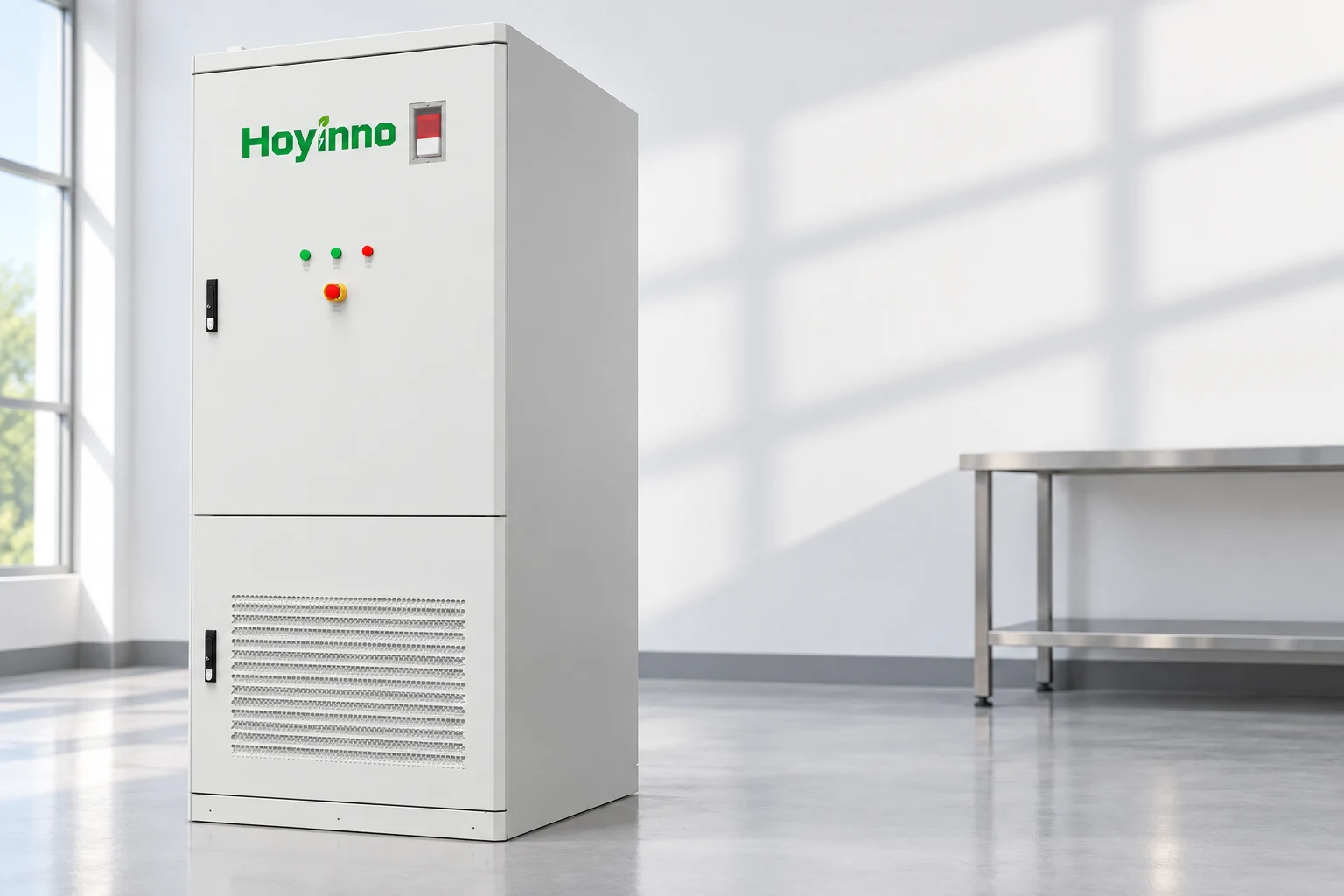
The published 233 kWh liquid-cooled cabinet specification lists VES233, 105 kW rated power, and 233 kWh system capacity. It also describes integrated EMS and PCS functions. Dividing the stated capacity by the stated power gives approximately 2.22 hours. That ratio is an ideal nameplate comparison; it does not establish delivered runtime after operating reserves, losses, auxiliary consumption, or capacity changes with age.
The same page lists a 400 VAC, 50 Hz interface and LFP cells. These are published product data, not confirmation that every offered configuration fits every project. A current technical schedule should reconcile the selected model, converter, control mode, and site interface. Check those details before comparing this cabinet with another item in the modular storage range.
Identify What The Product Image Cannot Establish
A gallery view can help identify the enclosure and visible controls. It cannot confirm the installed cell capacity, software permissions, protection settings, or available output at a particular temperature. Related cabinet variants may also use similar enclosures. Match the quoted configuration to its technical records rather than inferring a rating from a photograph or the physical size of the cabinet.
Convert Nominal Capacity Into A Defined Delivery Commitment
State The Energy Boundary And Reserve Policy
Usable energy must be defined at a named boundary and under stated conditions. Ask whether a quoted value refers to stored DC energy, battery discharge, or net AC delivery after system consumption. Confirm the starting and ending state of charge, temperature, discharge rate, and any reserve held for another duty. An emergency reserve cannot simultaneously be counted as energy available for routine shifting.
Do not apply a percentage loss twice. A system-level usable-energy figure may already include certain limits or conversion effects, while a nominal cell-energy figure may include none of them. A transparent calculation shows each adjustment once and identifies its source. Missing information should remain an open assumption instead of being replaced with an optimistic default.
Check The Required Performance At The Relevant Age
A selection can meet the initial duty but miss the same duty later if its retained capacity is not considered. Define the performance point that matters: commissioning, an agreed operating year, or an end-of-warranty condition. Ask how the expected cycling pattern, temperature exposure, and operating window relate to that point. A cycle-life headline alone does not define the energy guaranteed at the site's delivery boundary.
For battery energy power solutions, this distinction changes the comparison between adding energy capacity and changing the operating schedule. The project may tolerate a shorter dispatch window later, or it may require the original duration throughout the evaluation period. Make that requirement explicit before treating two nameplate capacities as equivalent.
Follow The Whole Operating Day
Build A Load Profile With Meaningful Time Resolution
A load profile should capture the events that drive the chosen use case. For energy shifting, interval demand and available generation may be sufficient to describe the daily pattern. For motor starts or a transition between sources, faster observations may be needed. Mark missing measurements, unusual shutdowns, and seasonal operating changes so a convenient sample week is not mistaken for a representative year.
Separate essential loads from loads that can be delayed or disconnected. This can change both the required output and the energy duty, but the permitted load sequence needs agreement. A storage system should not be credited with serving the entire facility when its intended operation supports only a selected circuit group. The site's analysis service scope can help structure the data discussion.
Include Recharging And Conflicting Dispatch Priorities
Discharge duration is only half of a repeated operating cycle. The system must recover enough energy before the next required event, within the available charging power and time. If solar production is expected to recharge it, consider the sequence of cloudy days and the energy still needed by local loads. If the grid provides charging, account for the actual permitted import window and connection limit.
The energy management system overview provides a starting point for discussing priorities. For example, preserving backup reserve and maximizing daily discharge can compete for the same stored energy. Define which objective takes precedence and what the controller should do when the forecast or measured conditions differ from the plan.

Compare Configurations At A Consistent Boundary
A comparison table should expose assumptions that a single capacity figure hides. Use the same load case, delivery point, starting conditions, and performance period for each configuration. The questions below distinguish selection inputs from acceptance evidence without assigning a universal size or runtime to an unfamiliar site.
| Selection Dimension | Project Input | Supplier Evidence | Comparison Trap |
|---|---|---|---|
| Continuous power | Coincident required load and operating mode | Rated output under the stated conditions | Using daily average demand as peak duty |
| Short demand events | Magnitude, duration, and recurrence | Supported response for the exact configuration | Assuming every power rating includes overload capability |
| Delivered energy | Required duty over time at the AC boundary | Usable energy with reserve and losses defined | Comparing nominal DC capacity with net AC delivery |
| Replenishment | Charging source, power limit, and available hours | Charging limits and controller behavior | Assuming the battery begins every event fully charged |
| Later-life duty | Required performance period and cycling pattern | Applicable retention and warranty conditions | Treating a cycle count as a runtime guarantee |
| Expansion | Future load and connection constraints | Supported parallel arrangement and integration scope | Assuming another cabinet automatically adds usable output |
Where a larger duty suggests comparing cabinets with the containerized storage range, repeat the same boundary checks. A larger enclosure can change installation and integration requirements as well as energy capacity. Confirm the actual configuration before multiplying brochure ratings or assuming that every unit can operate together in the required mode.
Turn The Selected Duty Into Acceptance Conditions
The selection record should lead to observable acceptance conditions. Define the test boundary, starting charge, ambient conditions, load sequence, duration, permitted reserve, and the records to retain. Identify which checks are completed before dispatch and which require the installed system. A factory inspection can confirm an agreed configuration or a documented test result; it cannot reproduce every condition of the final site.
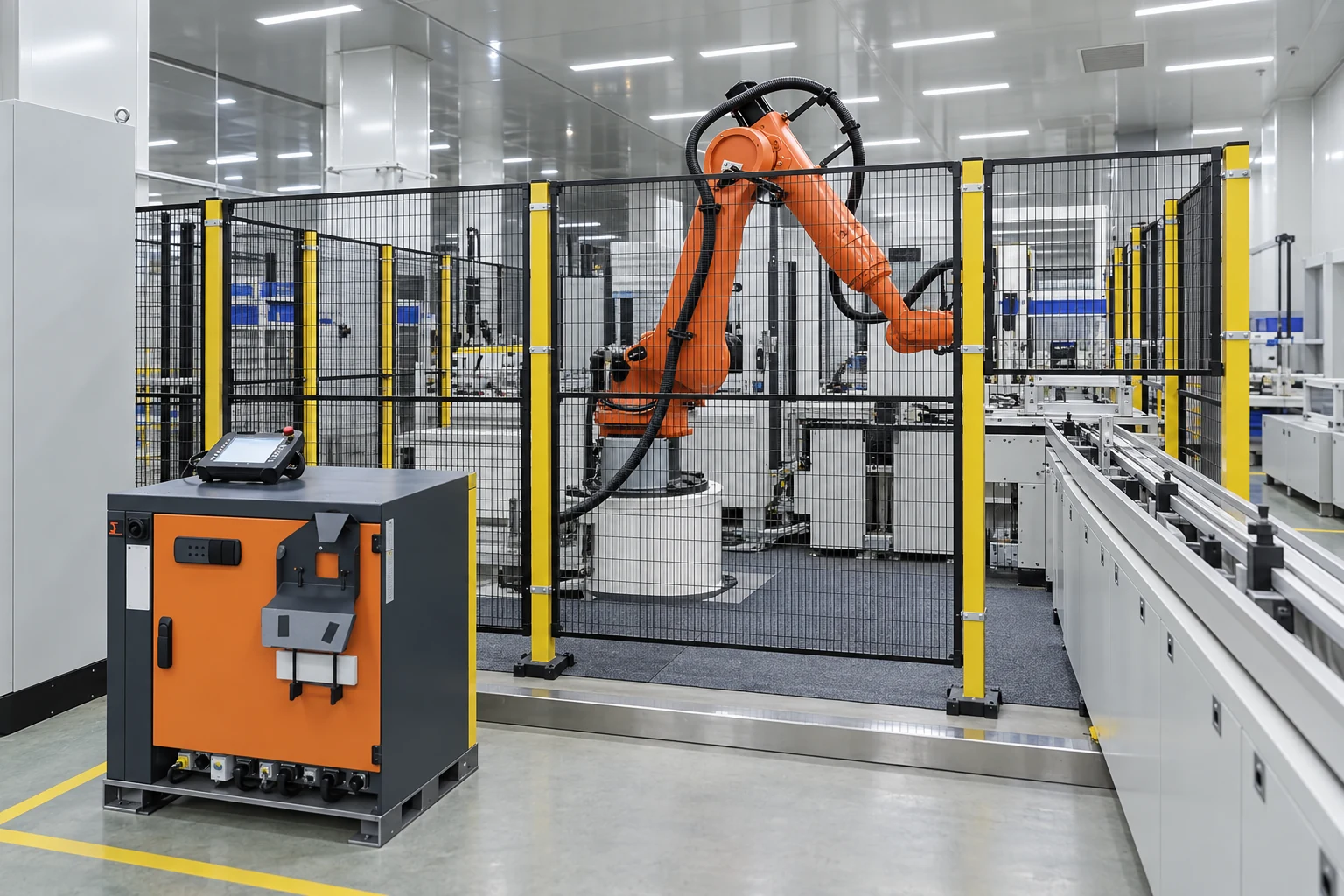
The site's engineering service description is relevant to defining that boundary. Installation design, protection coordination, operating modes, and commissioning responsibilities should be resolved for the actual project by the responsible technical team. An integrated cabinet still requires a compatible site interface; a product description alone cannot establish that compatibility.

Frequently Asked Questions
Does A 233 kWh Rating Mean A Fixed Number Of Backup Hours?
No. Runtime depends on delivered load, the agreed usable capacity, reserves, system consumption, operating limits, and starting conditions. Dividing nominal energy by rated power gives a comparison ratio, not a guaranteed backup duration for an arbitrary load.
Can More Energy Capacity Solve An Output-Power Shortfall?
Only if the resulting configuration also supports the required power through its cells, conversion equipment, controls, and connection. Additional stored energy by itself does not establish a higher output rating. Ask for the capability of the complete proposed arrangement.
Why Must Charging Time Be Included In Selection?
A repeated duty depends on replenishment between events. A system that serves one event may be undercharged for the next if the available source, permitted import, or charging window is insufficient. Evaluate a sequence of operation, not only a single discharge.
Can A Cabinet Photograph Confirm Which Variant Is Offered?
It can help with visual identification, but similar enclosures may support different configurations. Confirm the model and technical schedule in the offer. Use drawings and records for dimensions, installed components, and ratings rather than deriving them from an editorial image.
What Makes Two Storage Offers Directly Comparable?
They should address the same load sequence, power requirement, delivery boundary, energy reserve, performance period, and acceptance conditions. Differences should be visible in the assumptions, so a lower stated capacity or price can be interpreted in its actual scope.
Well-defined battery energy power solutions match a measured duty with a documented operating envelope. The decisive comparison is between what the load requires and what the complete configuration commits to deliver, including the time available to restore its charge. That relationship makes power, capacity, duration, and control choices part of one coherent selection.
 Commercial Energy Storage Solutions Need An Agreed Dispatch Priority
  Address: A401, Junxu Junchuang Park, 03A Qingyi Road, Nanhai District, Foshan City, Guangdong Province, China





