



 Home
Home
Battery Storage Solutions Depend On A Clearly Defined Delivery Boundary
Comparable battery storage solutions define what is delivered, where performance is measured and who makes the complete installation work. A container specification answers only part of that question. The selection decision also depends on conversion equipment, controls, site infrastructure and operating responsibilities. Without a common scope, a lower equipment price may simply describe a smaller share of the finished project.
Draw The Boundary Around The Offered System
The delivery boundary should identify both physical equipment and the work required to connect it. A battery enclosure, an integrated storage package and an operational plant can have similar marketing descriptions while leaving different tasks to the purchaser. Start the comparison with an annotated single-line diagram and a responsibility schedule. Every connection crossing the proposed scope should have an owner and a defined interface.
Distinguish A Battery Container From An Operating Plant
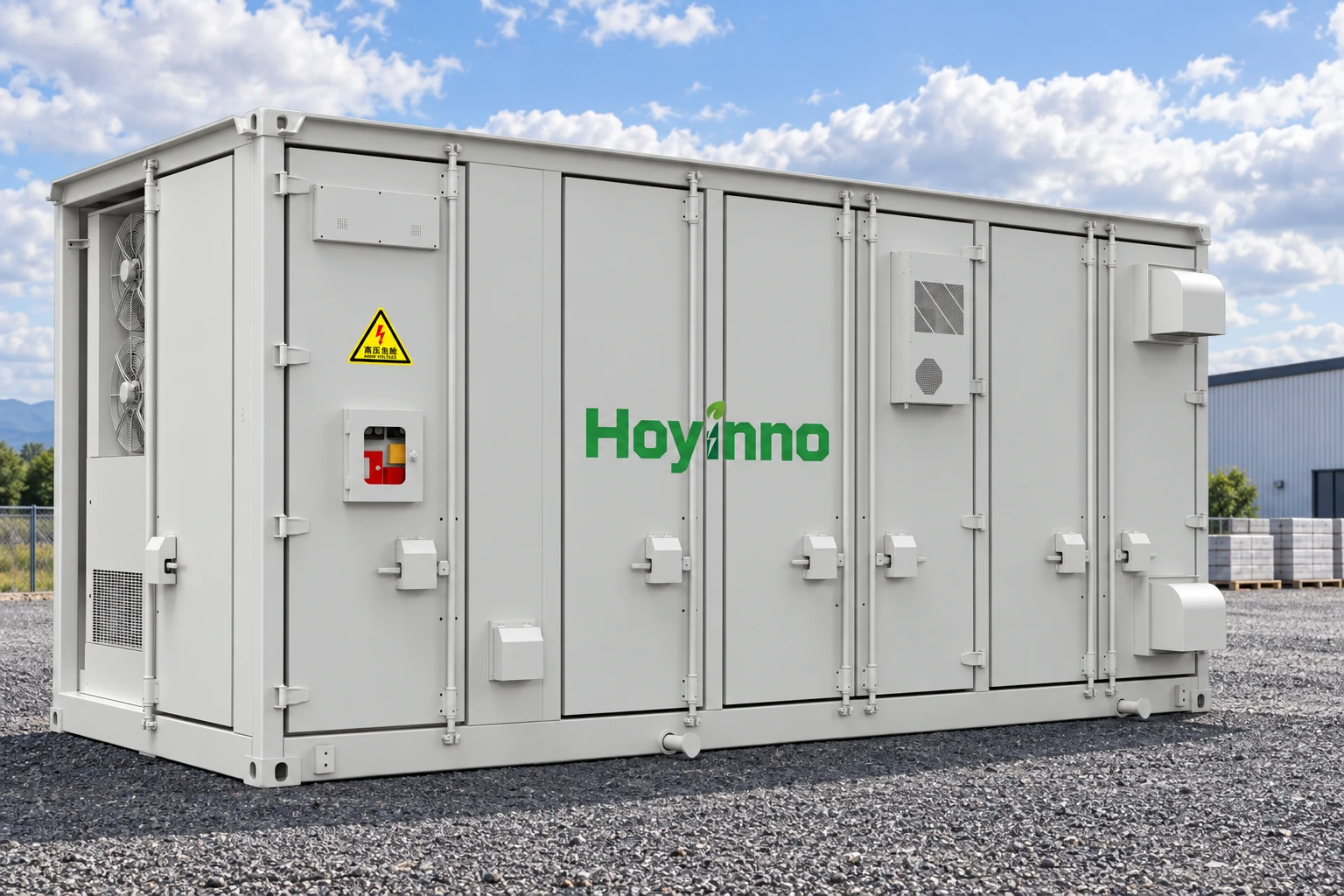
A container photograph cannot establish whether power conversion, transformers, switchgear, communications or external auxiliary supplies are included. Ask for the offered equipment list and the drawing revision to which the price applies. Mark supplied, installed, commissioned and excluded items separately. This makes a factory-built package comparable with a proposal that also includes local construction and connection work.
Hoyinno's 5.016 MWh utility-scale product page lists nominal energy and power parameters for a containerized offering. Those published values help identify a product family; they do not establish net output at a particular grid connection or the contents of a project contract. Confirm the exact configuration and approved drawings before adopting the page values as guaranteed performance.
Separate Equipment Supply From Integration Work
Integration responsibility should cover the gaps between packages. Transport to site, unloading, foundations, cable installation, protection coordination and communication setup may be assigned to different parties. Record who supplies information, who checks compatibility and who resolves a failed interface test. An exclusion is manageable when it has a competent owner, an allowance and a completion date. An unnamed exclusion becomes a project uncertainty.
Put Power And Energy At The Same Measurement Point
Compare performance at a named electrical boundary and under the same operating conditions. Cell energy, battery-side energy and exported AC energy describe different quantities. The EIA explains storage duration through the relationship between energy capacity and power. That relationship is useful for screening, but a project offer also needs to define what energy remains available after operating limits, losses and auxiliary demand.
Specify The Conditions Behind The Energy Figure
Usable energy should be stated with its state-of-charge window, discharge rate, temperature conditions and measurement method. Clarify whether the number describes commissioning or a later year of service. Ask how reserves, balancing requirements and unavailable equipment are treated. A value without these conditions cannot support a fair comparison, even if every proposal uses the same unit.
Check Continuous Output And Auxiliary Consumption
Power should identify the measurement point, duration and permitted operating envelope. Clarify whether cooling, controls and other auxiliary loads are included in a net figure or metered separately. The agreed calculation should also state how conversion and transformer losses are handled. A short-duration capability should not be substituted for continuous performance during the entire required service window.
Round-trip efficiency needs an equally clear test boundary. Confirm charging and discharging conditions, the treatment of standby periods and the included equipment. A component efficiency and a complete plant efficiency are not interchangeable. Retain the original supplier value, but label its basis so the comparison does not imply a result that was never offered.
Connect The Proposed Service To Actual Site Conditions
The right configuration follows the site's operating pattern. For behind-the-meter storage, the NREL SAM guidance uses load and dispatch inputs to examine charging and discharge behavior. A solar-rich site and a site with a short evening peak may need different schedules even when their annual electricity consumption is similar. Selection therefore needs time-based operating information as well as equipment parameters.
Use Representative Load And Generation Records
Provide interval demand records, relevant tariff periods, export constraints and available generation data. Include seasonal variation and unusual operating days rather than selecting only a favorable week. Missing data should be identified as an assumption with a proposed sensitivity check. The objective is to see whether the candidate arrangement can perform its intended service across realistic conditions.
Hoyinno's commercial and industrial solution information offers application context, while a project-specific analysis scope should identify the input data and evaluation method. Neither a generic application image nor a service description replaces a model of the actual connected site. Separate modeled results from guaranteed contractual obligations.
Resolve Competing Operating Requirements
Backup reserve, solar shifting and demand management can compete for the same stored energy. State which service has priority when they overlap and what is allowed to change that priority. A comparison becomes more useful when it shows the consequences of holding additional reserve or restricting charging. Avoid counting the same available capacity twice across simultaneous commitments.

Make The Control And Information Interfaces Explicit
A control interface needs an agreed behavior, not simply a protocol name. The purchaser should know which controller issues dispatch commands, which equipment enforces limits and which system records events. Availability of an interface does not by itself establish compatibility with the site's existing software or operating procedures. Integration tests should demonstrate the agreed exchange of commands, measurements and alarms.
Assign Dispatch Authority And Fallback Behavior
The energy management system description is a starting point for discussing supervisory functions. The project schedule should then identify command priority, local operating authority, permitted remote access and expected behavior after a communication loss. These decisions belong in the approved functional specification, with testing led by the responsible qualified engineering team.
Define Data Access And Change Responsibilities
Specify required measurements, event timestamps, retention periods and access rights. Clarify whether software subscriptions, remote monitoring, updates and exported operating records are part of the initial scope. Hoyinno's engineering service information can frame the interface discussion, but the final responsibility matrix should name the parties accountable for each deliverable and subsequent change.

Compare Offers With A Shared Scope Schedule
A useful schedule keeps the requirement, offered value and unresolved difference in separate columns. Comparing battery storage solutions this way preserves supplier-specific information while exposing assumptions that affect the complete project. The following structure is a review aid; it is not a specification for every installation. Add project requirements where they change the selection or leave a material responsibility unresolved.
| Comparison item | Common basis to record | Evidence or unresolved question |
|---|---|---|
| Included equipment | Drawing revision and itemized package scope | Identify conversion, transformer and auxiliary exclusions |
| Usable energy | Measurement point, operating window and service year | Reconcile reserved capacity and stated test conditions |
| Power capability | Continuous output and environmental assumptions | Separate short-duration capability from required sustained service |
| Controls and data | Command ownership, interface behavior and access rights | Agree integration tests and software obligations |
| Installation scope | Delivery boundary and named construction responsibilities | Price and schedule work excluded from equipment supply |
| Acceptance and support | Witnessed criteria, handover records and service responsibility | Distinguish verified results from future commitments |
Do not silently normalize a supplier's uncertain value into a guaranteed requirement. Mark it as unconfirmed and explain whether it affects configuration, price or the operating case. A narrower but well-defined offer may be easier to integrate than a broadly described package with no clear interface ownership. The decision should reflect the remaining work and the evidence needed to close it.
Connect Acceptance Evidence With Long-Term Operation
Factory readiness and site acceptance answer different questions. A factory test can confirm agreed package functions before shipment, while the completed site must also demonstrate its actual connections and integrated behavior. Define both milestones before placing the order. Each should identify the test scope, witness, acceptance criteria, exception process and records required for release or handover.
A factory result should be traceable to the shipped configuration and approved software revision. After installation, the responsible team should resolve transport damage, connection changes and outstanding interface issues before treating the plant as ready. Demonstrating an isolated component at the factory is useful evidence, but it cannot verify external equipment that was absent from the test arrangement.

Operations also require named responsibilities. The operation and maintenance service scope should be reconciled with the offer's response arrangements, spare-parts access, monitoring obligations and warranty conditions. Record how operating data will be retained and who decides whether a reported issue needs inspection. A support promise becomes useful when its service boundary is as clear as the equipment boundary.
Frequently Asked Questions
Does A Container Capacity Define The Whole Project?
No. It identifies an equipment parameter under stated conditions. Complete project scope also includes conversion, connection, controls and installation responsibilities. The offered drawings and itemized schedule establish which parts are included.
Why Can Equal Nominal Capacities Produce Different Comparisons?
Different operating windows, reserves and measurement points can change the energy available for the intended service. Compare the conditions behind the values before treating equal nameplate numbers as equivalent project performance.
Is An EMS Protocol Enough To Establish Compatibility?
No. Command meaning, data mapping, permissions, timing and fallback behavior must also agree. A documented interface and an appropriate integration demonstration provide stronger evidence than a shared protocol name alone.
Can Factory Testing Replace Site Acceptance?
No. Factory testing covers its agreed arrangement; the final installation adds site connections and external interfaces. The acceptance plan should identify what is demonstrated at each location and how outstanding issues are resolved.
What Is The Most Useful Selection Output?
A resolved scope schedule links the intended service to equipment, measurements, interface owners and acceptance evidence. Battery storage solutions become meaningfully comparable when these boundaries are consistent and remaining assumptions are visible.
 Which Site Constraints Can Exclude A Battery Energy Storage Solution?
  Address: A401, Junxu Junchuang Park, 03A Qingyi Road, Nanhai District, Foshan City, Guangdong Province, China





