



 Home
Home
Which Site Constraints Can Exclude A Battery Energy Storage Solution?
A battery energy storage solution can be excluded by site constraints before its nominal capacity becomes relevant. The first selection task is to establish whether equipment can be delivered, positioned, maintained and approved at the proposed location. This article explains a preliminary screening method; equipment manuals, qualified project engineers and the relevant local authorities determine the final design.
Screen The Whole Location Before Selecting An Enclosure
The usable project area is larger than the rectangle occupied by a battery enclosure. It also includes the space needed for associated equipment, access, cable routes, maintenance and the conditions imposed by the approved project design. A layout that fits a catalogue outline may still leave no workable way to operate or service the system.
Distinguish Equipment Footprint From Working Space
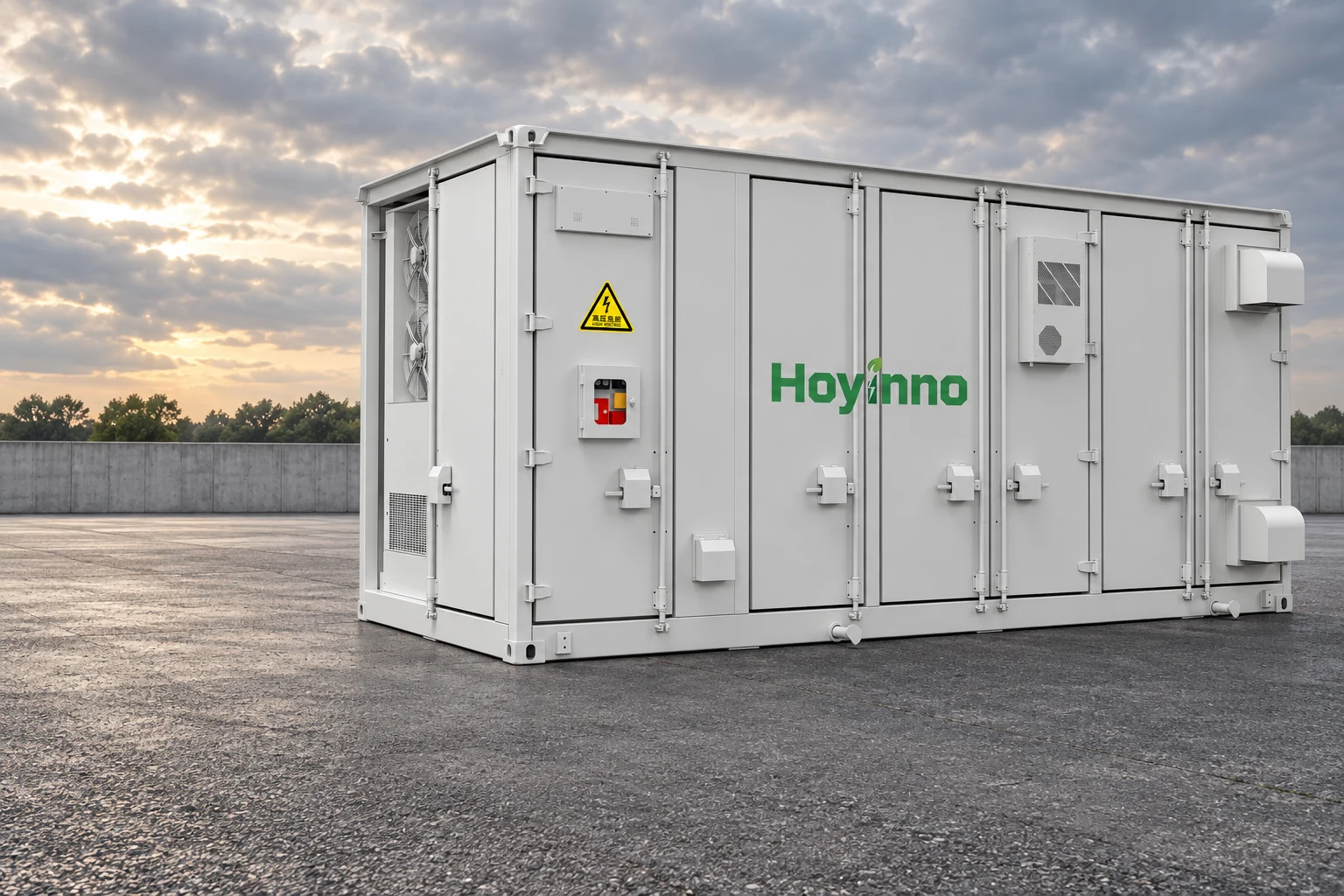
The footprint describes the enclosure itself. Working space depends on its doors, cooling arrangement, service procedure and surrounding equipment. Those requirements should come from the proposed configuration's installation and maintenance documentation. A sales image can help identify an equipment format, but perspective and a clean background make it unsuitable for measuring clearances.
The Hoyinno BESS catalogue contains both cabinet and container formats. The 5.016 MWh container product page is one example of a containerized format with declared nominal parameters. Its presence in the catalogue does not establish that this configuration fits a particular site or includes every project interface.
Identify Restrictions That Cannot Be Solved By A Smaller Cabinet
Some constraints affect the entire project rather than the chosen enclosure. A proposed use may need approval, the connection point may be unavailable, or the property may lack a workable access route. These issues should be identified before comparing nominal capacity. Reducing equipment size can help a geometric problem but cannot automatically resolve an unsuitable location or an unapproved connection.
Trace The Delivery Route All The Way To The Final Position
Delivery feasibility includes the route inside the property, the unloading operation and the final placement. A vehicle reaching the main gate does not establish that the equipment can reach its foundation. The route should be assessed against the actual transport arrangement, equipment mass and lifting requirements.
Check The Most Restrictive Part Of The Route
A narrow turn, overhead obstruction, weak surface or limited unloading area can govern the entire delivery plan. The assessment should use a current site survey and the proposed transport dimensions rather than approximate dimensions taken from a photograph. Where access depends on temporary works, identify who will design, approve and restore them.
Keep Service Access In The Long-Term Layout
Initial installation may be possible through an empty yard that later becomes occupied by other structures. Long-term service access requires a credible route for maintenance and eventual component or enclosure replacement. The relevant handling requirements may differ from initial delivery, particularly where the finished installation contains fences, transformers or other fixed equipment.
Match The Environmental Envelope To The Actual Exposure
A stated operating range is a boundary to investigate, not a promise of identical performance everywhere inside it. Heat, dust, moisture and other local conditions can influence cooling, maintenance and the suitability of the specified configuration. The project needs a site-specific review of the proposed operating envelope.
Ask What Performance Applies Under The Local Conditions
Temperature figures should be linked to the applicable operating mode and any conditions affecting power or energy delivery. Ambient temperature alone does not describe solar exposure, ventilation around equipment or the condition of cooling air. The comparison should identify the manufacturer's documented limits and any additional provisions needed at the proposed location.
Dust, salt exposure, humidity and altitude should be described factually from the site assessment. A generic outdoor rating should not be treated as proof of suitability for every combination of those conditions. If the offered model changes because of exposure, the updated proposal should identify the resulting equipment, maintenance and performance assumptions.
Treat Drainage And Ground Conditions As Early Inputs
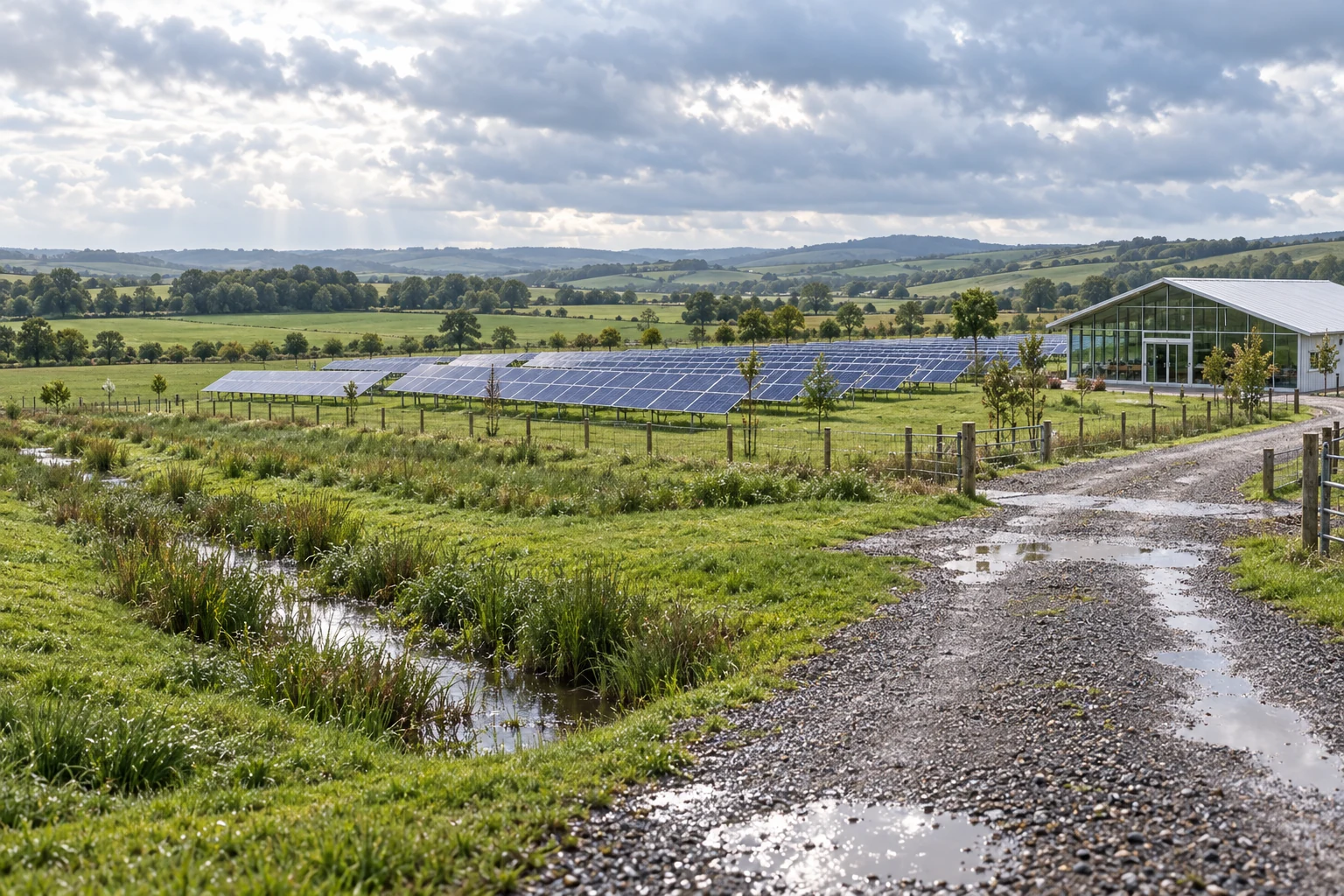
A dry site visit may not reveal how water moves during severe weather. The civil assessment should consider the applicable flood and drainage information, ground conditions and the proposed foundation concept. Equipment should not be selected on the assumption that a simple pad will resolve every ground or water issue. The appropriate project specialists determine suitable measures.
The commercial and industrial solution overview provides application context, but it cannot replace a survey of a specific yard. Two facilities with similar electricity demand can require different layouts because one has open land and the other has restricted access or more demanding exposure. Selection should preserve these differences rather than force both projects into the same package.
Resolve Connection And Approval Questions Alongside The Layout
Physical space, electrical interfaces and local approval requirements interact. Relocating the enclosure to gain access space may change the cable route or the relationship to other equipment. The useful comparison is therefore between feasible configurations at the actual site, not between isolated battery enclosures.
| Screening issue | Evidence needed | Possible selection consequence |
|---|---|---|
| Available working area | Current layout and model-specific installation requirements | Revise the equipment format or reject an impractical position. |
| Delivery and replacement route | Surveyed access and specialist transport assessment | Change the delivery arrangement or reconsider the location. |
| Ground and water conditions | Civil and drainage assessment for the proposed area | Revise the foundation concept or exclude unsuitable ground. |
| Environmental exposure | Site conditions and documented equipment limits | Require a supported configuration or a different operating assumption. |
| Electrical interface | Confirmed connection point and engineering review | Revise associated equipment, cable route or connection scope. |
| Local approvals | Applicable requirements and the responsible authority's review process | Hold selection until the proposed use and layout are acceptable. |
Do Not Infer Connection Readiness From A Capacity Label
A nominal energy figure says little about the existing site's switchgear, protection arrangements or permitted operation. Those interfaces require qualified electrical review and coordination with the relevant network or facility authority. An enclosure being factory assembled does not make a particular connection arrangement acceptable.
The engineering service page is a starting point for understanding the supplier's stated design support. The project must still define who owns the site survey, interface design and approval submissions. The EMS overview likewise describes control context; a control platform cannot remove a physical access restriction or substitute for the required connection review.

The US Environmental Protection Agency's BESS guidance, checked on September 22, 2026, highlights local siting and permitting as well as coordination with relevant stakeholders and first responders. That general guidance is not a universal setback rule and does not establish the requirements for another jurisdiction. Project-specific fire, electrical, environmental and planning reviews should use the applicable local framework.
Compare Alternatives By The Constraint They Resolve
A battery energy storage solution should move forward only when the important site questions have a supported answer or a clearly assigned route to one. An alternative is valuable when it resolves a real constraint without creating an unacceptable new one. More compact equipment is not automatically the most maintainable choice.
Record Conditions Instead Of Hiding Them In A Score
A comparison can classify a configuration as feasible, conditional or unsuitable for the current location. A conditional option should name the missing evidence, the responsible party and the decision it could change. For example, an option may depend on a civil assessment or a revised delivery route. Those conditions should remain visible beside cost and performance assumptions.
The analysis service overview provides a place to examine the supplier's stated evaluation scope. It does not establish that a particular site has already been assessed. Any comparative analysis should use the same site data and clearly distinguish verified dimensions from estimates that still need a survey.
Consider a hypothetical constrained yard with an adequate open rectangle but no confirmed replacement route. One proposal may occupy less area while placing service doors against an obstruction. Another may require a different location but preserve access. The decision depends on documented working requirements and the site's approved layout, not merely on which enclosure appears smaller in a catalogue.

Carry The Site Assumptions Into The Final Selection Record
The selected configuration should remain tied to the site information that made it feasible. A later change to the yard, equipment model, adjacent structure or connection location can invalidate an earlier comparison. Versioned drawings and an explicit list of open conditions help prevent that change from becoming invisible.
A battery energy storage solution is ready for detailed commitment when its site assumptions are consistent with the proposed configuration and the responsible specialists have resolved the necessary design questions. Capacity and commercial terms still matter, but they should be compared among options that have a credible path to installation and long-term service.
Frequently Asked Questions
Can A Product Photograph Be Used To Plan Door Clearance?
No. Perspective, framing and illustrative surroundings make photographs unsuitable for dimensional planning. The layout should use current model-specific drawings and the manufacturer's installation and maintenance requirements.
Does An Outdoor Enclosure Rating Resolve Flood Risk?
No. An enclosure rating and the site's flood or drainage conditions address different questions. The equipment specification must be considered together with a qualified civil assessment of the actual location.
Is A Smaller Battery Cabinet Always Easier To Install?
No. A smaller footprint may help one constraint while leaving delivery, working space, associated equipment or local approval issues unresolved. The complete configuration and access arrangement need comparison.
Should Site Screening Wait Until After A Model Is Ordered?
No. Early screening can identify restrictions that affect the format, location or feasibility of the project. Detailed engineering then resolves the requirements for the shortlisted configuration before installation commitments are finalized.
Can Factory Testing Replace Site Approval?
No. Factory checks concern the equipment and the agreed test scope. Site approval and installation review concern the equipment's placement, interfaces and local conditions, which require separate evidence.
The most useful next technical step is a documented site constraint review tied to the proposed equipment. It turns broad interest in storage into a smaller set of feasible options while keeping uncertain conditions visible until they are resolved.
 BESS Solutions Need Measurable Acceptance Conditions Before Selection
  Address: A401, Junxu Junchuang Park, 03A Qingyi Road, Nanhai District, Foshan City, Guangdong Province, China





