



 Home
Home
Can Off Grid Power Solutions Coordinate Every Critical Project Decision?
Off grid power solutions work when loads, generation, storage, controls, protection, and operating rules are designed as one system. The test is whether the architecture serves priority loads through resource gaps, outages, maintenance, and future demand. A defensible concept begins with site evidence and ends with measurable operating and acceptance criteria.
Start With the Service the Site Must Deliver
The application defines the system. A clinic protecting refrigeration has a different duty from a mine starting motors or a community supplying evening demand. Before selecting equipment, state what must remain available, for how long, at what power quality, and during which credible outage.
Separate Critical, Deferrable, and Interruptible Loads
Every load needs an operating priority. Critical services may require continuous supply; pumping or charging can move into strong renewable periods; low-priority loads may be shed during a declared contingency. This hierarchy shapes inverter power, storage duration, generator starts, feeders, and controls while protecting the reserve intended for safety or process continuity.
Turn Interval Data Into a Design Basis
Good load profile analysis uses timestamped demand, not monthly bills or nameplate totals. It should capture average load, coincident peaks, motor inrush, seasonal patterns, growth, and critical-service duration. Resource data needs the same time basis. Hoyinno's remote-area solution page describes generation, storage, and smart control as an integrated system; site data must show how they would interact.
Select the Operating Architecture Before Equipment
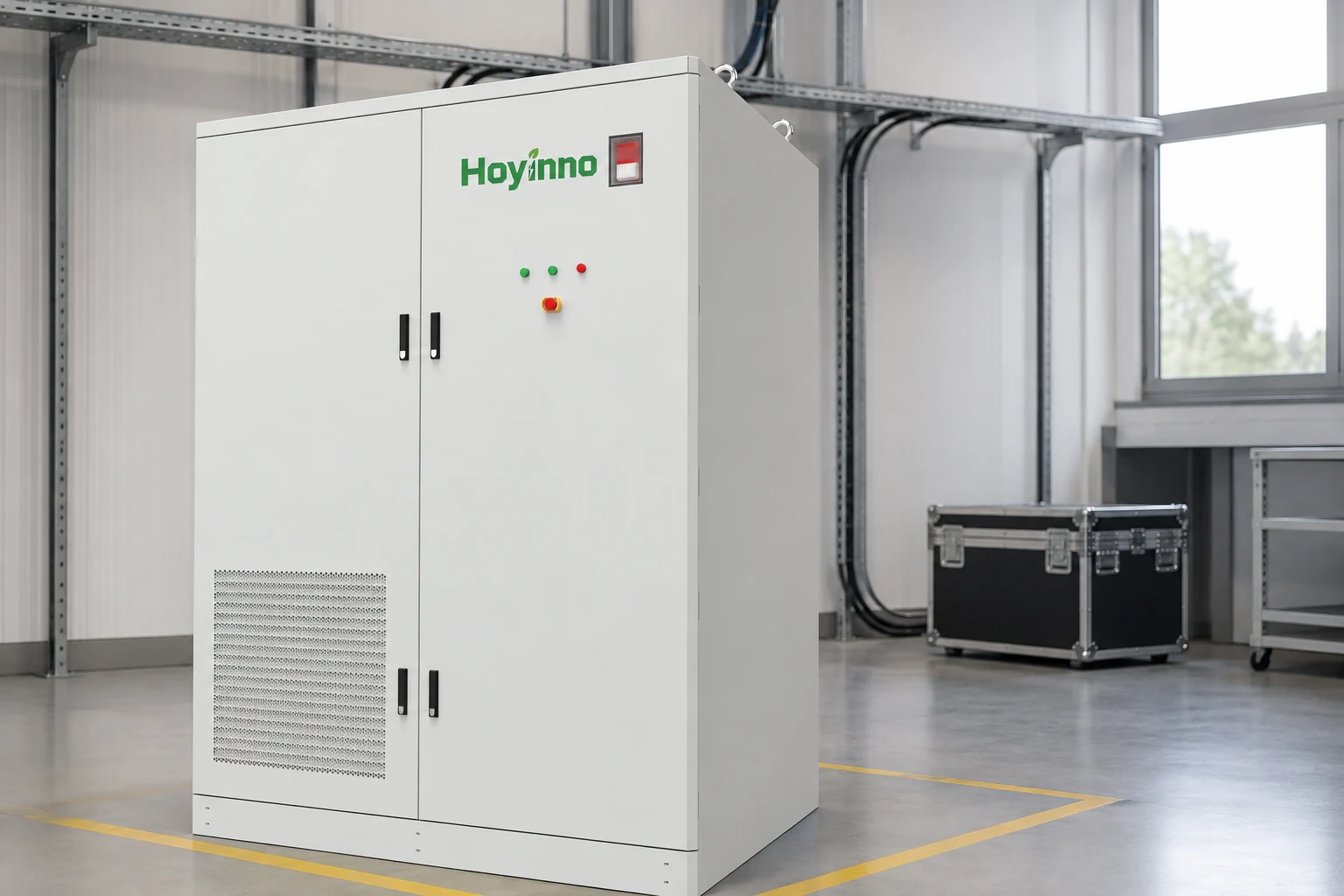
A credible study of off grid power solutions compares architectures before product labels. Options include renewable generation with storage, dispatchable backup, an islandable weak-grid microgrid, or staged expansion. Each should face the same service target, resource record, outage policy, logistics, and cost horizon.
Assign Every Energy Source a Clear Role
Solar and wind are variable, batteries are energy-limited, and generators require fuel. A sound hybrid microgrid design assigns each asset a duty instead of treating capacity as interchangeable. Renewables may carry normal demand, storage may balance and shift energy, and a firm source may cover long resource gaps. The plan should state when each asset charges, starts, stops, curtails, or preserves reserve.
Choose Coupling and Expansion Boundaries Deliberately
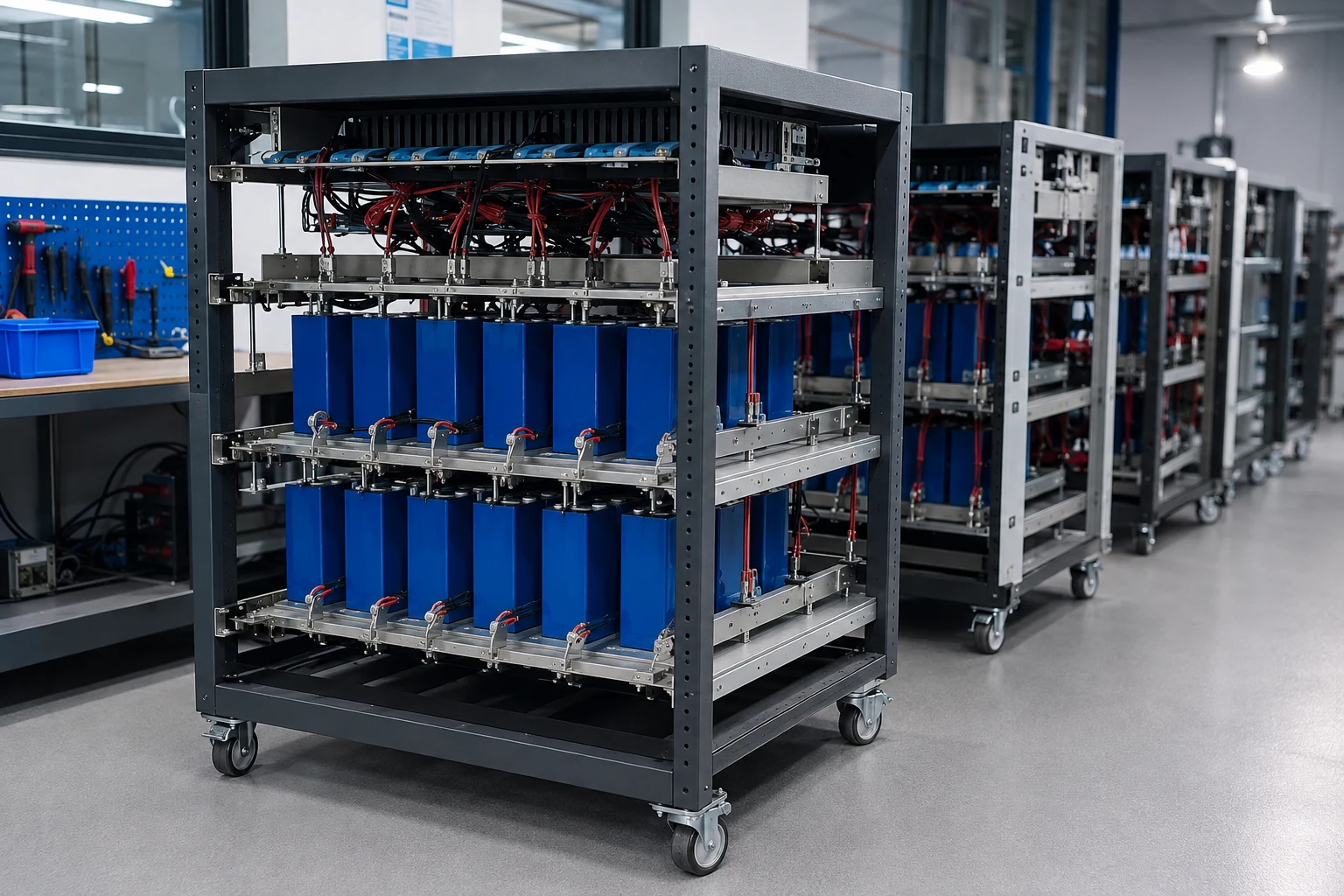
AC-, DC-, and mixed-coupled systems create different conversion paths, fault behavior, and interfaces. Modular storage configurations may support phased expansion; containerized configurations concentrate equipment into transportable blocks. Neither is automatically superior. Voltage, cable routes, civil work, lifting access, redundancy, controls, and expansion downtime decide the fit.
| Architecture | Suitable Context | Decision Evidence |
|---|---|---|
| Renewable plus storage | Managed demand with defined autonomy | Interval loads, resource record, usable energy, degradation, and shedding rules |
| Storage with firm backup | Critical loads exposed to long resource gaps | Contingency duration, start reliability, fuel logistics, noise, and emissions |
| Islandable weak-grid microgrid | An available but unreliable utility | Grid study, switching, synchronization, protection, and utility rules |
| Expandable staged system | Uncertain growth or phased construction | Growth cases, bus ratings, communications, civil allowance, and compatibility |
Size Power and Energy as Separate Requirements
Power determines how much demand can be served now; energy determines how long service continues. Confusing them can produce adequate kilowatt-hours with insufficient inverter power, or high power that exhausts energy too early. Both values need a defined operating case.
Power Must Cover Peaks, Inrush, and Derating
The power path includes converters, transformers, switchgear, cables, and distribution. Check coincident demand, motor starts, step loads, reactive power, environmental derating, and voltage-frequency response. Redundancy changes usable power: an N+1 arrangement may preserve critical service after one unit fails, while a single block creates a common failure.
Usable Energy Must Cover the Stated Autonomy Case
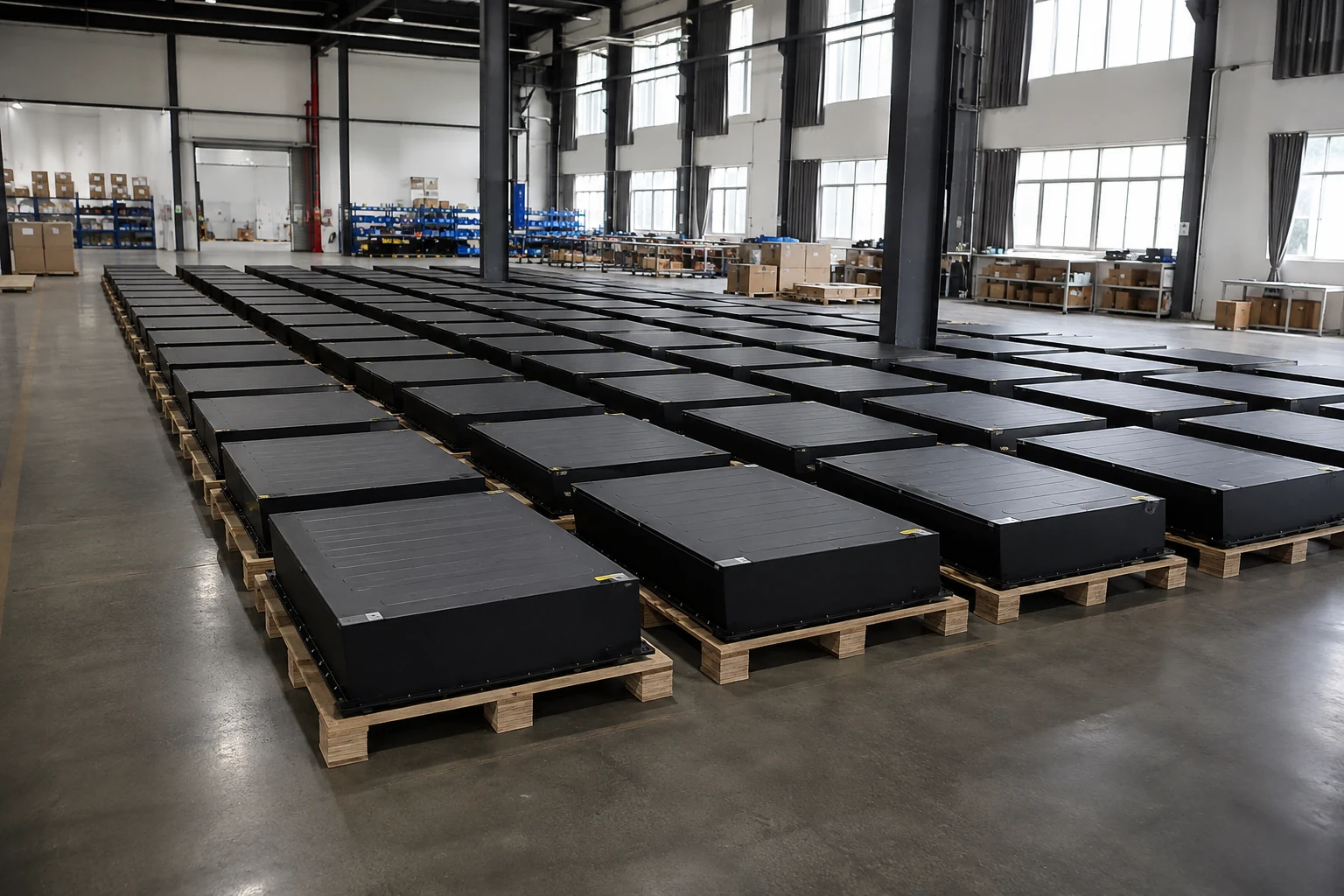
Battery storage sizing starts with load energy, then accounts for state-of-charge limits, losses, auxiliaries, temperature, degradation, and reserve. Nameplate energy is not dispatchable end-of-life energy. Recharge also matters: a battery covering one night can still fail if the next day cannot restore reserve. Poor resources, load growth, and maintenance cases show whether demand management or firm backup is more useful than more cells.
Treat Controls and Protection as Part of Supply
Ratings alone do not create a reliable microgrid. Measurements, priorities, limits, alarms, interlocks, and protection must form one state machine. Because an error can remove the voltage reference, overload a converter, or deplete reserve, controls belong in the acceptance plan.
Write Operating Modes Before Control Code
An energy management system needs modes for renewable service, charging, reserve, backup, shedding, maintenance, black start, and recovery. Every transition needs inputs, thresholds, authority, and a safe fallback. The Hoyinno EMS overview describes PV, storage, PCS, environmental monitoring, automatic strategies, switching, alarms, and black start. The project must still confirm protocols, ownership, cybersecurity, response time, and witnessed tests.
Coordinate Protection With Inverter-Limited Fault Current
Traditional overcurrent assumptions may not fit an inverter-dominated island. Fault current, grounding, neutral treatment, coordination, emergency stops, fire detection, and isolation need an engineering basis. During black start, one source establishes the reference, auxiliaries energize in order, and loads return in steps. Tests should also cover communication loss, sensor failure, and manual recovery.
Design for Climate, Access, and Maintenance
A drawing may overlook heat, humidity, dust, salt, altitude, flooding, poor roads, limited lifting, or slow spares. The survey should distinguish normal and extreme conditions, confirm enclosure and corrosion needs, calculate derating, and preserve drainage, fire access, ventilation, service clearance, and communications.
Apply Product Limits Only to the Model That States Them
The 522 kWh liquid-cooled cabinet page lists 250 kW, 522 kWh, IP54, CAN/RS485/Ethernet/4G, -20°C to 55°C, 0–95% non-condensing humidity, and derating above 3,000 m. These are site-stated limits for that model, not every BESS. The chosen configuration still needs thermal, fire, auxiliary-load, code, service, and site-performance checks.
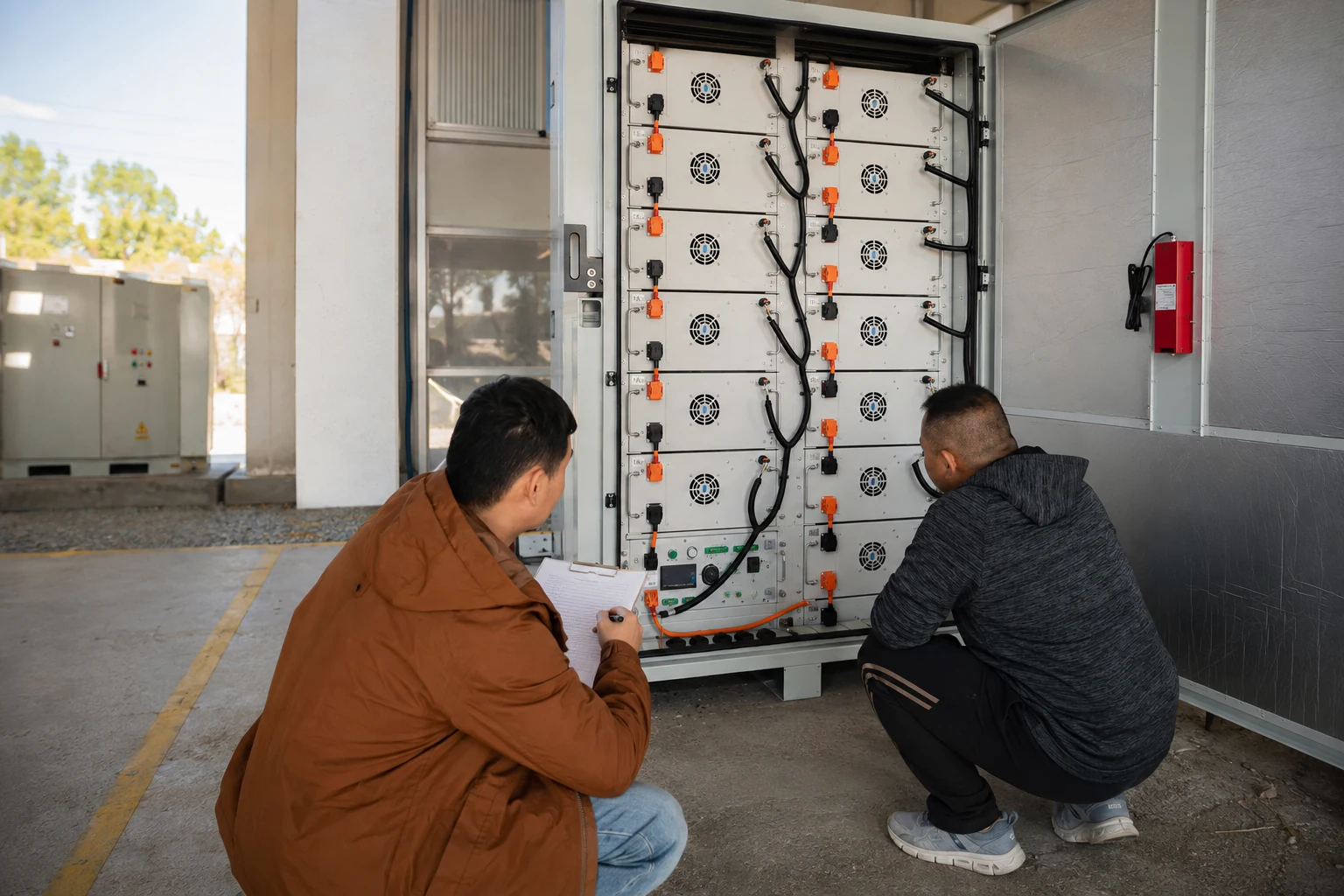
Maintenance planning should identify tasks, personnel, spares, firmware control, isolation, remote-support boundaries, and remaining service during an outage. Accessible modules and documented recovery may be more dependable than higher nominal efficiency with no practical repair path.
Compare Proposals With the Same Evidence
Every bidder should receive the same demand, diagram, site and resource data, growth, autonomy, modes, interfaces, safety duties, and tests. Otherwise, a low price may exclude scope or defer integration risk.
- Link power and usable energy to agreed loads, losses, degradation, auxiliaries, and reserve.
- Schedule interfaces among batteries, PCS, controls, transformers, switchgear, cooling, fire systems, and communications.
- Compare operating states, alarms, protection, recovery, access, training, and spares.
- Separate model-specific evidence from general compliance statements.
- Define factory, site, islanding, black-start, failure, and handover tests with pass/fail criteria.
Hoyinno's project cases remain supplier-authored evidence. One listed hybrid microgrid combines 3.55 MW PV, 2.5 MW/6 MWh ESS, 1 MW diesel, distribution, monitoring, and training. Its ratios should not be copied; the useful point is that sources, storage, operations, and service were connected decisions.
A transparent battery storage sizing workbook should expose inputs, constraints, and sensitivities. Useful outputs include unmet load, state of charge, curtailment, backup operation, reserve breaches, and converter loading. Annual energy balance alone cannot reveal an hourly failure.
Use a Stage-Gated Project Workflow
A stage gate narrows uncertainty before capital is committed and gives technical, commercial, and operational reviewers one decision record.
- Define service: record priorities, interruptions, power quality, autonomy, growth, and contingencies.
- Collect evidence: complete load profile analysis, resource, site, logistics, and any grid review.
- Compare architectures: model storage-backed, dispatchable-hybrid, and islandable cases against one target.
- Develop the concept: issue the diagram, duties, modes, protection, communications, and safety basis.
- Specify comparably: define scope, performance, documents, service, and acceptance before reviewing offers.
- Verify delivery: witness tests, reconcile records, train operators, and prove abnormal modes.
This keeps off grid power solutions tied to required service and exposes owner decisions about shedding, backup, reserve, tolerated failures, remote access, and gate evidence. The company profile may describe experience, but the project record must prove that the architecture and team meet actual requirements.
Frequently Asked Questions
Are off grid power solutions always completely renewable?
No. Some sites use renewable generation and storage alone; critical or seasonal applications may retain a generator, fuel cell, hydro source, or other firm resource. The mix follows service, resource history, shedding, autonomy, logistics, maintenance, and lifecycle cost. “Off grid” describes utility reliance, not one equipment recipe.
How many hours of battery autonomy should be specified?
There is no universal number. Autonomy follows critical-load energy, resource variability, backup availability, reserve, recharge, temperature, losses, and aging. Cases for a normal night, poor-resource days, unavailable backup, and maintenance are more informative than an arbitrary duration.
Does a larger battery automatically make a microgrid resilient?
No. More energy cannot correct inadequate converter power, unstable controls, poor protection, weak communications, a single failure, or an unrealistic recharge plan. Added storage matters only when the model shows which risk it reduces and how reserve is restored.
What should be defined before suppliers quote?
The request should provide interval loads, priorities, resources, site conditions, power and energy duties, autonomy, reserve, modes, voltage, grid interface, protection, communications, fire and environmental needs, expansion, documents, training, and tests. Suppliers can then declare exclusions and offer comparable configurations.
Why specify control requirements separately from hardware?
The same hardware behaves differently under different priorities, transitions, alarms, and failures. A project-specific energy management system description should define signals, authority, reserve protection, shedding, backup starts, black start, communication loss, records, manual control, and recovery. Ratings alone do not prove behavior.
A Verifiable Concept Connects Every Decision
Successful off grid power solutions form a traceable chain from service and measured loads to architecture, power, energy, controls, protection, maintenance, and acceptance. A strong concept exposes limits, assigns interfaces, and explains poor-resource, outage, communication-loss, and recovery behavior. This prevents a larger battery or polished product sheet from being mistaken for a complete system.
 Which Building Blocks Let Off Grid Power Operate Reliably?
  Address: A401, Junxu Junchuang Park, 03A Qingyi Road, Nanhai District, Foshan City, Guangdong Province, China





