



 Home
Home
What Fails When An Off Grid Power Plant Is Sized By Generation Alone?
An off grid power plant needs load evidence, storage, controls, protection, and commissioning—not generation capacity alone. An isolated system must balance changing demand and supply without a larger utility grid to absorb mistakes. Energy shortfalls, motor surges, control conflicts, and maintenance gaps can matter more than headline megawatts. Design should begin with the service the site must receive.
Generation Capacity Does Not Describe the Electrical Duty
A nameplate reports output under stated conditions, not when energy is available, how long it lasts, how quickly it changes, or whether it can start the largest load. Solar, wind, generators, and batteries each have different resource, power, energy, start, and availability limits. The plant must coordinate them against changing demand.
Peak Power and Daily Energy Solve Different Problems
A site can use modest daily energy but impose a difficult peak when a pump, compressor, or mill starts. A flat process load may instead require sustained energy through long low-renewable periods. Calculations should separate kilowatts, kilowatt-hours, ramp rate, starting current, power factor, and allowable interruption. One average number can oversize some assets while leaving critical duty unserved.
An Hourly Profile Is Only the Beginning
Load profile analysis should identify critical and flexible loads, weekday and seasonal patterns, starting sequences, future additions, demand-management options, and data uncertainty. Sub-hourly measurements may be necessary where fast ramps or motor events matter. The analysis should also define the acceptable service level: which loads must remain uninterrupted, which may be shed, how long autonomy is required, and what recovery looks like after an extended outage.
This is why an isolated power system is designed as an operating system rather than a collection of equipment. The power-station solution context can frame the architecture, but project measurements and operating priorities must determine the final duty.
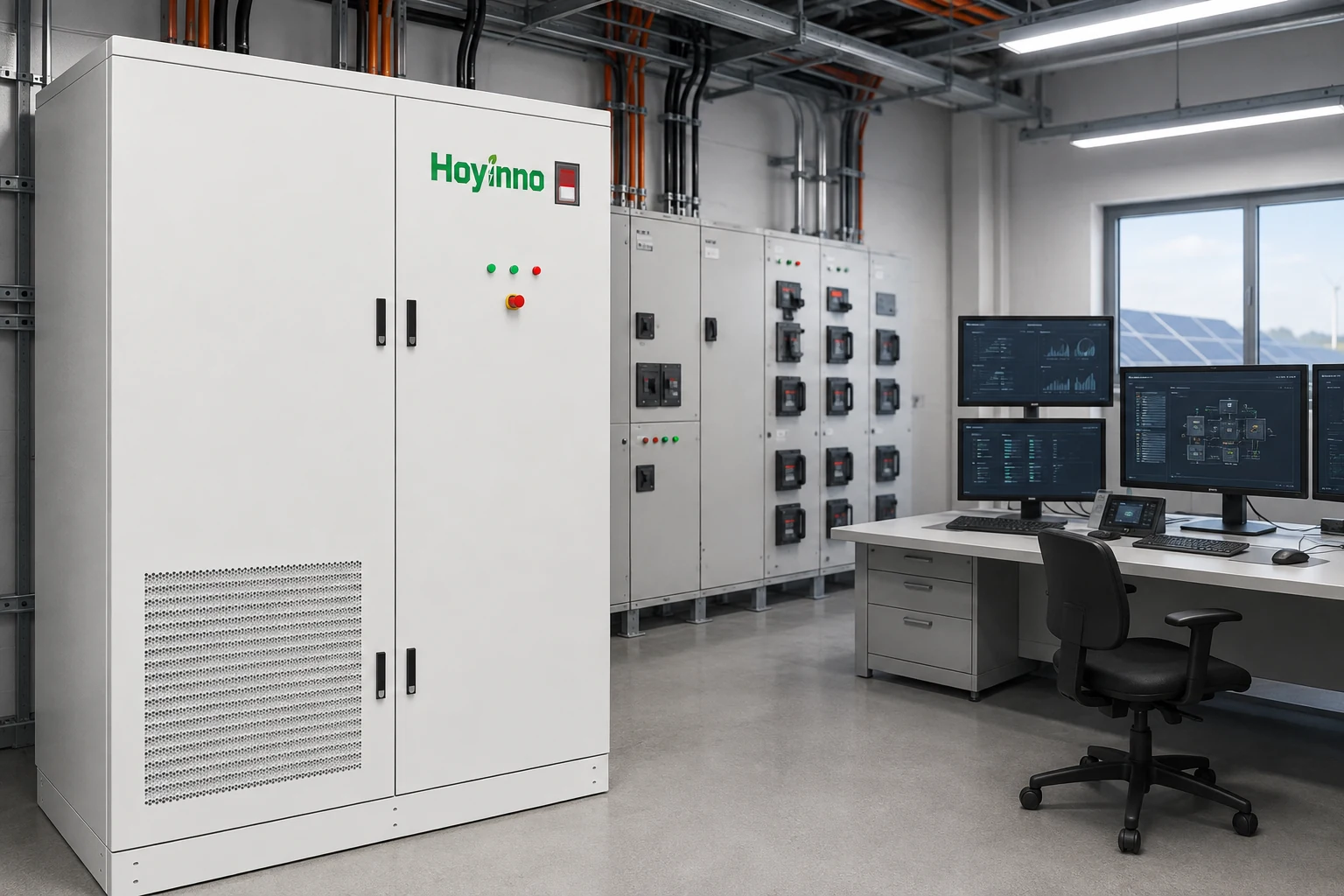
Energy Balance Must Survive the Worst Credible Sequence
Annual renewable yield can look attractive while consecutive low-resource periods create a deficit. Time-series tests should cover an evening peak after weak solar output, a generator outage, a low starting battery state, and seasonal load growth. Weather, degradation, reserve, and uncertainty assumptions should remain visible.
Storage Sizing Needs Both Power and Energy Limits
Battery energy storage may shift renewable output, support frequency and voltage, provide reserve, smooth ramps, or bridge generator starts. Each service imposes a different power-duration requirement. State-of-charge limits, efficiency, temperature, aging, availability, and contingency reserve reduce the usable window; nominal capacity is not always deliverable capacity.
Dispatch Policy Changes the Required Hardware
A controller that preserves reserve for a critical evening load behaves differently from one that maximizes immediate renewable consumption. Generator minimum loading, start limits, spinning reserve, fuel efficiency, curtailment, flexible demand, and battery cycling objectives influence dispatch. The project team should simulate and then document these priorities. Otherwise, a technically capable plant may operate in a way that consumes reserve too early, cycles assets unnecessarily, or creates repeated starts and unstable transitions.
Controls Must Keep Supply and Demand Balanced Every Second
In an off grid power plant, local equipment must establish and regulate voltage and frequency. The architecture needs clear roles for grid-forming resources, synchronization, generator dispatch, renewable curtailment, battery limits, load shedding, black start, alarms, and fallback modes. Interfaces between vendors deserve the same attention as individual components.
Control Modes Need Defined Transitions
A stable mode can still fail during transition to generator support, recovery from low charge, restart after a trip, or feeder reconnection. Each transition needs permissives, timing, setpoint ownership, and failure handling. Integrated renewables and smart energy management still require tested logic for the project’s equipment and duty.

| Design layer | Question to answer | Evidence required | Risk if omitted |
|---|---|---|---|
| Demand | What must run, when, and with what starting duty? | Measured profile, load list, growth cases | Unserved peaks or unnecessary capital |
| Energy | Can the system cross low-resource periods? | Time-series model and sensitivity cases | Autonomy shortfall despite good annual yield |
| Storage | Which power and duration services are needed? | Duty cycles, limits, aging and thermal assumptions | Premature limits or unavailable reserve |
| Controls | Who forms the grid and commands transitions? | Control narrative, cause-and-effect, simulations | Oscillation, trips, or conflicting commands |
| Protection | Can faults be detected and selectively isolated? | Studies, settings, coordination, test records | Wide outages or uncleared faults |
| Operations | Can the local team diagnose and recover? | Procedures, spares, training, support plan | Long outages after ordinary failures |
Protection and Power Quality Change in an Islanded Network
Inverter-dominated systems may supply fault current differently from synchronous machines. Earthing, fault levels, selectivity, breaker capability, ride-through, relay logic, and transfers need coordinated engineering. Harmonics, unbalance, flicker, frequency excursions, and load steps should be checked against actual equipment sensitivity.
Protection Must Match Every Operating Configuration
Fault current and power flow can change when generators are off, storage is grid-forming, a feeder is isolated, or a bypass is active. Studies should test credible configurations and document settings and interlocks. Acceptance testing must prove installed devices, wiring, communications, and settings—not only design files.
System services such as energy management, engineering design, and project integration belong in one coordinated scope. Separating them without an interface owner creates gaps exactly where operating modes interact.
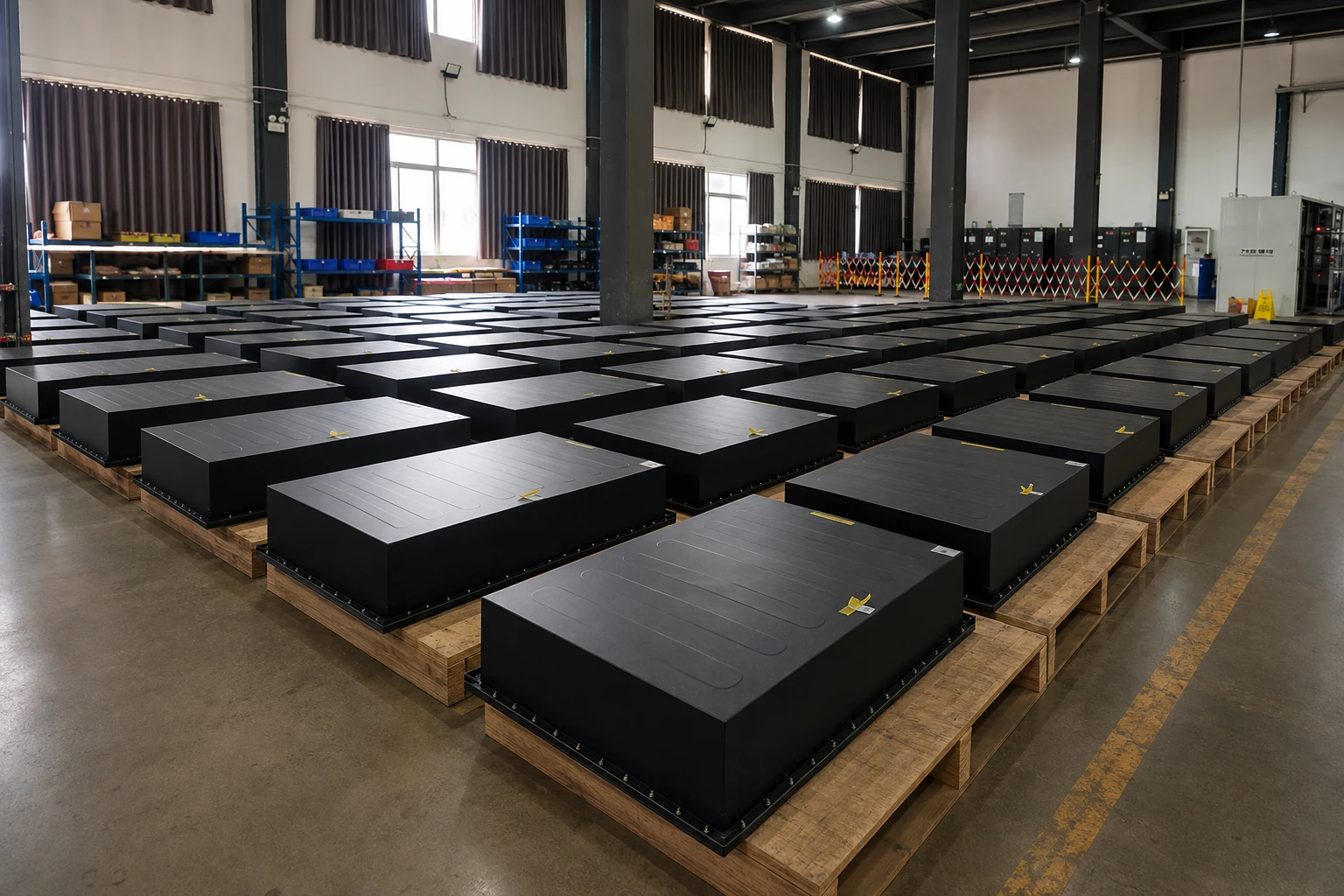
Physical Design Determines Whether Rated Performance Is Available
Temperature, dust, humidity, salt, altitude, flooding, access, and communications influence derating and lifetime. Remote projects may face transport limits, scarce skilled labor, long spares lead times, or uncertain fuel delivery. Enclosures, thermal management, fire strategy, drainage, foundations, cable routes, security, and maintenance access should match the actual site.
Modularity Helps Only When Interfaces Are Standardized
Modules can simplify staged growth, but they do not remove integration work. Ratings, protection, communications, firmware, mechanical interfaces, auxiliary power, cooling, and spares must remain compatible. Growth plans should identify installed and reserved capacity, studies to update, and whether expansion can occur without a prolonged outage.
A battery energy storage system may be delivered as cabinets or containers, yet the operating result also depends on transformers, switchgear, controls, cables, sensors, fire provisions, and site civil work. Photographs can establish product context; they cannot prove suitability for a specific climate, duty, or code environment.
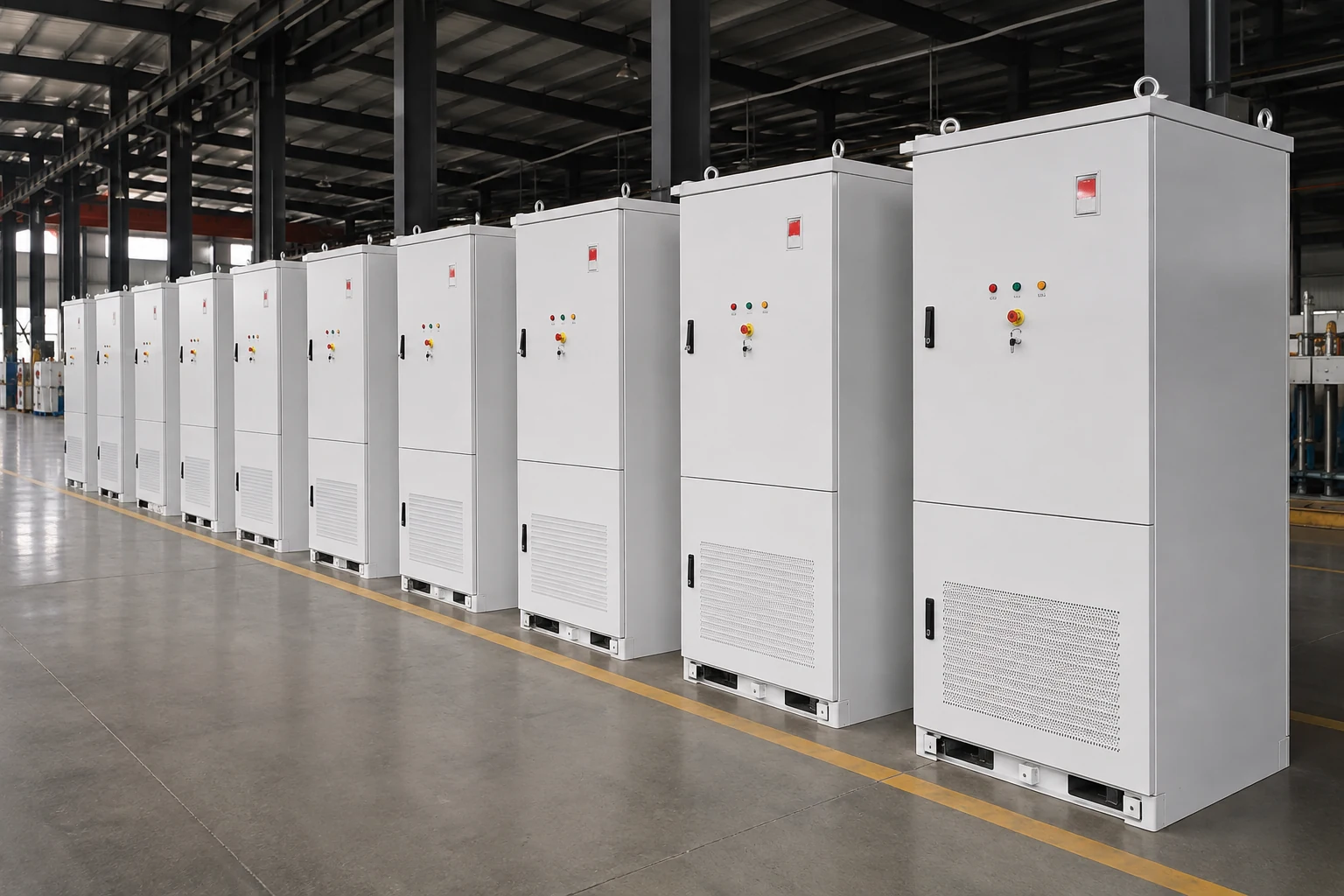
Commissioning Must Prove the Plant as a System
For an off grid power plant, component certificates do not prove installed system behavior. Commissioning should progress from inspection and point checks through subsystem tests, energized transitions, protection injection, load steps, communications loss, alarm verification, black start, and performance demonstrations. Conditions, expected results, observations, deviations, and retests should be recorded.
Test the Uncomfortable Operating Cases
The plan should include credible disturbances: loss of the largest generator, renewable ramp, high starting current, low battery state, failed sensor, communications interruption, feeder fault, and recovery after shutdown. Simulation, factory testing, and field tests can expose unsafe assumptions before operators meet them during an outage.
Operations Decide Whether the Design Remains Reliable
Performance changes as filters clog, batteries age, loads expand, sensors fail, and settings evolve. The operating plan should define inspections, preventive maintenance, health review, alarm response, backup procedures, cybersecurity, configuration control, spares, fuel, and escalation. Remote monitoring still needs dependable communications, access control, and a local response process.
Useful metrics connect outcomes to causes: energy not served, critical-load availability, curtailment, generator starts, fuel, battery throughput, temperature, trips, alarm duration, and recovery time. The industry article library and company homepage can frame questions; the project agreement should specify response times, data ownership, warranty boundaries, and change approval.
Frequently Asked Questions
How is an off-grid plant different from a backup generator?
A backup generator usually supports selected loads when another source fails. A fully islanded plant must continuously establish voltage and frequency, balance supply and demand, manage reserves, coordinate several resources, clear faults, and recover after disturbances. The design duty and control complexity are therefore broader than choosing a generator large enough for the peak load.
What data should be collected before sizing?
Collect interval demand, individual large-load characteristics, motor starts, criticality, operating schedules, seasonal changes, planned growth, power quality concerns, site conditions, renewable-resource data, fuel logistics, outage tolerance, and maintenance capability. Record uncertainty and create scenarios where measurements are incomplete. Better data often changes both the architecture and the economic comparison.
Can batteries replace all generator capacity?
Sometimes a high-renewable architecture can minimize or remove fuel generation, but the answer depends on resource variability, autonomy requirement, critical-load service, storage duration, charging opportunity, site constraints, maintenance strategy, and economics. The comparison should use time-series performance and credible contingencies rather than a simple exchange of nameplate ratings.
Why are black-start tests important?
After a total shutdown, the plant needs a defined sequence to energize auxiliary systems, establish a stable electrical reference, connect resources, restore loads, and manage failed steps. A paper sequence may overlook dead-bus logic, auxiliary-power dependencies, communications timing, or motor starting. Testing demonstrates that operators and controls can recover the installed plant safely.
Which document best connects design and operation?
No single document is sufficient, but a coherent operating philosophy should connect the load and reliability basis, single-line diagram, control narrative, protection settings, cause-and-effect matrix, operating modes, alarm priorities, commissioning results, and procedures. Configuration control is essential so that field changes do not leave drawings, settings, and instructions describing different systems.
The central lesson is simple: reliability comes from matching the electrical duty, time-series energy balance, control behavior, protection, physical environment, commissioning evidence, and operating capability. Generation capacity is one input. The plant succeeds only when those layers behave as one tested system.
 Can Off Grid Power Solutions Coordinate Every Critical Project Decision?
  Address: A401, Junxu Junchuang Park, 03A Qingyi Road, Nanhai District, Foshan City, Guangdong Province, China





