



 Home
Home
Which Design Tradeoffs Separate Grid And Off Grid Solar Power Systems?
Grid and off grid solar power systems differ in power paths, storage duties, outage behavior, control logic, and the project evidence required before design approval. The useful comparison begins with the load and operating states, not with a panel count or a battery catalog.
The Grid Connection Changes the Operating Contract
A grid-connected system normally shares responsibility with a utility supply. Solar can serve on-site demand, export where permitted, charge storage, or reduce purchased energy, while the grid can cover deficits within interconnection and tariff rules. An off-grid system has no routine utility fallback. Generation, storage, controls, and any backup source must collectively maintain an acceptable balance between available power and required load.
Connected Does Not Automatically Mean Resilient
Many standard grid-tied inverters stop energizing a circuit when the utility fails because protection and anti-islanding requirements must be respected. Continuity during an outage therefore needs a deliberately designed backed-up bus, compatible inverter behavior, a transfer arrangement, storage, protection coordination, and an operating sequence. A grid-connected project with these features is not equivalent to a conventional export-only installation.
Off-Grid Means the Local System Owns Frequency and Voltage
When there is no utility reference, a grid-forming source must establish the electrical environment for the loads. Storage inverters, generators, or coordinated controls may carry that role depending on the design. The architecture must also handle starting current, fast load steps, renewable variability, state-of-charge limits, and recovery after shutdown. These are control and power-quality questions as well as energy questions.
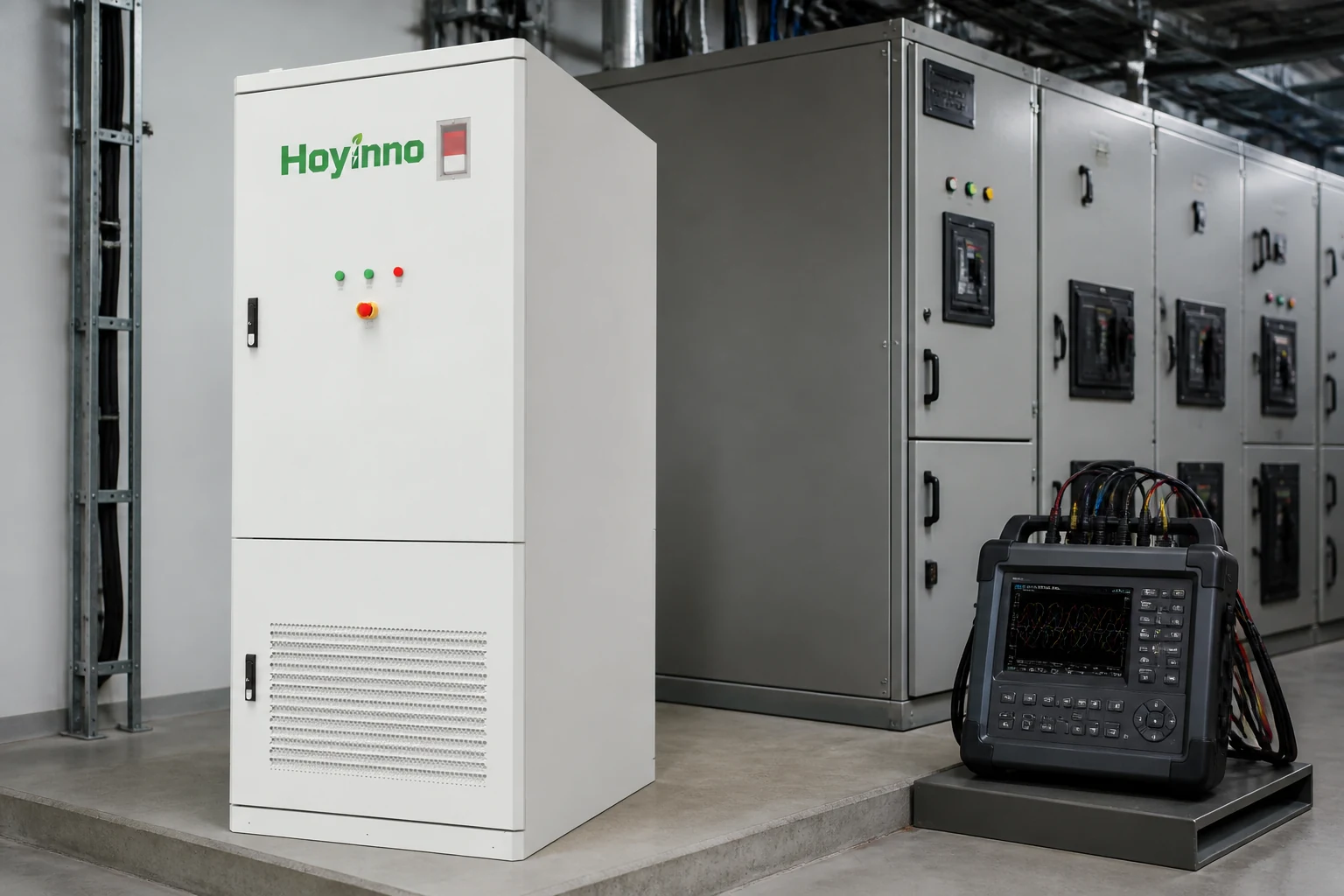
For remote projects, the same-site off-grid solution context shows how generation, storage, and management can be combined. Actual ratings, protections, environmental limits, and compatibility must still be confirmed.
The Load Profile Is the First Sizing Document
Monthly energy consumption is too coarse for architecture decisions. Two facilities can consume the same monthly kilowatt-hours while having very different peaks, night loads, motor starts, outage exposure, and seasonal patterns. The project team needs a time-based critical load profile that separates essential, deferrable, and interruptible demand.
Power and Energy Answer Different Questions
Power addresses what must run at the same moment; energy addresses how long it must run. A battery can hold sufficient energy yet be unable to start a large motor, or it can deliver high power but exhaust its usable energy before the required interval ends. Inverter rating, short-duration overload, battery discharge limits, thermal conditions, auxiliary consumption, and degradation assumptions belong beside the energy calculation.
Load Prioritization Reduces Uncontrolled Failure
Critical-load design is a governance decision, not just a calculation. Operators should agree which circuits remain energized, which can be shed automatically, which may restart after delay, and which require manual authorization. The sequence should reflect safety, process continuity, communications, cooling, security, and recovery needs. It should also consider what happens when a nominally small auxiliary load is necessary for the energy system itself.
Storage Duty Depends on Architecture and Failure Mode
In grid-connected projects, storage may perform time shifting, peak management, backup, power smoothing, or another permitted service. In off-grid projects, storage often becomes the primary balancing resource between variable generation and demand. The same nominal energy value can therefore experience different cycling, reserve, response, and availability requirements.
Battery Autonomy Is a Scenario, Not a Universal Number
Battery autonomy should state which loads are served, for how long, from what initial state of charge, at what environmental condition, with what conversion losses, reserve, and end-of-life assumption. An “eight-hour battery” has little meaning without those boundaries. Solar contribution during the event may be included, excluded, or treated as a sensitivity depending on the reliability objective.

| Decision area | Grid-connected emphasis | Off-grid emphasis | Evidence before approval |
|---|---|---|---|
| Supply reference | Utility rules and interconnection behavior | Local grid-forming source | One-line diagram and operating states |
| Shortfall response | Import, dispatch, or backed-up bus | Storage, backup generation, or load shed | Dispatch and failure sequence |
| Storage reserve | Service-specific reserve and outage objective | Continuity reserve and renewable uncertainty | Scenario-based energy model |
| Protection | Interconnection, anti-islanding, selective backup | Local fault behavior and source coordination | Protection study and settings plan |
| Operations | Tariff, export, demand, restoration | Fuel, service access, load priority, black start | Operating philosophy and responsibility matrix |
Controls Must Translate the Design Into Safe State Changes
Energy management coordinates objectives; protective devices enforce electrical limits; equipment-level controllers protect assets; and site operators need understandable alarms and authority. These layers must agree on measurements, commands, limits, timeouts, communication loss, and fallback states. A control diagram should show more than arrows—it should state who is allowed to make each decision.
Islanding Controls Need a Complete Transition Story
Where intentional backup or microgrid operation is planned, islanding controls must detect the applicable condition, separate the protected system as designed, establish a stable reference, manage generation and load, and synchronize or transfer safely during restoration. Equipment compatibility, local rules, protection coordination, and commissioning tests determine the real sequence.
The current service overview may help establish supplier support context, while project acceptance still needs a responsibility matrix for design data, settings, software versions, commissioning, training, remote access, and post-handover response.
Measurement and Communications Are Part of the Power System
Dispatch decisions depend on meters, current transformers, voltage sensing, weather data, equipment status, and state estimates. The design should define accuracy, sampling, time synchronization, communication protocols, cybersecurity boundaries, data retention, and behavior on stale or missing data. Remote sites may require local autonomy when external communication is unavailable.
Site Conditions Can Reverse a Paper Preference
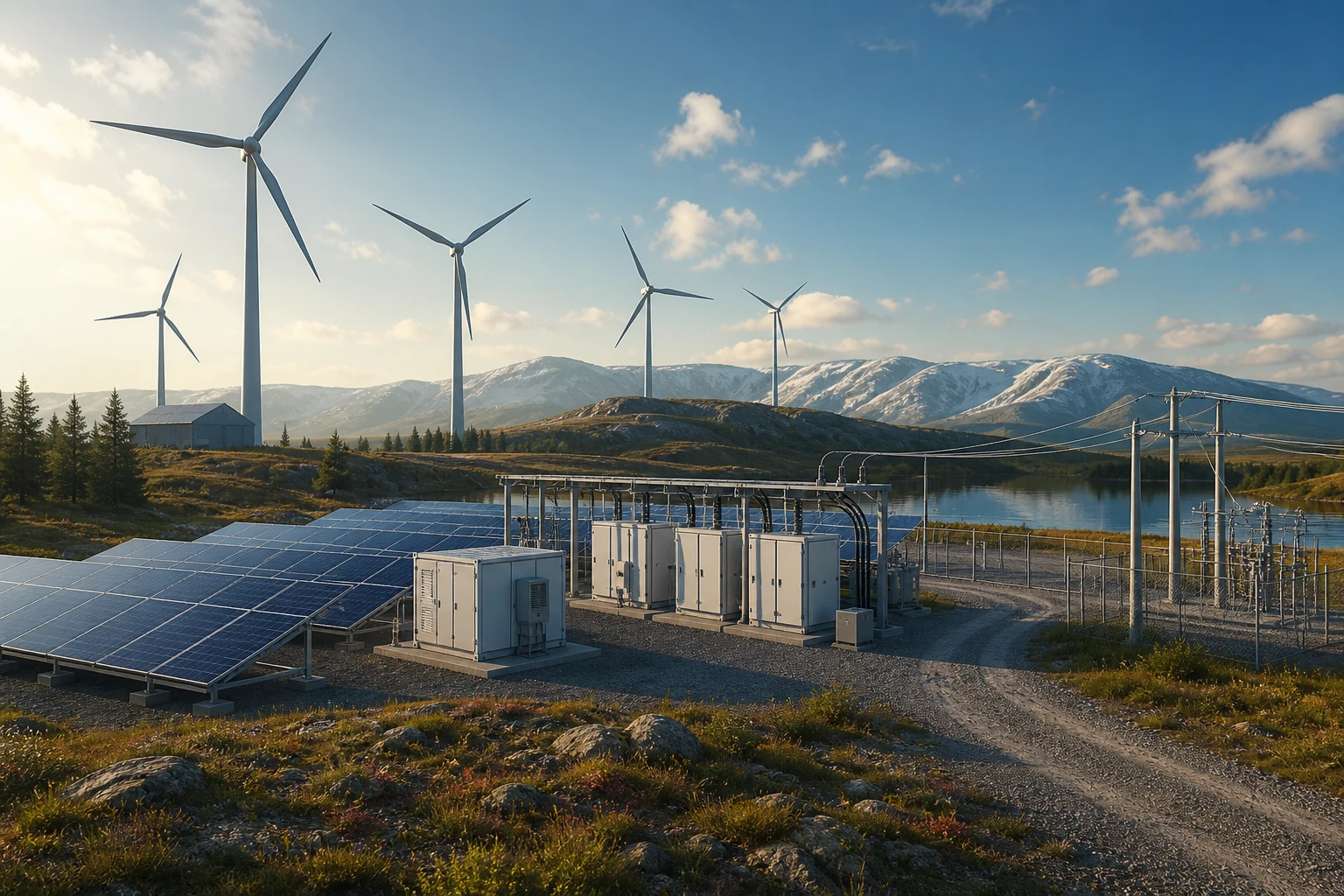
The technically attractive architecture may be impractical if interconnection is delayed, road access is limited, maintenance skills are scarce, temperatures exceed equipment assumptions, flooding or dust exposure is unmanaged, or replacement logistics are slow. Site evaluation should connect civil, electrical, environmental, communications, fire-safety, security, and operational constraints.
Reliability Must Include Maintenance and Recovery
Reliability is not only the probability of operating today. It includes fault isolation, safe access, spare strategy, software support, consumables, inspection intervals, remote diagnosis, response time, and recovery after a deep discharge or protective shutdown. An off-grid architecture may justify redundancy or backup generation because a single failure otherwise removes all supply. A grid-connected design may rely on the utility for some states but still need a defined backup boundary.
A Project Comparison Should Use Weighted Scenarios
Compare alternatives against agreed scenarios rather than a single cost figure. Include normal operation, seasonal low generation, maximum load, grid outage, component failure, maintenance, communication loss, fuel interruption, and restoration. Score safety, service continuity, energy cost, implementation schedule, interconnection risk, maintainability, expansion, and evidence quality with weights approved by project stakeholders.
The result is not automatically the option with the most storage or the lowest capital cost. It is the architecture whose assumptions and residual risks are acceptable. A project case library can suggest questions, but it cannot substitute for verified design inputs.
Grid And Off Grid Solar Power Approval Should Follow An Evidence Gate
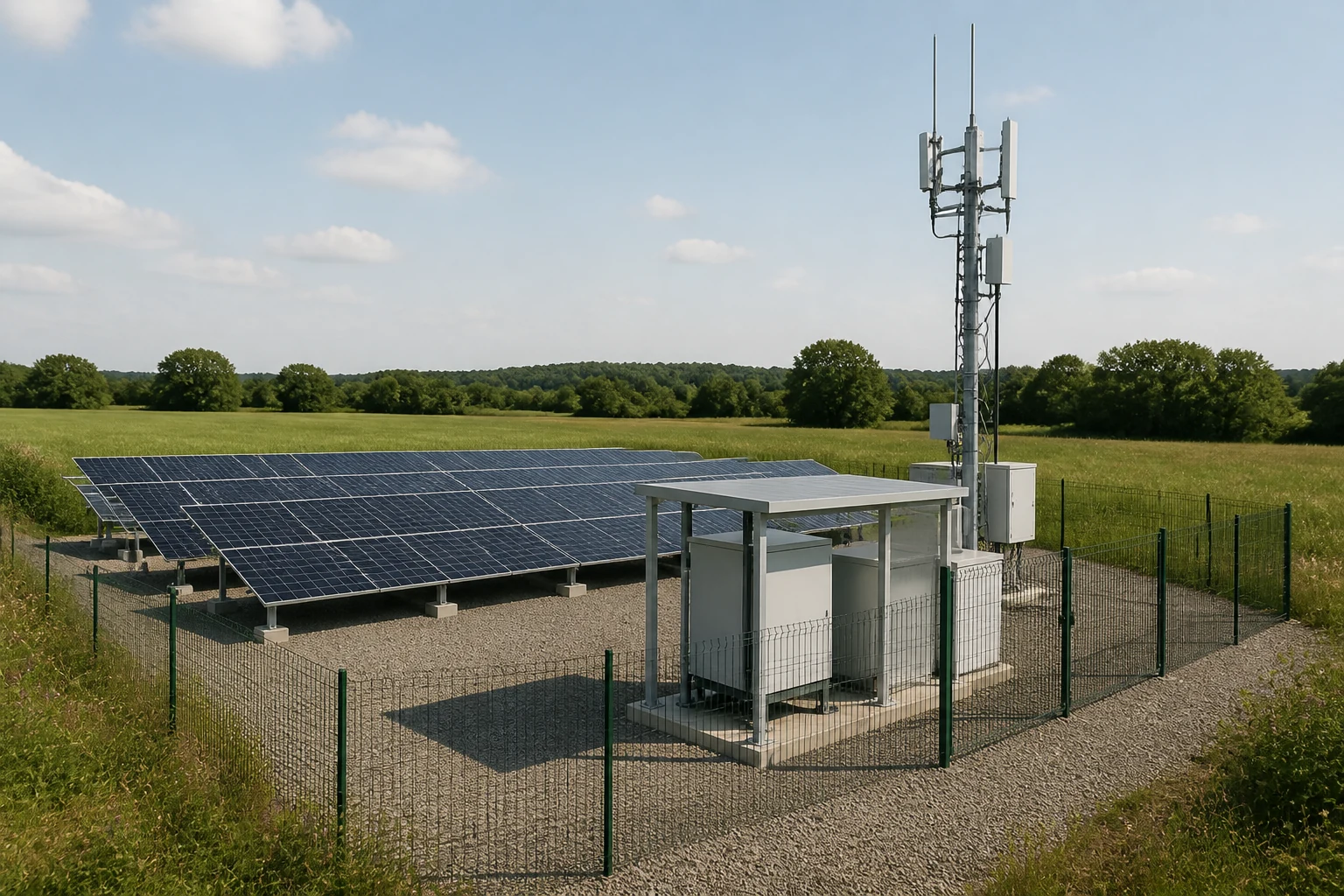
Before selecting between grid and off grid solar power architectures, freeze the basis of design. It should include measured or justified load data, resource assumptions, utility conditions, operating modes, continuity objective, storage reserve, backup strategy, environment, lifecycle horizon, responsibilities, and applicable review requirements.
- Approve a one-line diagram that shows every source, bus, transfer point, protected load group, and isolation boundary.
- Review power and energy calculations separately, including end-of-life, temperature, conversion loss, reserve, and uncertainty.
- Test normal, degraded, failure, maintenance, and restoration sequences in the operating narrative.
- Confirm equipment interfaces, protection settings, communications, software configuration, and commissioning responsibilities.
- Define acceptance tests, operator training, records, spares, remote support, and post-handover escalation.
Supplier information can populate this gate, but claims should be tied to the selected model and current documents. The company profile and technical news library provide context, while acceptance should rest on project drawings, specifications, test plans, and agreed responsibilities.
Frequently Asked Questions
Can a grid-connected solar system operate during a utility outage?
Only if the system is specifically designed and permitted for that operating state. It generally requires a defined backed-up bus, compatible inverter and storage behavior, isolation or transfer equipment, protection, controls, and commissioning. A conventional grid-tied solar system may shut down when the utility is absent.
How many hours of storage does an off-grid site need?
There is no universal number. The answer depends on the protected loads, renewable resource, poor-weather sequence, allowable load shedding, backup generation, initial state of charge, losses, temperature, reserve, degradation, and reliability objective. Use scenario modeling and state every assumption.
Is an off-grid system always more expensive?
Not necessarily in total project value. It may require more local generation, storage, controls, backup, and service planning, but remote grid extension or unreliable supply can also be costly. Compare lifecycle cost, schedule, service continuity, operational burden, and risk on the same basis.
What data should be collected before requesting a design?
Collect interval load data, equipment details, critical-load priorities, location, solar resource basis, grid availability, outage history, environmental conditions, space, communications, access, expansion plans, and the required continuity objective. The project contact page can route a structured information package.
What should commissioning prove?
Commissioning should demonstrate installation checks, protection, metering, communications, equipment limits, dispatch, alarms, load shedding, transition states, emergency response, restoration, operator interfaces, and required records. The exact test plan should reflect the approved architecture and local requirements.
A sound comparison ends with a traceable basis of design: the chosen architecture, the scenarios it can serve, the assumptions still open, the evidence needed to close them, and the operating responsibilities accepted by the project team.
 What Fails When An Off Grid Power Plant Is Sized By Generation Alone?
  Address: A401, Junxu Junchuang Park, 03A Qingyi Road, Nanhai District, Foshan City, Guangdong Province, China





