



 Home
Home
How Can Solar Energy Off Grid Support Loads After Sunset?
Solar energy off grid works by matching a changing load to solar production, battery energy, inverter power, protection, controls, and a defined backup policy. Sunlight is only the input. Reliable service after sunset depends on how the whole system measures, stores, converts, limits, and dispatches energy through each hour.
Energy Must Balance Over Time, Not Only At Noon
An off-grid system has no utility network waiting to absorb surplus or cover a deficit. At every moment, generation plus available stored or backup power must equal the active load and system losses. If the balance fails, voltage or frequency can move outside the acceptable range, protective devices can operate, or the inverter can disconnect loads to protect equipment.
Power And Energy Answer Different Questions
Power, measured in kilowatts, describes demand or delivery at one moment. Energy, measured in kilowatt-hours, describes that rate accumulated over time. A battery can hold enough energy for an entire night yet still be unable to start a motor with a high short-duration surge. Conversely, an inverter may support the peak but the battery may run out before morning. Both dimensions have to be checked against the same timeline.
The Daily Balance Includes Losses And Operating Limits
PV output passes through conductors, converters, battery charging, storage, and inversion before it reaches many loads. Each stage has losses, while batteries also have usable-state-of-charge limits and temperature-dependent behavior. A design that simply compares panel nameplate energy with daily consumption hides these constraints. The hourly or sub-hourly balance should show when energy is produced, where it goes, and what remains available.
Follow The Power Path From Sunlight To The Load
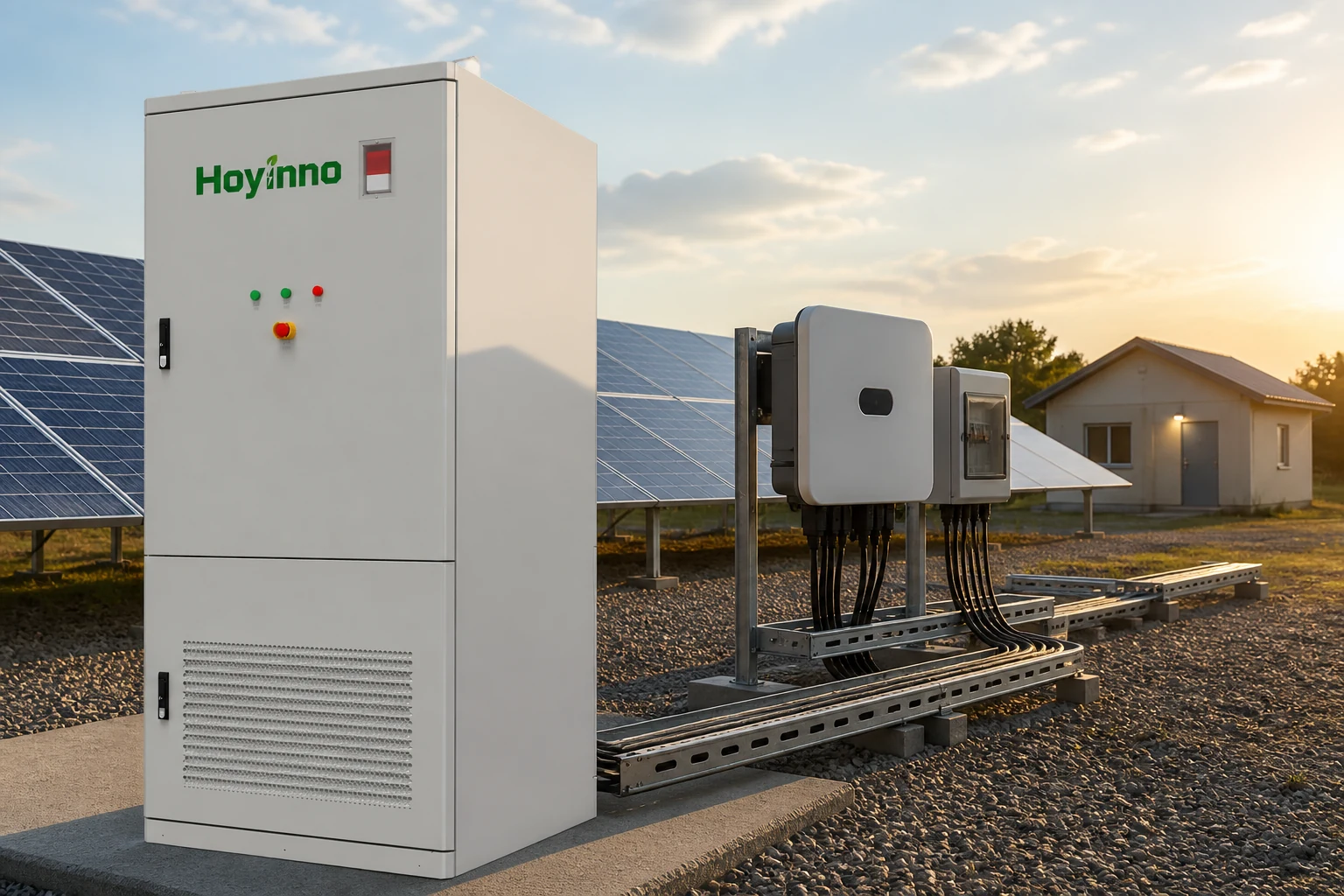
A remote-area off-grid solution typically joins PV modules, DC collection and protection, one or more power converters, battery storage, AC or DC distribution, measurement, and a supervisory controller. Some projects also include a generator or another dispatchable source. The exact topology varies, but the operating logic can be understood as a sequence of energy decisions.
PV Serves The Present Load Before Charging The Future
When sunshine is available, the controller can direct PV power to active loads and use the remaining capacity to charge the battery. If production exceeds both demand and permitted charging power, the system curtails the surplus. If a cloud reduces production, the battery or backup source closes the gap. These transitions happen continuously rather than as a single daytime-to-nighttime switch.
The Battery Moves Energy Across Hours
Storage absorbs part of the daytime surplus and returns it after solar production falls. A modular energy storage system may scale usable energy or power in defined blocks, but modules do not remove the need for coordinated state estimation, thermal limits, protection, and dispatch rules. The controller must know how much energy is truly available, how quickly it can be delivered, and what reserve should remain.
| System Element | Primary Job | Input To Define | Failure To Avoid |
|---|---|---|---|
| PV array | Convert sunlight into electrical power | Site irradiance, orientation, temperature, shading | Using annual average output to promise hourly availability |
| Battery | Shift energy and support short deficits | Usable energy, power, efficiency, temperature, reserve | Counting nameplate capacity as fully usable |
| Inverter | Form and regulate the AC supply | Continuous load, surge, phase, voltage, frequency | Sizing only to average demand |
| Controller | Coordinate sources, storage, and loads | Priorities, limits, alarms, fallback states | Leaving transitions and fault behavior undefined |
| Protection | Isolate faults and protect people and assets | Fault levels, grounding, selectivity, local rules | Treating protection as an equipment accessory |
| Backup source | Cover defined extended deficits | Start logic, fuel, minimum run, charging policy | Adding a generator without an operating strategy |
Begin Sizing With The Load, Weather, And Required Service
The starting point is a time-based demand model, not a preferred battery size. A critical load profile identifies which loads must remain energized, their normal and peak power, start-up behavior, schedule, seasonality, and tolerance for interruption. Flexible or deferrable loads should be separated from essential loads so the design does not assign the highest reliability level to every appliance.
Build A Profile That Preserves Peaks And Timing
Daily kilowatt-hours alone cannot show whether loads overlap or whether a motor starts just as another large load is running. The profile should retain the interval needed to capture relevant peaks and operating sequences. It should also distinguish expected demand from credible worst cases. For industrial, telecom, commercial, or community projects, measured data is stronger than a list of appliance ratings because it reflects actual duty cycles.
Translate Service Requirements Into Autonomy
Battery autonomy planning asks how long the defined loads must operate without adequate solar input and what conditions are allowed at the end of that period. The answer depends on weather sequences, acceptable load shedding, backup availability, recovery time, usable depth of discharge, aging allowance, conversion losses, and temperature. “Two days of autonomy” is incomplete until the load set and operating assumptions are stated.
A standalone photovoltaic system should therefore be simulated across representative and difficult periods rather than sized from one average day. The model can test whether PV restores the battery after a low-sun interval, whether charging power creates a bottleneck, and whether the reserve is repeatedly depleted. This also reveals the tradeoff between more PV, more storage, managed loads, and backup energy.
The Inverter And Controller Hold The Local Grid Together
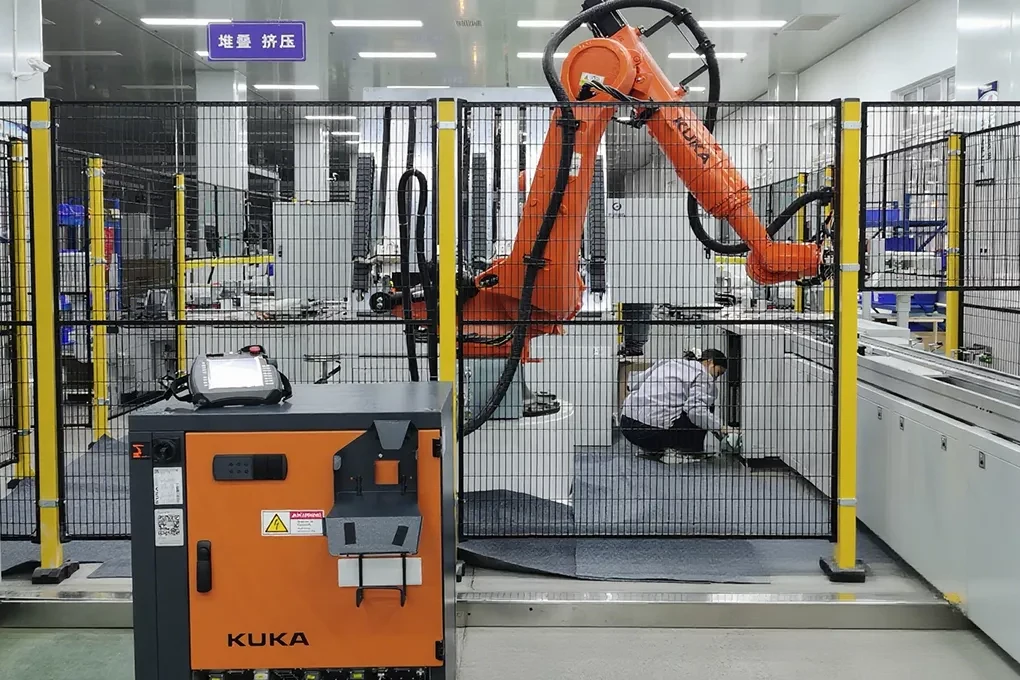
In an isolated AC system, the inverter often establishes the voltage and frequency reference that the utility grid would otherwise provide. Its behavior during load steps, motor starts, overloads, low battery conditions, faults, and source transitions is central to stability. The site’s power conversion and control context helps identify relevant functions, but project settings still have to be defined and tested.
Grid-Forming Operation Must Cover Real Load Behavior
The inverter’s continuous rating, short-term overload capability, phase arrangement, voltage range, and harmonic performance should be assessed against actual connected equipment. Motor, compressor, pump, transformer, and electronic loads can create very different start-up or power-quality demands. A nominal kilowatt sum is not a complete stability study, especially where weak conductors or long distribution runs add voltage drop.
Control Logic Converts Priorities Into Actions
The energy management logic decides when to charge, discharge, curtail, start backup, shed a load, or hold reserve. These actions should follow explicit priorities and include safe states for lost communications or failed sensors. Useful monitoring and analysis also separates alarms that require action from measurements collected for trends. Operators need a readable account of why the system changed state.
Resilience Comes From Defined Responses To Difficult Conditions
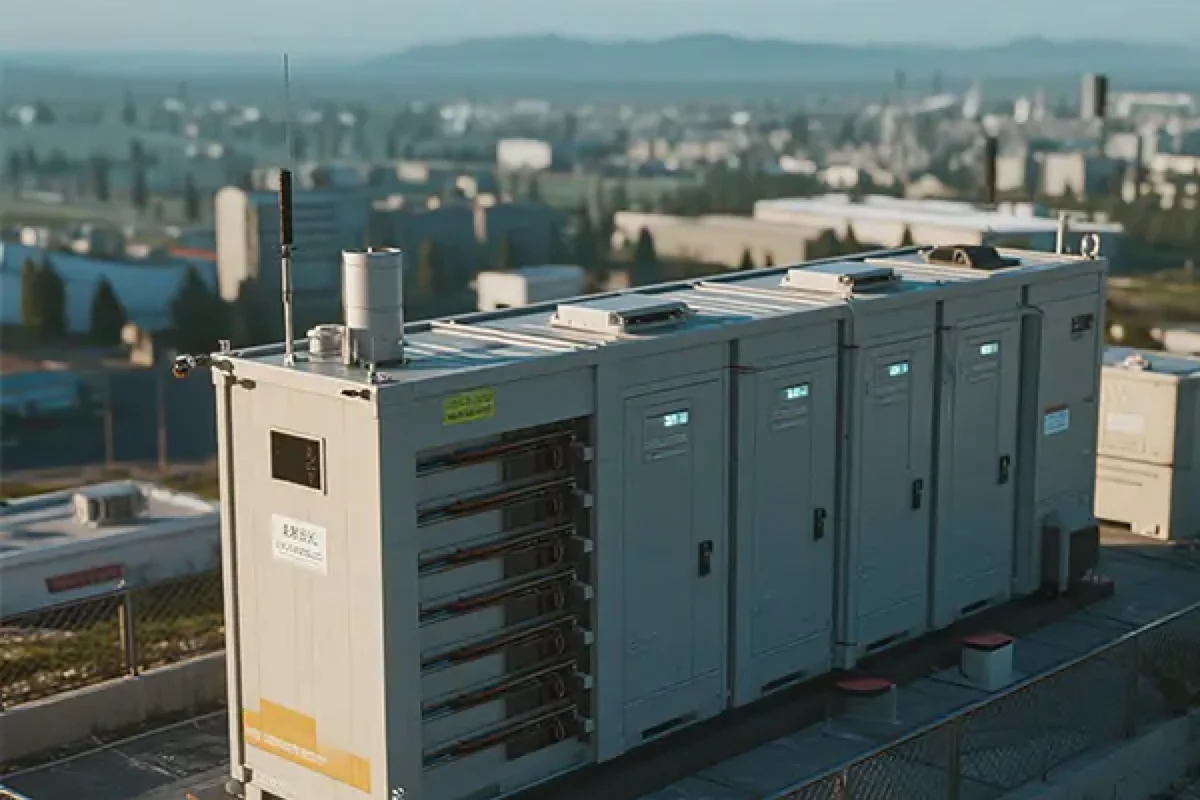
Solar energy off grid does not mean the system must survive every possible weather event with no compromise. It means the project defines which services are protected, for how long, under which conditions, and what happens when the operating envelope is exceeded. The response may combine reserve energy, staged load shedding, a backup generator, temporary demand limits, or a controlled shutdown that preserves the battery for restart.
Cloud cover, seasonal irradiance, dust, module temperature, and shading change PV yield. Ambient temperature also changes battery power, usable energy, lifetime, and cooling demand. The model should include these coupled effects rather than one broad safety factor. A project-specific engineering review can trace every margin to an inspectable assumption.
Backup generation should be treated as part of the control system. Start thresholds, permitted battery charging, fuel constraints, maintenance, and failed-start behavior all affect availability. The goal is a coherent operating policy, not simply another nameplate source.
Commissioning Proves The Designed Sequence Works On Site
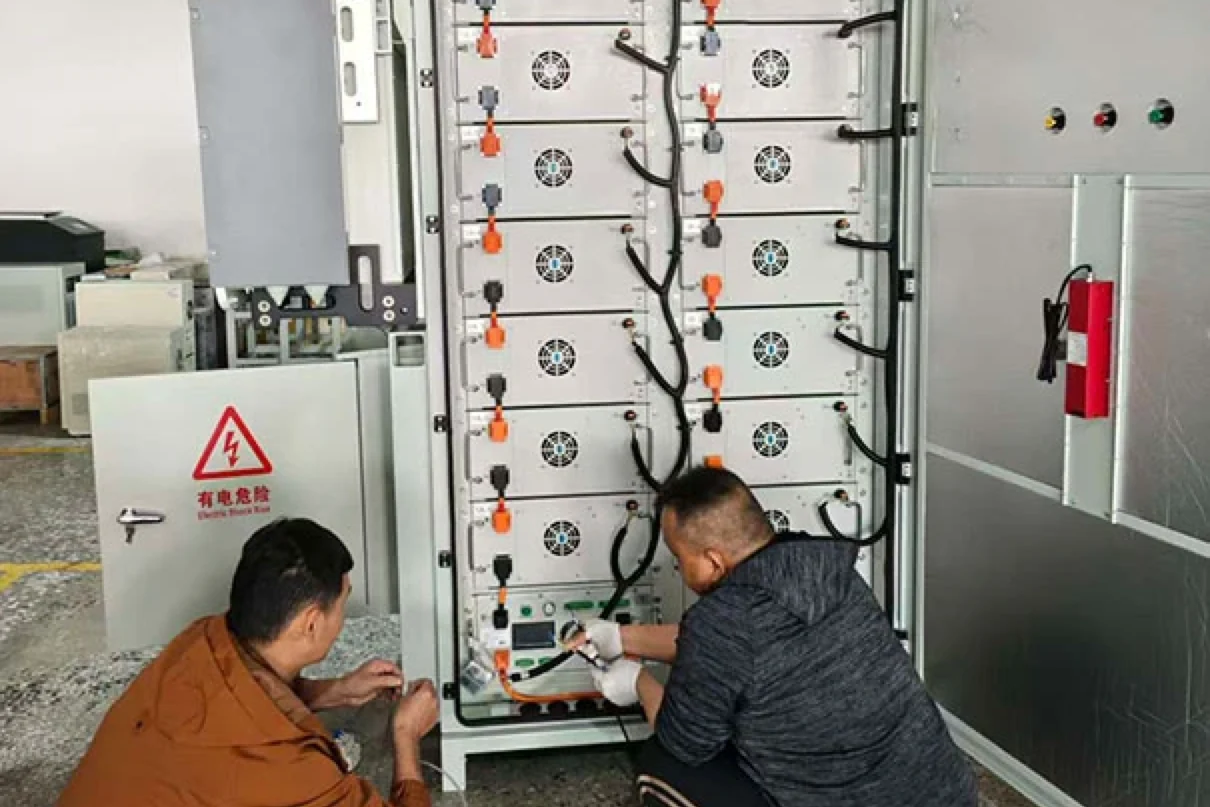
Documentation should connect the approved design to installed equipment, settings, protection, communications, and test results. Commissioning can verify polarity, insulation, grounding, metering direction, inverter limits, battery state reporting, alarm paths, load-shed commands, backup transitions, restart behavior, and remote visibility. Tests should cover normal operation and credible faults with clear acceptance criteria.
After handover, operators need a simple state model: what normal looks like, which loads have priority, when reserve is being protected, how to interpret alarms, and when a manual intervention is appropriate. Trending production, load, state of charge, curtailed energy, backup runtime, temperature, and interruptions helps distinguish a design limit from a developing equipment problem. Comparable project cases may suggest scenarios, but the site’s own records define its baseline.
Battery autonomy planning should be revisited when loads change, new equipment is added, operating hours expand, or measured solar yield differs from the model. The original critical load profile and commissioning record provide the reference for that review. Without them, an apparently small operational change can consume reserve or exceed inverter capacity without a visible design decision.
Frequently Asked Questions
Can An Off-Grid Solar System Run Loads At Night?
Yes, when stored energy or a backup source is available and the inverter can support the instantaneous demand. The required battery depends on the nighttime load, usable energy limits, losses, reserve policy, temperature, and the reliability target—not simply the hours between sunset and sunrise.
What Is The Difference Between Battery Power And Battery Capacity?
Power describes how quickly the battery can deliver energy, while capacity describes how much energy it can store. A system must meet both the highest relevant demand and the required operating duration. Battery limits, inverter capability, and load surges must be checked together.
Does More Battery Always Improve Reliability?
Not necessarily. More storage helps only if it can be charged, controlled, protected, and used within its operating limits. In some cases, additional PV, managed loads, improved efficiency, or a defined backup strategy can address the real constraint more effectively than storage alone.
Why Is Hourly Solar Data Better Than A Monthly Average?
A monthly average hides the timing and sequence of production deficits. Time-series data shows whether difficult weather occurs over consecutive hours or days, whether the battery recovers, and whether the system repeatedly reaches a reserve threshold. The model resolution should match the important load and weather changes.
What Makes A Standalone PV System Different From Grid-Tied Solar?
A standalone photovoltaic system must create and maintain its own electrical reference and continuously balance sources with loads. It cannot assume the utility will absorb surplus, supply a deficit, or stabilize voltage and frequency. Storage, controls, protection, load priorities, and restart behavior therefore become central design functions.
Reliable solar energy off grid is best understood as a time-based operating system: measured loads, weather-dependent generation, usable storage, grid-forming conversion, coordinated protection, explicit priorities, and verified responses to both normal transitions and difficult conditions.
 Which Design Tradeoffs Separate Grid And Off Grid Solar Power Systems?
  Address: A401, Junxu Junchuang Park, 03A Qingyi Road, Nanhai District, Foshan City, Guangdong Province, China





