



 Home
Home
How Does Off Grid Solar Power Keep Critical Loads Running After Sunset?
Off grid solar power keeps critical loads running after sunset by storing daytime energy, limiting demand, and coordinating conversion, protection, and backup resources. The battery is important, but nighttime continuity is a system outcome: usable stored energy, inverter capability, load priority, controls, weather margin, and operating discipline must work together.
The System Must Balance Power and Energy Without the Utility
An off-grid installation creates and maintains its own local electrical balance. During daylight, solar generation can supply active loads and charge storage. After sunset, storage and any dispatchable backup source carry the selected loads. At every moment, supply must match demand within the equipment’s operating limits; the current manufacturer site supplies equipment context, while the site design must prove that balance.
Power Capacity Answers the Instantaneous Question
Power, expressed in kilowatts, describes how much demand equipment can support at a moment. A pump start, compressor cycle, motor acceleration, or simultaneous group of appliances can create a short peak much higher than the average load. The inverter, battery discharge path, conductors, and protection scheme must tolerate the intended peak and its duration. Sufficient stored energy does not compensate for an undersized power path.
A useful critical load profile therefore records more than daily consumption. It identifies operating watts, starting behavior, duty cycle, time of use, allowable interruption, and which loads may be deferred. This turns a list of appliances into a chronological electrical requirement that controls can actually manage.
Energy Capacity Answers the Duration Question
Energy, expressed in kilowatt-hours, describes how long storage can support a given demand. Usable energy is not automatically equal to the nominal number on a product label because operating limits, temperature, conversion losses, aging assumptions, and reserve policy affect what can be delivered. The design should state which conditions are included instead of applying a single optimistic factor to every site.
Daytime Solar Must Serve Loads and Rebuild the Energy Reserve
The solar array has two jobs on a typical day: carry daytime consumption and replace energy removed from storage. An array sized only against annual or monthly consumption can still leave the battery short on a cloudy day or during a seasonal low-sun period. Engineering uses time-based solar resource and load data because production and consumption rarely follow the same curve.
The Charging Window Is a Limited Resource
Morning energy may first support operating loads, leaving only the surplus available for charging. Midday clipping, heat, shading, soiling, cable loss, converter limits, or a short solar window can reduce that surplus. A practical design tests whether storage can reach the required state of charge before the evening peak under defined weather conditions, not merely whether the array has a large nameplate rating.
The energy-management strategy can improve the result by shifting flexible work to high-generation hours. Water pumping, ice making, thermal storage, vehicle charging, or other deferrable processes may absorb daytime solar directly. This reduces conversion through the battery and protects the night reserve for loads that cannot move.
Weather Margin Must Be an Explicit Assumption
No fixed solar-storage system can promise unlimited operation through any weather sequence. The design basis should state the representative low-generation period, forecast uncertainty, reserve threshold, and backup response. A battery autonomy window is meaningful only when paired with a defined load set and starting state of charge. The remote-area system approach illustrates integrated generation, storage, and control, but changing either design condition changes the duration.
Storage Carries the Night but Controls Decide How
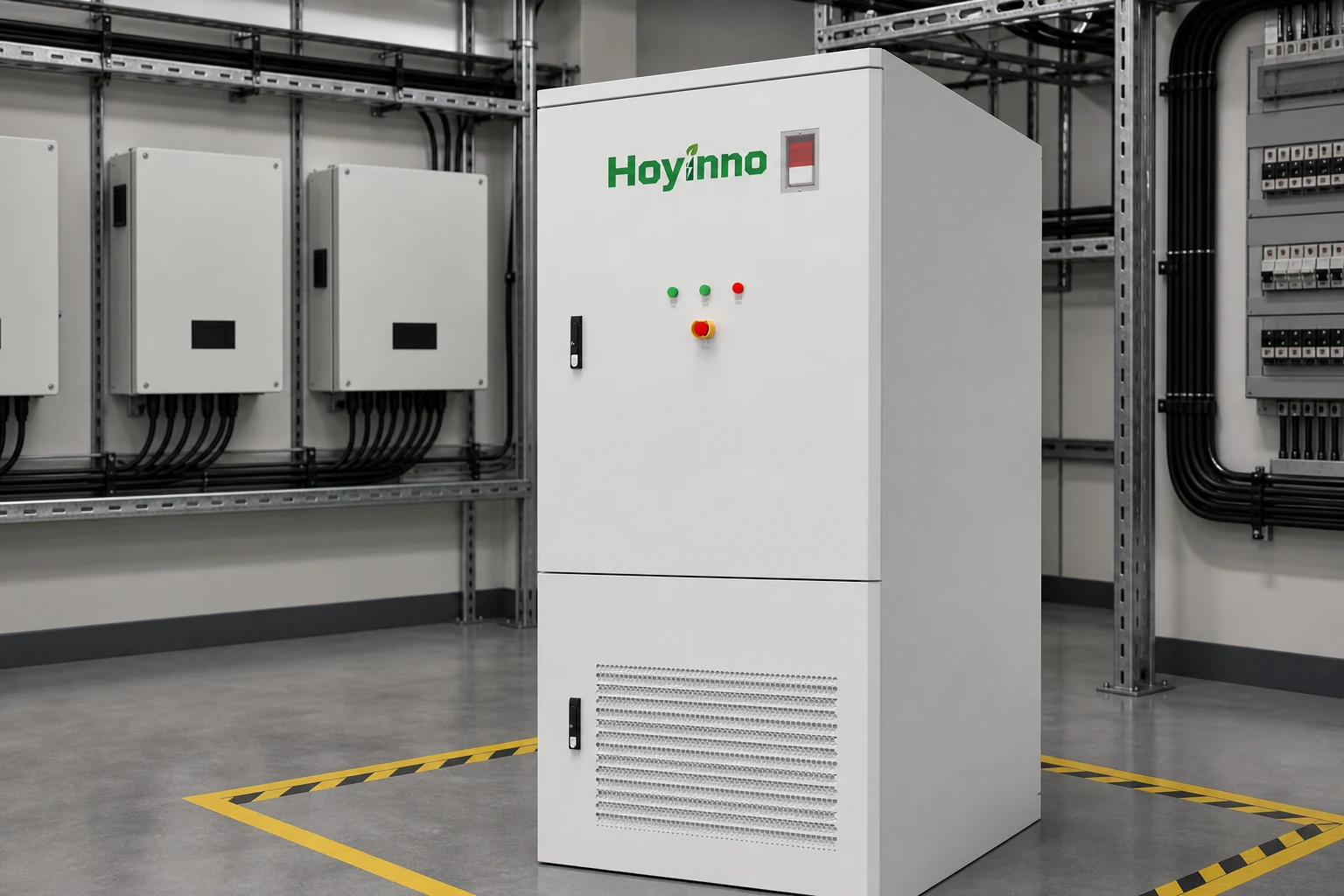
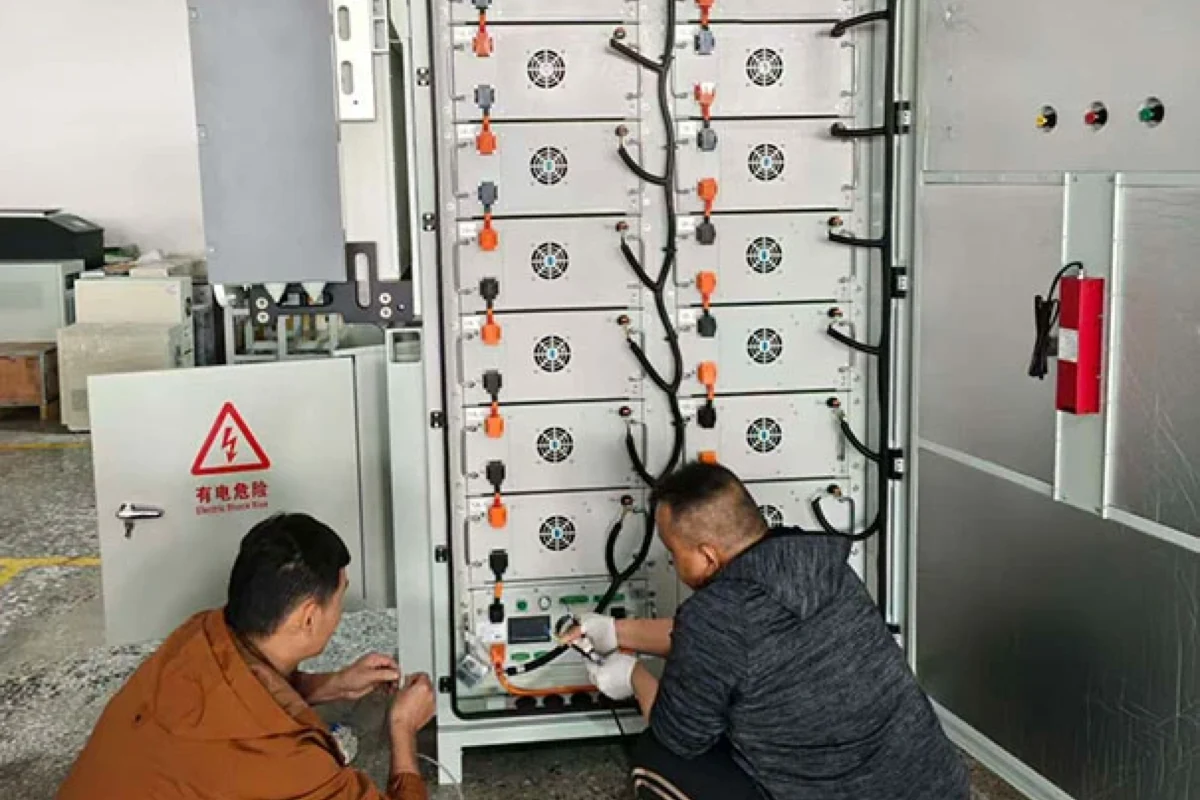
Storage shifts solar energy from the production period to the consumption period. A battery system also responds quickly to load changes, yet its behavior is governed by battery management, power conversion, protection, thermal management, and site-level controls. The BESS product range provides equipment context, but a cabinet choice alone does not establish a complete off-grid architecture or site-specific performance.
| Design question | Input needed | Control response | Consequence if omitted |
|---|---|---|---|
| Can every selected load start? | Peak watts, surge duration, coincidence | Limit starts or sequence equipment | Inverter trip despite stored energy |
| Can loads run until sunrise? | Hourly demand and usable battery energy | Reserve or shed lower-priority loads | Premature low-state shutdown |
| Can solar restore the reserve? | Seasonal generation and daytime demand | Shift flexible loads and manage charging | Daily energy deficit accumulates |
| What happens in poor weather? | Required continuity and weather design case | Start backup or enter conservation mode | Unplanned interruption |
| How is a fault isolated? | Protection study and equipment topology | Disconnect the affected section safely | Small fault removes the entire site |
State of Charge Is a Decision Variable, Not Just a Display
The operating controller uses state of charge to protect the battery and preserve service. Thresholds may trigger warnings, defer flexible demand, start backup generation, or shed loads in stages. Those thresholds should align with battery limits and the site’s service priorities. A displayed percentage without a documented action plan does not ensure continuity.
Reserve can also be dynamic. If forecast generation is weak or an essential nighttime activity is expected, the controller may retain more energy earlier in the day. If conditions are favorable, it may allow additional flexible demand. The appropriate strategy depends on verified forecast inputs and the consequences of an incorrect prediction.
Power Conversion Establishes the Local Electrical Reference
In a standalone solar system, suitable equipment must establish and regulate the electrical environment when no utility grid is present. The detailed architecture varies, but designers must confirm grid-forming or equivalent behavior, control interfaces, black-start sequence, generator synchronization, fault response, and transitions. The same-site technical library can inform questions, but grid-connected assumptions should not be copied into an islanded design without review.
Load Priority Converts Limited Energy Into Useful Service
Critical-load planning accepts that not every circuit has equal value during an energy shortage. Separating essential, flexible, and discretionary loads lets the controller preserve the services that matter most. This is often more reliable and economical than sizing every component for every possible simultaneous demand.
Priority Tiers Need Electrical and Operational Definitions
Tier one may include safety, communications, controls, medical refrigeration, or process equipment that cannot stop safely. A lower tier may include comfort cooling, nonessential lighting, auxiliary pumping, or production that can be rescheduled. Each tier should state maximum demand, permitted interruption, restoration conditions, and any manual override. Operations personnel need to understand what the system will do before the first low-energy event.
Automatic shedding should be tested with real control sequences. Disconnecting one device may change ventilation, cooling, communications, or another dependency. Restoring too many circuits together can create a second surge. A commissioning test should confirm the intended order and allow safe operator intervention.
Climate, Site Access, and Maintenance Shape Real Autonomy
Environmental and operational conditions can change the performance of every subsystem. Temperature affects battery behavior and cooling demand; dust and humidity influence enclosures and maintenance; shade or soiling reduces solar production; and remote access changes the value of monitoring, spare parts, and straightforward recovery procedures.
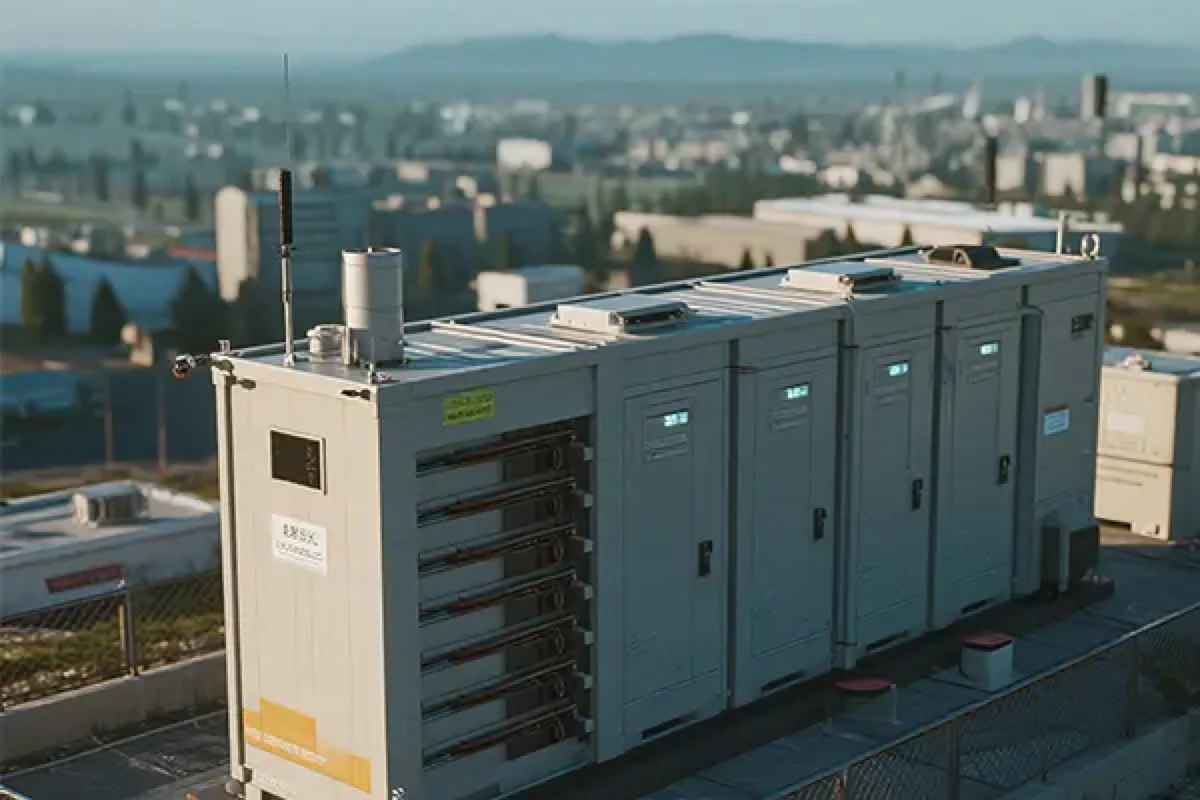
Equipment arrangement must maintain service clearances, ventilation or thermal-management needs, cable routing, emergency access, drainage, physical security, and communication reliability. These are site-design decisions, not properties inferred from a photo. Storage cabinet options still require confirmation against local electrical, building, fire, environmental, and interconnection requirements.
Commissioning Proves the Sequence, Not Only the Components
A component can pass factory checks while the assembled system still behaves incorrectly. Commissioning should test the energy path and control logic as one installation: solar production, charging, load transfer, low-state response, backup start, fault isolation, communications loss, emergency stop, and recovery. A published hybrid-energy case provides project context, but each site's test boundaries must be defined independently.
- Confirm the as-built single-line diagram, protection settings, communications map, and equipment ratings.
- Verify sensor direction, meter scaling, state signals, alarms, and remote visibility.
- Demonstrate charging and discharge within approved operating limits.
- Apply representative load steps and observe voltage, frequency, and control response.
- Trigger staged load shedding and confirm dependencies remain safe.
- Test backup coordination, controlled shutdown, black start, and return to normal operation.
The test record should capture initial conditions, steps, expected behavior, measured response, exceptions, corrective work, and final acceptance. This gives operators a baseline for future troubleshooting and prevents an unexplained settings change from becoming part of normal practice.
Frequently Asked Questions
Can solar panels power loads directly after sunset?
No. Solar panels do not produce useful energy without sufficient light. Nighttime loads must be supplied by stored energy, another generator, or a different available source. Controls coordinate the transition and protect equipment as conditions change.
How many hours of battery storage does an off-grid site need?
There is no universal number. Required duration depends on the time-based essential load, usable storage under expected temperature and aging conditions, starting state of charge, acceptable interruption, weather design case, and backup strategy.
Why can a system shut down when the battery still shows energy?
Possible reasons include an instantaneous power limit, low-voltage protection, temperature restriction, reserve threshold, communications fault, inverter limit, or a state-of-charge estimate that does not represent immediately usable energy. Diagnosis needs event records and measurements rather than the percentage display alone.
Does adding more battery solve poor solar production?
More storage can extend operation when it begins charged, but it does not create energy. If the solar resource and charging window cannot replace daily consumption, the deficit continues until demand is reduced or another source contributes.
What is the first input needed for off-grid design?
A time-based load profile is the most useful starting input for off grid solar power. It should distinguish critical and flexible loads, record peaks and starting behavior, identify seasonal changes, and state the service consequence of interruption. The off-grid solution overview can frame the architecture, while resource, storage, conversion, and backup decisions must be tested against the same site requirement.
Reliable off grid solar power is therefore a controlled energy balance, not a panel-and-battery count. The next technical step is to validate an hourly load profile against seasonal solar production, usable storage, equipment power limits, reserve policy, and a tested response for the days when generation does not follow the average.
 How Can Solar Energy Off Grid Support Loads After Sunset?
  Address: A401, Junxu Junchuang Park, 03A Qingyi Road, Nanhai District, Foshan City, Guangdong Province, China





