



 Home
Home
Electricity Storage Solutions Need A Tested Transfer Sequence
Compare electricity storage solutions against the required transfer sequence, critical loads and recovery conditions before treating stored energy as dependable backup power.
Define the interruption that the site can tolerate
A battery can hold enough energy for an outage while the connected equipment still stops during the transition. The missing requirement is often the sequence between losing the grid and restoring a stable supply to the intended circuits. Start with the service that must continue, then examine the equipment and controls needed to preserve it. Capacity alone cannot describe that transition.
Separate essential operation from every connected load
Create a critical load profile that identifies the equipment needed during an interruption, its running demand, starting behavior and acceptable downtime. A control system, refrigeration compressor and lighting circuit may have different tolerances. Record those differences explicitly. A whole-site meter can describe aggregate consumption without revealing which circuit causes a restart failure or which load can wait.
Distinguish ride-through from an orderly restart
Some processes can pause and restart; others require a separate continuity arrangement for sensitive controls. Define whether the objective is uninterrupted service, a controlled interruption or recovery within an agreed period. These are different requirements. A claim that a system provides backup does not specify which one it meets under the proposed load and operating conditions.
DOE's microgrid explanation describes the role of controls in balancing connected resources and operating independently from the wider grid. Applying that principle requires a project-specific design. A grid-connected installation does not acquire a complete island operating mode merely because it contains a battery. The switching, protection and control responsibilities must be identified together.
Write the operating sequence before choosing the enclosure
Electricity storage solutions should be compared through a defined sequence: detect the grid event, establish the intended electrical boundary, provide a stable source for the selected loads, manage available energy and return to the grid under approved conditions. Each step needs an owner and a verification method. This article describes selection questions; switching settings and site procedures require qualified project engineering.
Identify the equipment at each control boundary
Clarify what is supplied inside the storage package and what remains external. The power conversion and control functions, energy management functions, transfer equipment, protection interfaces and site distribution need compatible responsibilities. A component being present does not demonstrate that the complete sequence has been configured or tested. Ask for the functional description and the relevant interface documents for the proposed configuration.
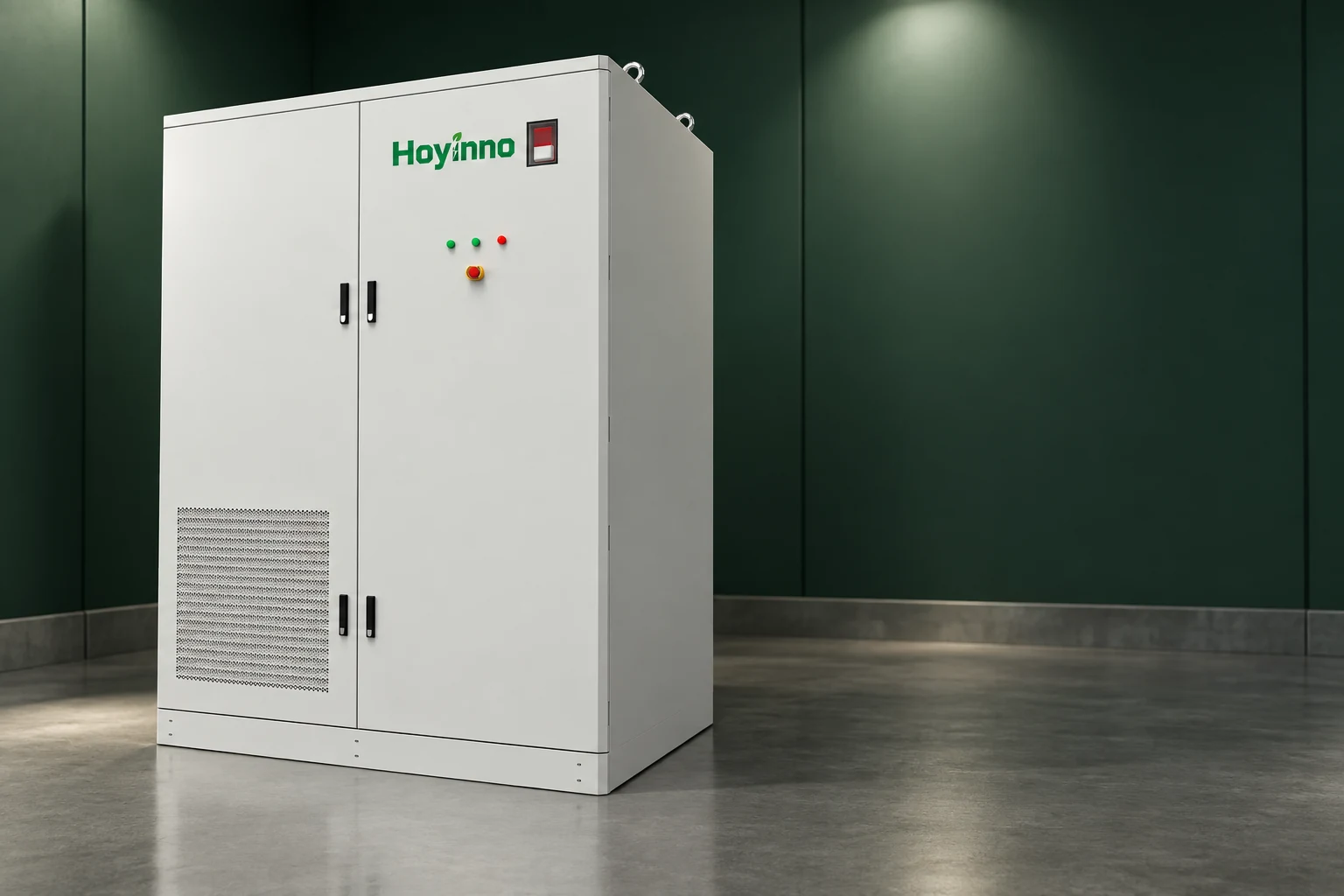
The 522 kWh liquid-cooled cabinet page describes an integrated cabinet with battery management, power conversion and thermal-management functions. It provides a concrete format for discussion, but its listed energy capacity does not establish the interruption experienced by a particular load. Verify the supplied configuration, external equipment and operating modes before drawing that conclusion.
Ask how the system starts when the grid is absent
Remaining online after a disturbance and starting from a fully de-energized condition are separate cases. Establish whether a cold restart is required, which auxiliaries need power first and what resources must be available. Confirm how the intended source establishes a stable local supply and how other resources join it. Do not assume that a demonstration beginning with everything energized proves recovery from a complete outage.
Protect the reserve needed for the next event
A system used for daily energy shifting may reach an outage with less stored energy than an operator expects. Define the operating reserve and how it changes with forecast conditions, maintenance and other services. The critical load profile must be assessed against the energy available at the relevant starting state, not only against the nominal amount on a product page.
Compare power and duration as separate requirements
Power describes how quickly energy can be delivered; energy describes how much is available over time. EIA's storage overview treats these as distinct characteristics. A longer-duration requirement and a demanding start event therefore ask different questions of a system. Compare both with the proposed equipment and stated operating conditions, including auxiliaries and any limitations provided for that configuration.
A simple preliminary calculation can organize a discussion: an assumed constant 40 kW load over two hours represents 80 kWh at the load before additional allowances are considered. This is an arithmetic example, not a recommended battery size or a performance claim. Actual selection needs the time-varying demand, permitted operating range, conversion losses, auxiliary demand, aging assumptions and reserve strategy defined by the project.
Decide what gives way when objectives compete
Backup readiness, tariff-driven dispatch and renewable-energy use can compete for the same stored energy. State which objective has priority and what happens when the reserve threshold is reached. Ask who can change that policy and how the change is logged. A system can operate exactly as programmed while failing an expectation that was never captured in the operating brief.
The remote-area solution description discusses coordinating generation, storage and energy management. Treat it as an architectural starting point. Renewable generation remains variable, so the recovery plan should identify the assumed contribution from each source and the fallback when it is unavailable. A sunny demonstration does not establish performance through a different operating period.

Make the acceptance test follow the promised service
A transfer test should show what the connected service experiences. Define the starting state, load condition, triggering event, expected response and evidence to retain. A cabinet screen showing normal operation after an event may be useful, but it does not describe the interruption, the load restart or the reason a protective device operated. Agree the observations before the test is conducted.
Measure the event at the relevant point
For each critical circuit, define which observations establish acceptance and how their timing will be related. Equipment event logs, controller states and suitable electrical measurements may each contribute different information. A timestamp mismatch can make a sequence difficult to interpret. The test plan should identify the instruments, measurement points, reporting basis and responsible reviewers appropriate to the project.
Witnessed testing should use approved procedures and a representative load condition. Testing an empty system is not equivalent to supporting the intended process. Where a full operational test is impractical, record the limitation and the additional evidence needed. Do not describe an untested condition as accepted simply because a related function passed a factory demonstration.
| Scenario | Selection question | Evidence to agree |
|---|---|---|
| Grid interruption | What does the critical service experience? | Defined load condition and event sequence record |
| Low starting reserve | Which loads remain supported and for what objective? | Approved reserve policy and stated test conditions |
| Cold restart | Which equipment energizes first without the grid? | Startup dependencies and witnessed functional results |
| Resource unavailable | How does operation change when an input is missing? | Defined degraded operating mode and alarm response |
| Grid recovery | How is normal operation restored? | Approved return sequence and service observations |
Hoyinno's engineering and support services provide a route for clarifying project responsibilities. The useful deliverable is a configuration-specific test plan with acceptance criteria and named interfaces. A broad promise of support does not define the work of the site contractor, equipment supplier and operator during a transfer test.

Include recovery, maintenance and changes in the decision
The outage ends only when the site reaches its intended operating state again. Electricity storage solutions need a recovery description covering return to the grid, restoration of deferred loads, recharge priorities and readiness for another interruption. A successful initial transition can still be followed by an uncontrolled restart or an unexpectedly depleted reserve if those steps are omitted.
Maintenance can change the available architecture. A bypass arrangement, isolated module or disabled communication link may alter what the system can support. The operating brief should identify those conditions and their effect on service. Changes to firmware, controls or connected loads should trigger an assessment of whether earlier evidence still applies, followed by proportionate checks approved for the project.
The operation and maintenance service outline includes inspection, monitoring, fault diagnosis and reporting. Confirm the actual contracted scope, response arrangements and records for the installation. Website descriptions do not establish a site-specific service level. Retain the agreed maintenance responsibilities alongside the drawings, settings records and acceptance documentation.
Compare proposals through one common sequence
Use the same critical load profile and operating scenarios when reviewing competing configurations. Record included equipment, external dependencies, unsupported conditions and the evidence offered for each requirement. A proposal that identifies its limitations is easier to evaluate than a capacity claim with no system boundary.
The commercial and industrial solution overview can frame the discussion of operating objectives, but the selection record should remain specific to the site. Keep advertised capabilities, configuration commitments and witnessed results in separate columns. This prevents an early marketing statement from becoming an assumed acceptance result later in the project.
Frequently asked questions
Does more battery capacity guarantee uninterrupted supply?
No. Energy capacity and the transition experienced by a load are different requirements. The complete architecture, controls, interfaces and connected equipment must be assessed against the required service.
Can a grid-connected battery always operate during an outage?
No. Confirm that the proposed configuration supports the intended independent operating mode and includes the required switching, protection and controls. Do not infer that capability from the presence of storage alone.
What is the difference between cold restart and transfer?
Transfer concerns a change between operating conditions or sources. Cold restart concerns recovery from a de-energized condition. The dependencies and acceptance evidence can differ, so both need review when both are required.
Should factory testing replace a site transfer test?
Factory testing can establish defined equipment functions. Site testing addresses the installed interfaces and connected service. Agree which requirements each test covers and record any conditions that remain unverified.
What should be checked after a major load change?
Review running demand, starting behavior, interruption tolerance and the approved operating sequence. Determine whether the existing configuration and earlier test evidence still cover the changed service before relying on them.
A defensible choice among electricity storage solutions connects the required service to a defined architecture, an agreed transfer test and a workable recovery plan. When any link remains uncertain, record the gap as a selection condition. The system becomes dependable through verified behavior across the full sequence, not through a capacity number by itself.
 On Grid Off Grid Hybrid Solar Options Differ In Their Operating Boundaries
  Address: A401, Junxu Junchuang Park, 03A Qingyi Road, Nanhai District, Foshan City, Guangdong Province, China





