



 Home
Home
On Grid Off Grid Hybrid Solar Options Differ In Their Operating Boundaries
Comparing on grid off grid hybrid solar options starts with the loads that must run, the available energy sources and the conditions allowed at the utility connection.
The labels describe operating arrangements, but do not define outage behavior. Sunlight alone may not sustain a disconnected building, and a battery may lack an approved supply path to protected loads. Compare operating boundaries before cabinet sizes or headline capacities.
The Key Distinction Is Who Maintains A Usable Supply
Grid-Tied Generation Normally Depends On An External Reference
In a conventional grid-following arrangement, the inverter works against the voltage and frequency established by an energized network. Solar output offsets demand or exports within the permitted operating arrangement. The presence of sunlight does not by itself establish that the installation can supply a disconnected building. Outage operation needs an appropriate system architecture and approved separation from the utility, not simply more solar modules.
Independent Operation Adds An Energy-Balance Responsibility
An off-grid installation must support its defined loads from the sources available inside its boundary. Solar production varies over time, while demand may continue after sunset. Storage, dispatchable generation, load scheduling or a combination can address that mismatch. None removes the need to define what happens when available energy is insufficient. Load reduction can be a planned response rather than a surprise failure.
A hybrid installation combines resources and may operate in several modes, but the term has no single guaranteed backup meaning. Identify the actual functions: solar self-consumption, battery charging, peak management, export control and any permitted outage supply. The off-grid system page provides a starting point for discussing independent operation; its applicability still depends on the site-specific design and equipment configuration.
Compare All Three Arrangements On The Same Basis
Use one set of loads and one operating objective when comparing alternatives. A whole-facility independent system is not directly comparable with a grid-tied array designed only to reduce electricity purchases. State the service being purchased before judging either alternative expensive or insufficient. The following comparison is conceptual; individual products can support additional functions only when explicitly specified and verified.
| Operating Question | Conventional On-Grid | Off-Grid | Hybrid Arrangement |
|---|---|---|---|
| Normal reference | Utility network | Local source or controller establishes supply | Depends on the configured operating mode |
| Solar shortfall | Utility supplies the remaining demand | Storage, another source or load reduction is required | Utility or local resources cover the defined shortfall |
| Utility outage | Generation normally stops without a separate approved backup arrangement | No utility dependence inside the independent boundary | Protected-load supply is conditional on design and available energy |
| Export | Subject to connection terms and controls | No utility export in a fully isolated system | May be permitted, limited or prohibited |
| Storage priority | Optional unless another objective requires it | Often supports time shifting and continuity | May balance economic dispatch with a reserved energy level |
| Main unresolved risk | Assuming solar guarantees power during an outage | Underestimating low-generation periods | Assuming multiple components automatically deliver all operating modes |
Keep Hardware Capacity Separate From Operating Permission
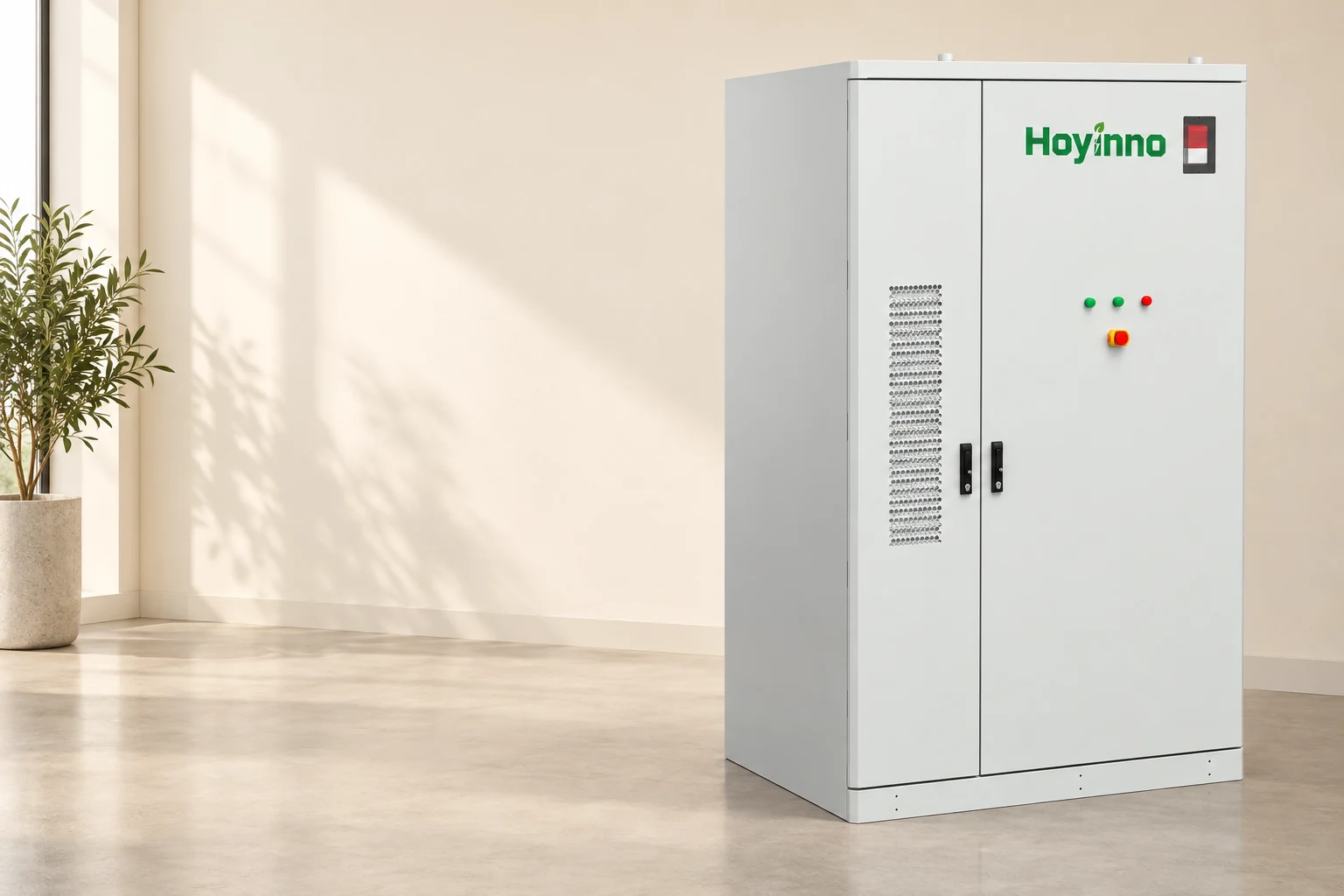
The 418 kWh liquid-cooled battery system listing identifies a storage product family. Its presence in a proposal does not establish permitted export, seamless transfer, black start or compatibility with every inverter. Those are system-level claims requiring evidence for the exact configuration. A cabinet photograph cannot settle them.
Likewise, a product's nominal energy figure is not the energy guaranteed to a protected load for every operating condition. Compare the declared measurement boundary, usable operating window, conversion losses, auxiliary demand and the reserve maintained before an interruption. Ask for these assumptions in the same document as the proposed operating modes so that an attractive capacity figure is not separated from its limits.
Start With A Time-Based Load Picture
Energy Demand And Peak Power Answer Different Questions
For commercial and industrial applications, a load profile should show how demand changes over a representative day and across relevant seasons. Total energy describes how much must be supplied over time; peak and transient power describe the demand that equipment must support at a particular moment. Two facilities can consume the same daily energy while requiring very different power capability and control behavior.
For illustration, a steady 20 kW protected load over four hours requires 80 kWh at the load before allowing for losses, reserves and uncertainty. This arithmetic is not a battery recommendation. A short motor-starting demand, an additional cooling load or a changed operating schedule can alter the equipment requirement without changing that simple four-hour calculation in an obvious way.
Model A Shortfall That Lasts Longer Than Expected
Australian government solar-design guidance distinguishes grid-connected arrangements from independent systems and highlights the need to account for demand beyond daytime generation. For a comparison, test a realistic low-generation period as well as an average sunny day. Include the starting battery condition and any limit on charging from an alternate source. An annual energy total can hide a critical shortage lasting only a few hours.
Compare usable battery energy against the defined service window, then examine recovery. A system that survives one evening may still begin the next day with little reserve if solar availability remains low. An independent arrangement needs an explicit response to that condition. A hybrid arrangement may use the utility when available, but cannot rely on it in a scenario that assumes the utility has failed.

Describe Outage Behavior As A Sequence Of States
Island Operation Needs An Explicit Load Boundary
Identify which loads remain supplied, which are shed and which are excluded during an interruption. The protected boundary may be smaller than the facility's normal demand. That distinction affects both cost and expectations. A proposal describing only total building consumption leaves too much ambiguity about what the backup function is intended to accomplish.
Document the expected states before, during and after a utility interruption. Include detection, separation, establishment of a local supply, load acceptance, low-energy response and return to normal service. Transfer time and load compatibility should be stated as verified characteristics of the proposed system. Sensitive equipment may have requirements that a generic backup label does not address.
Restart And Reconnection Are Separate Claims
Continuing to operate from an already energized state is different from starting a fully de-energized local system. Ask whether the proposed arrangement supports the required restart condition and which auxiliary supplies must be available. The same question applies after storage reaches its lower operating limit. Avoid interpreting a demonstration under favorable conditions as proof of every restart scenario.
Resolve The Trade-Off Between Savings And Reserved Energy
Battery dispatch for bill reduction can conflict with retaining energy for an unexpected interruption. A system that routinely discharges deeply before an expensive tariff period ends may have less reserve when an outage begins. Compare control priorities under the same assumptions: reserve level, charging opportunities, expected interruptions and any limits on grid charging or export.
For on grid off grid hybrid solar comparisons, this trade-off is often more useful than asking which label is best. A stable utility and mainly daytime demand can favor a different arrangement from a remote site with overnight critical loads. There is no defensible universal winner without defining the required service and the consequences of losing it.
Keep the economic model consistent with the operating model. If the financial calculation uses the full storage window every day while the resilience calculation assumes a large untouched reserve, both benefits cannot be accepted without reconciling the schedule. State replacement, maintenance and auxiliary-energy assumptions explicitly. Treat savings estimates as scenario results rather than guarantees carried by a product name.
Look For Evidence At The Boundaries Between Components
Most comparison gaps occur where responsibilities meet: battery to power-conversion equipment, controller to meter, local source to utility, and installation to ongoing service. The service information and engineering information can help frame those discussions, but the project documents must identify the actual responsible parties and deliverables.
Ask for a function-by-function evidence list covering the proposed hardware and software revisions. Distinguish a component datasheet, a factory functional check and an acceptance test of the installed arrangement. Evidence at one level does not automatically establish the next. A capable cabinet can still be installed in a system whose control strategy does not meet the intended service requirement.

Choose The Arrangement By The Service It Can Demonstrate
A useful decision record states the normal operating mode, the protected load boundary, the required outage window and the unresolved evidence. Revisit it when the load schedule, connection terms or energy sources change. The technical article archive can provide further context, while the final choice remains tied to the site's own operating assumptions.
The practical value of an on grid off grid hybrid solar comparison lies in making those assumptions visible. Grid-tied generation can address energy purchases, independent operation must manage local adequacy, and a hybrid arrangement can combine functions when its controls and interfaces support them. Select the arrangement whose demonstrated behavior matches the required service, including the conditions under which that service will be reduced.
Frequently Asked Questions
Does A Hybrid System Always Supply Loads During An Outage?
No. That function depends on the exact equipment, isolation arrangement, controls, protected loads and available energy. The word hybrid does not establish transfer performance or restart capability.
Can An On-Grid Array Operate Without The Utility?
A conventional grid-following array normally cannot establish an independent supply by itself. Any additional island operation capability must be explicitly designed, permitted where required and verified for the proposed configuration.
Is A Larger Battery Always A Better Comparison Result?
No. Energy capacity does not replace adequate power capability, suitable controls or a defined reserve policy. Compare the service delivered under the same load and operating assumptions.
Why Does A Daily Energy Total Not Settle The Design?
It does not show when demand occurs, the size of short peaks or the duration of low solar availability. A time-based profile reveals shortages hidden by an average total.
What Should Be Clarified Before Choosing An Architecture?
Clarify the load boundary, grid connection terms, outage objective, available sources and evidence for each claimed mode. These conditions provide a consistent basis for comparing alternatives.
 Off Grid Solar Suppliers Must Account For The Complete Delivery Scope
  Address: A401, Junxu Junchuang Park, 03A Qingyi Road, Nanhai District, Foshan City, Guangdong Province, China





