



 Home
Home
How Does An Off Grid Solar Battery Storage System Balance Loads And Autonomy?
An Off Grid Solar Battery Storage System balances daily loads and autonomy by coordinating generation, usable battery energy, conversion limits, and operating priorities.
It is not simply a solar array connected to a large battery. The system must keep voltage and frequency within limits, supply starting currents, protect the battery, manage variable sunlight, decide when to curtail or shed loads, and recover after low-energy periods. A workable design therefore begins with the load and operating rules, then selects compatible equipment around them.
The Energy Balance Starts With The Load
The design reference is the energy demanded over time, not the total nameplate wattage printed on equipment. A daily load profile shows when energy is consumed, which loads overlap, which devices have short starting peaks, and which services can be delayed when stored energy is scarce.
Separate Energy, Power, And Surge
Energy measured over hours determines how much generation and storage are needed. Power determines whether the inverter and battery can support the simultaneous load, while surge capability covers motor starts, compressors, pumps, and other brief peaks. A system can have enough stored energy for a day and still trip because its instantaneous power path is undersized.
Assign Load Priorities Before A Shortage
Critical, shiftable, and discretionary loads should be identified in advance. Communications, safety equipment, controls, refrigeration, or water treatment may need continuity, while some heating, pumping, or process tasks can move to sunny hours. This hierarchy allows the controller to protect essential operation instead of waiting for a low-voltage shutdown.
Solar Production Must Be Evaluated Across Time
Solar yield changes by hour, season, weather, temperature, shading, orientation, and module condition. A design based only on an annual average can hide the low-production period that actually determines storage and backup needs. The useful calculation compares time-series production with the same time resolution used for loads.
Use The Worst Relevant Operating Window
The worst case is not automatically the darkest historical day. It is the credible operating window defined by service importance, acceptable curtailment, maintenance access, and backup strategy. A clinic, telecom site, workshop, and seasonal camp can tolerate different risks. The design basis should state the chosen weather record, seasonal demand, reserve target, and recovery expectation.
Account For Conversion And Environmental Losses
Module temperature, cable drop, charge-controller efficiency, battery charge and discharge losses, inverter efficiency, standby demand, and auxiliary cooling all reduce delivered energy. These losses should be visible assumptions rather than one unexplained derating factor. The site's power conversion and control information can frame equipment roles, but project values still require engineering confirmation.
Battery Capacity Is Defined By Usable Energy
Nameplate capacity is only the starting point. The battery autonomy window depends on permitted state-of-charge range, temperature, aging allowance, discharge rate, conversion losses, reserve policy, and the load that remains after demand management. Usable energy must be stated at the system boundary relevant to the load.
Define Autonomy As A Service Promise
“Two days of autonomy” is ambiguous unless it names the protected loads, starting state of charge, solar contribution during the event, minimum state of charge, temperature, and end condition. A clear battery autonomy window might instead promise that critical loads are served for a defined period after solar input falls below a threshold, with discretionary loads shed in stages.
Leave Room For Aging And Recovery
Capacity fade does not only shorten discharge duration; it also changes how quickly the system returns to reserve after poor weather. Recovery analysis should test whether available solar power can support current loads and recharge the battery at the same time. If recovery would take too long, the design may need more array capacity, managed loads, or a dispatchable backup source.
Control Logic Connects The Hardware
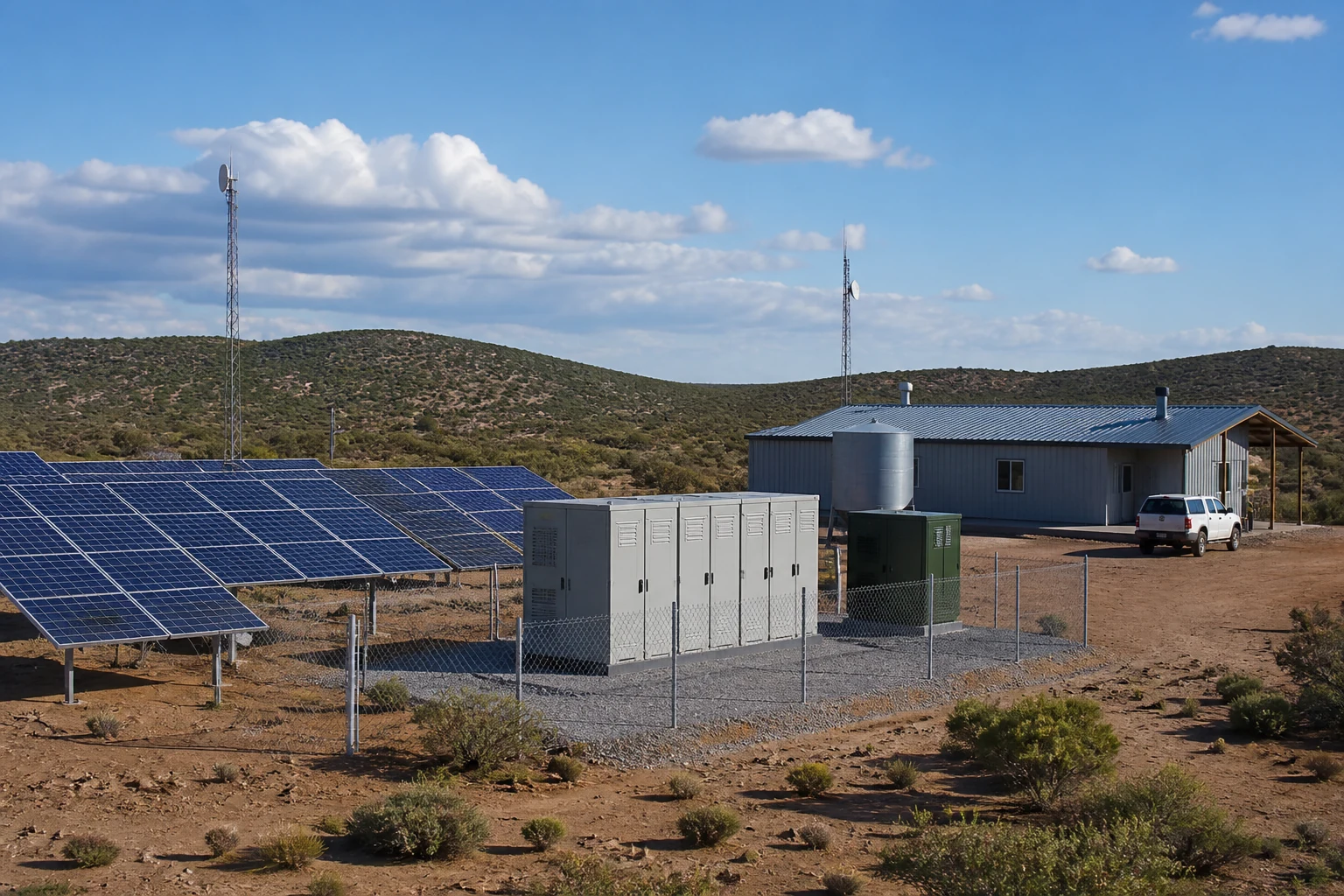
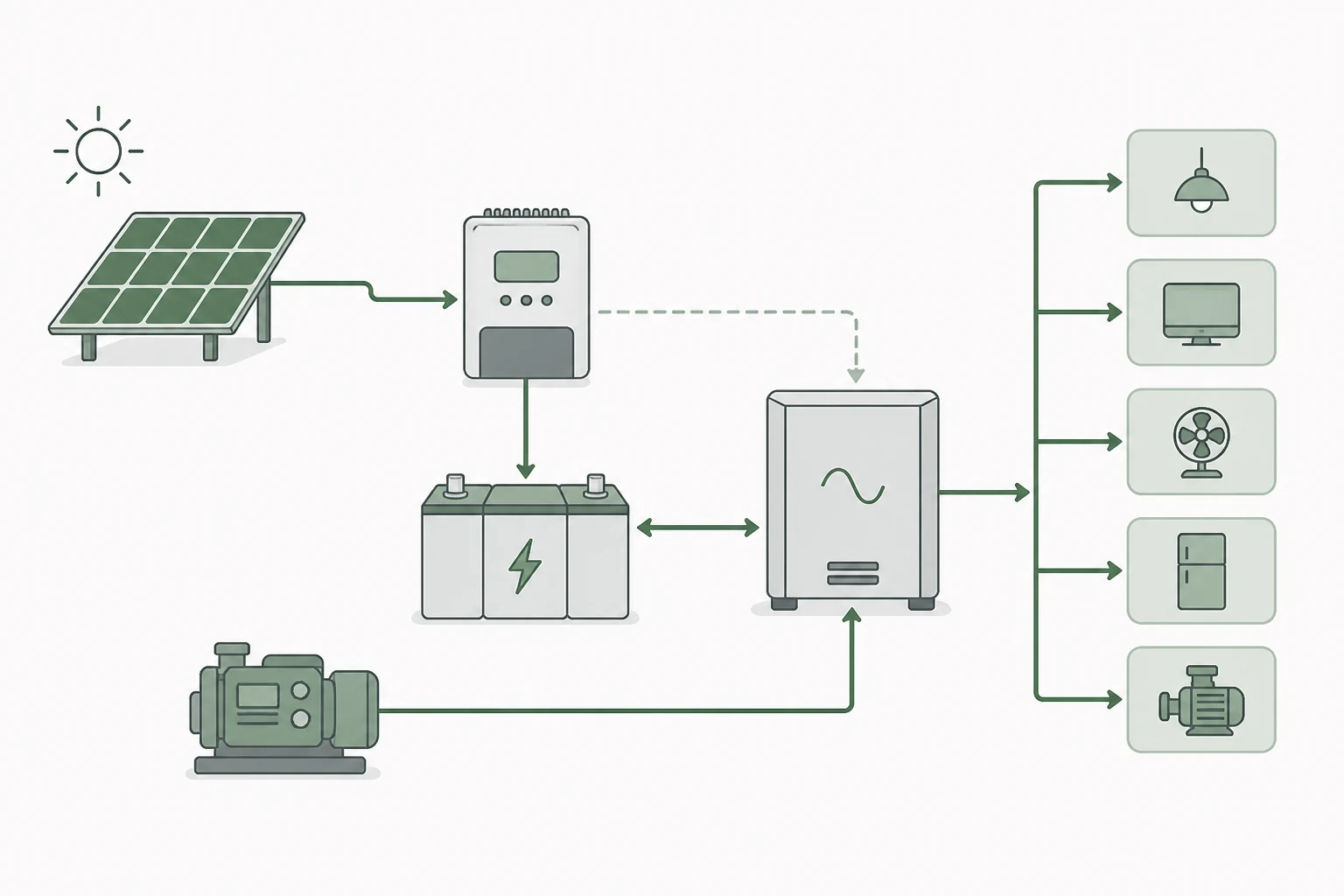
Remote-area off-grid architecture combines renewable generation, storage, conversion, and energy management. The control sequence decides how those resources behave through normal charging, load steps, low state of charge, generator start, fault isolation, and restoration.
Coordinate Charge Limits And Load Decisions
Solar charge control should respect battery voltage, temperature, current, and state limits while using available photovoltaic energy efficiently. The energy-management layer then applies load priorities, reserve thresholds, and backup rules. Independent settings can conflict: a conservative battery limit may be correct locally but still cause system-wide load loss if the supervisory logic does not anticipate it.
Make Every State Observable
Operators need a small set of trustworthy signals: solar production, load, battery state, alarms, available power, backup status, and communications health. Events should be time synchronized so a fault can be reconstructed. Remote monitoring is useful only when local protection remains safe during a communication loss and field personnel can identify the current operating state.
Component Ratings Must Meet As A System
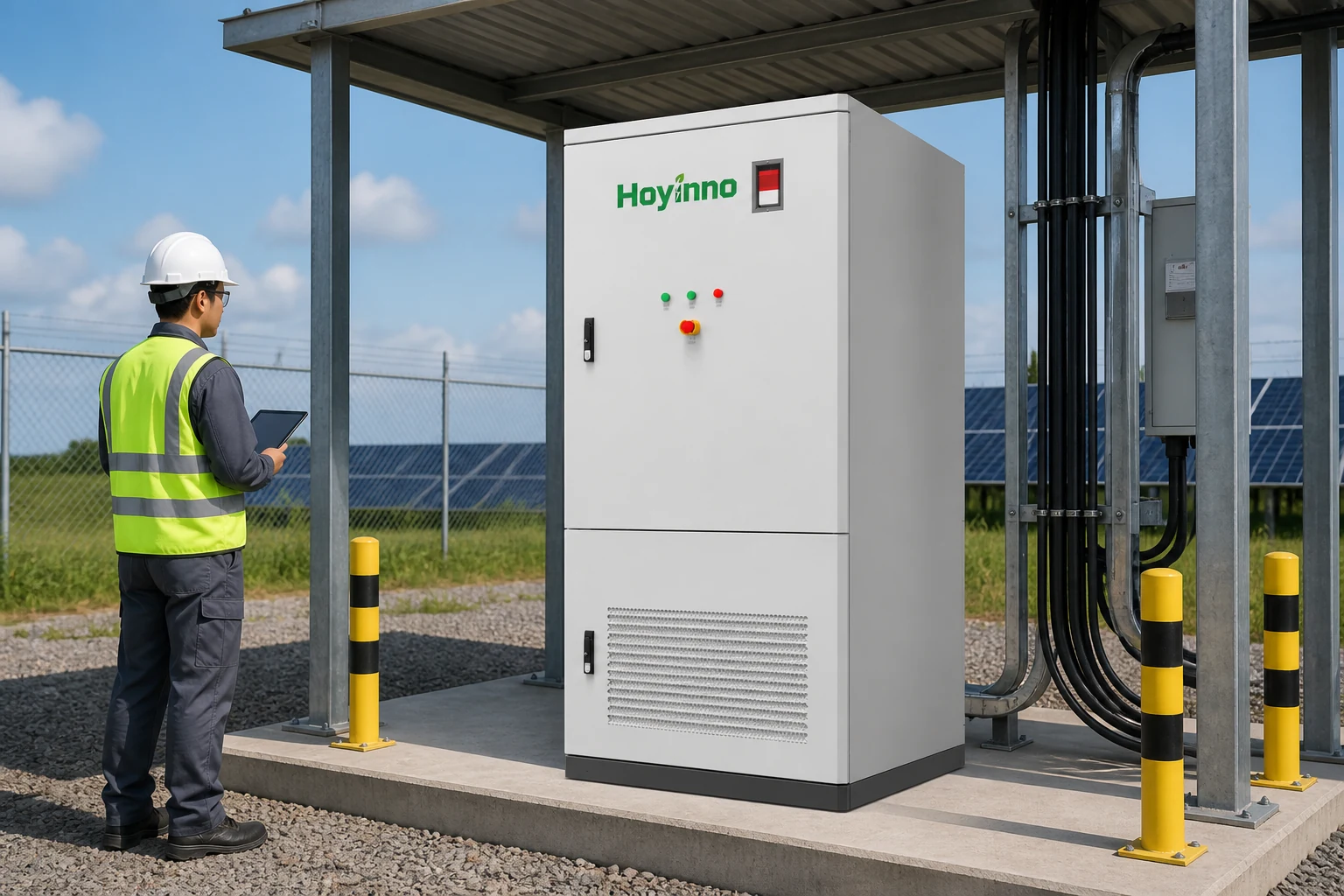
A correct component list can still produce an unreliable installation when interfaces are inconsistent. Voltage ranges, current limits, communications, grounding, protection, environmental ratings, thermal management, and enclosure access must be checked across the entire power path.
| Design question | Why it matters | Evidence to review |
|---|---|---|
| What is the hourly load and surge? | Sets energy, inverter, battery-power, and protection requirements | Measured profile, duty cycles, starting-current data, priority list |
| What solar resource covers the limiting season? | Determines array size and recovery after low-energy periods | Time-series weather, shading, orientation, temperature assumptions |
| What battery energy is actually usable? | Nameplate energy overstates service if reserve and losses are ignored | Operating state range, efficiency, temperature, aging, reserve policy |
| Can conversion equipment support all modes? | Charging, load supply, surge, backup, and restoration impose different limits | Operating envelopes, short-term ratings, mode-transition sequence |
| How is low energy handled? | Unplanned shutdown can damage service and complicate recovery | Alarm thresholds, staged load shedding, backup rules, restart logic |
| How will the site be maintained? | Remote access and spares can dominate downtime | Isolation points, service clearances, monitoring, spares, response plan |
The equipment format should follow the project rather than drive it. Cabinet, modular, and containerized approaches can each be suitable under different capacity, transport, access, climate, service, and expansion conditions. Product pages provide a starting taxonomy; final compatibility depends on confirmed interfaces and site constraints.
Commissioning Proves The Operating Sequence
Commissioning should demonstrate the design under controlled transitions, not merely confirm that each device powers on. The test plan should cover normal solar charging, load steps, surge events, low-state response, load shedding, backup start and stop where present, communication loss, alarms, emergency isolation, and restoration.
- Verify installation, torque, polarity, grounding, protection settings, clearances, ventilation, and labeling against approved drawings.
- Confirm sensor scaling and direction so production, load, and battery power are not misread by the controller.
- Exercise automatic states while recording thresholds, timing, power quality, and operator messages.
- Test a controlled loss of communications and confirm that local devices enter a safe defined state.
- Train site personnel on alarms, isolation, restart restrictions, inspection intervals, and escalation routes.
Long-term reliability also depends on operations. The available operation and maintenance service, technical support, and engineering scope should be matched to local response time, spare-part strategy, monitoring coverage, and owner responsibilities rather than assumed from a generic service label.
Frequently Asked Questions
Does More Battery Capacity Always Improve Reliability?
No. Extra capacity can extend autonomy, but it may remain undercharged if the array cannot support loads and recovery. Reliability also depends on inverter power, surge support, controls, protection, maintenance, environmental conditions, and the ability to reduce noncritical demand.
How Is An Off Grid Solar Battery Storage System Different From Backup Power?
It operates without relying on a continuously available utility grid, so it must balance energy over time and establish local voltage and frequency. A backup system may wait for a grid outage and support only selected loads for a shorter period.
Should A Generator Be Included?
That depends on service criticality, seasonal solar resource, fuel logistics, emissions constraints, maintenance capability, and acceptable curtailment. A generator can reduce required battery or array capacity, but it adds fuel, service, control, and starting-reliability dependencies.
What Data Is Most Important Before Sizing?
A measured or defensible hourly daily load profile is the strongest starting point. Add surge data, load priorities, seasonal changes, local solar and temperature records, site access, required autonomy, acceptable downtime, and expected future loads.
Why Can A System Shut Down With Energy Still Displayed?
Displayed state of charge does not guarantee available power. A temperature limit, current limit, voltage sag, inverter overload, protection event, communication fault, or reserve threshold may block discharge. Event logs and synchronized measurements are needed to identify the actual constraint.
The central principle is straightforward: an Off Grid Solar Battery Storage System is reliable when its energy assumptions, power limits, control states, protection, and maintenance plan describe the same service. Start with measured demand, define the limiting operating window, make reserves explicit, and verify transitions through commissioning. Equipment selection becomes clearer once that system logic is visible.
For further technical context, the site's industry article archive can supplement project study, while every rating and application assumption should still be confirmed for the actual site.
 An Energy Management System For Battery Storage Coordinates Every Operating Layer
  Address: A401, Junxu Junchuang Park, 03A Qingyi Road, Nanhai District, Foshan City, Guangdong Province, China