



 Home
Home
How Does Off Grid Storage Work Across Seconds, Hours, And Days?
Off grid storage works on several clocks: it responds within seconds, shifts energy across hours, and preserves reserve through longer resource gaps. Treating all of those jobs as one capacity number hides the operating problem. A system needs enough converter response for sudden change, enough usable energy for the planned load window, and a credible way to recharge before the next difficult period.
The timescale view helps planners separate functions that are often mixed together. A short load step may demand high power but very little energy. Overnight operation may demand substantial energy but modest power. Long-term service also requires thermal control, maintenance, and evidence that available capability still matches the operating plan.
One Asset Serves Several Operating Clocks
A battery system does not experience a site as an average day. It sees electrical events in sequence: a motor starts, a cloud reduces solar input, production reaches its evening peak, the battery approaches its reserve floor, a generator becomes available, and the next charging window begins. Each event has a different duration and a different limiting component.
Seconds Are Primarily A Power Problem
Fast events are governed by converter current, control mode, voltage and frequency limits, protection settings, and the condition of the battery. The energy used during a brief response may be small, yet the required power can be high. The design should show the permissible power-versus-duration envelope rather than relying on one continuous-power value.
Hours Are Primarily An Energy-Scheduling Problem
Longer operation depends on the chronological load profile, renewable availability, usable battery window, losses, auxiliaries, and reserve policy. The key question becomes which loads receive energy and when. An hourly balance exposes whether the system reaches an evening peak with enough reserve, even when the daily generation total looks adequate.
Seconds: Keep Electrical Service Inside Its Envelope
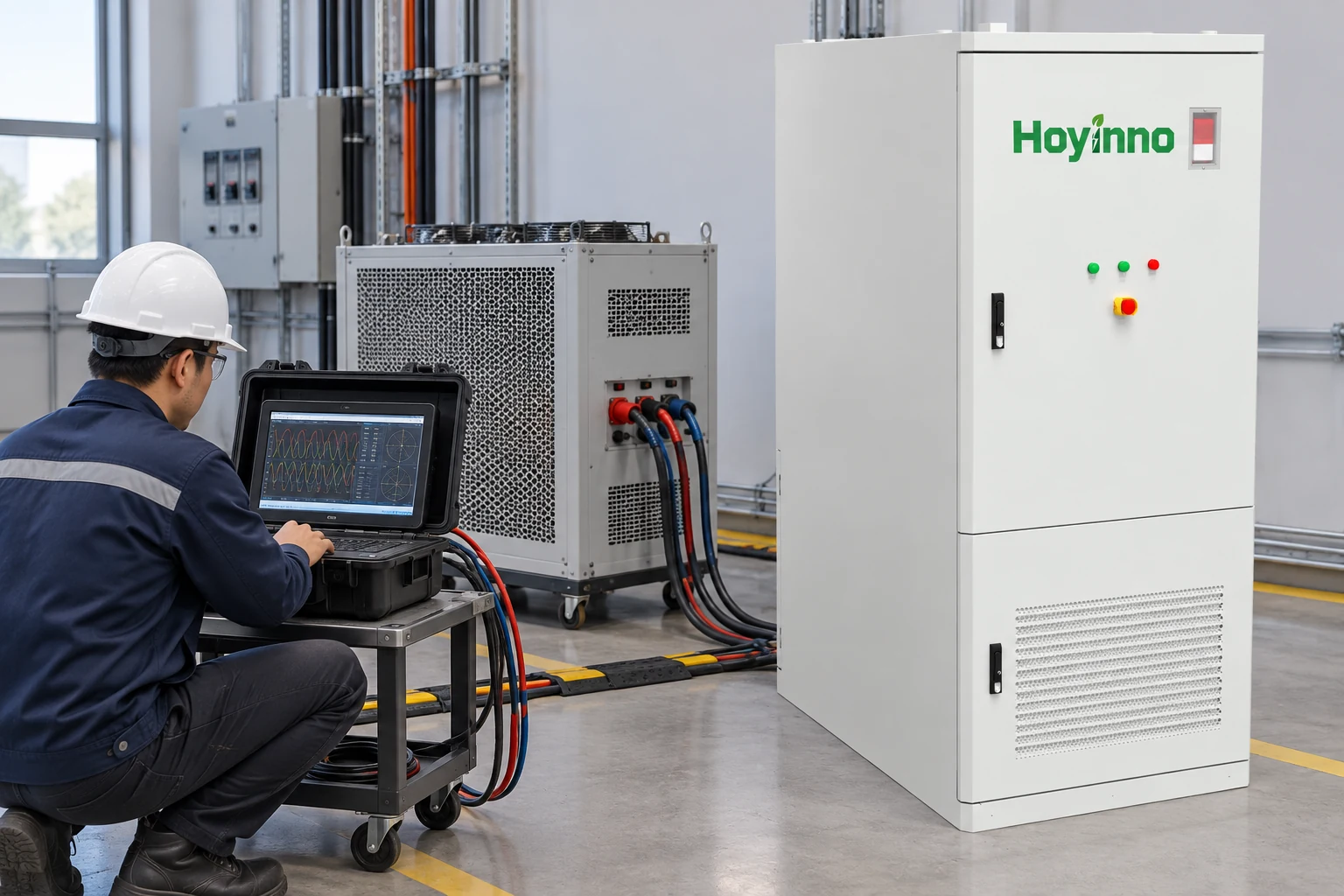
When generation or load changes abruptly, storage can absorb or deliver power before slower resources respond. This power response depends on the inverter, battery limits, control hierarchy, and protection design. It should be specified through measurable events such as load steps, renewable ramps, motor starts, and source transitions.
Converter Headroom Matters Before Stored Energy
A battery can hold substantial energy and still be unable to support a sudden demand if the power-conversion system reaches a current, thermal, or reactive-power limit. The operating plan should reserve headroom near expected peaks and state how active and reactive demands are prioritized. Temperature and state limits should be included in the same envelope.
Response must coordinate with protection. An inverter-led island may provide different fault current from a utility or generator. Fast controls must not conceal a fault, compete with another voltage source, or trigger unnecessary site-wide disconnection. Engineers should define who establishes voltage and frequency, how the converter behaves during a fault, and which device isolates the affected section.
The site's power conversion and control category shows the relevant interface layer. A project still needs its own one-line diagram, operating states, power limits, protection study, and witnessed transition tests.
Minutes To Hours: Move Energy Through The Daily Cycle
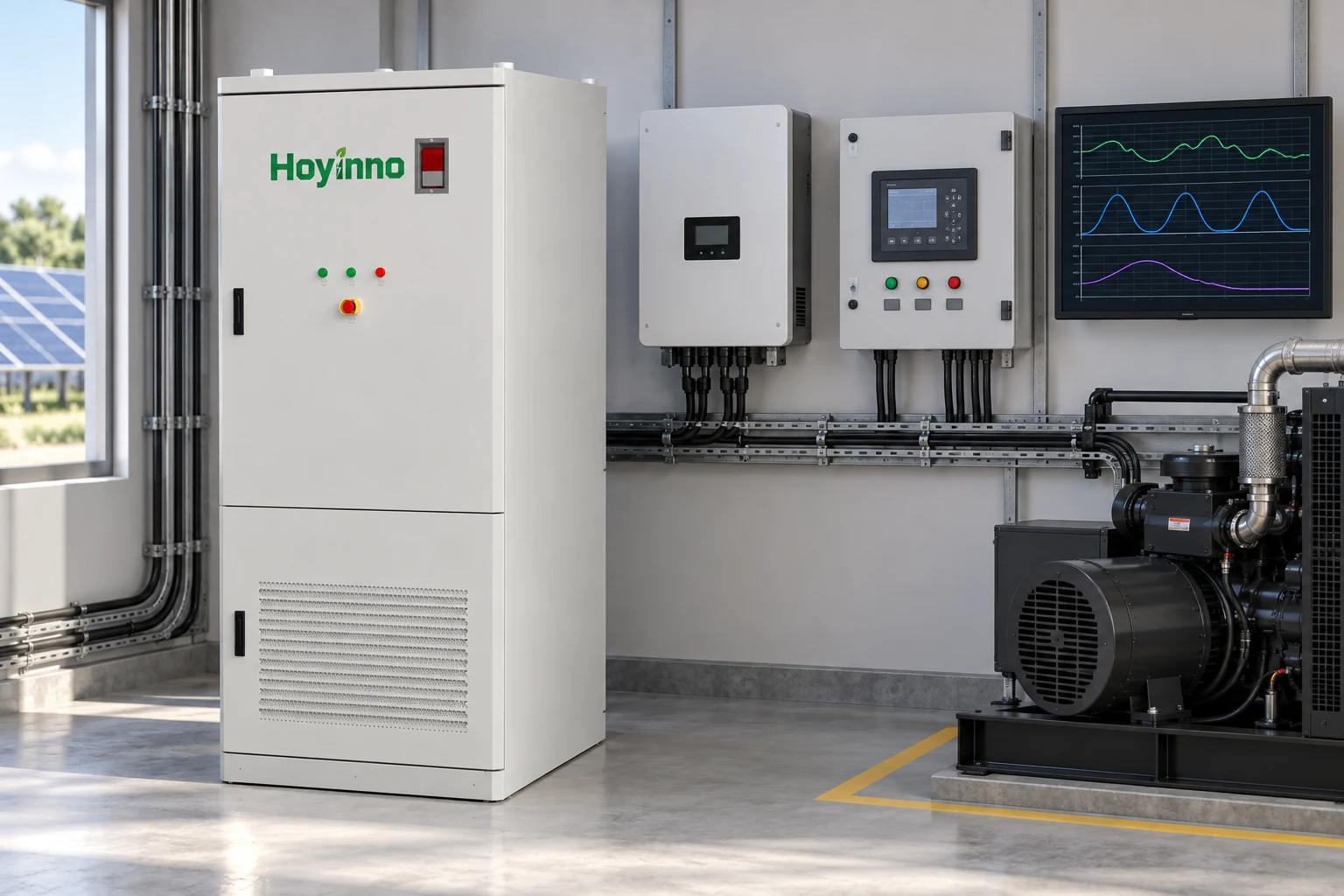
Across the daily cycle, the purpose of off grid storage changes from immediate stabilization to energy allocation. Charging may occur while essential loads continue to run, while discharging may be limited by the reserve needed for an uncertain evening or a generator start. The schedule therefore requires load and resource profiles rather than a daily total.
Usable Energy Is An Operating Window
The useful quantity is not nameplate capacity alone. It is the energy available between approved upper and lower limits after conversion losses, auxiliary consumption, temperature effects, reserve, and expected aging are considered. A visible state of charge value is useful only when its measurement basis and allowable operating window are understood.
Load Priority Converts Energy Into Service
Loads should be grouped by consequence, start behavior, permissible interruption, and operating schedule. A modest communication or cooling load may be essential even if its demand is small. A large process load may be deferred without losing the site's critical outcome. This priority matrix lets controls preserve useful service instead of consuming reserve uniformly.
| Timescale | Main Storage Job | Primary Limit | Evidence To Request |
|---|---|---|---|
| Milliseconds to seconds | Hold voltage and frequency through abrupt change | Converter current, control mode, protection | Power-duration curve and load-step trends |
| Seconds to minutes | Bridge source start, synchronization, or renewable ramps | Headroom, thermal limit, transition logic | Event sequence and synchronized measurements |
| Hours | Shift energy and protect priority loads | Usable energy, losses, reserve policy | Chronological load and generation model |
| Days | Survive poor resources and rebuild reserve | Weather sequence, fuel, charging opportunity | Sensitivity cases and recovery timeline |
| Months to years | Maintain required capability | Aging, temperature, maintenance, availability | Baseline tests, logs, inspections, capacity checks |
Days: Protect Autonomy And The Next Recharge Opportunity
Several low-generation periods change the design question. The off grid storage system must preserve critical service while remaining able to accept the next useful charging opportunity. Energy autonomy should therefore be tied to a defined load set, starting condition, resource sequence, and reserve floor—not described as an unrestricted number of days.
Model A Sequence, Not A Typical Day
A credible case may combine an evening peak, a cloudy morning, a delayed generator start, and a second weak solar day. The calculation should show served and curtailed loads, battery power, available generation, reserve, and any unmet demand over time. It should also state which assumptions are forecasts and which are enforceable operating rules.
Recharge Can Be More Constraining Than Discharge
After a difficult period, the battery must rebuild reserve while loads are still active. Solar input may arrive late, the generator may have a minimum loading rule, and the charger or battery may limit acceptance power. A valid recovery case proves that reserve returns before the next critical window without transferring the shortfall to another part of the system.
The same-site remote-area application page provides context for sites where access, fuel, and communications affect the operating plan. Those conditions should be expressed as project inputs rather than assumed from a generic location category.
Years: Preserve Capability And Trace Its Change
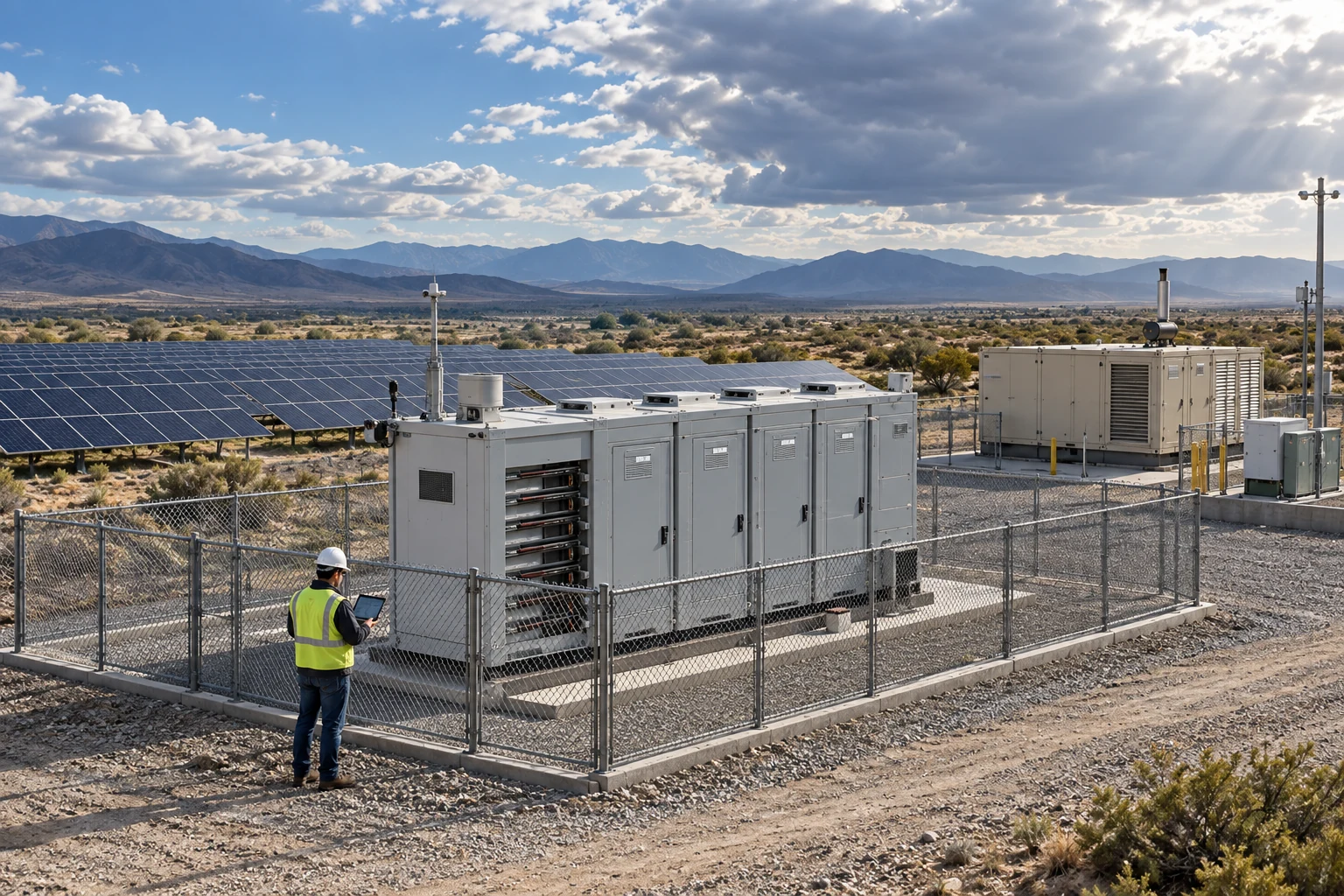
Storage performance is not static. Temperature exposure, charge and discharge patterns, time at high or low charge, maintenance, firmware, and equipment availability influence what the site can deliver later. Lifecycle planning should track whether the required power and usable energy remain available, not merely whether the cabinet is online.
Thermal Conditions Shape More Than Lifetime
Temperature affects immediate power, charging acceptance, auxiliary demand, and long-term degradation. The design should define environmental limits, cooling or heating behavior, sensor coverage, alarms, derating, and the response to a failed thermal subsystem. Site layouts must also preserve airflow and safe maintenance access.
Monitoring Needs A Decision Purpose
Battery monitoring should retain enough detail to explain an event and compare current performance with the commissioning baseline. Useful channels include battery power, voltage, current, temperatures, alarms, converter mode, available renewable production, generator state, served load, and operator commands. Retention, clock synchronization, permissions, and offline buffering deserve explicit requirements.
The same-site EMS overview supplies supervisory context, while operations and maintenance services provide a related service reference. Neither page substitutes for a project-specific signal list, ownership matrix, retention policy, or maintenance schedule.

Translate Each Clock Into A Procurement Test
A same-site product page such as the 233 kWh all-in-one cabinet provides equipment context and published parameters. It does not prove that one configuration satisfies every off-grid duty. The proposal should connect the selected battery, converter, controls, switchgear, sources, loads, environment, and operating sequence to explicit test evidence.
Give Every Requirement A Duration And Initial State
“Support the load” is incomplete unless the load, duration, starting battery condition, available generation, reserve, ambient condition, and pass boundary are stated. The same applies to a step response, generator bridge, overnight schedule, or multi-day case. Duration prevents a short power rating from being mistaken for sustained capability.
Test the integrated sequence. Factory and site tests should exercise representative transitions rather than only component alarms. The intended signal list and software versions should be present. Deviations need owners, corrected settings, and a repeated affected step. The engineering service page is relevant same-site context, but acceptance remains the buyer's documented project boundary.
- Freeze critical loads, operating states, and the electrical one-line diagram.
- Provide chronological demand and resource data at a useful time resolution.
- Define power-duration limits, usable energy, reserve, and recharge rules.
- Approve protection, source transitions, communications fallback, and load shedding.
- Witness fast response, hourly dispatch, degraded operation, and recovery cases.
- Retain baseline trends, approved settings, exceptions, and maintenance responsibilities.
A modular energy storage system may simplify staged expansion, but future modules still require compatibility, space, protection, thermal, control, and commissioning provisions from the initial design.
Frequently Asked Questions
Why Is Capacity Alone An Incomplete Storage Specification?
Capacity describes stored energy, not the power available for a brief event, the converter's control mode, the usable operating window, losses, reserve, recharge opportunity, or long-term availability. Buyers need power-versus-duration and chronological energy evidence together.
How Fine Should Load Data Be?
The interval must reveal the events the storage is expected to manage. Hourly data may support energy scheduling, but motor starts, converter transitions, protection, and fast renewable ramps require higher-resolution measurements or separate event assumptions. One interval rarely answers every timescale.
Can More Battery Replace Load Prioritization?
Additional energy can extend service, but it does not decide which load is essential, solve an excessive power step, correct protection, or guarantee timely recharge. Priority rules reduce ambiguity and help the same stored energy protect the outcomes that matter most.
What Evidence Should Remain After Commissioning?
Keep the one-line diagram, operating-state definitions, priority matrix, settings, software versions, signal list, protection study, test scripts, timestamped trends, exceptions, corrections, baseline capacity and power results, maintenance plan, and clear responsibility for later changes.
In summary, off grid storage is most useful when each required service is assigned a clock. Seconds define response and protection, hours define energy allocation, days define autonomy and recharge, and years define retained capability. That structure turns a general storage concept into requirements that can be modeled, priced, tested, and operated.
 What Must Off Grid Electricity Storage Balance Before The Grid Is Gone?
  Address: A401, Junxu Junchuang Park, 03A Qingyi Road, Nanhai District, Foshan City, Guangdong Province, China





