



 Home
Home
Off Grid Electricity Begins With Load Evidence, Storage, And Control
Off grid electricity is dependable only when local generation, storage, conversion, protection, and controls are designed around a measured load. It is a small electrical network that must create its own voltage and frequency, survive peaks, cover periods without renewable production, and recover safely from faults.
What Off-Grid Supply Actually Means
An isolated supply performs jobs normally handled by a public grid. It must establish an electrical reference, balance production and consumption, absorb surplus energy, shed load when resources are insufficient, and protect people and equipment. The design boundary therefore includes loads, distribution, generation, storage, conversion, controls, communications, protection, and operating procedures.
The System Boundary Extends Beyond the Battery
A battery moves energy between times, but it does not define the network. A complete standalone power system also needs a grid-forming source, switching and isolation, coordinated protection, metering, and abnormal-condition logic. Fuel generation, wind, hydro, or controllable demand may be included when local resources and reliability justify them.
Power Balance Is Continuous, Not Daily
Daily energy totals can look adequate while a motor start, cloud event, or coincident peak still causes failure. Supply and demand must match at every moment. Storage and rotating generation can buffer mismatches, but response rates, current limits, state of charge, and priorities must be compatible. Both time-series modelling and short-duration electrical studies are therefore necessary.
Every watt consumed must be produced or released from storage at that moment; every surplus watt must be stored, curtailed, or used.
Start with the Load, Not the Equipment Catalogue
Reliable off grid electricity starts with defensible demand data. Nameplates often overstate normal consumption yet miss starting current, short peaks, and future additions. The study should map interval demand, maximum coincident power, starting characteristics, seasonal changes, essential service windows, power-quality sensitivity, and realistic growth.
Energy Capacity and Power Capacity Answer Different Questions
Energy capacity describes how long storage can support demand; power capacity describes instantaneous output. A long, low load may need substantial energy with modest power, while a pump can demand high power briefly. Efficiency, reserve, allowed depth of discharge, temperature, and ageing reduce usable capacity, so both ratings need operating assumptions.
Critical and Flexible Loads Need Separate Rules
A critical load profile identifies which circuits must remain energized, for how long, and with what interruption tolerance. Flexible processes can move to strong-generation periods, while nonessential loads can be shed in stages. Panels, contactors, priorities, alarms, and restoration procedures must reflect this classification.
| Evidence | Question it answers | Common design consequence | Risk if omitted |
|---|---|---|---|
| Interval load data | When and how fast demand changes | Inverter power, ramp rate, and dispatch logic | Trips despite acceptable daily energy |
| Essential-service list | Which loads cannot be interrupted | Priority feeders and staged load shedding | Battery is consumed by noncritical demand |
| Starting current | What short peaks motors and transformers create | Surge margin and starting sequence | Voltage collapse or nuisance protection |
| Seasonal operating plan | How demand changes through the year | Generation mix and reserve policy | Good average performance but seasonal shortage |
| Growth allowance | Which future loads are credible | Expandable architecture and reserved capacity | Premature replacement or chronic overload |
Build a Local Energy Path Around Real Conditions
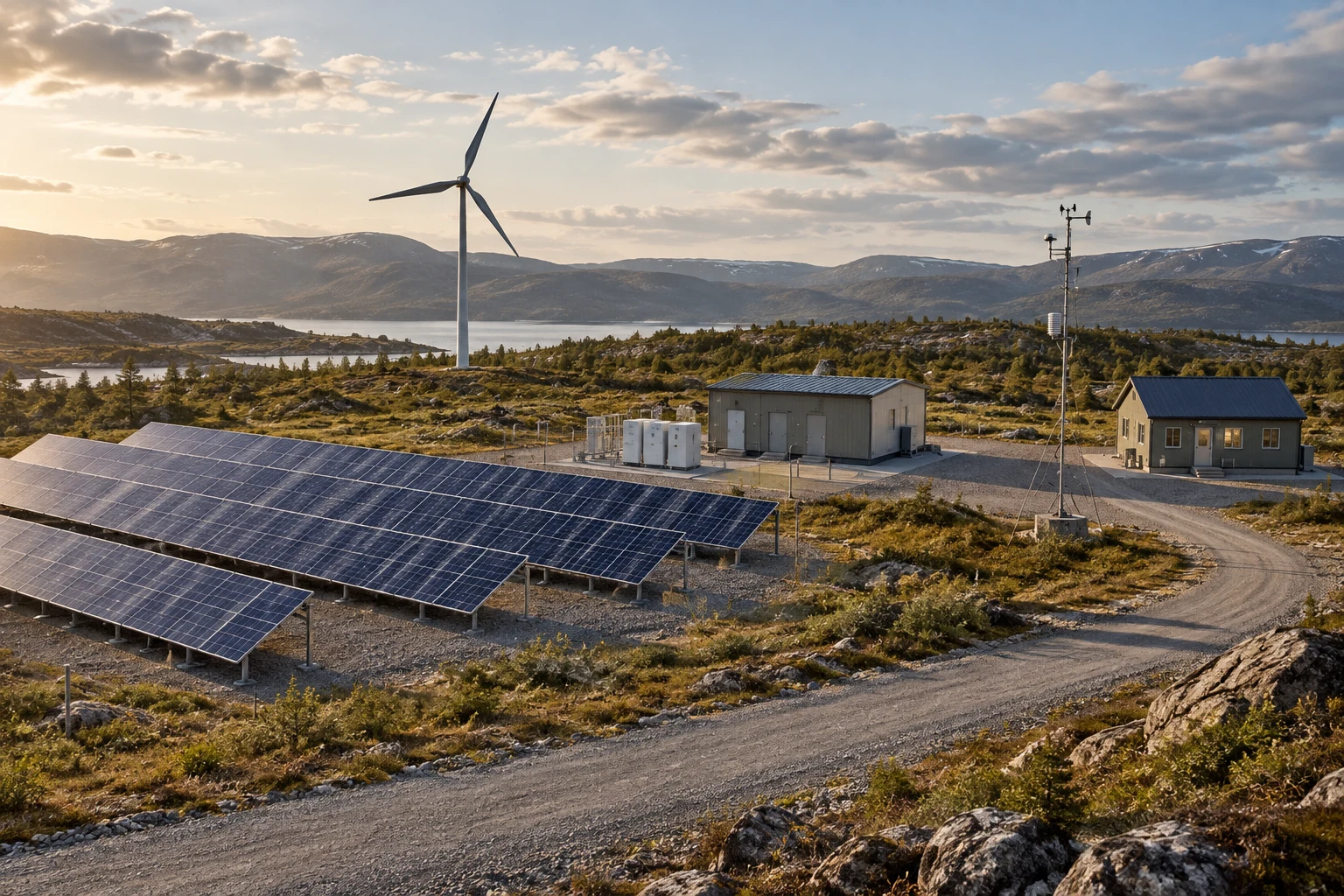
Generation is a time-varying resource, not one rated number. Photovoltaic output changes with season, time, temperature, clouds, dust, shading, orientation, and maintenance. Wind and hydro have different constraints. A generator can add firm capacity but introduces fuel, minimum loading, maintenance, noise, and starting limits. The model should represent these conditions.
Size Generation Against the Difficult Period
Annual averages can hide the week that determines adequacy. A difficult case may combine low renewable production, high demand, limited access, and reduced battery performance. Designers should test conservative scenarios and state curtailment, backup, and load-management assumptions. More generation can reduce storage duty but increase unused production and equipment cost.
Define Autonomy as an Operating Policy
Battery autonomy should state the supported load, state-of-charge window, environmental condition, ageing allowance, and restoration plan. “Two days” is incomplete unless it identifies the included feeders. More storage can reduce generator starts, but it cannot indefinitely cover an undersized array, unplanned load growth, or unavailable maintenance.
Conversion and Control Create the Electrical Grid
The grid-forming source establishes local voltage and frequency. Continuous rating, short overload capability, reactive-power support, harmonics, control modes, and generator compatibility matter as much as efficiency. The available BESS families show equipment categories, but a category page cannot prove that one model matches a specific network.
Grid-Forming Capability Must Match the Operating State
Some inverters follow an existing waveform; others establish one. An isolated network needs a source that forms and regulates the grid under required conditions. Black start, transfer, synchronization, reserve sharing, and fault-current contribution should be confirmed by operating mode. Behavior with a generator online can differ from battery-only operation.
Control Priorities Turn Components into One System
Microgrid controls decide when to charge, discharge, start generation, curtail production, shed flexible demand, and restore circuits. Priorities must be explicit when objectives conflict. Hoyinno describes monitoring and operating functions on its energy management system page; acceptance should verify what is actually configured for the site.
- Normal mode should define renewable priority, reserve margin, and permitted state-of-charge range.
- Low-energy mode should define staged warnings, generator actions, and noncritical load shedding.
- Fault mode should define isolation, safe shutdown, alarm routing, and permitted automatic recovery.
- Maintenance mode should prevent unexpected operation while allowing controlled testing.
Protection and Acceptance Have to Reflect an Islanded Network
Protection designed for a strong utility grid may behave differently on an inverter-dominated island. Lower, limited fault current changes detection and breaker coordination. Qualified professionals must address earthing, residual-current protection, isolation, surge protection, arc-flash risk, enclosure suitability, emergency shutdown, fire strategy, and local rules.
Commissioning Should Prove the Difficult Transitions
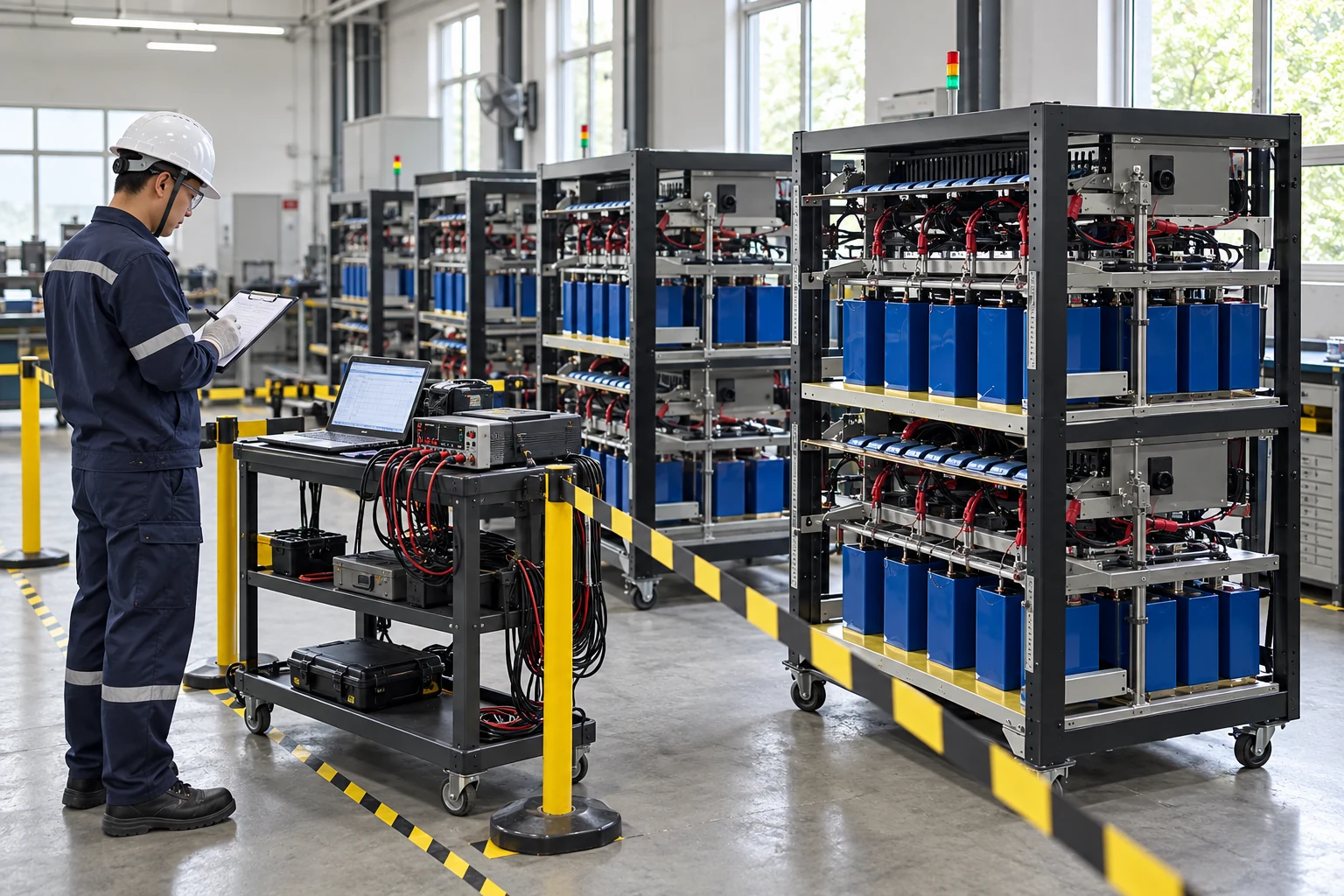
Acceptance should test operating sequences, not just components. Demonstrations can include black start, loss of one source, motor starting, step-load response, low-state-of-charge behavior, synchronization, communication loss, alarm escalation, staged load shedding, and safe shutdown. Settings, waveforms, event logs, and corrective actions then form a diagnostic baseline.
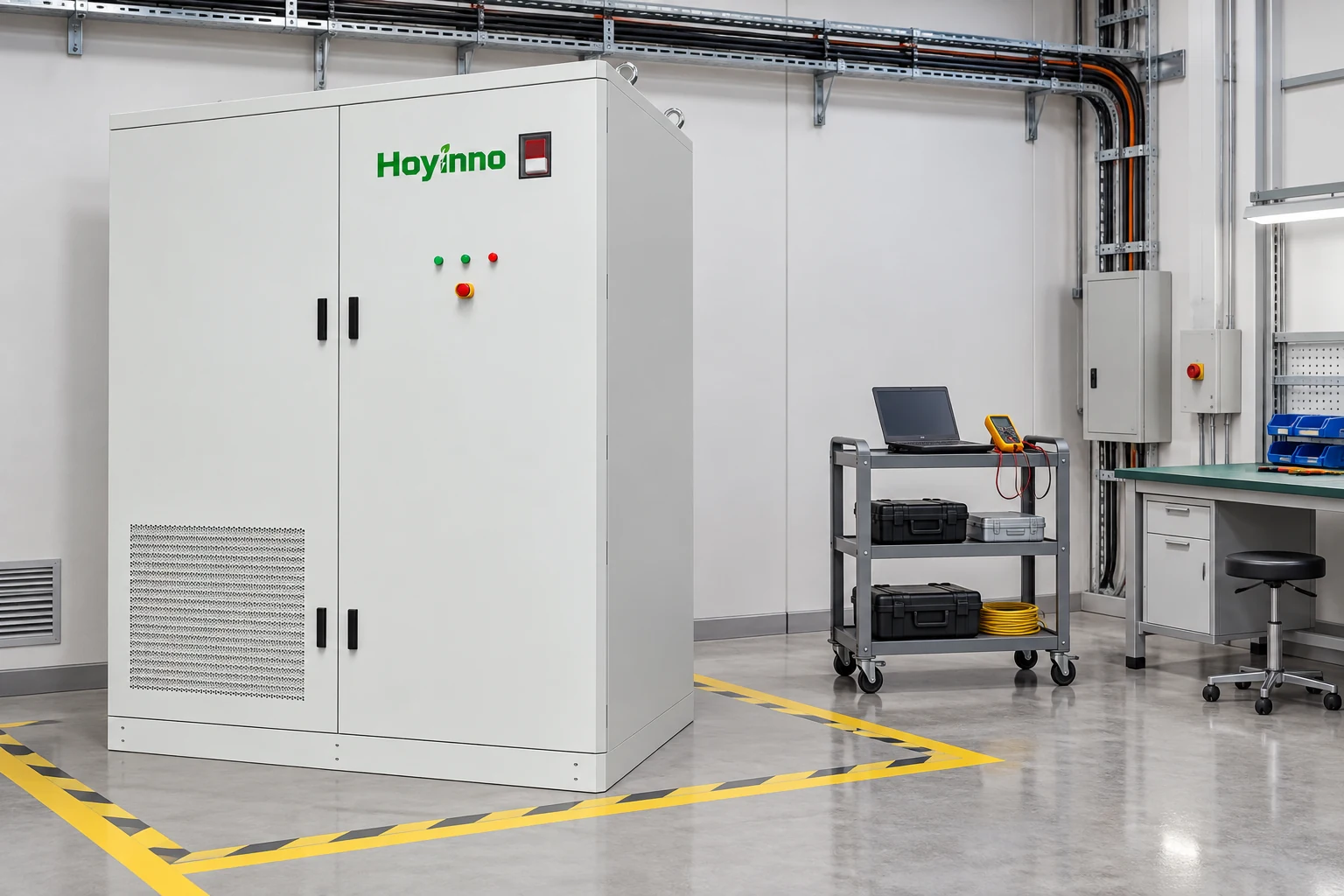
The 522 kWh liquid-cooled cabinet page lists model-specific subsystems and electrical data. Those values belong only to that model and should not be generalized or treated as proof of site suitability.
Operations Determine Whether the Design Remains Reliable
After handover, off grid electricity depends on disciplined operation. The site needs named responsibilities, alarm response times, spare-parts strategy, inspection intervals, configuration control, and safe restart procedures. Remote monitoring reduces diagnostic delay but does not replace local access, trained personnel, or tested manual procedures.
Trend Data Should Explain Energy and Fault Behavior
Useful records include load, renewable production, generator state, battery state of charge and temperature, inverter limits, alarms, communication health, and curtailed energy. Trends can reveal load growth, soiling, cooling problems, imbalance, or control changes. The operation and maintenance service page is a starting point for support scope, not a response plan.
The second use of a critical load profile is operational: compare actual demand with the design assumption. Recalculate observed battery autonomy as usable capacity and load change. Review microgrid controls to confirm approved settings match the active configuration and every change has an owner, reason, date, and rollback path.

Know When an Off-Grid Architecture Fits
An isolated architecture can fit where a grid connection is unavailable, unreliable, too slow, or uneconomic. It is less attractive when demand is unknown, spare-parts access is impossible, no one can maintain the system, safety ownership is unclear, or reliability requires excessive redundancy. A grid connection, hybrid arrangement, demand reduction, or different service model may be better.
A feasibility process should define objectives, gather load and resource evidence, model credible scenarios, compare options, and record assumptions. Hoyinno lists analysis services and broader engineering support; any study should still begin with auditable project data rather than a preselected equipment answer.
A mature standalone power system is judged by service continuity and evidence, not component count. It should explain how loads are supplied, shortages are managed, protection works with limited fault current, the network restarts, and operators detect changing performance.
Frequently Asked Questions
Is an Off-Grid System the Same as Backup Power?
No. Backup power supports selected loads during interruption of a primary supply. A fully isolated system has no utility grid to resume service, so generation, storage, conversion, controls, protection, and procedures support normal service continuously. A hybrid site can include both concepts, but its operating states and transfer rules must be clear.
Can Solar Panels Alone Provide Continuous Electricity?
Usually not for loads that continue after sunset or during low production. Solar output varies independently of demand, so storage, controllable generation, flexible demand, or a combination must cover the mismatch. A correctly configured inverter is also required to establish and regulate the local AC network.
Why Can a System with Enough Kilowatt-Hours Still Trip?
Stored energy does not guarantee adequate instantaneous power. Motor starting, transformer energization, or coincident load steps can exceed the inverter or battery current limit. Voltage drop, reactive demand, protection settings, and cable impedance also matter. Power studies and staged sequences address risks hidden by daily energy totals.
How Much Storage Is Needed?
There is no universal number. Storage depends on supported load, resource variability, autonomy, usable state-of-charge window, losses, temperature, ageing, generator policy, access, and acceptable load shedding. Time-series analysis should report both energy and power requirements under credible difficult conditions.
What Evidence Should Be Available at Handover?
Useful evidence includes the approved single-line diagram, load assumptions, protection study, settings register, commissioning results, alarm matrix, control narrative, as-built drawings, software records, spares, maintenance plan, training record, and emergency procedures.
Off grid electricity becomes reliable when design begins with measured demand, separates power from energy, models weak resource periods, proves protection and transitions, and gives operators practical data and procedures.
 How Should An Off Grid Solar Power Setup Progress From Load Survey To Commissioning?
  Address: A401, Junxu Junchuang Park, 03A Qingyi Road, Nanhai District, Foshan City, Guangdong Province, China





