



 Home
Home
Which Seven Inputs Define Reliable Off Grid Solar Power Solutions?
Reliable off grid solar power solutions begin with seven project inputs: load, solar resource, autonomy, conversion, controls, site conditions, and acceptance evidence. A catalog cannot replace these inputs because an isolated system must balance energy over time, supply instantaneous demand, survive predictable weather gaps, and recover safely without a utility grid.
1. Set The System Boundary
The boundary states what must be powered and which sources, controls, meters, protection devices, communications, and operating modes belong in the project. A whole facility, a critical-load bus, and a solar-storage-generator microgrid are different systems even when their battery capacity is similar.
Map Sources, Loads, And Command Ownership
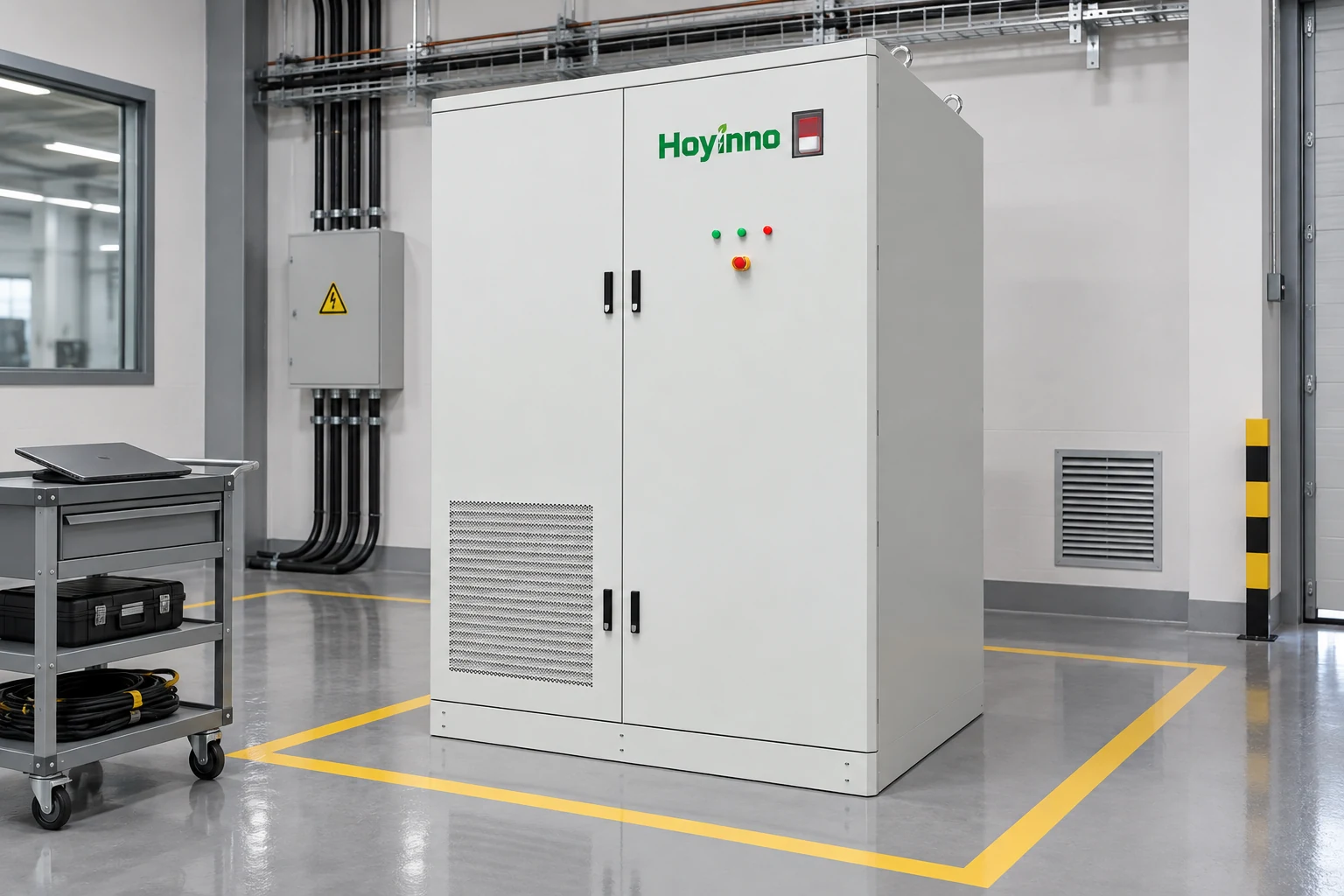
A useful single-line and control map shows the photovoltaic array, battery, conversion equipment, distribution boards, critical and noncritical loads, generator if present, metering points, and the controller responsible for each command. It should state whether the site must black start, transfer between sources, or stay live during maintenance. Hoyinno presents its energy management platform as coordinating generation, storage, power conversion, alarms, and operating strategies; the proposal still needs to confirm the exact interfaces and functions included.
Label Evidence And Assumptions Separately
Metered interval data is stronger than a monthly bill, and a surveyed cable route is stronger than an estimate. When a measurement is unavailable, the design should expose the assumption, margin, and test that will replace it. This keeps uncertainty from disappearing inside an oversized battery or optimistic solar-yield figure. It also makes changes traceable: when a load grows, the effects on storage, inverter duty, cooling, and backup policy can be recalculated.
2. Input One Is The Load Model
For off grid solar power solutions, annual consumption alone is insufficient. The design needs demand timing, the largest coincident load, motor or transformer starting behavior, criticality, growth, and loads that can move to daylight hours. A measured critical load profile gives the strongest foundation because it reveals both energy and operational peaks.
Separate Energy, Power, And Surge
Daily kilowatt-hours influence how much energy must be generated and stored. Kilowatts and short-duration surge determine whether the inverter, conductors, and protection can support the load at a given moment. Two sites can use the same daily energy but need different equipment if one runs steady refrigeration while the other starts pumps. The study should preserve interval resolution, mark starting events, and identify reactive or nonlinear loads that may affect conversion equipment.
Use Priority Tiers For Scarce-Energy Conditions
Group loads as critical, controllable, and deferrable. Critical loads receive the longest support and clearest restart priority. Controllable loads may be curtailed at a defined state of charge. Deferrable loads may run during strong solar production. The hierarchy must describe an accepted service outcome, not arbitrary undersizing, and the same priorities should appear in controller settings and acceptance tests.
3. Input Two Is The Seasonal Solar Resource
A robust design uses the weak part of the year, not only the annual average. Seasonal solar resource evidence should reflect cloud patterns, horizon shading, dust, module temperature, rainfall, and the months when demand is highest. Resource and load records should use the same time basis.
Show The Limiting Month And Loss Chain
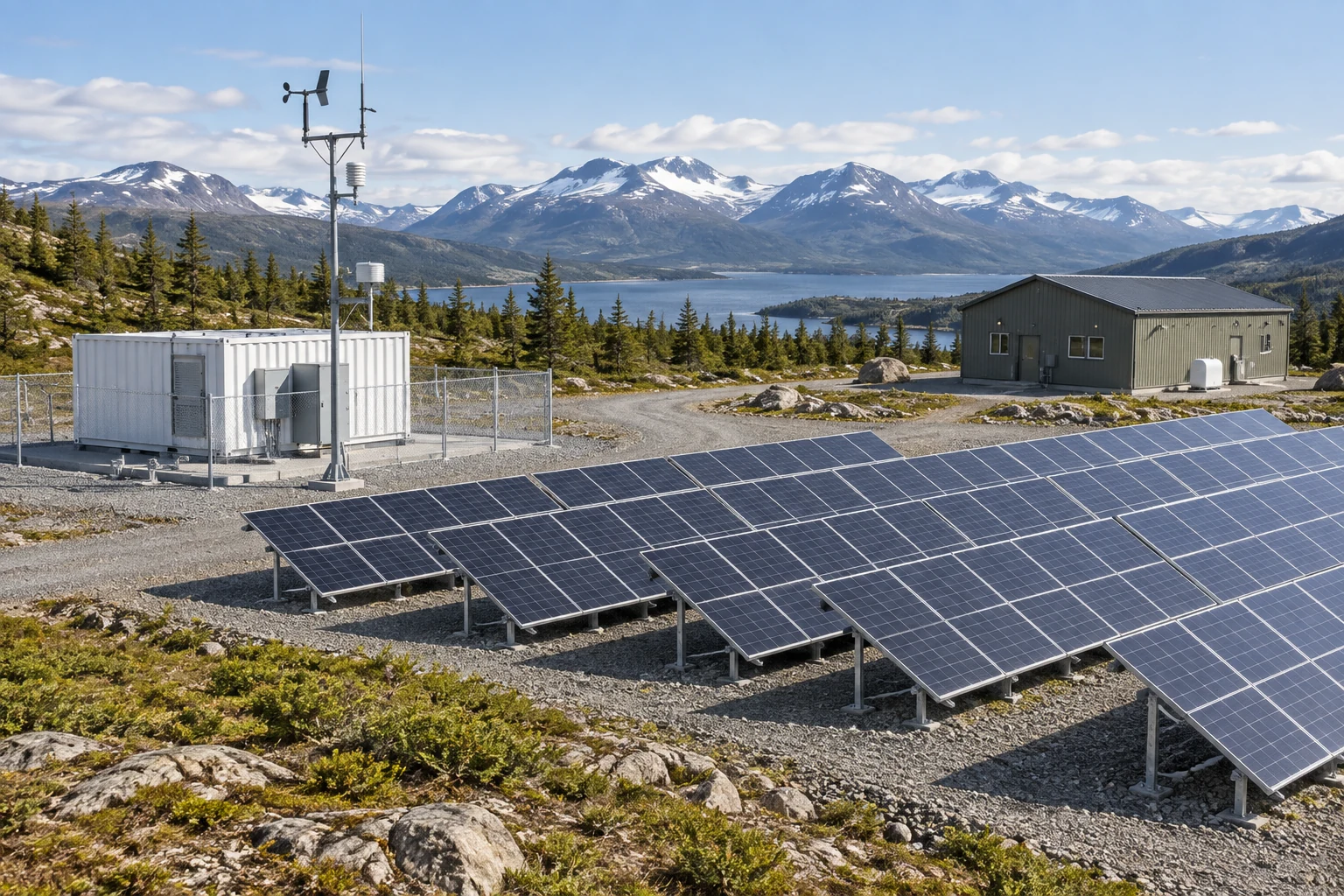
The limiting period may result from low irradiation, heat, persistent clouds, or a seasonal load increase. The proposal should identify that period and show losses for temperature, wiring, conversion, soiling, shading, and availability. A transparent loss chain lets reviewers test whether cleaning access, array layout, or load scheduling can improve the result. Site layout also controls row spacing, drainage, cable distance, security, future expansion, and the feasible array size.
4. Input Three Is The Autonomy And Backup Policy
Battery autonomy planning should start with the service level to protect. “One day of backup” is ambiguous unless it states which loads operate, at what demand, from what initial state of charge, through which conversion path, and whether another source may start. Longer autonomy increases stored energy, charging time, space, and replacement exposure.
Calculate Usable Energy And A Recovery Rule
Energy available to loads is reduced by the allowed state-of-charge window, conversion losses, auxiliary consumption, temperature, aging allowance, and emergency reserve. Those factors should be listed rather than hidden inside one nameplate number. The Hoyinno BESS category includes cabinet, modular, integrated, and containerized families, but the relevant architecture can only be selected after usable energy and power duty are defined.
Off grid solar power solutions also need a shortage policy. It may combine staged load shedding, a minimum reserve, generator dispatch, fuel constraints, or operational rescheduling. It should state start and stop thresholds, recharge priority, and recovery after shutdown. If no backup source exists, the design should quantify the accepted loss-of-load risk and the consequence of exhausting reserve.
5. Inputs Four And Five Are Conversion And Control
Energy capacity does not prove that a system can start a motor, ride through a step load, synchronize a generator, or protect a feeder. Conversion equipment must match voltage, phase, frequency, continuous power, overload duration, harmonic behavior, and fault requirements. The power conversion and control range is a same-site starting point, not a substitute for project duty evidence.
Verify Topology, Transitions, And Control Modes
The review should include a one-line diagram, overload curve, normal and abnormal power flows, protection inputs, and source-transition logic. Microgrid control logic should define measurement sources, dispatch priorities, state-of-charge limits, generator commands, curtailment, load shedding, alarms, communication-loss behavior, and manual override. Ask for a mode table covering normal operation, low resource, maintenance, communication failure, emergency stop, and restart, with the responsible controller and safe fallback state named for each mode.
For multi-source off grid solar power solutions, the narrative should identify which device establishes voltage and frequency, how other sources synchronize, and how conflicting commands are prevented. Accepted settings and software versions belong in handover so service personnel can distinguish the commissioned configuration from later changes.
6. Input Six Is The Site And Input Seven Is Acceptance
Temperature, humidity, dust, salt, altitude, flooding, lightning, ventilation, fire separation, noise, and access can influence enclosure, cooling, foundation, protection, and maintenance. The related 522 kWh cabinet page describes an integrated cabinet context, but model-specific claims should not be generalized without the selected datasheet and design.
Convert Conditions Into Tests And Handover Evidence
Specifications should state required ambient range, enclosure protection, thermal derating basis, drainage level, clearances, monitoring points, road and crane limits, spare strategy, remote connectivity, and service responsibilities. Hoyinno's service page lists engineering, consultancy, analysis, and operation-and-maintenance support; a contract should identify which deliverables and response boundaries actually apply. The acceptance pack should connect assumptions to approved drawings, settings, factory records, site tests, training, spares, and maintenance instructions.
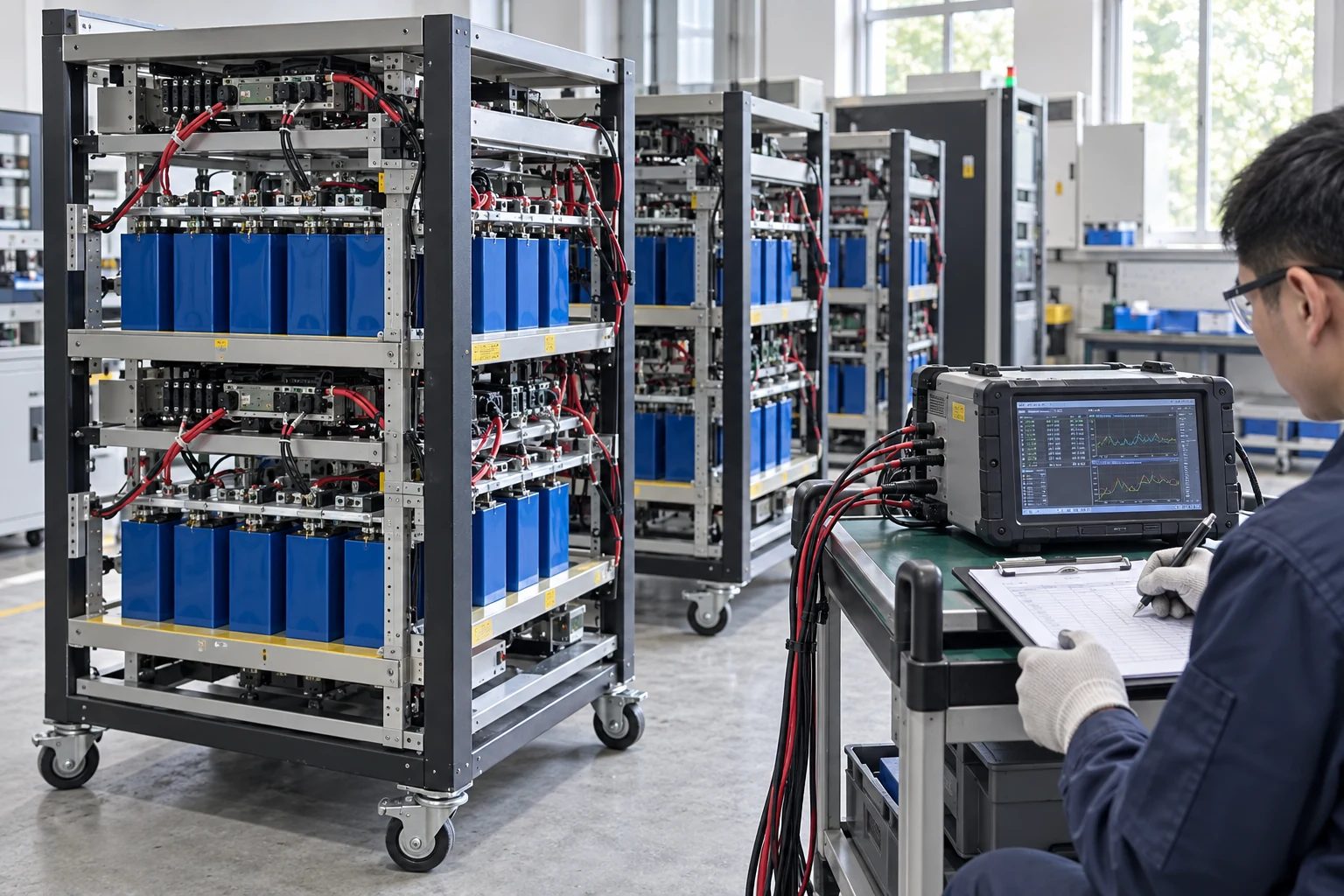
Tests should cover transitions as well as steady operation: a large load starts, solar output falls, a generator enters or leaves service, communication drops, or the battery reaches a control limit. Record voltage and frequency behavior, sequencing, alarms, fallback logic, recovery, exceptions, and final settings. The technical FAQ may help frame questions, but acceptance evidence must come from the selected design and tested assets.

Compare Proposals On The Same Seven Inputs
A complete proposal does not need identical equipment, but it should answer the same questions and expose open assumptions. Reviewers can mark each input as confirmed, assumed, excluded, or pending.
| Input | Minimum Evidence | Decision Controlled | Warning Sign |
|---|---|---|---|
| 1. Load | Interval profile, peak, surge, priority tiers, growth | Energy, inverter, feeder, and shedding duty | Only monthly kWh or nameplate sums |
| 2. Resource | Seasonal data, horizon, losses, limiting month, layout | PV capacity, recharge time, shortage exposure | Annual average with no loss chain |
| 3. Autonomy | Supported loads, duration, usable factors, backup rule | Battery energy, reserve, and recovery | Backup hours without a load basis |
| 4. Conversion | One-line, voltage, phase, overload, protection inputs | Topology, transformer, and redundancy | Nameplate power without surge evidence |
| 5. Controls | Mode table, command ownership, thresholds, fallback | Dispatch, transitions, shedding, and alarms | Dashboard images without operating rules |
| 6. Site | Environment, layout, access, logistics, service plan | Enclosure, cooling, foundation, maintenance | Generic outdoor claim |
| 7. Acceptance | Test matrix, criteria, settings, records, training | Proof that delivery matches approved design | Testing defined after delivery |
This method prevents a lower price from appearing complete when controls, site works, or verification are missing. It also avoids assuming that one architecture is universally best: equipment should follow the accepted service outcome and evidence.
Frequently Asked Questions
What Data Should Be Collected Before Requesting A Design?
Collect interval load data, major and starting loads, operating hours, growth, site coordinates, available solar evidence, generator or grid details, voltage and phase, space constraints, environmental conditions, and required service during a resource gap. Mark measured values separately from estimates.
Is Battery Capacity The Main Sizing Number?
No. Battery energy is one result. The system must also satisfy instantaneous power, surge, usable state-of-charge limits, recharge time, conversion losses, auxiliary loads, aging allowance, temperature conditions, and operating policy. More nameplate energy does not correct an undersized inverter or weak controls.
How Many Days Of Autonomy Are Usually Required?
There is no universal duration. It depends on load criticality, seasonal resource, accepted interruption risk, backup availability, fuel logistics, economics, and the ability to shed or shift demand. Compare service outcomes and assumptions rather than adopting a generic number.
When Is A Generator Useful In A Solar Microgrid?
A generator may cover rare long resource gaps, unusual peaks, maintenance, or contingency recovery. Its value depends on fuel access, minimum stable loading, emissions, noise, start reliability, maintenance, and control coordination. Model its operating hours rather than treating it as unlimited backup.
What Should A Site Acceptance Test Include?
Verify installation, grounding where applicable, protection settings, communications, measurements, charge and discharge limits, representative load steps, source transitions, alarms, emergency stop, fallback, restart, monitoring, and operator procedures. Record conditions, instruments, criteria, results, exceptions, and final settings.
Reliable off grid solar power solutions are defined by a traceable chain from measured demand to tested operation. Close the seven inputs in order, keep assumptions visible, and compare architectures only after each proposal answers the same service, site, control, and evidence questions.
 Off Grid Electricity Begins With Load Evidence, Storage, And Control
  Address: A401, Junxu Junchuang Park, 03A Qingyi Road, Nanhai District, Foshan City, Guangdong Province, China





