



 Home
Home
Which Site Risks Should Off Grid Solar Solutions Resolve Before Equipment Selection?
Off grid solar solutions become dependable only when site demand, renewable supply, storage, controls, protection, and operating constraints are verified before equipment selection.
Define the Operating Boundary Before Comparing Equipment
Separate Critical Loads from Deferrable Loads
A useful site load profile records more than monthly consumption. It identifies interval demand, starting current, power factor, seasonal variation, weekday and weekend patterns, and the duration of every essential process. Loads should be grouped as critical, controllable, and deferrable, with an explicit restoration order after a shutdown. Water pumps, compressors, refrigeration, ventilation, communications, and control systems can create short peaks that are invisible in daily kilowatt-hour totals. When measured data is unavailable, temporary logging and a conservative operating schedule are more defensible than a single nameplate sum.
State the Resilience Target in Observable Terms
“Reliable power” is not a measurable requirement. A better statement defines maximum unserved energy, permitted outage duration, minimum state of charge, recovery sequence, black-start expectations, and the weather or maintenance event the system must withstand. For example, a cold-storage load may tolerate a short transfer but not an extended interruption, while a pumping process may be scheduled around available energy. This distinction determines whether the design needs battery reserve, generator support, redundant conversion equipment, or stronger demand control.
The remote-area off-grid solution overview illustrates the combined roles of generation, storage, conversion, and local energy management. That architecture is a useful starting map, but every project still needs site-specific thresholds and failure responses.
Test Solar Resource, Autonomy, and Seasonal Stress Together
Model the Worst Credible Operating Sequence
Solar resource variability must be tested as a sequence, not only as an annual percentage. A practical model examines the hours before a low-solar period, the storage state at its start, essential demand during the event, auxiliary consumption, conversion losses, and the energy needed to return to the normal reserve band. This reveals whether a system survives an adverse sequence or merely balances energy over a long average. Sensitivity cases should include higher load, reduced module output, battery aging, and one unavailable component.
Translate Autonomy into Usable Stored Energy
Battery autonomy planning begins with the load that must be served and ends with usable AC energy under specified conditions. Nominal battery capacity must be adjusted for allowable depth of discharge, state-of-charge reserve, temperature, aging, round-trip losses, inverter limits, auxiliary loads, and the desired end-of-life performance. A two-hour label is ambiguous unless it states which load level, reserve floor, ambient condition, and degradation point it assumes.
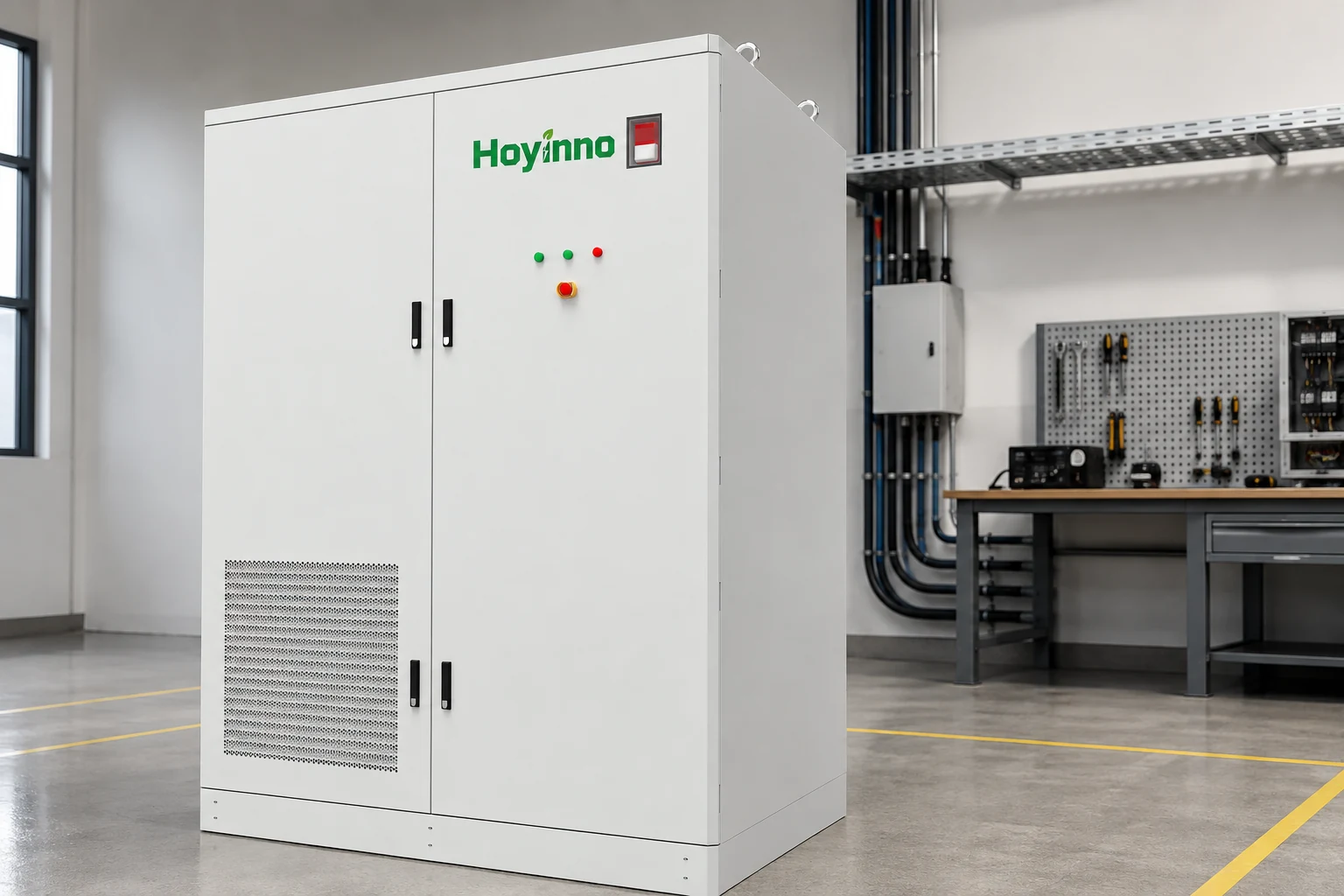
The 522 kWh modular energy-storage cabinet page provides an example of cabinet-level configuration and safety-related features. Such data should enter a shortlist only after usable energy, power duration, environmental rating, and interfaces are established.
Verify Power, Protection, and Dynamic Performance
Check Transients Instead of Only Rated Kilowatts
For each large or sensitive load, the design basis should state starting method, inrush, ramp rate, ride-through requirement, harmonic profile, and expected coincidence with other equipment. The inverter and storage system must support these events without violating voltage or frequency limits. Sequential starting, variable-frequency drives, soft starters, or process scheduling may reduce the required peak, but these measures must be part of the operating logic rather than informal assumptions.
Off grid solar solutions also need a stable response when generation changes quickly or a feeder trips. Simulations should cover step loads, cloud ramps, low state of charge, loss of a conversion module, and restart after de-energization. The study must also define earthing, protection coordination, maintenance states, and black-start behavior so acceptance criteria can be tied to commissioning records.
Design the Control Strategy as Part of the Power System
Write State-Based Logic That Operators Can Audit
A defensible microgrid control strategy defines normal, constrained, emergency, maintenance, and recovery states. Each state needs entry conditions, exit conditions, priorities, time delays, alarms, fallback behavior, and manual authority. Communications loss should not leave the system in an undefined condition. Local equipment should retain safe autonomous functions, while supervisory logic records why a transition occurred.
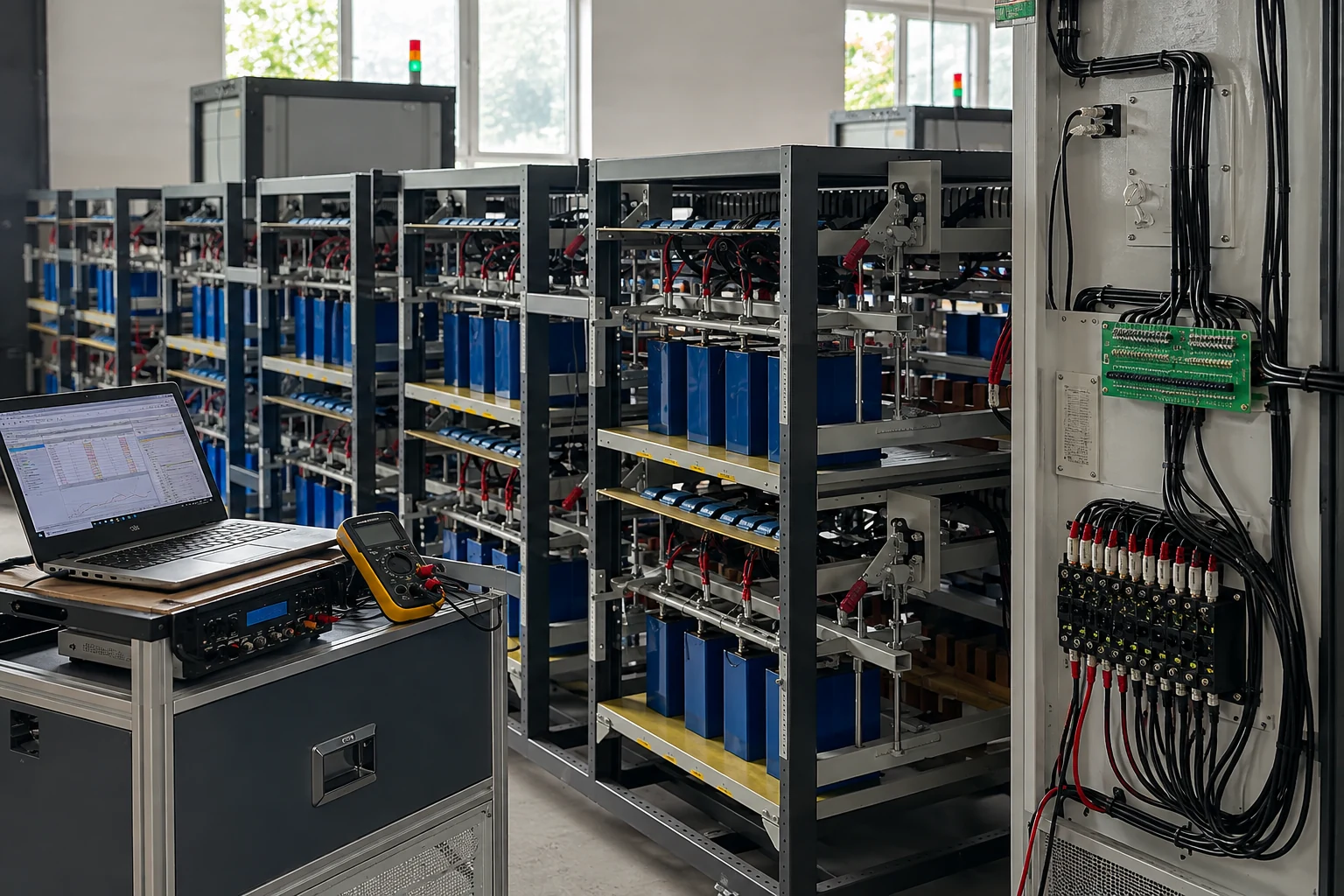
The energy-management system overview shows typical monitoring and control functions. For a specific project, the point list should reconcile inverter, battery, generator, meter, and environmental systems. Every high-consequence scenario should then become an acceptance test with a precondition, action, expected response, tolerance, and evidence file.
Screen Equipment Against Site Conditions and Lifecycle Duty
| Risk area | Evidence before selection | Decision affected | Acceptance evidence |
|---|---|---|---|
| Demand and transients | Interval measurements, motor starts, load priority, growth case | Inverter power, feeder design, shedding sequence | Recorded step-load and start tests |
| Resource and autonomy | Seasonal weather series, loss assumptions, adverse sequence | Array size, usable storage, backup policy | Model reconciliation and discharge test |
| Environment | Temperature, humidity, dust, corrosion, altitude, drainage | Enclosure rating, cooling, derating, civil works | Inspection records and alarm tests |
| Controls and communications | State logic, point list, failure modes, access rules | Controller scope, protocol gateway, cybersecurity | Factory and site scenario logs |
| Lifecycle support | Warranty conditions, spares, service response, end-of-life case | Supplier shortlist, maintenance budget, redundancy | Handover records and service plan |
Check Environmental Fit and Derating
High temperature can reduce conversion capability and accelerate cell aging; low temperature can restrict charging; humidity, salt, fine dust, insects, and flooding create different enclosure and maintenance demands. Equipment ratings should be checked at the actual altitude and temperature, not only at standard laboratory conditions. Cooling consumption belongs in the energy model, and air paths must remain serviceable after installation.
Physical integration is equally important. Foundations, lifting paths, door clearances, cable bend radii, fire separation, drainage, and access control can rule out a nominally suitable cabinet. The broader energy solution overview helps frame possible contexts, while final suitability remains an engineering decision.
Evaluate Lifecycle Duty, Not Only Initial Capacity
The commercial comparison should normalize usable energy at beginning and end of life, warranted throughput, operating temperature, allowed state-of-charge window, efficiency measurement conditions, availability exclusions, preventive maintenance, software support, spare parts, and response times. A lower initial price may carry a higher lifecycle risk if the warranty does not match the modeled cycling duty or if replacement modules cannot be obtained within the project’s resilience window.
Modularity can simplify expansion and service isolation, but it introduces controls, balancing, and compatibility questions. The containerized energy storage portfolio can inform formats to evaluate. Final selection still needs a compliance matrix mapping requirements to documents, calculations, certificates, or witnessed tests.
Plan Delivery, Commissioning, and Handover Before Purchase
Use Stage Gates to Prevent Late Surprises
A practical sequence includes design-basis approval, model review, interface freeze, drawing approval, factory acceptance, pre-shipment inspection, site installation checks, energization, performance testing, and operational handover. Each gate should have entry criteria and named approvers. Open deviations need an owner, due date, risk statement, and evidence of closure rather than disappearing into meeting notes.
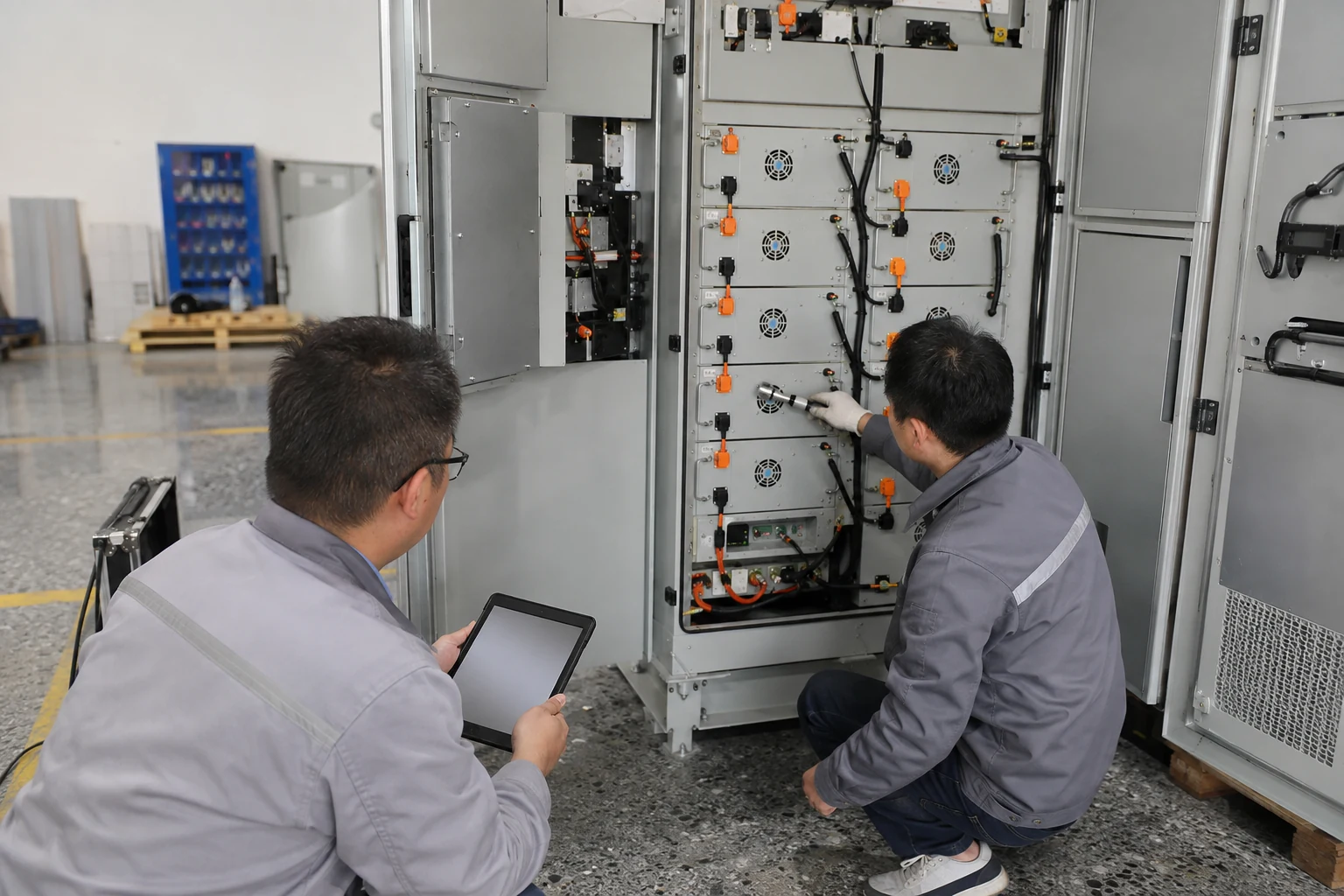
Factory tests should exercise real control interfaces. Site tests then confirm cable impedance, polarity, protection settings, sensor scaling, communications, auxiliary supplies, emergency circuits, and environmental controls. Operators need approved diagrams, alarm priorities, restoration and isolation procedures, maintenance tasks, software backups, and training evidence. The service information can help define supplier support boundaries, while project documents must assign monitoring, remote access, setpoint, firmware, incident, and degradation responsibilities.
FAQ
What information is needed before sizing an off-grid system?
At minimum, the team needs interval demand, critical-load definitions, motor-start details, future growth, seasonal solar data, site conditions, acceptable outage limits, backup policy, distribution constraints, and required end-of-life performance. Where measurements are incomplete, the uncertainty should be quantified and tested through sensitivity cases rather than hidden inside a single safety factor.
How many days of battery autonomy should a project specify?
There is no universal number. The correct duration depends on essential demand, consecutive low-solar conditions, load flexibility, generator availability, delivery logistics, required service continuity, battery limits, and the cost of unserved energy. The requirement should be expressed as usable energy and operating conditions, then validated against time-series scenarios.
Does adding a generator eliminate storage risk?
No. A generator can reduce the storage needed for prolonged energy shortages, but it adds fuel quality, delivery, maintenance, minimum-load, starting, emissions, acoustic, synchronization, and control risks. The design must model generator failure and define reserve behavior. Storage may still be essential for fast transients, silent operation, renewable capture, and black-start support.
How should suppliers of off grid solar solutions be compared?
Suppliers should answer the same compliance matrix using the same duty cycle and acceptance criteria. Compare usable end-of-life energy, sustained and transient power, environmental derating, protection behavior, control interfaces, safety evidence, warranty conditions, service coverage, spares, logistics, and demonstrated test results. Unresolved exceptions should be priced and assigned before award.
The Selection Decision Should Remain Traceable
A robust project does not begin with a cabinet model; it begins with an operating boundary that all disciplines can test. Demand data, adverse weather sequences, dynamic studies, protection settings, control states, site conditions, logistics, and lifecycle support should converge into one approved design basis. Equipment can then be screened against observable requirements rather than attractive headline ratings.
The most useful final record is a short chain of evidence: each risk has an assumption, each assumption has a verification method, each requirement has an owner, and each acceptance result is retained. When site conditions change, that chain shows which calculations and settings must be revisited. This discipline makes performance expectations clearer for engineering, procurement, operations, and investment review throughout the asset’s life.
 Which Seven Inputs Define Reliable Off Grid Solar Power Solutions?
  Address: A401, Junxu Junchuang Park, 03A Qingyi Road, Nanhai District, Foshan City, Guangdong Province, China





