



 Home
Home
Off Grid Energy Solutions Differ By Load Priority, Autonomy, And Recovery Path
Off grid energy solutions become dependable when design starts with load priority, autonomy duration, and a documented recovery path—not with a battery size alone.
Architecture Begins With The Service That Must Survive
An off-grid system is a small power network with no larger grid available to absorb forecasting errors. Its first design task is therefore to define which services must continue, which may pause, and which may be rescheduled. A clinic refrigerator, a telecom base station, a water pump, and staff housing can share one site while having completely different consequences when energy is scarce.
Critical Loads Need A Time-Based Hierarchy
A useful critical load hierarchy separates life-safety or communications loads from operational loads and deferrable convenience loads. The list should record watts, starting current, hours of use, time of day, seasonal variation, and the consequence of interruption. This turns a flat equipment inventory into an operating schedule that an engineer can model. It also exposes whether a short evening peak, an overnight base load, or a multi-day weather event is the dominant design condition.
Future Demand Belongs In The Base Case
Measured consumption is only a starting point when a site will add rooms, pumps, refrigeration, productive machinery, or network equipment. The feasibility record should identify committed growth separately from speculative growth and state when each load is expected. A modular expansion plan is usually more transparent than hiding uncertain future demand inside a large contingency. Hoyinno's remote-area solution overview provides application context, while the final sizing still depends on project measurements.
Autonomy Is A Service Decision, Not A Marketing Number
Energy autonomy target means the defined period during which priority loads can operate without normal renewable input. It should name the load tier, starting state of charge, permitted depth of discharge, conversion losses, temperature assumptions, and the recovery source. “Two days of backup” is incomplete if it does not say whether all loads or only critical loads remain energized.
Solar-Battery Designs Trade Fuel Logistics For Storage
A solar-plus-storage architecture can reduce fuel deliveries and routine engine service, but long low-resource periods shift risk toward larger energy storage, tighter demand control, or both. Seasonal solar data and an hourly load profile matter more than a single annual average. The IEA PVPS feasibility blueprint groups work into information gathering, modelling, and assessment because the same nominal capacity can behave very differently under distinct load timing and weather sequences.
Hybrid Generation Adds A Recovery Option
A generator, small wind source, or other dispatchable supply can shorten the storage duration required for rare events, yet it introduces fuel quality, spare parts, start reliability, noise, emissions, and maintenance obligations. The design should state automatic-start logic, minimum loading, fuel reserve, failed-start response, and how the battery will recover afterward. Hoyinno describes power conversion and control as a distinct system layer; that control layer is where source priorities and transitions must be verified.
Compare Solution Families By Operating Consequence
Several architectures can serve the same peak demand, but they do not create the same maintenance burden or failure behavior. The comparison should use one load model and one weather data set so that differences arise from architecture rather than inconsistent assumptions.
| Architecture | Best Fit | Main Strength | Primary Exposure | Evidence To Request |
|---|---|---|---|---|
| Solar plus battery | Predictable loads and strong solar resource | Low routine fuel dependence | Extended low-solar periods | Hourly simulation and curtailment record |
| Solar, battery, and generator | Critical loads with fuel access | Dispatchable recovery | Fuel and engine maintenance | Start logic, run-hours model, and fuel plan |
| Multi-renewable hybrid | Complementary wind, hydro, or solar resource | Diversified generation profile | Greater controls complexity | Coincident resource data and control narrative |
| Modular staged system | Demand grows in known phases | Capacity can follow verified growth | Interface and expansion constraints | Expansion envelope and compatibility statement |
The table is a screening tool, not a universal ranking. IRENA's guide for remote communities notes that technologies differ in modularity and operating characteristics; local resource quality, productive demand, governance, and maintenance capability determine which trade-off is acceptable.
Recovery Strategy Determines How The System Behaves Under Stress
Reliable off grid energy solutions describe what happens after forecast error, equipment unavailability, or an unusually long resource shortfall. A recovery operating strategy should define staged load shedding, restart order, reserve thresholds, manual overrides, alarm ownership, and the maximum time allowed before an operator responds.
Load Shedding Should Preserve A Minimum Service
Rather than allowing voltage collapse or a complete shutdown, controls can disconnect lower-priority circuits in stages. Each stage needs a trigger, delay, reset condition, and visible alarm. Operators should know which service remains at every state and whether automatic reconnection could create a second peak. Commissioning should test these transitions with realistic loads, not only confirm that individual devices power on.
Black Start And Recharge Need Separate Proof
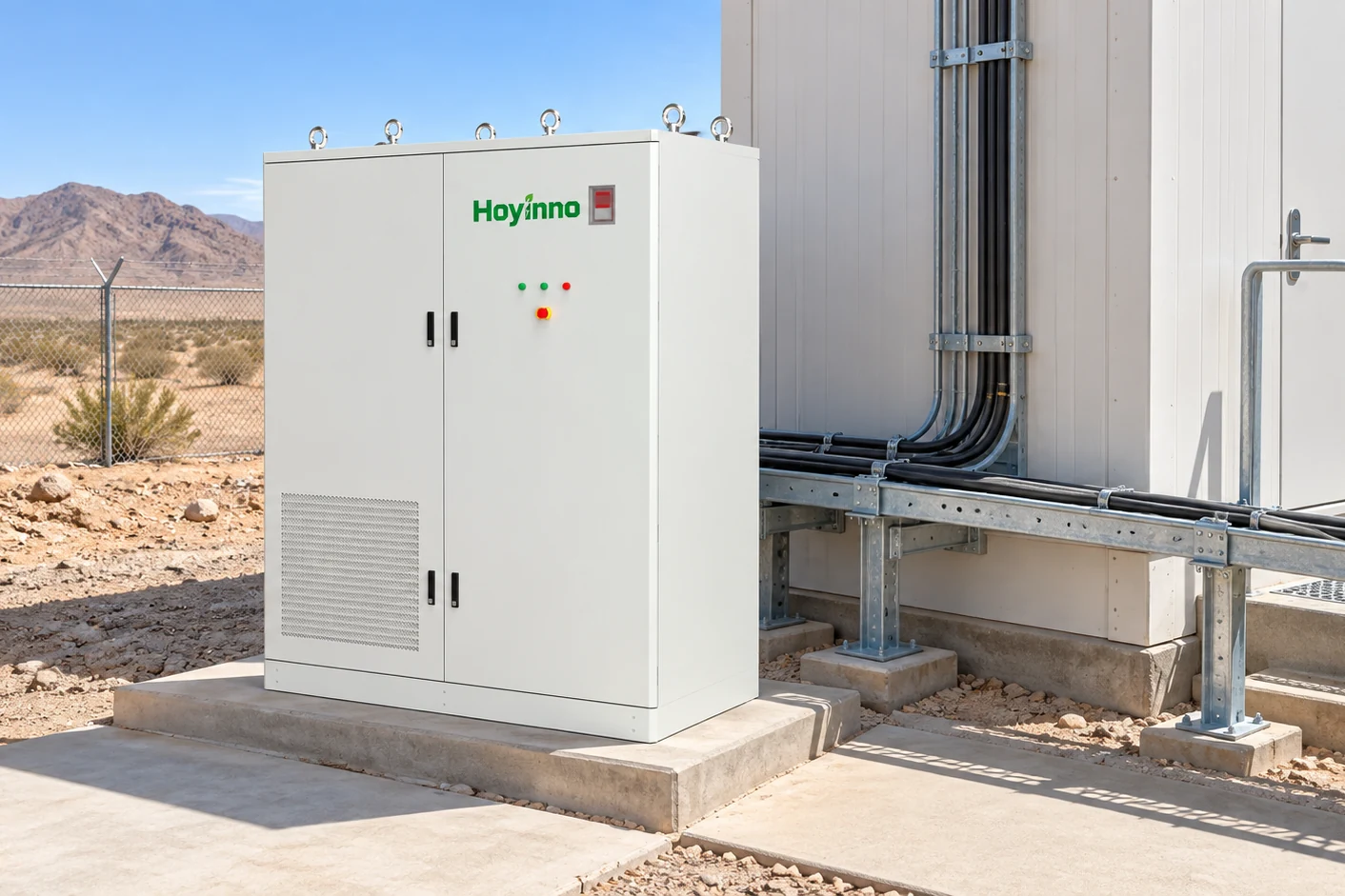
A system may ride through a short disturbance yet fail to restart after a deep outage. The test plan should cover controller power, protection reset, inverter energization, generator-assisted recovery when applicable, and the order in which circuits return. It should also calculate how many hours or resource days are needed to restore operating reserve while serving the minimum load. Hoyinno's 522 kWh cabinet page shows one storage product context, but project recovery evidence must come from the configured system.

Site Conditions Change Electrical And Maintenance Assumptions
High ambient temperature, dust, salt, humidity, insects, flooding, altitude, and difficult transport routes can change usable capacity, cooling demand, enclosure selection, cable routing, and service intervals. These are engineering inputs rather than geographic labels. A site survey should connect every observed condition to a design response and to the person responsible for maintaining it.
Access And Spares Are Part Of Availability
A component that can be replaced in one day near a city may create weeks of downtime at a remote site. The design record should list critical spares, diagnostic access, lifting and transport limits, remote monitoring channels, technician skills, and escalation contacts. The factory information page may help establish manufacturing context, while a project still needs its own spare-parts and service plan.
Procurement Evidence Should Connect Model Inputs To Acceptance Tests
A comparable proposal should show the source of load data, renewable resource period, loss assumptions, reserve policy, simulation time step, equipment boundaries, and exclusions. It should also identify which outcomes will be checked during factory inspection, installation, commissioning, and early operation. This prevents a modelled promise from becoming an untestable statement.
One-Line Diagrams And Control Narratives Must Agree
The one-line diagram shows electrical topology; the control narrative explains operating states. Reviewers should be able to trace metering, isolation, protection, source transfer, and load-shedding commands across both documents. Mismatched device names or undefined states are early warning signs. The site's battery energy storage overview can frame available categories, while tender documents should identify the exact configuration being offered.
Acceptance Criteria Need Measurable Pass Conditions
Tests should specify initial conditions, instruments, duration, tolerances, data to retain, and the action if a result falls outside the limit. Useful checks include steady-state load support, step response, source transition, alarm transmission, controlled load shedding, restart, and monitored recharge. A commissioning record with timestamps and trends is more useful than a simple “pass” box because it supports later troubleshooting and operating training.

Operations Data Should Close The Design Loop
The first months of operation should compare actual load, solar production, battery state, generator run hours, curtailed energy, alarms, and downtime against the model. Deviations can indicate changed behavior, sensor errors, maintenance needs, or unrealistic assumptions. A concise dashboard is useful only when thresholds lead to assigned actions. Hoyinno's industry-news library offers broader technical reading, but the site's own trend archive remains the strongest evidence for tuning its operating rules.
Review intervals should match the decisions they support. Operators may need daily alarm and reserve checks, while engineers can review monthly energy balance, peak demand, temperature, conversion losses, and source contribution. Seasonal reviews should compare actual weather and demand with the model before anyone concludes that equipment is undersized. When a set point changes, the record should preserve the previous value, reason, approver, effective date, and expected effect. This simple change history prevents a later team from treating an operating adjustment as an unexplained fault and gives future expansion studies a trustworthy baseline.
The practical conclusion is that off grid energy solutions should follow service priorities and credible recovery scenarios. When measurements, assumptions, controls, and tests form one traceable chain, decision-makers can compare choices without confusing installed capacity with delivered reliability.
A final review should be able to answer one plain question: which service remains available in each credible operating state, and what evidence supports that answer?
Frequently Asked Questions
What information is needed before comparing off-grid proposals?
Provide an hourly or sub-hourly load profile when possible, a critical-load list, seasonal resource data, growth assumptions, site conditions, outage consequences, operating skills, and fuel constraints. Require every bidder to use the same base inputs.
How is autonomy different from battery capacity?
Battery capacity is an equipment quantity. Autonomy is a service outcome defined by the loads served, usable energy limits, losses, temperature, initial state of charge, and the assumed availability of renewable or backup generation.
When does a generator improve an off-grid design?
It can improve resilience when rare long shortfalls would otherwise require excessive storage and when fuel, maintenance, and reliable starting are realistic. It can weaken the design when those operating conditions are not sustainable.
Why should load shedding be tested during commissioning?
Testing confirms that priorities, delays, alarms, and reconnection sequences behave as documented. It also reveals whether a supposedly noncritical circuit is electrically linked to an essential service or creates an unexpected restart peak.
What should be monitored after handover?
Track demand, renewable output, storage state, temperatures, alarms, source transitions, curtailed or unserved energy, generator hours, and maintenance actions. Compare them with the feasibility model and investigate persistent differences.
 Where Does An Off Grid Power Supply Lose Reliability First?
  Address: A401, Junxu Junchuang Park, 03A Qingyi Road, Nanhai District, Foshan City, Guangdong Province, China





