



 Home
Home
Where Does An Off Grid Power Supply Lose Reliability First?
An off grid power supply becomes defensible when load boundaries, reserve margins, recovery sequences, and maintenance constraints are tested before procurement.
Start With The Boundary That Could Interrupt Service
An isolated power system cannot lean on a large utility network when forecasts are wrong. Its design case must therefore connect every important service to time, power, energy, restart behavior, and consequence. A daily energy total is useful, but it cannot show whether a pump and compressor start together, whether a clinic load rises overnight, or whether a telecom shelter has a constant base demand.
A Load Inventory Needs Time And Consequence
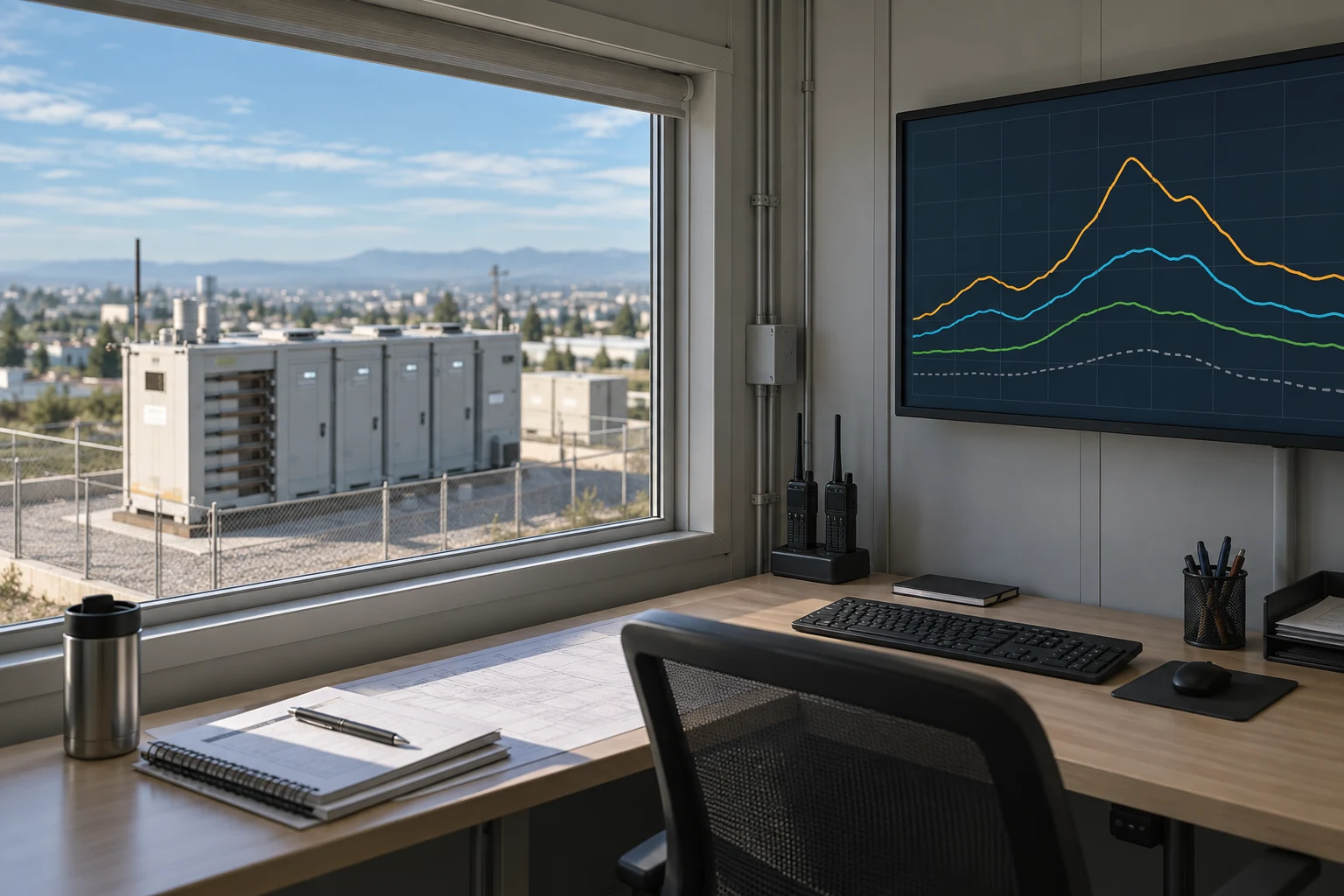
Record continuous watts, starting current, operating duration, time of day, weekday or seasonal variation, and the effect of interruption for every significant circuit. Then separate critical, operational, and deferrable loads. An hourly load profile turns that inventory into a modelable sequence and makes diversity assumptions visible. If measured data are incomplete, document the proxy, sampling period, and uncertainty instead of presenting an estimate as a fact.
Short Peaks And Long Shortfalls Are Different Problems
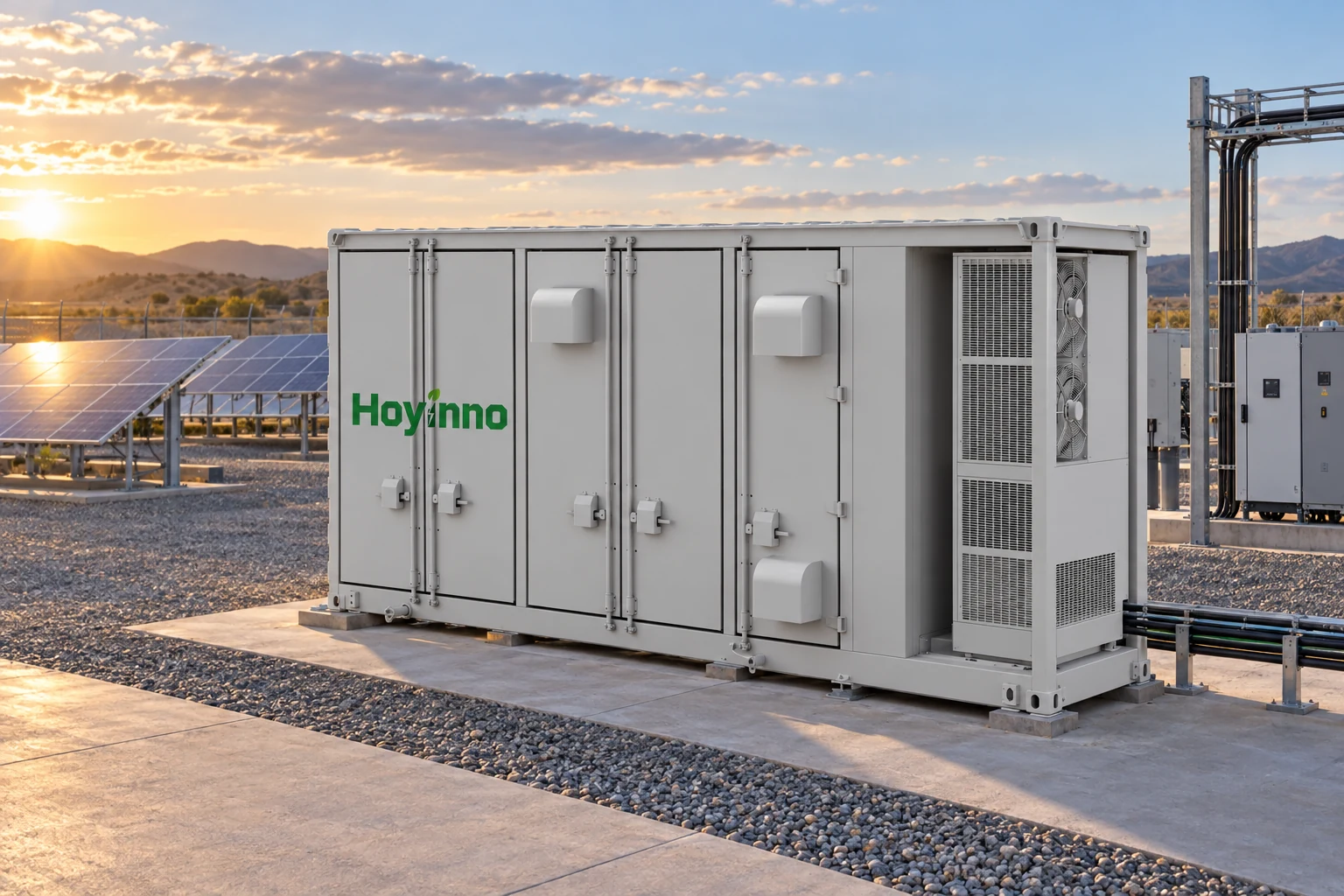
Power electronics must carry brief starting and step loads, while stored energy must bridge hours or days of supply deficit. Oversizing storage does not automatically solve an inverter overload, and a high-power inverter does not create overnight energy. Ask the designer to show both constraints on the same timeline, including conversion losses, auxiliary consumption, battery temperature, and permitted discharge limits. Hoyinno's power conversion and control category provides component context, but the project model must prove the combined behavior.
Reserve Policy Must Be Written As An Operating Rule
A battery state-of-charge target is not a reserve policy unless it states which loads are protected, when the threshold changes, and what action follows. The operating reserve margin should be expressed against a defined demand and resource case. It may vary by season, fuel availability, expected weather, or site staffing, but every variation needs an owner and a reason.
Normal Dispatch Should Preserve Recovery Capacity
Running the battery aggressively can reduce fuel use or curtailment in normal conditions while leaving too little energy for an unexpected outage. Conservative dispatch protects recovery capacity but may raise operating cost or waste renewable production. A useful proposal shows the trade-off through sensitivity cases rather than hiding it in one default set point. The IEA PVPS feasibility blueprint separates data gathering, modelling, and assessment because a recommendation is only as reliable as the assumptions linked to it.
Autonomy Claims Need A Starting State
“Two days of autonomy” is incomplete without the initial state of charge, load tier, usable depth of discharge, temperature, inverter losses, auxiliary loads, renewable contribution, and end condition. A more useful statement might define how long essential circuits survive after generation is unavailable, followed by how quickly normal reserve can be restored. This makes competing proposals comparable even when their component sizes differ.
Control States Matter More Than A Single Efficiency Number
Efficiency values describe selected operating points. Availability depends on how the system moves between states: renewable surplus, normal battery discharge, low reserve, generator start, load shedding, fault isolation, and restart. The control narrative should identify triggers, delays, priorities, permissives, manual overrides, alarms, and reset conditions for each transition.
| Boundary | Evidence Input | Model Or Test | Pass Condition | Residual Risk |
|---|---|---|---|---|
| Motor or compressor start | Starting current and coincident loads | Power step simulation and live step test | Voltage and frequency remain within defined limits | Future equipment may change the peak |
| Low-resource interval | Weather sequence and priority load | Chronological energy model | Reserve threshold is not crossed in the design case | Weather may exceed the selected percentile |
| Backup source failure | Start history and fuel condition | Failed-start scenario | Minimum service survives until recovery action | Operator response can be delayed |
| High ambient temperature | Site temperature and ventilation | Derating calculation and thermal test | Configured output is sustained without unsafe temperature | Dust loading changes cooling performance |
| Component outage | Topology and isolation points | Single-fault review | Defined critical circuits remain supported | Common-cause faults may remain |
The matrix is not a universal ranking. It forces each claim to name its input, method, limit, and remaining uncertainty. A design that performs well in one boundary may be exposed in another, so procurement should compare the whole operating envelope.
Recovery Must Be Tested From A Credible Failed State
An off grid power supply can ride through a short disturbance and still fail after a deep shutdown. Recovery evidence should begin from the state that actually worries the owner: low battery, tripped protection, unavailable renewable input, a failed generator start, or a controller restart after auxiliary power is lost.
The Restart Order Should Protect Both Loads And Sources
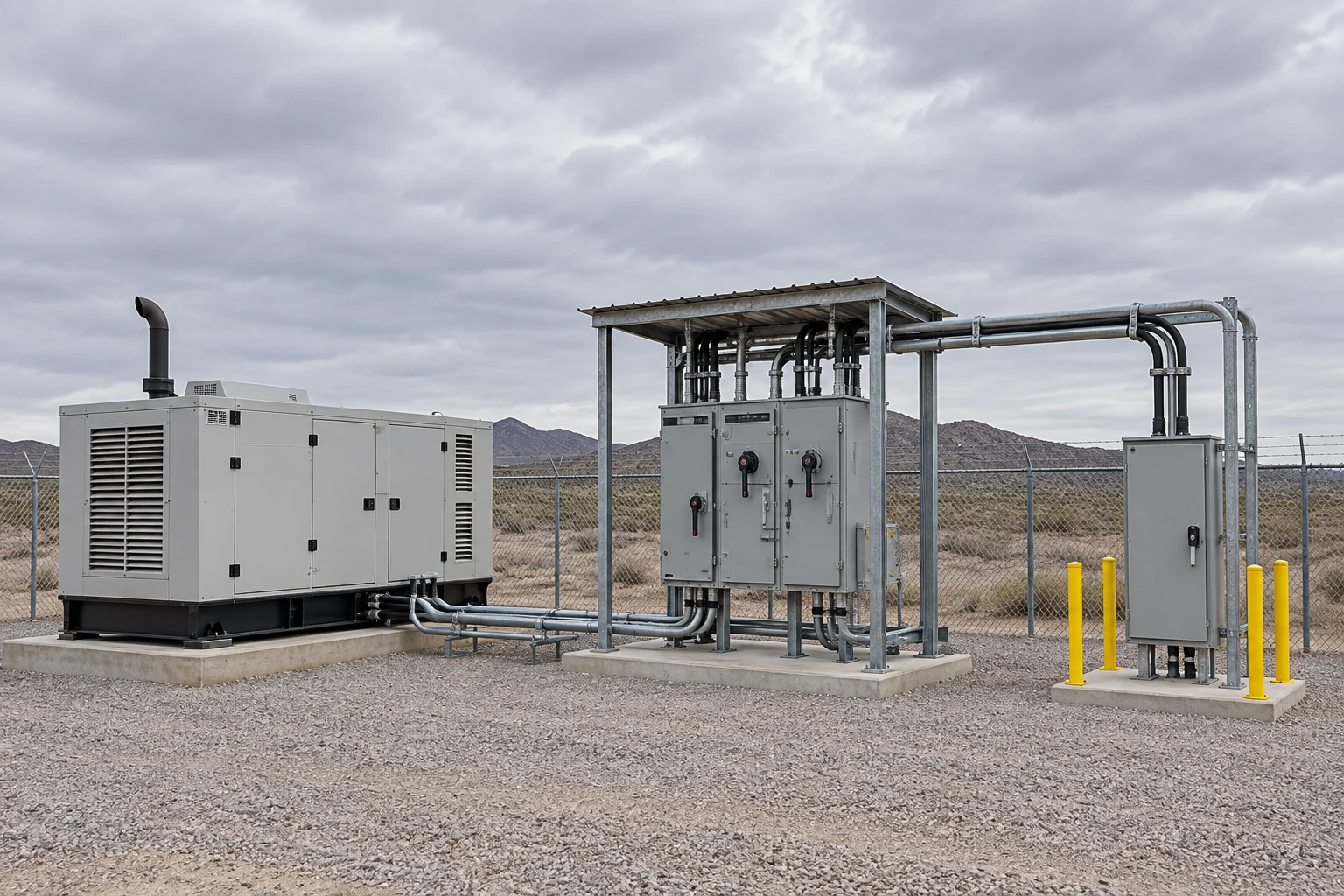
A black-start sequence should show how controller power returns, protection is reset, the electrical bus is energized, sources synchronize when applicable, and circuits reconnect in stages. Starting everything together can recreate the peak that caused the outage. Commissioning should retain timestamps, state changes, measurements, alarms, and operator actions so the result can be repeated after a firmware or settings change.
Recharge Time Is Part Of The Recovery Result
Restoring a minimum service is only the first milestone. The design must estimate how long it takes to rebuild reserve while continuing to serve priority loads. A generator that merely holds the load may not recharge the battery; a small renewable array may need several clear days. Ask for recovery trajectories under at least a typical and a conservative resource case. Hoyinno's remote-area solution overview shows relevant application settings, while the accepted recovery case must remain project-specific.
Environmental Conditions Change The Usable Envelope
Temperature, altitude, dust, salt, humidity, insects, flooding, lightning exposure, and access constraints affect cooling, protection, enclosure choice, cable routing, maintenance intervals, and usable energy. A country name is not a design condition. The site survey should record measured or authoritative local values and link every value to a selected rating, derating rule, or maintenance action.
Cooling Loads And Derating Must Appear In The Energy Balance
Thermal management consumes energy and may become a larger share of demand during the very conditions that reduce battery or inverter capability. A credible model includes auxiliary fans, pumps, heaters, controls, communications, and standby consumption. It also shows what happens if filters clog or one cooling path is unavailable. The 5.016 MWh container system page provides a current enclosure example, but no product page substitutes for site-specific thermal calculations.
Maintainability Converts Component Reliability Into Availability
Remote equipment can remain out of service far longer than its repair time because diagnosis, permissions, transport, lifting, and spare delivery take days or weeks. Availability analysis should include detection time, remote access, travel time, spare location, technician skills, replacement procedure, commissioning after repair, and any dependency on a single communication channel.
Spares Need A Failure Mode And Shelf-Life Rationale
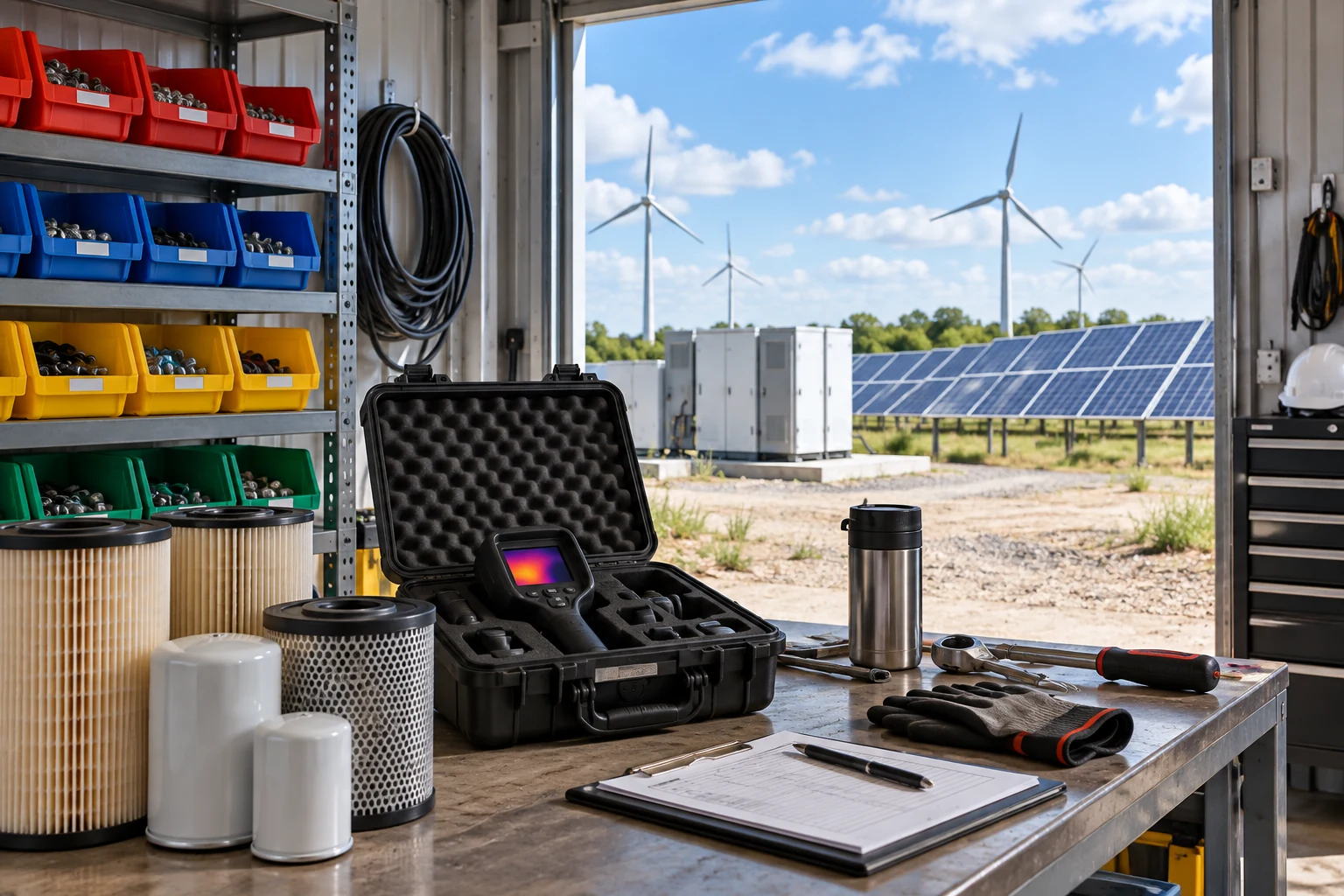
A spare-parts list is useful when every item is linked to a credible failure, lead time, storage condition, inspection interval, and replacement skill. Stocking everything is costly; stocking only inexpensive parts can miss the item that controls downtime. Review filters, contactors, fuses, sensors, fans, auxiliary supplies, control hardware, cables, and consumables according to the installed topology. Hoyinno's operations and maintenance page can frame service scope, while the contract should state local responsibilities and response limits.
Procurement Evidence Should Trace Directly To Acceptance
Comparable bids use the same load data, resource period, growth case, reserve rule, exclusions, and financial assumptions. Each bidder should identify model versions, equipment boundaries, losses, set points, and interfaces. The result must then map to factory inspection, installation checks, commissioning tests, and an early-operation review rather than stopping at a simulation report.
One-Line Diagrams And Control Narratives Must Agree
Reviewers should trace every source, bus, meter, protection device, isolation point, and priority feeder across the diagram and narrative. Device names and operating states must match. Undefined transfer behavior, unexplained normally open points, missing auxiliary supplies, and conflicting alarm ownership are early warning signs. The engineering services overview shows available project context; acceptance documents still need the exact configured revision.
Define initial conditions, instruments, duration, tolerance, retained records, witness role, and failure action. Test steady load, step load, source transition, staged shedding, alarms, failed starts, restart, and reserve recovery. A signed box without trend data is weak evidence.
Operations Data Should Challenge The Design Assumptions
During early operation, compare actual demand, renewable production, storage state, temperatures, generator hours, alarms, downtime, and maintenance with the model. Persistent differences may indicate changed behavior, sensor problems, settings, weather variance, or a flawed assumption. Hoyinno's analysis service page provides site context, while the IEA PVPS 2025 work links design, monitoring, maintenance, trained operators, and remote supervision.
The practical decision is not which proposal lists the most capacity. It is which proposal shows how defined services survive credible boundaries and how the remaining uncertainty will be observed. When measurements, assumptions, control states, tests, and operating records form one traceable chain, an off grid power supply can be evaluated as a service system rather than a collection of boxes.
A final gate should ask which boundary causes the first unacceptable loss of service and what approved action moves it.
Frequently Asked Questions
Why is daily energy use insufficient for design?
Daily energy hides timing. Two sites can use the same kilowatt-hours while having different peaks, overnight base loads, motor starts, load coincidence, and consequences of interruption. Chronological data lets the model test power and energy constraints together.
How should autonomy be stated?
Name the protected loads, initial state of charge, usable discharge limit, losses, temperature, renewable and backup assumptions, and the end condition. Also state how reserve is restored after the autonomy interval.
What is the difference between ride-through and recovery?
Ride-through keeps service operating during a disturbance. Recovery returns the system from a degraded or stopped state to a defined reserve. A design may pass one and fail the other.
Which commissioning records are most useful later?
Retain configuration identifiers, initial conditions, time-synchronized measurements, state changes, alarms, operator actions, test limits, deviations, corrections, and the final retest result.
When should the operating model be updated?
Update it after material load growth, source changes, battery replacement, control revisions, persistent forecast error, or a failure that reveals an unmodelled state. Preserve the previous assumptions for comparison.
 Which Off Grid Battery Storage Specifications Govern Usable Autonomy?
  Address: A401, Junxu Junchuang Park, 03A Qingyi Road, Nanhai District, Foshan City, Guangdong Province, China





