



 Home
Home
Which Off Grid Battery Storage Specifications Govern Usable Autonomy?
Off grid battery storage should be specified as a timed operating envelope that links load, usable energy, power, charging opportunity, environmental limits, and recovery. A nameplate capacity answers only one part of that problem. A defensible specification explains which loads must remain live, how long they must run, what happens during a peak, how the battery is recharged, and how the system returns to normal after a difficult operating day.
Start With The Service The Battery Must Protect
The first decision is not chemistry or cabinet size. It is the electrical service that cannot be interrupted. A telecom shelter, clinic, workshop, water pump, and community microgrid can all need storage, but their duty cycles and consequences of failure are different. The specification should therefore define the protected outcome before comparing products.
Separate Required Energy From The Nameplate Figure
Nameplate energy is not automatically the energy available to the load. The useful window is narrowed by the permitted state-of-charge range, conversion losses, temperature, control reserves, ageing allowance, and any energy held back for recovery. Buyers should request the basis for usable battery capacity and should state whether the calculation applies at the battery terminals or at the AC load. Without that boundary, two offers with similar kilowatt-hour figures may deliver different operating time.
Specify Power For Both Steady And Short Events
Energy answers “how long,” while power answers “how much at once.” The required battery power rating must cover the normal coincident load and credible steps such as motor starting, refrigeration cycling, pump acceleration, or a communications surge. The inverter, protection settings, conductor size, and thermal design must all tolerate that event. A storage system can contain enough energy for the night yet still trip when several loads start together.
Build A Chronological Load Model Before Sizing
A list of equipment is useful, but it does not reveal which devices run together or how demand changes through the day. The engineering model should place loads on a timeline, distinguish continuous and intermittent demand, and identify events that cannot be shifted. That chronology turns a rough total into a testable operating case.
Classify Loads By Consequence And Flexibility
Critical loads require continuity; controllable loads can be delayed; discretionary loads can be shed during a long deficit. This classification allows controls to protect the essential service instead of treating every circuit as equally urgent. It also makes the design easier to review: the buyer can see which loads remain after each staged limit and whether the proposed priorities match actual operations.
Test The Worst Credible Time Window
An hourly load profile should cover ordinary days and the most demanding credible sequence, such as a cloudy period followed by an evening peak. The model needs duration, coincidence, startup behavior, and seasonal variation rather than a single average. Where data are limited, temporary metering and a conservative uncertainty band are usually more useful than multiplying connected load by an arbitrary factor.

Connect Autonomy To The Next Charging Opportunity
For off grid battery storage, autonomy duration is meaningful only when paired with a recharge assumption. A battery that supports one night may be adequate when dependable solar recovery follows, but insufficient during several low-resource days. The model should state the weather sequence, generator availability, renewable input, charging power, and load served while charging.
Model Resource Variability As A Sequence
Solar and wind inputs change by hour and season, and a battery cannot create energy that was never collected. The buyer should request simulations or calculations that preserve this chronology. Daily averages can hide a morning deficit, clipped midday production, or a late-day peak. Sensitivity cases should show what happens when generation is lower than expected and when the battery begins the day below its preferred state of charge.
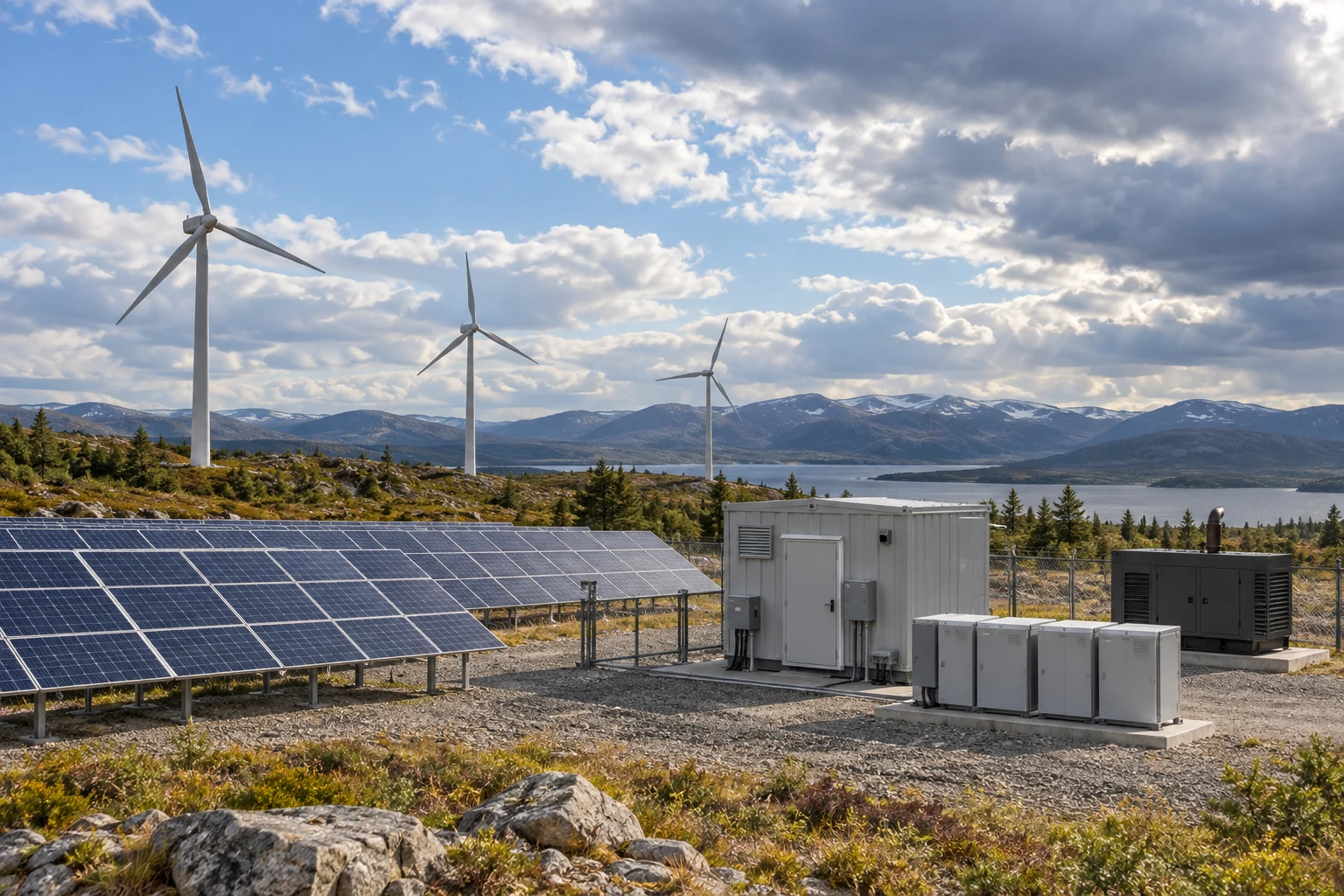
The remote-area off-grid application page is relevant context for projects where service access and fuel logistics affect the recovery plan. The article does not assume that one architecture fits every site; it treats access, generation, and load as connected design inputs.
Keep Reserve Separate From Normal Daily Cycling
A storage design should distinguish working energy from emergency reserve. Mixing the two makes an optimistic everyday result look like a resilient one. The reserve policy should say when energy becomes unavailable to ordinary loads, who may override that limit, and which event restores the normal operating window.
Define Every Deduction From Gross Energy
The usable calculation should list the lower and upper state-of-charge limits, expected conversion losses, auxiliary consumption, temperature allowance, commissioning reserve, and end-of-life margin. The same assumptions should appear in the controls and acceptance test. This is where usable battery capacity becomes an auditable requirement rather than a marketing number. Any assumption that cannot be tested should be marked for confirmation.
| Specification Item | Question It Must Answer | Evidence To Request | Common Ambiguity |
|---|---|---|---|
| Usable energy | How much energy reaches the defined load? | State-of-charge window, losses, temperature and ageing basis | Gross DC nameplate presented as usable AC energy |
| Continuous power | Which coincident loads can run? | Operating point, voltage, power factor and thermal limits | Short peak rating substituted for continuous duty |
| Transient power | Can the system ride through starts and steps? | Duration curve, test method and protection settings | Peak stated without duration or recovery condition |
| Recharge window | When can the battery return to target charge? | Resource sequence, charger limit and simultaneous load | Recharge assumed while ignoring served load |
| Reserve policy | What energy remains for critical events? | Load-shed stages, override rules and restoration logic | Emergency reserve counted in daily autonomy |
Verify Controls, Interfaces, And Recovery Logic
The battery, power-conversion equipment, energy-management system, generator controls, and protective devices form one operating system. Compatibility must be demonstrated at the interface level. A component can pass its own test and still produce an unstable project if commands, measurement scaling, alarms, or state transitions are inconsistent.
Write The Sequence Of Operations Before Commissioning
The sequence should describe normal charge and discharge, renewable curtailment, generator start and stop, low-state-of-charge load shedding, black start, emergency stop, and restoration after a fault. Each transition needs a trigger, time delay, permitted operating range, and expected result. This document becomes the bridge between the design model, control programming, test script, and operator training.
Make Monitoring Useful To The Maintainer
Monitoring should expose enough data to distinguish an energy shortfall from a power limit, communications loss, thermal restriction, or ageing trend. Useful records include state of charge, charge and discharge power, inverter status, cell or module alarms where available, temperature, curtailed energy, generator run time, and load-shed events. Alarm ownership and escalation timing matter as much as the dashboard itself.
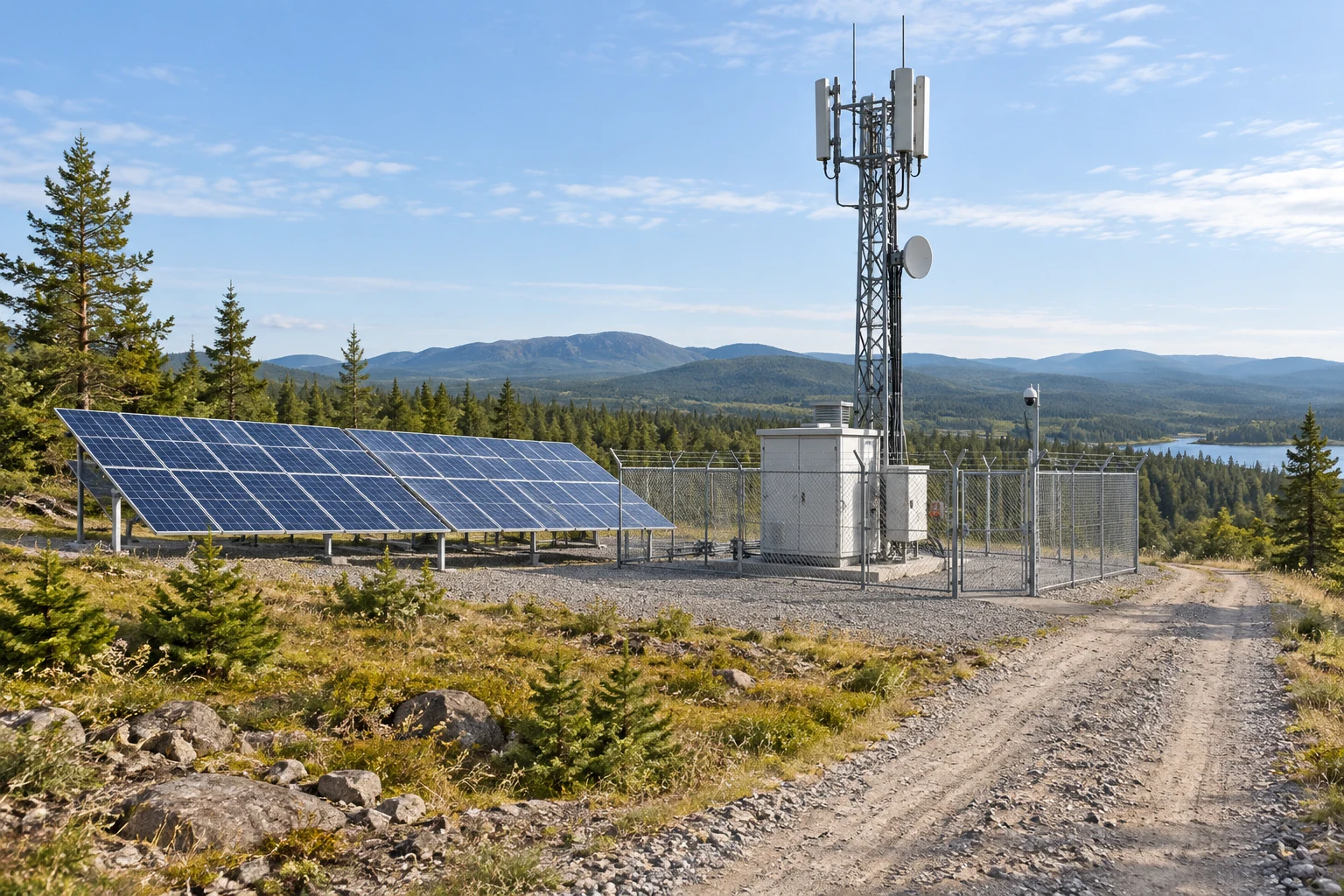
The site groups conversion and control equipment under power conversion and control; procurement should still confirm the exact interface, protocol, and control responsibility for the proposed configuration.
Account For Environment, Safety, And Service Access
Temperature, humidity, dust, salt, elevation, flooding exposure, insects, and ventilation can change available power, auxiliary demand, component life, and inspection frequency. The enclosure and cooling approach must be appropriate for the actual installation, not merely for a catalog test condition. The site plan should also preserve safe clearances, drainage, fire response access, cable routing, and space for replacement work.
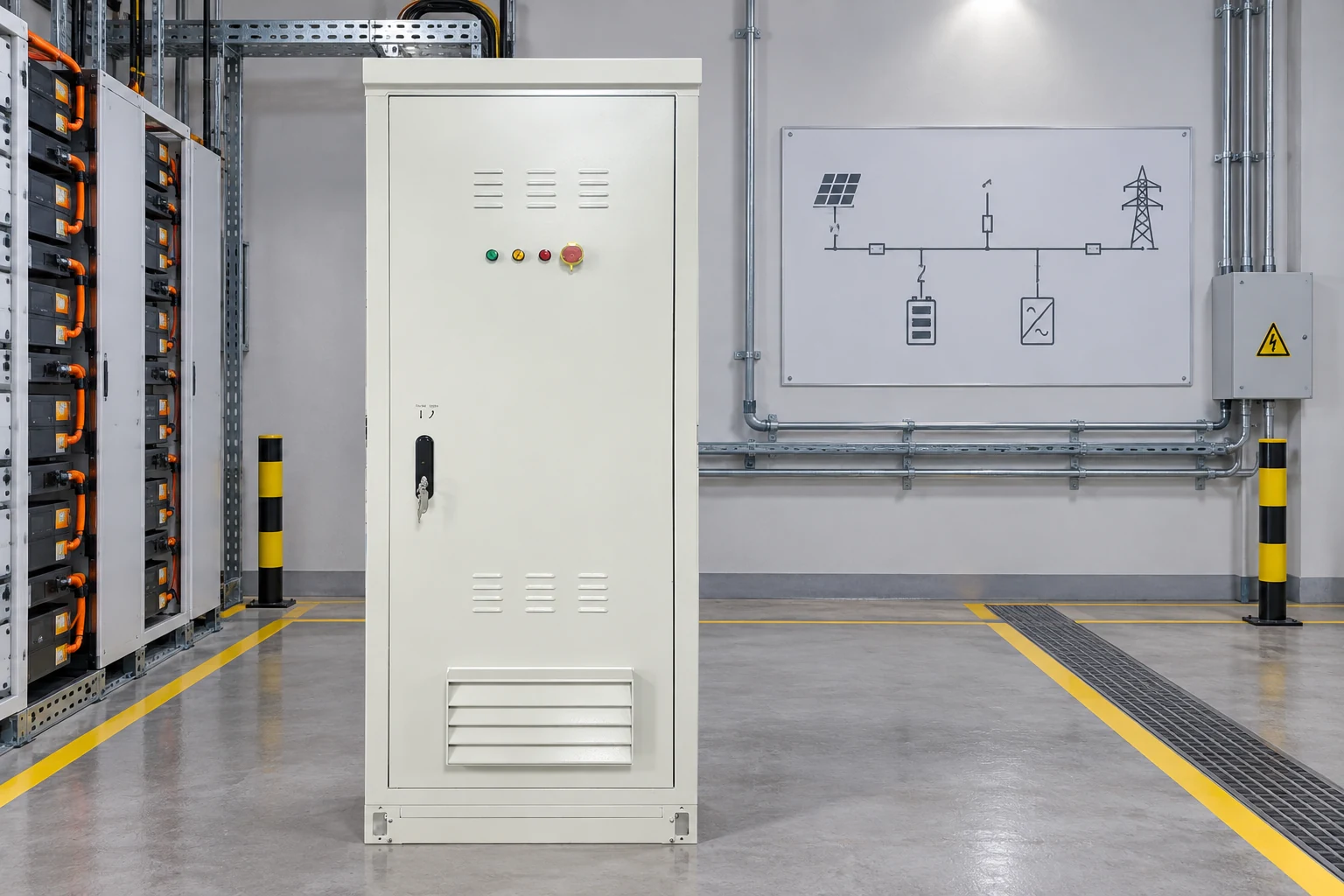
Maintenance planning should identify tasks that require trained personnel, spare parts with long replenishment times, remote support, and local visual checks. The 61 kWh compact cabinet page shows one same-site product context, while the modular storage category and containerized storage category illustrate why enclosure scale and service strategy must be matched to the project rather than generalized.
Turn The Design Basis Into Acceptance Evidence
The procurement package should require evidence that maps directly to the design assumptions. A useful acceptance plan tests the battery power rating, usable energy window, control transitions, communications, alarms, protection, and recovery under defined loads. It should name the responsible parties, test instruments, pass criteria, records, and treatment of deviations.
- Freeze the load list, priorities, metered profile, and uncertainty assumptions.
- Record the resource and recharge sequence used to calculate autonomy duration.
- Trace each capacity deduction and reserve rule into the controller settings.
- Review interface documents for batteries, inverters, renewable sources, generators, and supervisory controls.
- Witness staged load, transition, alarm, shutdown, and restart tests.
- Retain baseline operating data so later performance can be compared with commissioning.
A buyer can use the same-site contact channel to confirm which documents, interfaces, and configuration details are available for a specific project, but the request should carry the project load model and acceptance basis rather than asking only for a battery size.
Frequently Asked Questions
Is Kilowatt-Hour Capacity Enough To Compare Systems?
No. Kilowatt-hours do not state the allowed state-of-charge window, AC conversion losses, auxiliary use, temperature conditions, end-of-life allowance, or reserved energy. A comparison should use the same measurement boundary and the same operating assumptions for every offer.
How Is Off Grid Battery Storage Autonomy Calculated?
It is calculated by applying a timed load profile to the usable energy window while accounting for losses, reserves, environmental limits, and any renewable or generator input during the period. The result should be tested across ordinary and difficult operating sequences rather than expressed as one universal number.
Why Can A Large Battery Still Trip On Startup?
The system may have adequate energy but insufficient instantaneous power, inverter overload duration, voltage support, or protection coordination. Motor and compressor starts should be represented in the load model and verified with a duration-based transient requirement.
What Should A Commissioning Test Record?
It should record initial conditions, load, charge level, commands, measurements, alarms, protection actions, transition times, pass criteria, deviations, corrective work, and the final approved settings. The record should also identify the software and firmware versions present during the test.
When Should A Buyer Add More Storage?
Additional storage is justified when the revised load chronology, recharge opportunity, reserve policy, environmental derating, and lifecycle basis show a shortfall. Adding capacity without correcting control, power, or recharge limits can increase cost without solving the actual constraint.
In short, the best comparison is a boundary-to-boundary one: the same loads, chronology, losses, reserve policy, environment, recovery sequence, and acceptance method should be applied to every candidate. That approach turns capacity claims into operating evidence and makes future changes easier to evaluate without guessing.
 Off Grid Energy Storage Needs A Recovery Budget, Not Just An Energy Budget
  Address: A401, Junxu Junchuang Park, 03A Qingyi Road, Nanhai District, Foshan City, Guangdong Province, China





