



 Home
Home
Off Grid Energy Storage Needs A Recovery Budget, Not Just An Energy Budget
Off grid energy storage is often sized around the energy needed to survive an outage or a low-generation period. That is necessary, but it is only half of the operating story. A project also needs a recovery budget: enough charging opportunity, controllable power, reserve, time, and service capability to return the system to a stable operating state without creating a second shortfall.
The distinction matters because two designs with the same nominal kilowatt-hours can recover very differently. One may restore critical service before the next demand peak; another may remain trapped at a low state of charge because the available generator, solar resource, charger, or control sequence cannot rebuild the reserve while loads are still being served. Buyers should therefore compare recovery evidence alongside capacity.
Define Recovery As A Service Outcome
Recovery is not simply “the battery is charging.” It is the controlled return from an adverse state to an agreed operating condition. That condition might be a restored critical feeder, a minimum reserve before nightfall, normal generator availability, or a stable microgrid with all priority loads reconnected. The procurement specification should state the start condition, the target condition, and the maximum acceptable time between them.
Start With The Event That Creates The Deficit
A useful model begins with a credible sequence: several cloudy days, a generator fault, an unexpected evening peak, delayed fuel delivery, or a maintenance outage. The design team should quantify which loads remain active, which resources are unavailable, and how much stored energy is left when recovery begins. That starting point prevents an optimistic calculation that assumes a full battery precisely when the project is most constrained.
Separate Survival From Restoration
Survival energy keeps required loads operating during the event. Restoration energy supports controls, auxiliaries, cooling, pumps, communications, generator starting, and the controlled return of feeders after the event. If those functions are ignored, the system can technically retain energy yet still be unable to resume service. A buyer should ask for both budgets and the boundary between them.
Model The Next Credible Charging Opportunity
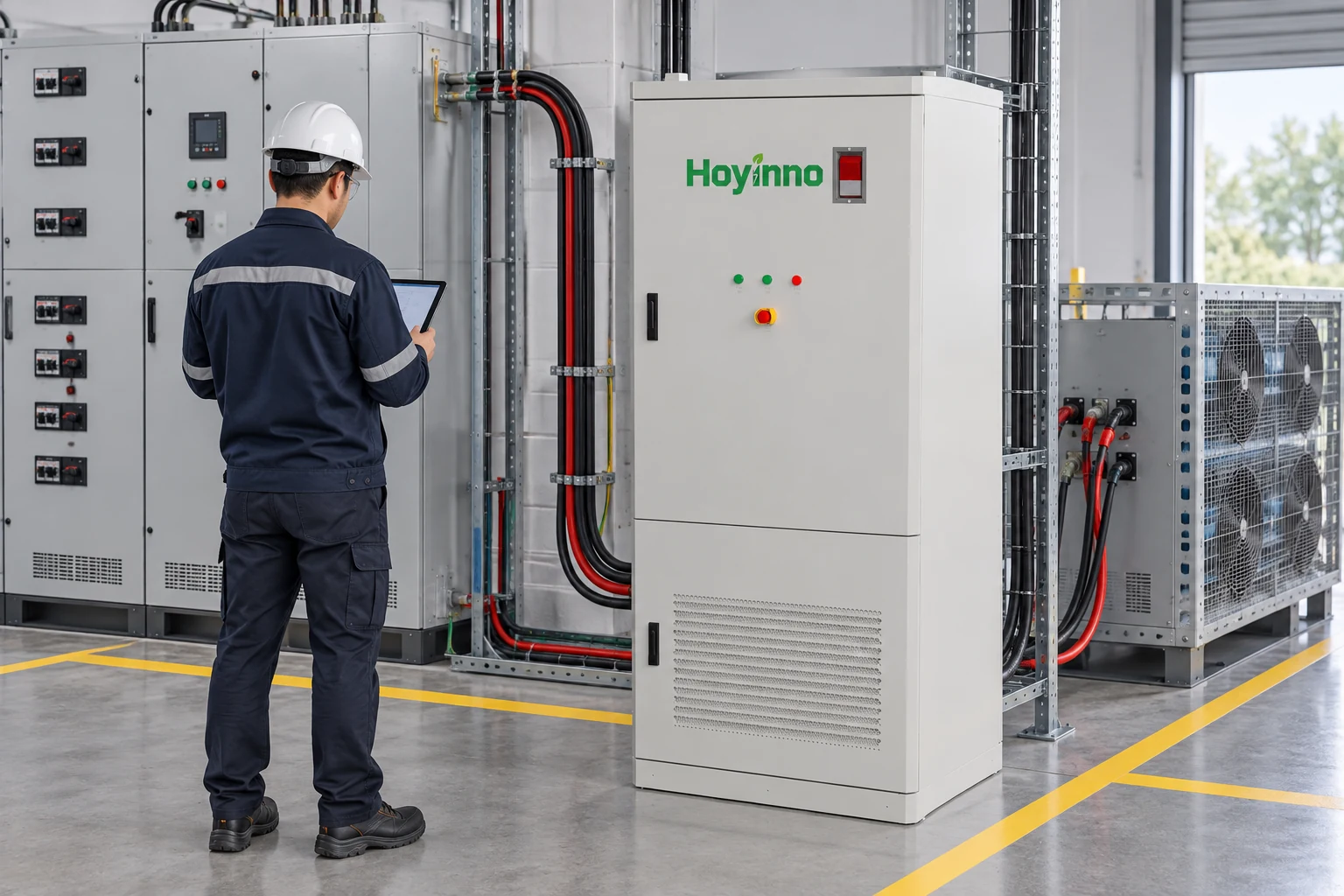
For off grid energy storage, the recharge assumption must be chronological. Daily solar energy, generator fuel, and charger power cannot be treated as interchangeable totals. The model should show when energy becomes available, which loads continue during charging, and what limits the power that can enter the battery. This creates a defensible recharge window rather than an abstract energy balance.
Use Time-Series Inputs Instead Of Daily Averages
A daily average can hide the operating problem. Solar generation may arrive after a morning demand peak; a generator may be restricted to certain hours; charging may be limited by temperature or inverter capability; and a simultaneous process load may consume most of the available power. Hourly or finer data reveal whether the reserve is rebuilt before the next critical period.
State What Happens During A Second Poor Day
The recovery case should not end after one favorable day. Buyers should request sensitivity cases for lower renewable production, a late generator start, higher auxiliary consumption, and reduced usable capacity. The question is not whether the design can recover under ideal conditions, but whether it has a controlled degraded mode when the preferred recovery path is delayed.
Reserve Power For Restart And Load Return
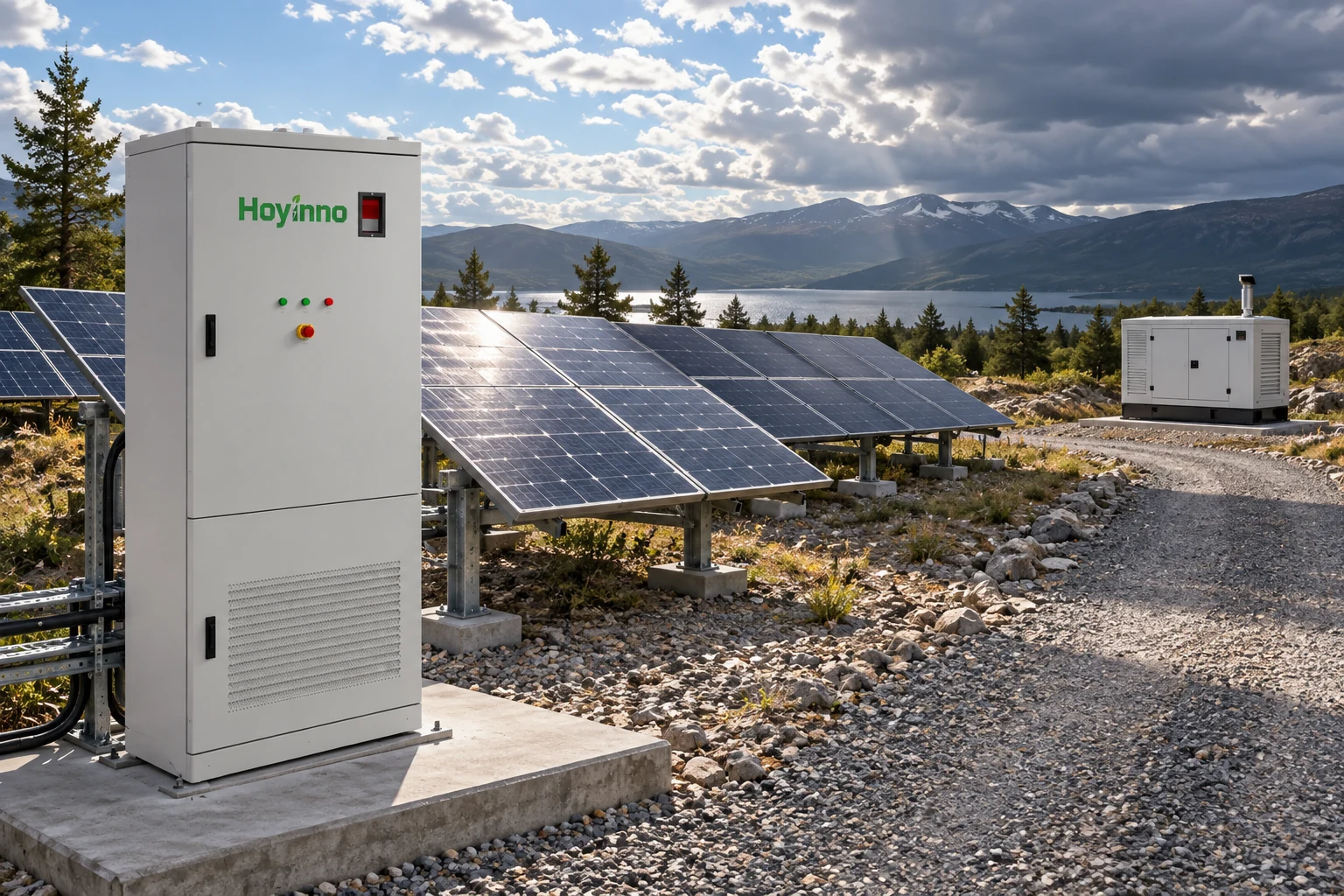
Energy is only one constraint. Restarting a site can require short bursts of power, voltage support, motor acceleration, transformer energization, and simultaneous auxiliary loads. The battery and power-conversion equipment must support those events without violating protection settings or thermal limits. A design that can run a steady load may still fail during restoration.
Write The Sequence Before Programming It
The black start sequence should name the devices that establish voltage and frequency, the order in which sources and feeders return, the state-of-charge threshold for each step, and the conditions that stop or reverse the process. It should also define how the system behaves if communications are unavailable or a component does not acknowledge a command.
Control Cold Load Pickup
Loads returning after an outage may draw more power than they did before disconnection. Refrigeration, pumps, transformers, heaters, and motor-driven equipment can create a concentrated pickup event. Staggered reconnection, soft starting, and priority groups can reduce that peak, but the settings must be documented and tested. The required power margin belongs in the recovery budget.
| Recovery Element | Question To Answer | Evidence To Request | Failure If Omitted |
|---|---|---|---|
| Starting state | How depleted or constrained is the system? | State of charge, available sources, active loads, alarms | Recovery begins from an unrealistic full-capability condition |
| Charging opportunity | When and how fast can reserve be rebuilt? | Time-series resource, charger limit, simultaneous load | Daily energy appears sufficient while reserve remains low |
| Restart power | Can voltage, frequency, and auxiliaries be established? | Power-duration curve, inverter mode, auxiliary list | The system retains energy but cannot energize the site |
| Load return | Which feeders reconnect, and in what order? | Priority matrix, pickup limits, protection settings | One reconnection step trips the recovering system |
| Degraded mode | What service remains if recovery is delayed? | Load-shed stages, operator actions, escalation path | Controls oscillate or exhaust the final reserve |
| Acceptance | How is successful recovery proven? | Witnessed test, timestamps, measurements, approved settings | Capacity is accepted without proving restoration |
Coordinate Storage With Every Other Resource
An off-grid project with modular storage is a system of systems. Solar, wind, generators, converters, storage, protection, and supervisory controls share responsibility for recovery. The design should identify which device is grid-forming, which devices follow it, who owns the master control logic, and what happens when a measurement or communications link fails.
The site groups the relevant interface equipment under power conversion and control. That category context is useful, but a project specification must still confirm the exact protocols, command hierarchy, protection boundaries, and firmware responsibilities for the proposed configuration.
Test The Transitions, Not Only The Components
Recovery depends on transitions between sources, operating modes, and load groups. Each transition needs a trigger, delay, permissible range, expected measurement, and fallback action.
Make Maintenance Part Of The Recovery Budget
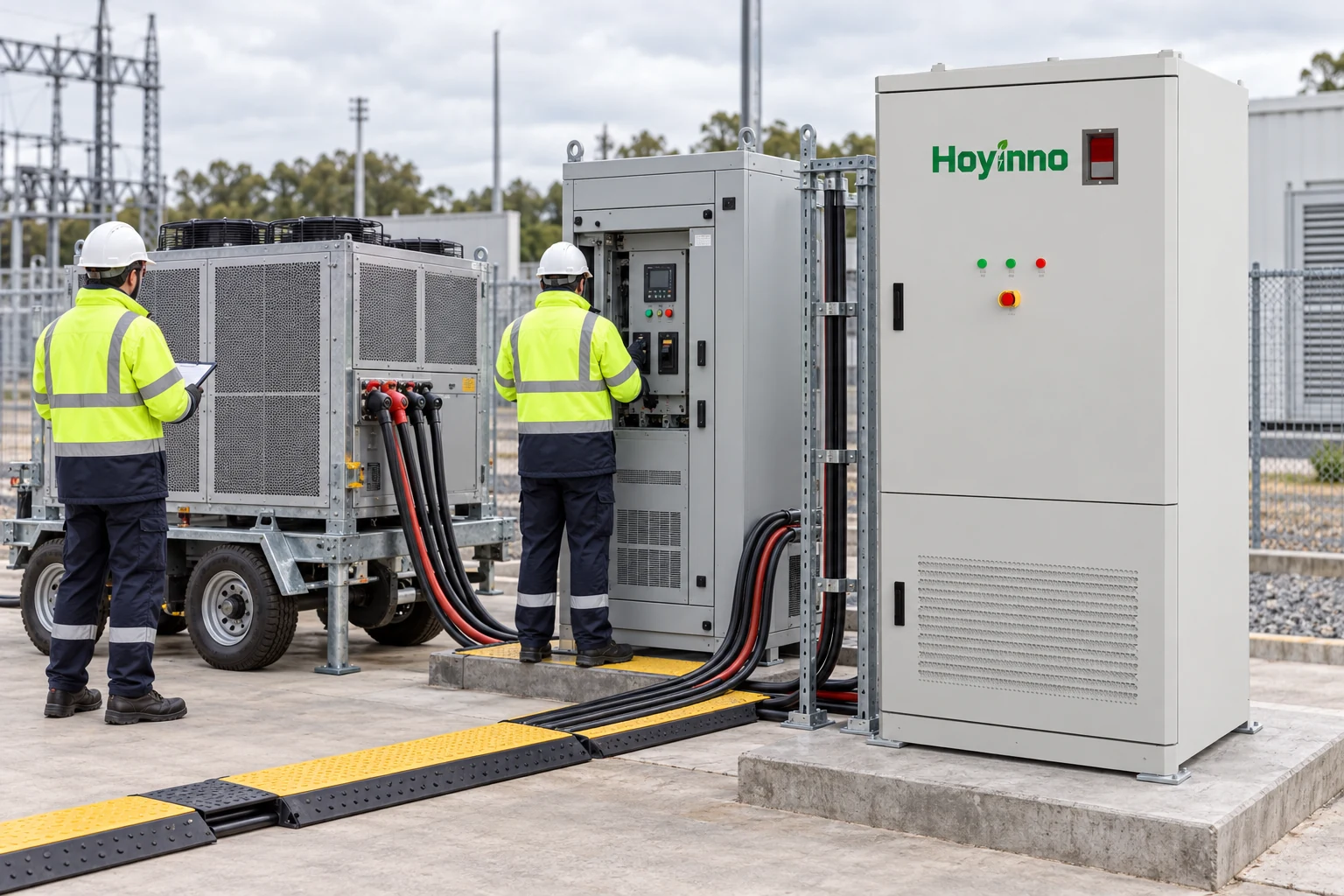
Remote projects may lose more time waiting for diagnosis, transport, parts, or specialist support than they spend on the electrical repair itself. Service access, safe working space, local spares, remote logs, and escalation contacts therefore affect recoverability. The remote-area off-grid application page provides same-site context for locations where logistics and local capability shape the operating plan.
Specify The Minimum Useful Data Set
Useful recovery records include state of charge, battery power, inverter mode, renewable input, generator status, served load, curtailed load, temperatures, alarms, command timestamps, and protection actions. The data should remain available after a communications interruption and should be detailed enough to reconstruct the event without relying on memory.
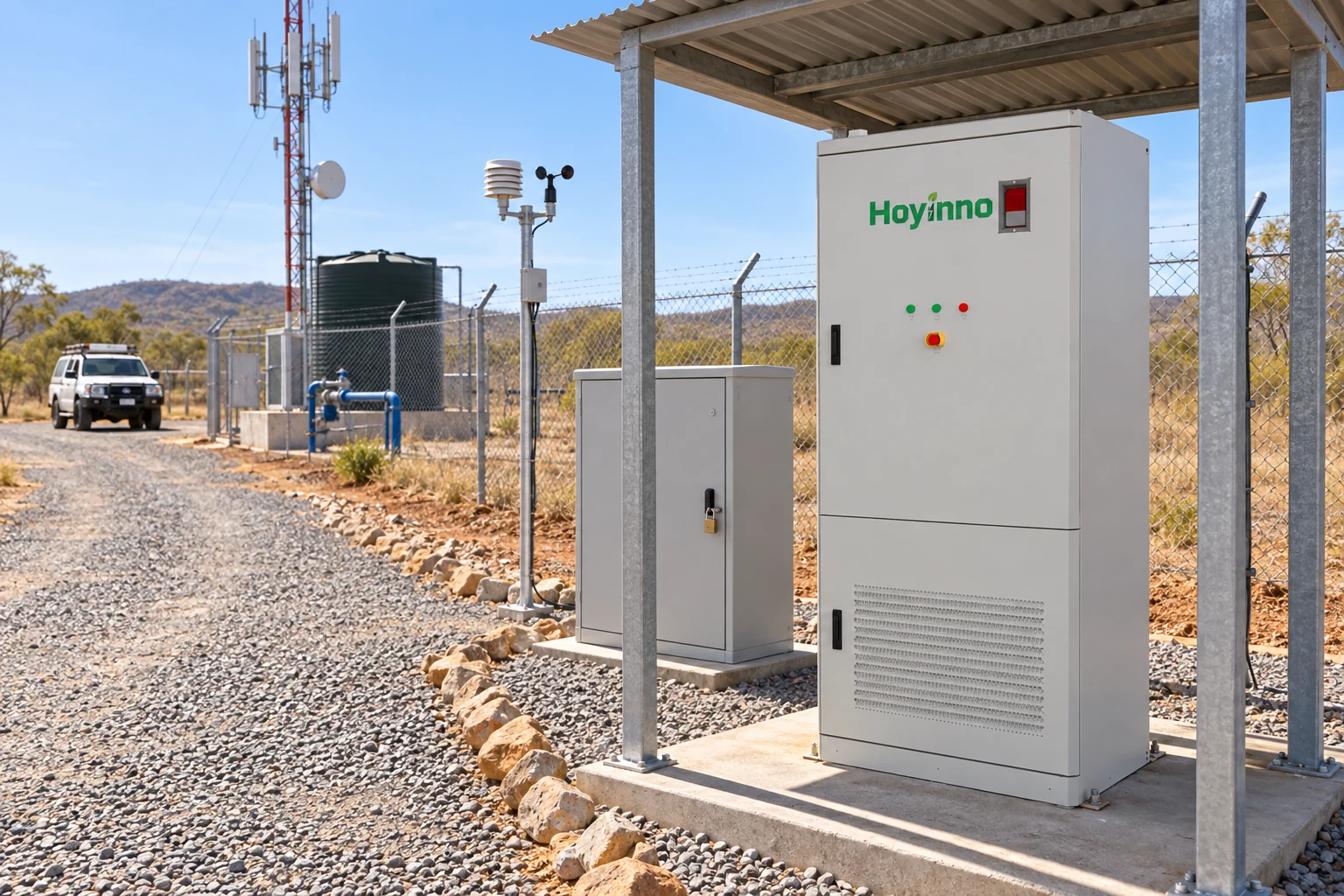
The same recovery framework applies to a containerized energy storage system.
Turn Recovery Into Procurement Evidence
Product comparison becomes clearer when every bidder receives the same starting state, resource sequence, load priorities, environmental conditions, and restoration target. The response should show energy and power limits, control responsibilities, exceptions, and the proposed test method. This prevents nominal capacity from standing in for system performance.
The 129 kWh modular cabinet page is one same-site product context for a modular storage configuration, while the 233 kWh cabinet page shows another scale. Published details should be treated as a starting point for project discussion, not as proof that one cabinet or configuration fits every off-grid duty. The buyer still needs a site-specific load model, interface schedule, and recovery case.
Witness A Complete Recovery Cycle
A useful recovery acceptance test begins from a defined depleted or constrained state. It then removes or limits a resource, verifies essential service, initiates charging, performs staged load pickup, records transitions and alarms, and confirms that the agreed reserve is restored within the target time. Deviations should lead to corrected settings and a repeated affected step, not a vague observation.
- Freeze the load priorities, critical service definition, and starting state.
- Provide time-series renewable, generator, charger, and auxiliary assumptions.
- Document restart power, control ownership, communications fallback, and protection.
- Define degraded operation for delayed recharge or unavailable equipment.
- Witness the recovery sequence with synchronized measurements and timestamps.
- Retain the approved settings, baseline data, and responsibility matrix for operations.
Frequently Asked Questions
Why Is Battery Capacity Not A Complete Recovery Metric?
Capacity describes stored energy, but recovery also depends on the starting state, charging opportunity, power-conversion limits, auxiliary demand, load pickup, controls, and service logistics. A large battery can remain depleted if the system cannot rebuild reserve while continuing to serve essential loads.
How Should Off Grid Energy Storage Be Compared?
Apply the same chronological load profile, renewable sequence, generator availability, reserve policy, environment, starting state, and restoration target to every offer. Compare usable energy, continuous and transient power, charging limits, control interfaces, degraded modes, and witnessed test evidence.
What If Solar Production Is Lower Than Forecast During Recovery?
The control plan should enter a defined degraded mode: preserve critical loads, delay discretionary loads, adjust generator operation, and maintain a reserve threshold that avoids uncontrolled shutdown. Sensitivity cases should prove that this behavior is deliberate rather than improvised.
What Evidence Should Remain After Commissioning?
Retain the approved sequence of operations, settings, firmware versions, one-line diagrams, interface schedule, protection study, test script, timestamped measurements, deviations, corrective actions, and operator responsibilities. These records make later troubleshooting and capacity expansion far more reliable.
In short, off grid energy storage should be judged by how predictably it returns a site to useful service after a difficult sequence. A recovery budget exposes the missing assumptions—time, charging, restart power, controls, degraded operation, and maintenance—and turns them into evidence that can be designed, priced, tested, and operated.
 What Must Off Grid Power Storage Control Before Capacity Can Help?
  Address: A401, Junxu Junchuang Park, 03A Qingyi Road, Nanhai District, Foshan City, Guangdong Province, China





