



 Home
Home
Solar Electric Battery Storage Depends On Compatible Conversion And Controls
Solar electric battery storage supplies loads through coordinated batteries, power converters and controls, rather than through battery capacity alone. Solar panels generate electricity when light is available; the storage system changes its timing so that part of that energy can serve a later demand. Whether the arrangement can export, remain within a site limit or operate during an outage depends on the electrical design and its configured operating functions. Understanding these dependencies is more useful than treating a cabinet's energy rating as a complete description of the system.
Follow The Electricity Through Three Different Functions
The basic functions are generation, storage and delivery. Photovoltaic modules produce DC electricity, batteries retain energy through electrochemical processes, and converters make the electrical output compatible with the receiving bus or load. Control equipment coordinates these functions within their permitted limits.
A Battery Stores Energy Rather Than A Ready-Made AC Supply
A battery's stored energy is not automatically available as the voltage, frequency and waveform required by an AC load. The power conversion system must manage the exchange between the battery and the electrical bus. The operating envelope includes battery voltage, converter ratings, protective settings and relevant environmental conditions. A complete explanation therefore identifies both the stored-energy component and the equipment that allows energy to leave it in a usable electrical form.
The Department of Energy's solar integration material explains the role of storage in shifting solar energy and the role of inverters in converting DC generation to AC. These are general principles, not evidence that a specific cabinet supports every proposed connection. The selected equipment still needs a documented compatible arrangement.
Control Commands Must Remain Inside Hardware Limits
An energy management system can request charging or discharge, but a request cannot override a battery or converter limit. The battery management system monitors the battery, while power conversion equipment regulates electrical exchange. Their exact interfaces depend on the system design. The host's EMS overview describes coordinated energy management; the relevant project documents must establish which measurements and commands are available in the proposed configuration.
Distinguish A Connection Topology From An Operating Promise
AC coupling and DC coupling describe where components exchange electricity. They do not, by themselves, promise backup power, unrestricted charging or a particular efficiency. Identify the actual buses and conversion stages before drawing conclusions about what the system can do.
AC Coupling Coordinates Equipment On An AC Bus
In a typical AC-coupled arrangement, the PV inverter supplies an AC bus and a battery converter connects storage to that bus. The equipment must coordinate electrical limits and operating permissions. Existing solar equipment can sometimes be retained, but compatibility is a design question rather than an assumption. A retrofit assessment should identify the installed inverter, connection rules, metering and any limitation on export or charging.
DC Coupling Shares A Defined DC-Side Arrangement
A DC-coupled configuration links the solar and storage functions through a defined DC-side arrangement with suitable conversion and control equipment. This can change which conversion stages electricity passes through, but the result depends on the actual design. The phrase does not mean modules and batteries can be connected directly without voltage regulation, protection or control. Record the relevant interfaces instead of replacing the electrical drawing with a marketing label.
For solar electric battery storage, the topology is an input to the operating explanation. A shared bus must still respect the equipment's voltage range, current limits and protective functions. A simplified concept sketch is useful for discussion, while construction and commissioning require the project-specific electrical documents.
Keep Energy Capacity And Delivery Power Separate
Energy capacity and power rating answer different questions. Energy describes an amount that can be retained or delivered over time; power describes a rate. Neither should be presented without the conditions under which the value applies. A cabinet label is only one part of the site-level description.
Nominal Energy Is Not The Entire Load-Supply Budget
Usable energy can depend on the permitted state-of-charge window, reserve settings, battery condition and conversion or auxiliary consumption. A project should define the measurement point for the claimed delivered energy. Energy at the battery terminals and energy received by the load are different boundaries. This is why a rated capacity cannot be converted into a guaranteed runtime simply by dividing it by a convenient average demand.
Explain Normal Operation With A Time-Based Example
The operating sequence becomes clearer when generation and demand are considered together. A site may have surplus solar electricity during one interval and a deficit during another. Storage can move part of the available energy between those intervals, subject to the allowed charge and discharge rates.
Surplus Generation Does Not Always Mean Available Charging
Charging may be limited by the battery's current state, converter rating, temperature or configured reserve strategy. Other equipment may be using the available solar power, and the site may have restrictions at the utility connection. A control system needs measurements that describe the actual balance rather than inferring surplus from installed PV capacity. A large array can still produce little useful charging energy during a particular interval.
Consider an illustrative workday without assigning invented equipment numbers. Morning demand can rise before strong PV production; midday production can exceed the active load; late demand can continue after solar output falls. The storage controller responds to those changing conditions. The outcome depends on the measured profile and settings, so the example explains timing rather than promising a saving or an uninterrupted service.

Describe Outage Behaviour As A Separate System Function
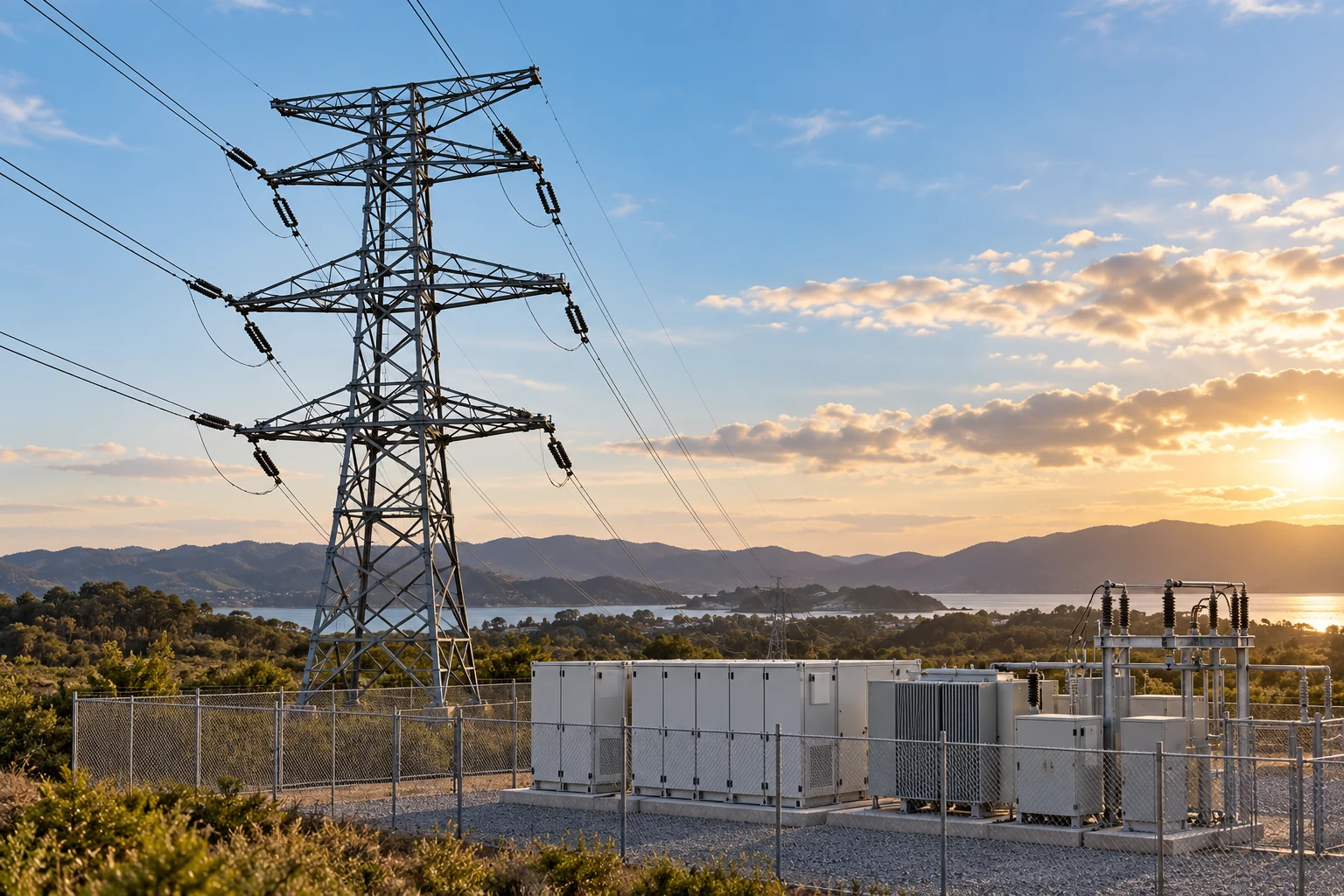
Operating during a grid outage requires more than stored energy. The system must be permitted and equipped to separate the relevant loads from the utility, establish an appropriate electrical reference where necessary, and coordinate sources and protection within the resulting island.
Grid Following And Grid Forming Have Different Roles
Grid-following equipment normally operates with an existing voltage and frequency reference. Grid-forming capability can establish a reference under suitable conditions. The Department of Energy's inverter and microgrid explanations distinguish these functions and describe their relevance to resilient operation. A system's advertised storage function should not be extended into an assumed black-start or islanding function without the relevant design and acceptance evidence.
An outage sequence should identify which loads remain supplied, how the utility boundary is isolated, and what happens when the battery reaches a protective limit. A planned transition may include switching delays or restrictions that matter to sensitive equipment. The host's off-grid solution information supplies application context, while the site-specific sequence determines what is actually available.
| Function | Required Condition | Common Misinterpretation |
|---|---|---|
| Charge from solar generation | Available generation, permitted power path and battery acceptance | Installed PV capacity guarantees charging at all times |
| Serve an AC load | Compatible converter, voltage and frequency conditions | The battery directly supplies any AC equipment |
| Limit utility export | Correct measurement point and coordinated controls | A capacity rating establishes export compliance |
| Supply an isolated load group | Designed isolation, source reference and protection sequence | Every grid-connected battery provides backup automatically |
| Restart after a shutdown | Specified starting resources and tested control sequence | Stored energy alone guarantees black start |
Read Product Specifications At The Correct Boundary
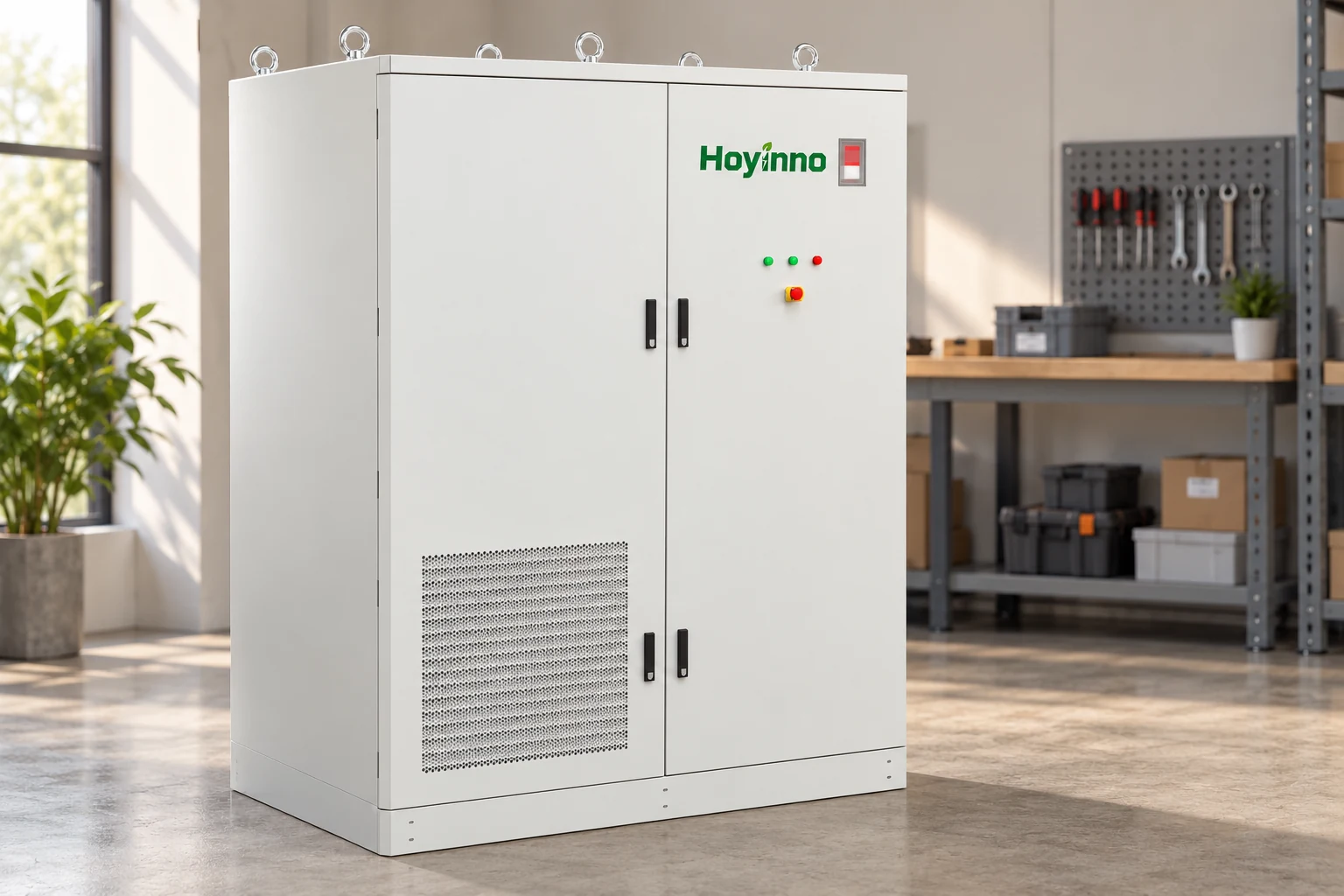
A product catalogue can identify equipment families and listed components, but the system explanation should keep verified facts and open configuration questions distinct. Do not combine the capacities or component descriptions of different models into an invented product specification. The 522 kWh cabinet listing identifies one equipment family; confirm its configured interfaces. The engineering scope should connect that selected cabinet to the actual load boundary.
Use Commissioning To Connect The Explanation With Observed Behaviour
Commissioning checks whether the installed equipment and configured controls perform the intended sequence. It should establish the measurement locations, protective settings, communication status and response to relevant changes in supply or demand. A passed component check does not automatically demonstrate a complete site function.
Measurements Need Defined Locations And Time Alignment
PV output, battery exchange and utility flow may be measured at different points. Their signs, timestamps and calculation intervals must be understood before they are compared. A control error can result from a reversed measurement direction or an incorrect aggregation boundary even when the hardware is operating. Record these details in the commissioning evidence so that later monitoring can distinguish a real energy imbalance from a measurement problem.
The host's engineering services page can guide discussion about project delivery scope. A useful handover describes the intended operating modes, relevant limits, acceptance observations and remaining restrictions. Monitoring should preserve the meaning of these boundaries over time, especially after a control revision or the addition of another load.
Frequently Asked Questions
Does A Larger Battery Automatically Supply A Larger Load?
No. Stored energy and output power are separate limits. The converter, battery operating conditions and load characteristics determine whether the required rate of supply is available.
Is AC Or DC Coupling Always Better?
Neither topology is universally preferable. Existing equipment, voltage ranges, operating functions and project constraints affect the choice. Compare the actual configuration under the same conditions.
Can Every Solar Battery Work During An Outage?
No. Outage operation requires an appropriate isolation and control arrangement as well as sufficient energy. Confirm the supported operating mode and the load group it serves.
Why Does Nominal Capacity Differ From Delivered Energy?
The allowed operating window, reserves, equipment consumption and conversion path can change how much energy reaches the defined load boundary. State the conditions and measurement point when discussing delivery.
What Makes Monitoring Data Useful?
Known measurement locations, correct directions, aligned timestamps and an understood operating mode. Without that context, apparently conflicting values may describe different parts of the system.
The clearest explanation of solar electric battery storage links generation, stored energy, conversion and control to a defined load boundary. Each function has conditions and limits. Keeping those conditions visible makes a cabinet specification, an operating sequence and a commissioning observation understandable as different parts of one electrical system.
 Why Does A Solar Battery System Change Its Power Path?
  Address: A401, Junxu Junchuang Park, 03A Qingyi Road, Nanhai District, Foshan City, Guangdong Province, China





