



 Home
Home
Solar Panels And Battery Storage Need A Seasonal Energy Check
Solar panels and battery storage work together by generating electricity when sunlight is available and shifting some of that energy to a later time. Their usefulness depends on the sequence of generation and demand, not only on annual totals. A battery that easily covers one evening may still reach its reserve limit during several low-generation days if it cannot recharge sufficiently between them.
An Annual Total Does Not Describe The Hardest Week
Energy arrives in a sequence
An annual generation estimate adds together strong and weak solar periods. It does not show whether usable electricity arrives before the site needs it. Two projects with similar yearly totals can have different cloudy periods, working hours and evening loads. Storage responds to those chronological differences, so annual balance alone cannot establish backup duration or the fraction of demand met at every moment.
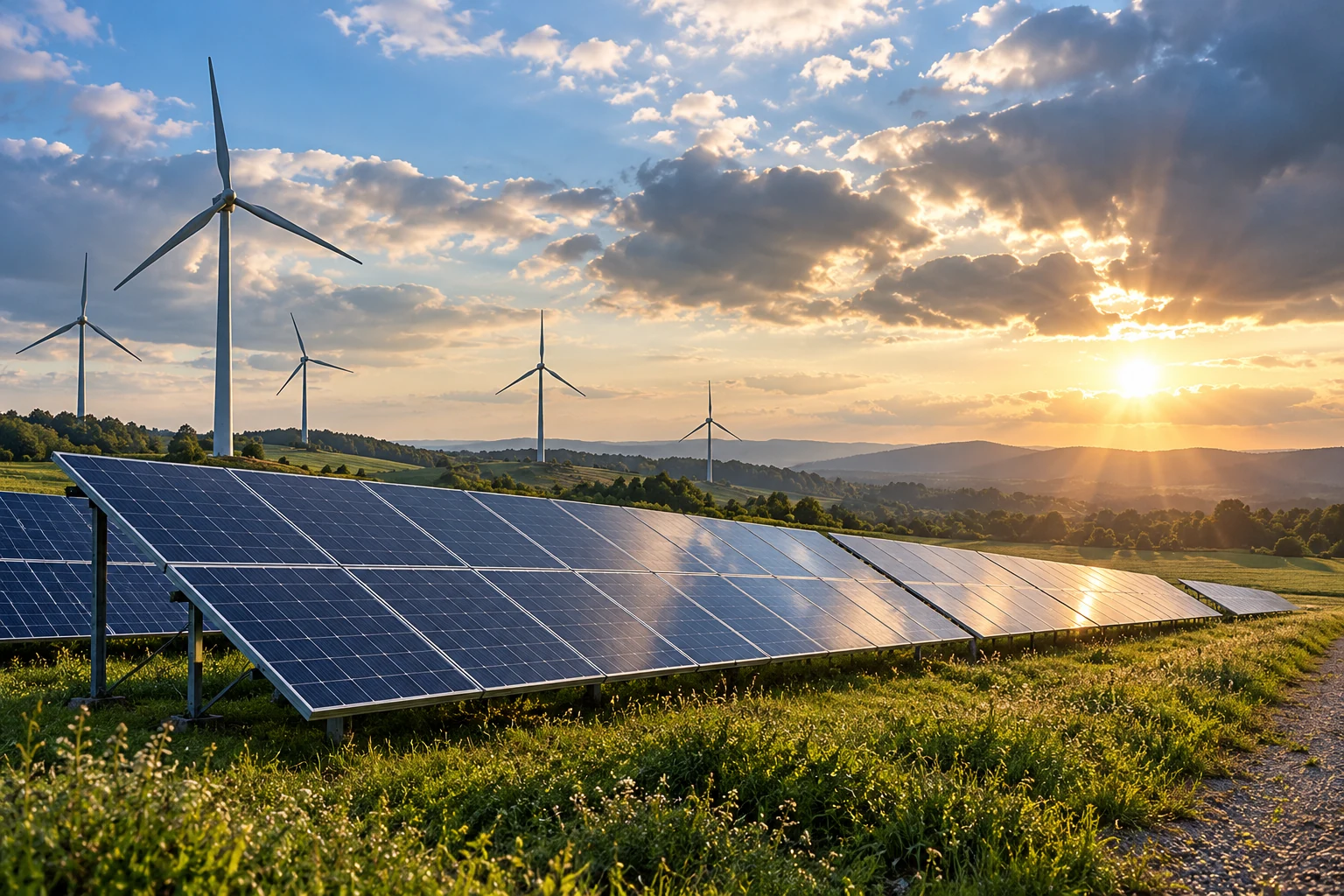
Solar radiation varies with location, time of day, season and weather. The Department of Energy describes those physical influences in its solar radiation guidance. Use local generation estimates and measured demand to understand the project; a broad regional label does not describe the shading, array orientation or operating schedule of an individual site.
The demanding period may follow the load
Seasonal variation is not confined to solar output. Cooling, pumping, processing or other activities may change when and how much electricity is needed. The weakest balance may occur when demand rises while generation falls, or when more demand shifts beyond daylight hours. Inspect both sides of the balance before deciding which month or weather sequence deserves closer study.
The site's remote-area application information provides context for projects with limited grid support. It does not establish that a particular system can operate through every weather event. That conclusion requires an explicit service objective and a chronological assessment of the available energy sources.
Separate Stored Energy From Recharge Opportunity
A larger battery changes the buffer
A battery holds a finite amount of usable energy between its operating limits. Extra capacity can extend support when it starts charged, but it does not create energy during a weak solar period. If the site consumes more than the array and other allowed sources supply over several days, the stored amount falls until a limit or another source changes the operating outcome.
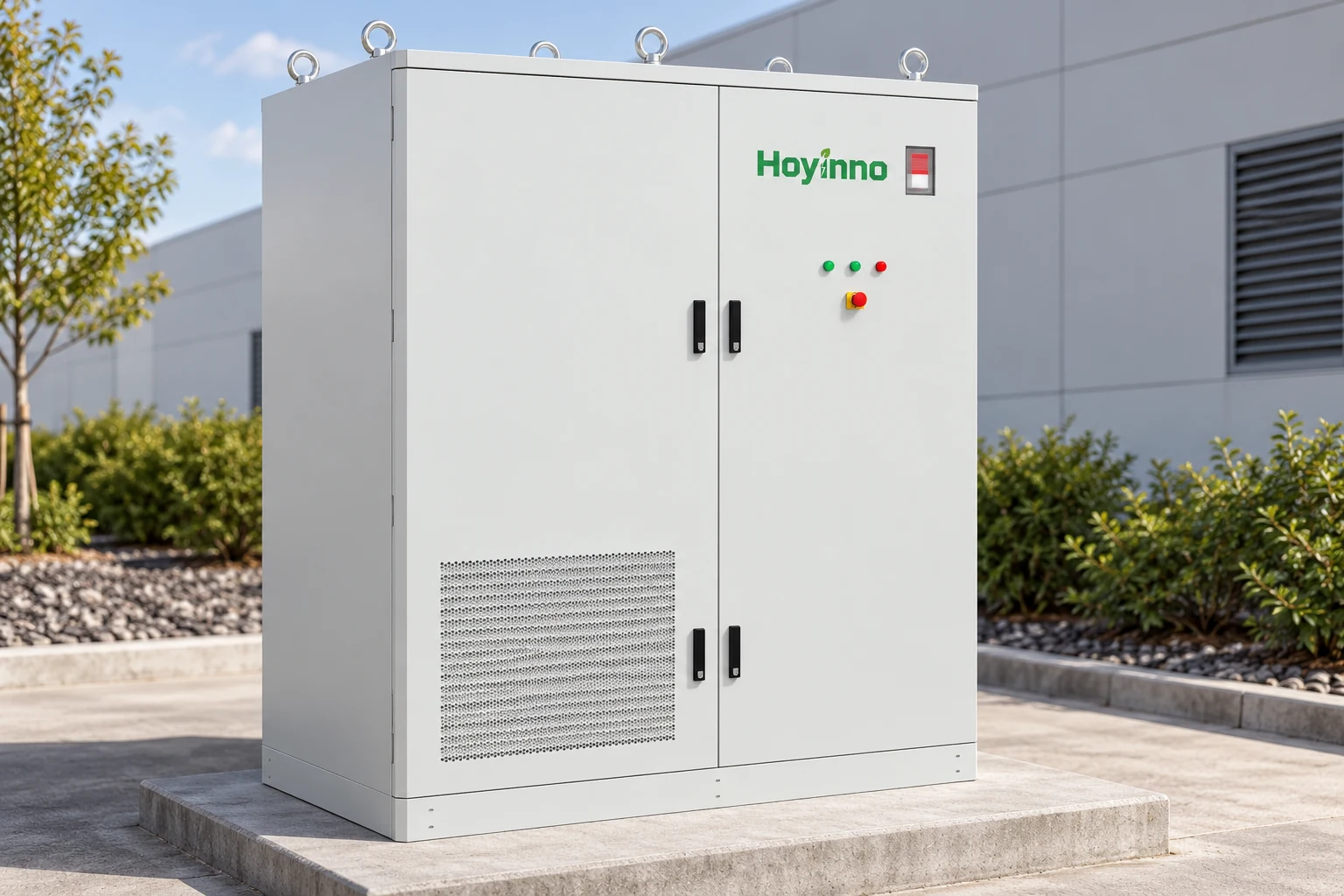
The verified modular storage range illustrates battery equipment formats. A cabinet's nominal energy rating is only one input. The permitted operating range, conversion losses, auxiliary demand and conditions of use affect how much electricity reaches the load. A product image cannot establish those quantities or a guaranteed number of backup days.
Recharging competes with daytime demand
Recharge opportunity is the energy and power available to restore the battery after serving the site's immediate needs, subject to system controls. A sunny interval may supply the daytime load without leaving much surplus for storage. Conversely, a lower-demand day may restore the battery even if generation is below its seasonal maximum.
Power limits matter within that interval. A brief surplus cannot necessarily be absorbed in full if the charging path is constrained, and energy may be curtailed or exported under the applicable configuration. The conversion and control scope should therefore be understood alongside battery capacity when interpreting a model.
Follow Consecutive Days Without Resetting The Battery
The starting state affects the apparent result
A simulation that starts every day with a full battery can hide a sustained deficit. Carry the ending state of one day into the next, while applying the actual reserve and operating constraints. State how the simulation begins and whether an initial warm-up period is used. An optimistic starting condition should not become an unexplained source of energy.
For solar panels and battery storage, the hardest case may occur late in a sequence rather than on the single darkest day. A moderate shortfall repeated several times can exhaust the available buffer. A very weak day followed by strong recovery can have a different outcome, even if the average generation over the wider period looks similar.
Keep recovery in the analysis
Consecutive cloudy days should be followed by a check of how quickly the system can recover while continuing to serve demand. Reaching the end of an outage with little energy remaining may satisfy one service objective but leave limited resilience for another event. Recovery assumptions should include the same load priorities and charging permissions used during normal operation.
Build Scenarios From The Site's Actual Conditions
Use chronological inputs with compatible boundaries
Align solar estimates and demand records to the same time zone and interval. Confirm whether each series represents generation before conversion, electricity at the site bus or energy measured at another boundary. Mixing incompatible boundaries can silently double-count losses or treat electricity unavailable to the load as usable supply.
Check data quality before interpreting an unusual seasonal pattern. Missing meter intervals, daylight-saving adjustments where applicable, temporary shutdowns and changes in equipment use can distort the comparison. The engineering service context is relevant to organizing the project inputs, but the analysis should identify its actual data sources and unresolved gaps.
Test meaningful changes rather than one favourable case
Compare representative seasonal operation with adverse sequences selected for the service objective. Include a case with elevated demand or reduced availability where it is credible for the site. Explain why each scenario matters. A single illustrated day is useful for teaching energy flow, but it cannot demonstrate year-round performance or the probability of a particular interruption.
Seasonal variation should be tested against the proposed operating policy as well as the hardware. A reserve held for emergencies is not simultaneously available for unrestricted daily discharge. If the policy changes between scenarios, identify that change so its effect is not mistaken for a hardware improvement.
Read The Result As A Set Of Different Constraints
A useful assessment reports more than a single percentage of annual demand served. Inspect when unmet demand occurs, the lowest stored-energy state, charging restrictions and recovery behaviour. Those observations show whether a limitation concerns energy supply, storage duration, power capability or the timing of controllable loads.
| Observed pattern | Possible constraint | What to examine next | What cannot be assumed |
|---|---|---|---|
| Battery falls over several weak days | Persistent energy deficit | Generation sequence, demand and allowed support sources | More battery alone creates a sustainable energy supply |
| Surplus occurs briefly but charging remains limited | Charging path or operating constraint | Converter limits, controls and available charging window | All surplus generation can be stored |
| Energy remains but a large load cannot be served | Instantaneous power or equipment limit | Load peaks and permitted output conditions | Unused stored energy proves adequate power capability |
| One event is covered but recovery is slow | Limited recharge margin | Post-event demand and recharge opportunity | The next event starts with a full battery |
| Normal operation works but outage support fails | Different outage boundary or operating mode | Supported loads, islanding design and available sources | Grid-connected savings imply backup capability |
A larger battery may improve duration when enough energy exists to charge it, while load scheduling can reduce the amount that must be shifted. The energy management system provides the control layer for permitted priorities and schedules. Controls coordinate available resources; they cannot remove a physical shortage of energy or override equipment protection.

Define The Role Of Other Supply And Flexible Demand
A grid connection or another dispatchable source can change the seasonal problem if it is available and permitted to support the load or charge storage. Specify its conditions explicitly. Do not count on grid charging in a scenario whose purpose is to assess a grid outage, and do not assume a standby source can start, synchronize or sustain all required loads without appropriate engineering.
The Department of Energy distinguishes short-duration smoothing from longer-duration energy support in its storage overview. That distinction is useful here: a system intended to handle brief fluctuations should not be described as seasonal storage merely because it includes a battery. Multi-day or seasonal service objectives need evidence at the corresponding timescale.
For a site with critical and discretionary loads, define the service boundary before evaluating consecutive cloudy days. Supporting a smaller essential-load group is a different objective from maintaining every operation. Both can be valid objectives, but their results should be labelled separately so a limited-support scenario is not presented as whole-site autonomy.
Operating records help refine assumptions after commissioning. Compare expected and observed generation, demand and battery behaviour through relevant seasons, and investigate material differences. The operation and maintenance scope is relevant to that follow-up, while actual monitoring responsibilities and performance criteria should be defined for the installation.
Frequently Asked Questions
Can a battery solve a low-generation season by itself?
It can shift stored energy and provide a buffer, but it cannot create the missing supply. The result depends on usable capacity, starting state, demand and opportunities to recharge. A persistent seasonal deficit needs an assessment of generation, support sources or demand as well as storage.
Why is an annual energy balance insufficient?
It combines periods that may be far apart. An excess during one period does not automatically remain available through a later shortage, especially in a system designed for daily cycling. Chronological analysis shows the sequence of charging, discharge and unmet demand within actual operating limits.
How should cloudy periods be assessed?
Use credible local sequences and carry the battery state forward between intervals. Keep demand and reserve assumptions explicit, then inspect recovery after the weak period. The number of days alone is not enough because both the depth of the generation shortfall and the load pattern matter.
Does increasing array size always remove the problem?
No. It may improve energy availability, but charging power, export restrictions, site area or other constraints can limit the benefit. Examine the weak period and stronger periods together. The right interpretation depends on the service objective rather than a universal panel-to-battery ratio.
What is the most useful next technical check?
Compare aligned generation and demand records for relevant seasons, including adverse sequences and realistic starting states. Solar panels and battery storage should be assessed against a defined load boundary, permitted support sources and recovery requirement. These inputs make a later sizing study meaningful without implying a capacity recommendation from a general article.
The central distinction is between storing available energy and obtaining enough energy over time. A seasonal check makes that distinction visible: it follows the system through weak periods, preserves real operating constraints and shows whether recovery is possible before the next demand event. It is a foundation for project-specific engineering, not a guarantee inferred from annual totals.
 Why Do Solar Panels & Battery Storage Show Different Energy Readings?
  Address: A401, Junxu Junchuang Park, 03A Qingyi Road, Nanhai District, Foshan City, Guangdong Province, China





