



 Home
Home
Solar PV Off Grid Works Through A Timed Balance Of Generation, Storage, And Loads
Solar PV off grid describes a power system that must establish its own electrical reference, match supply to demand, and preserve enough stored energy for every hour when sunlight is insufficient. Panels are only the source. Reliable service emerges from the interaction of the photovoltaic array, battery, power conversion system, energy-management logic, protection, and the loads themselves.
What An Off-Grid Solar System Actually Has To Do
Photovoltaic modules provide energy, not a complete electrical grid
A PV array produces variable DC power according to irradiance, cell temperature, orientation, shading, and equipment condition. It does not by itself hold voltage and frequency for AC equipment after sunset. Those functions come from coordinated conversion and storage. The battery energy storage system absorbs surplus production, releases energy when production is low, and helps the inverter respond to rapid changes that the array cannot follow alone.
Autonomy comes from coordinated operating functions
The battery, inverter, controller, breakers, meters, and communications network form an operating system rather than a collection of independent boxes. The inverter may form the local AC waveform, the battery-management system enforces cell limits, and the energy management system decides when to charge, discharge, curtail PV, start backup generation, or shed a noncritical load. Protection must remain selective in every permitted operating state.
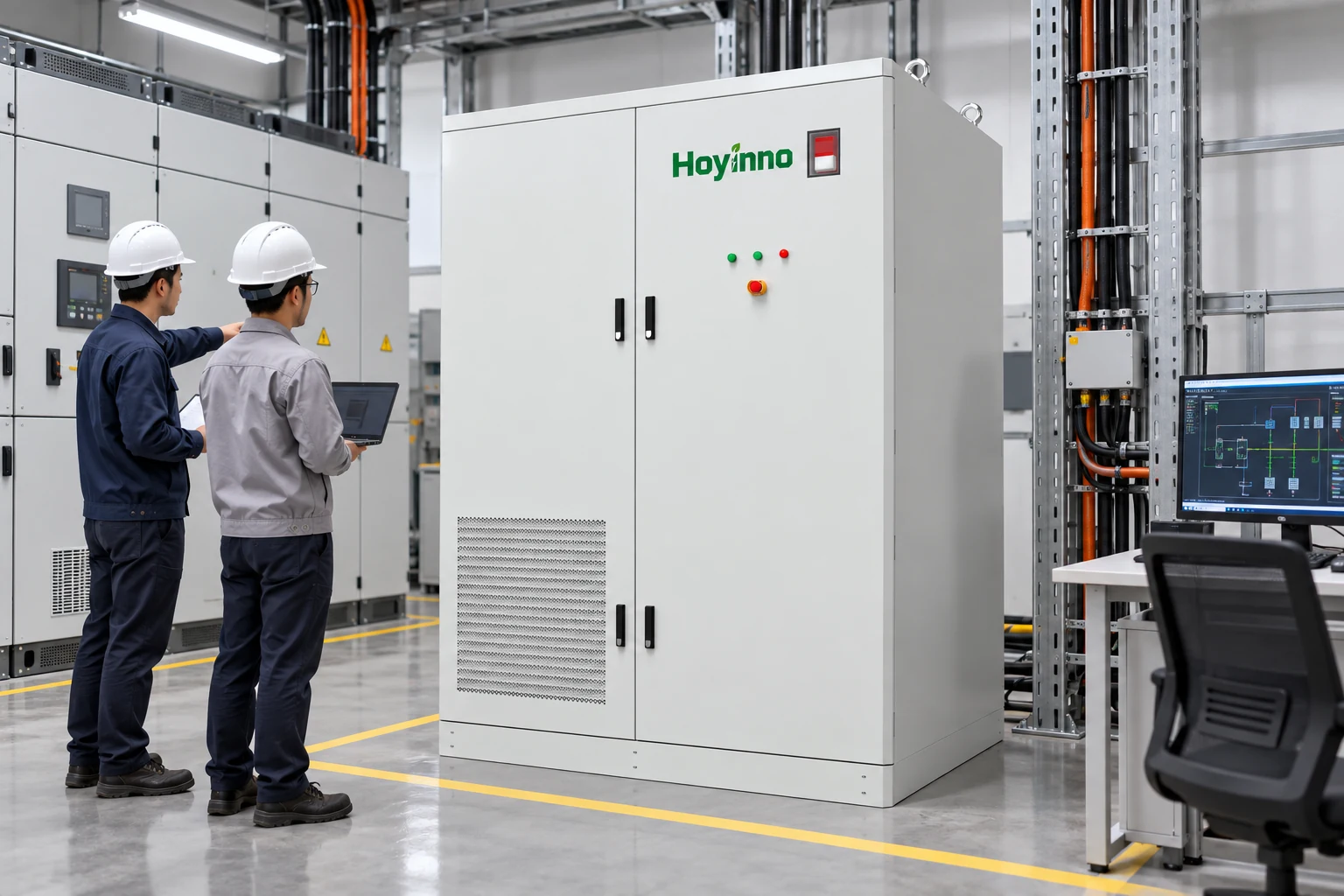
Follow The Power Balance Across One Day
Morning establishes the recovery path.
At sunrise, PV output rises from zero while the battery may already be near its planned lower state-of-charge limit. The first available solar power serves active loads; the remainder begins recovery charging. If overnight consumption was higher than expected, the controller may temporarily hold optional loads or use backup generation until the array can support both demand and safe battery recovery.
This period exposes the value of a measured load profile analysis. Daily energy alone hides the timing of refrigeration cycles, pumps, ventilation, communications equipment, process loads, and shift changes. Interval data shows whether morning demand competes with battery charging and whether a short peak, rather than total energy, determines converter size.
Midday surplus must have a useful destination.
Near solar noon, array output may exceed demand. The excess can charge storage, serve controllable loads, or be curtailed. Charging power is limited by battery temperature, state of charge, cell voltage, inverter rating, and cable capacity. Oversizing the array can improve low-irradiance performance, but it also increases the frequency of midday curtailment once storage is full. Curtailment is not automatically a fault; it can be the rational outcome of designing for difficult seasons.
Evening reveals whether the design is truly balanced
As irradiance fades, storage becomes the primary source and the inverter continues to maintain the local grid. This transition should be uneventful: loads should not see an interruption merely because the energy source changes. The usable battery window must cover the evening peak, overnight base load, conversion losses, auxiliary consumption, and a contingency margin without crossing the minimum state of charge.
In a well-defined Solar PV off grid design, the controller also protects tomorrow. It may start a generator before the battery reaches a hard limit, shed ranked loads, or reduce discretionary demand when the forecast indicates insufficient recovery. These actions preserve essential service and battery life instead of waiting for an emergency shutdown.
Separate Power Ratings From Energy Capacity
Array sizing begins with interval yield, not only annual sunshine
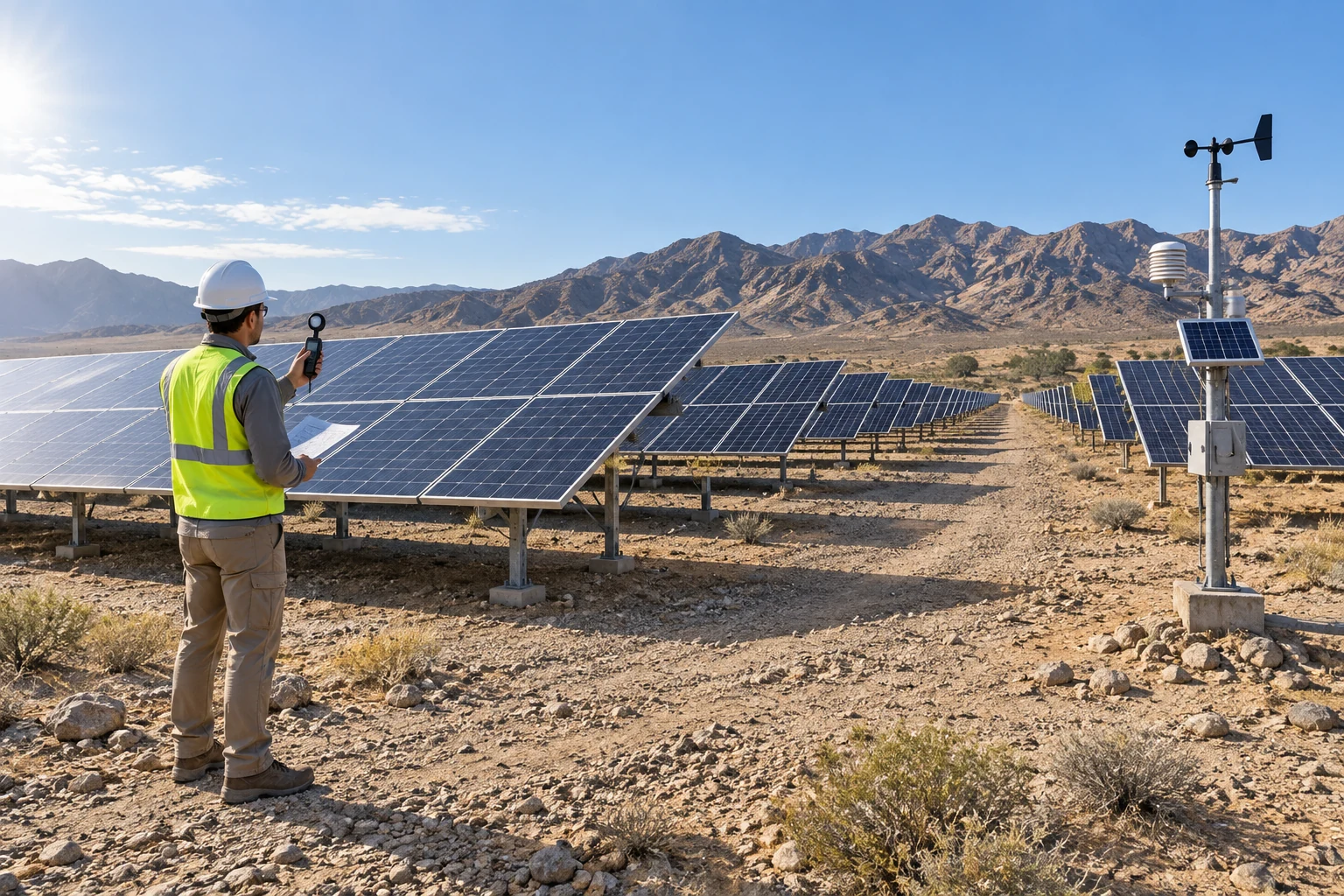
Photovoltaic array sizing should use the site resource, module temperature behavior, tilt and azimuth, soiling, mismatch, cable loss, inverter efficiency, degradation, and realistic availability. The critical period is often not the annual average but the weakest sequence of days that the service requirement must tolerate. Long-term datasets and on-site measurements help reveal seasonal cloud, dust, humidity, and temperature effects that a single peak-sun-hours value cannot describe.
Battery specifications must cover both kilowatts and kilowatt-hours
Battery storage capacity describes how long energy can be supplied, while battery power describes how quickly it can be delivered or absorbed. Both values must remain within cell, pack, converter, cable, and thermal limits. A large energy rating does not guarantee a motor can start, and a high power rating does not guarantee the site can operate through the night.
| Quantity | What it governs | Evidence needed | Typical design check |
|---|---|---|---|
| PV energy yield | Daily recovery and seasonal generation | Interval irradiance, temperature, loss assumptions | Weak-season energy balance |
| Inverter power | Continuous load, steps, and motor starts | Measured peaks and equipment starting behavior | Transient voltage and frequency response |
| Battery energy | Autonomy between charging opportunities | Night load, reserve, aging, usable SOC window | End-of-life low-sun sequence |
| Battery power | Fast discharge and charging capability | C-rate, thermal limits, converter rating | Largest credible ramp or step |
| Backup source | Recovery during extended energy deficit | Fuel logistics, minimum loading, start reliability | Black start and prolonged-cloud scenario |
Conversion And Control Determine Electrical Behavior
Coupling architecture changes where power is converted
No topology is universally superior. A new compact installation may value fewer conversion stages, while a phased site may value modular AC interfaces. The correct comparison follows energy through every conversion path at relevant operating points and checks how each device behaves during start-up, shutdown, faults, maintenance isolation, and black start. Hoyinno's engineering approach frames these interfaces as system-level decisions.
Grid-forming control maintains a stable local reference
Inverter operating modes define whether a converter follows an existing voltage waveform or establishes one. A truly isolated AC system needs at least one resource capable of forming voltage and frequency. Other sources can then synchronize to that reference. Droop settings, virtual inertia, reactive-power control, and current limits determine how the system responds when demand changes suddenly.
Fault current from power electronics can be lower and shorter than fault current from rotating machines, so conventional protection assumptions may not hold. Selectivity studies should use device-specific behavior and permitted operating modes. The resulting settings must still clear faults promptly without disconnecting healthy circuits unnecessarily.
Protection Must Work Through Every Operating State
Limits are an active part of normal operation.
Controls need observable states and recoverable failures
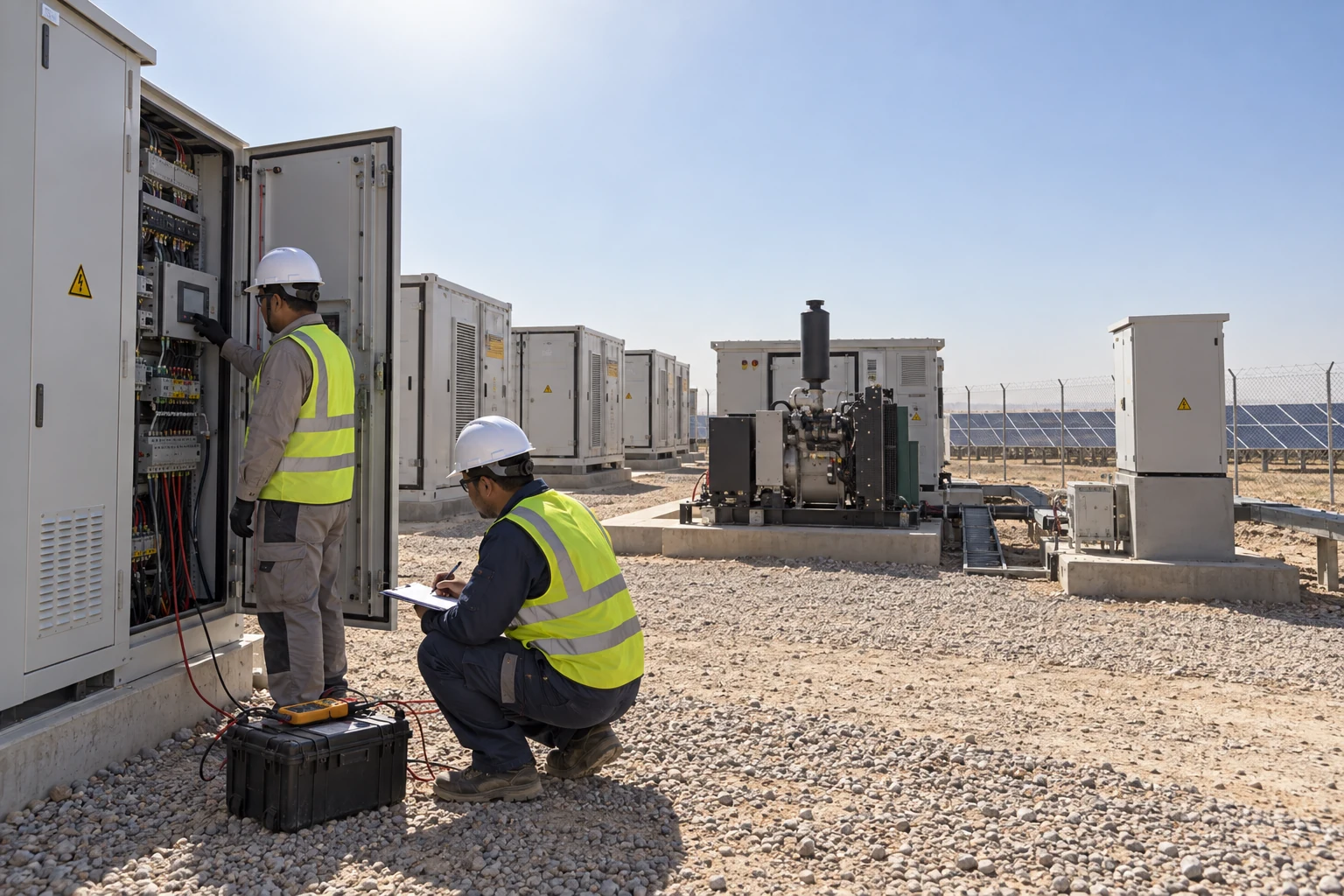
A controller should expose why it made a dispatch decision. Logged state changes, alarm priorities, time synchronization, and trend data allow an operator to distinguish a normal constraint from a failing component. Communications loss should lead to a documented fallback state, not an undefined contest between devices. The fallback may preserve a conservative reserve, hold the last safe setpoint, or isolate a subsystem depending on risk.
Before energization, factory and site tests should cover sensor plausibility, command authority, interlocks, loss of communications, generator synchronization, load shedding, restoration, and emergency stop behavior. A structured technical support plan also records software versions and parameter sets so later changes can be audited.
Seasonal Evidence Matters More Than A Single Good Day
Commissioning proves functions; monitoring proves durability
Commissioning can demonstrate that the installation starts, transfers sources, follows limits, trips correctly, and restores service under controlled tests. It cannot represent every season. Operational monitoring must compare predicted and actual PV yield, load energy, peak demand, battery throughput, temperature, state-of-charge range, curtailment, generator runtime, and unserved energy over time.
Performance should be interpreted in context. Lower PV output may reflect clouds or soiling rather than module failure; increased battery cycling may reflect new night loads rather than control drift. An energy analysis that combines weather, dispatch, and load data helps separate expected variation from actionable degradation.
Maintenance protects the assumptions behind the model
Dust on modules, blocked cooling paths, loose terminations, sensor drift, firmware changes, and unrecorded load additions can gradually invalidate the original balance. A practical maintenance program links inspection intervals to the site's environment and consequence of failure. It also keeps spare parts, trained personnel, safe isolation procedures, and remote diagnostic access aligned with the equipment actually installed.
Trend review can reveal slow changes before an alarm threshold is crossed. Falling round-trip efficiency, wider cell imbalance, repeated temperature derating, or longer recovery time after a similar weather event can justify targeted inspection. Formal operations and maintenance services should preserve the commissioning baseline while documenting every approved change.

Frequently Asked Questions
Can an off-grid PV system operate without a battery?
It can serve loads only while sufficient generation is available if another source establishes the electrical reference and absorbs rapid imbalances. For continuous service, some form of storage or dispatchable generation is normally required. The acceptable arrangement depends on load tolerance, ramp rates, and the consequences of interruption.
How many days of battery autonomy are necessary?
There is no universal number. Autonomy follows the critical load, weather sequence, allowed depth of discharge, aging, temperature, backup-source availability, and required reliability. Interval simulation across representative years is more defensible than multiplying average daily consumption by an arbitrary number of days.
Why can a system have enough annual energy and still trip?
Annual totals erase timing. A brief load step can exceed inverter power, evening demand can arrive after storage is depleted, or several weak solar days can prevent recovery. Voltage, frequency, thermal, and protection limits can also stop operation even when a yearly energy calculation appears favorable.
What is the difference between curtailment and lost load?
Curtailment occurs when available renewable power is intentionally not used, often because storage is full or equipment has reached a limit. Lost load occurs when demand cannot be served. Some curtailment can be economical; lost critical load is a reliability failure unless the operating plan explicitly permits it.
What data should be retained after commissioning?
Useful records include as-built diagrams, protection settings, controller parameters, software versions, acceptance results, equipment serial numbers, alarm definitions, maintenance schedules, and baseline trends. Interval production, load, state of charge, temperature, curtailment, and generator data support later diagnosis and performance comparison.
The Operating Chain Is The Design
A dependable Solar PV off grid system is not defined by one oversized component. It is defined by a traceable chain: measured demand becomes interval requirements; site conditions become realistic PV yield; conversion and storage ratings cover power and energy; controls coordinate every permitted state; protection contains faults; and monitoring tests the original assumptions over time.
 Which Off Grid Solutions Match Critical Loads, Climate, And Fuel Risk?
  Address: A401, Junxu Junchuang Park, 03A Qingyi Road, Nanhai District, Foshan City, Guangdong Province, China





