



 Home
Home
What Makes A Utility Scale Battery Energy Storage System Grid-Ready?
A Utility Scale Battery Energy Storage System becomes grid-ready only when its battery, power, controls, safety, site, and operating plan form one verified asset. A container is only part of that boundary. The project must translate a grid need into measurable power, duration, response, availability, and acceptance requirements.
Grid Readiness Starts With the Whole System Boundary
Define What Sits Inside and Outside the Battery Package
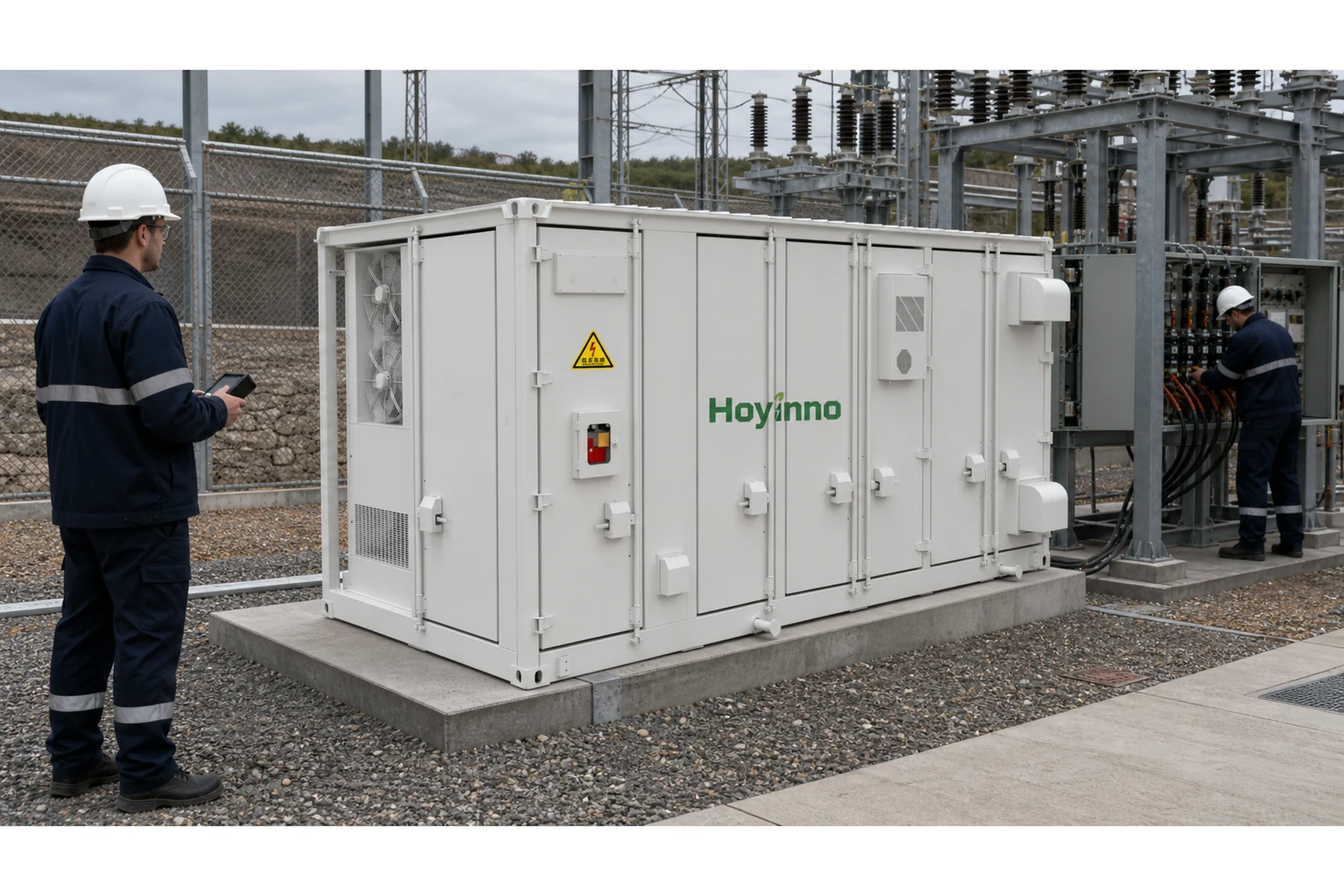
The physical package can contain cells, modules, racks, battery management, thermal management, fire detection, local protection, auxiliary distribution, and power conversion. Outside it may sit switchgear, transformers, meters, plant control, communications, grounding, drainage, and emergency interfaces. Hoyinno's current 5.016 MWh container page illustrates an integrated equipment package; the installed plant still needs project-specific site engineering, settings, studies, and operating approval.
Turn the Intended Grid Service Into Testable Requirements
Storage can shift renewable energy, manage ramps, follow dispatch, support local reliability, or provide reserves where market and network rules permit. Each service creates a different duty cycle. A useful requirement names the requested active and reactive power, response time, duration, state-of-charge reserve, cycle profile, availability window, metering point, and recovery behavior instead of relying on the broad phrase “grid support.”
Those requirements should flow into the single-line diagram, control narrative, equipment schedule, civil layout, network architecture, and acceptance matrix. The solution overview can frame applications, while project authorities define the actual demonstration criteria.
Power, Energy, and Duration Answer Different Questions
Use MW for Rate and MWh for Stored Work
Power in megawatts describes how fast the plant charges or discharges. Energy in megawatt-hours describes how much work it can deliver over time. A nominal 2 MW / 4 MWh arrangement suggests two hours at rated power before reserve, losses, auxiliaries, temperature, degradation, and control limits. For a Utility Scale Battery Energy Storage System, usable output comes from an agreed operating envelope, not simply from dividing nameplate values.
Designers should distinguish rated power, continuous power, short-duration overload, beginning-of-life energy, end-of-life guaranteed energy, and usable state-of-charge window. This prevents a high headline energy value from hiding insufficient connection capacity, or a high converter rating from hiding too little energy for the intended service.
Size Against the Worst Credible Operating Case
The model should combine dispatch intervals, renewable or load profile, efficiency, parasitic demand, ambient conditions, outages, and aging. It should test low state of charge, schedule reversal, unavailable blocks, reduced cooling, and a constrained connection. The output is a documented power-and-energy envelope.
A containerized storage system can simplify transport and factory integration, while a modular system can support staged capacity. Neither form decides the correct duration by itself. The duty cycle and connection limit remain the governing inputs.
| Design quantity | What it controls | Evidence to review |
|---|---|---|
| Active power | Charge and discharge rate at the metering point | PCS limits, transformer and switchgear ratings, grid study |
| Usable energy | Service duration within the permitted state window | Energy model, losses, auxiliaries, reserve, degradation |
| Response | How quickly and accurately the plant follows commands | Control narrative, ramp limits, acceptance trend data |
| Availability | Expected service with equipment outages or derating | Block topology, spares, degraded-mode tests |
Controls Convert Equipment Into a Dispatchable Plant
Give Each Control Layer a Clear Authority
Battery management protects cell and rack limits. The power conversion system regulates current, voltage, and grid-facing power within its envelope. A plant or energy management controller coordinates blocks, state of charge, schedules, reserve, and connection constraints. Higher-level commands must never override local safety limits, and lower-level derating must be visible to the plant controller so it does not dispatch capacity that is no longer available.
A sound battery dispatch strategy identifies command priority, ramp behavior, state targets, unavailable equipment, manual modes, and recovery after a communications loss. It also defines the source of time synchronization, the authoritative meter, and the data retained for settlement or performance review. Clear authority prevents two controllers from correcting the same signal in opposite directions.
Treat Interconnection as a Design Input, Not a Final Test
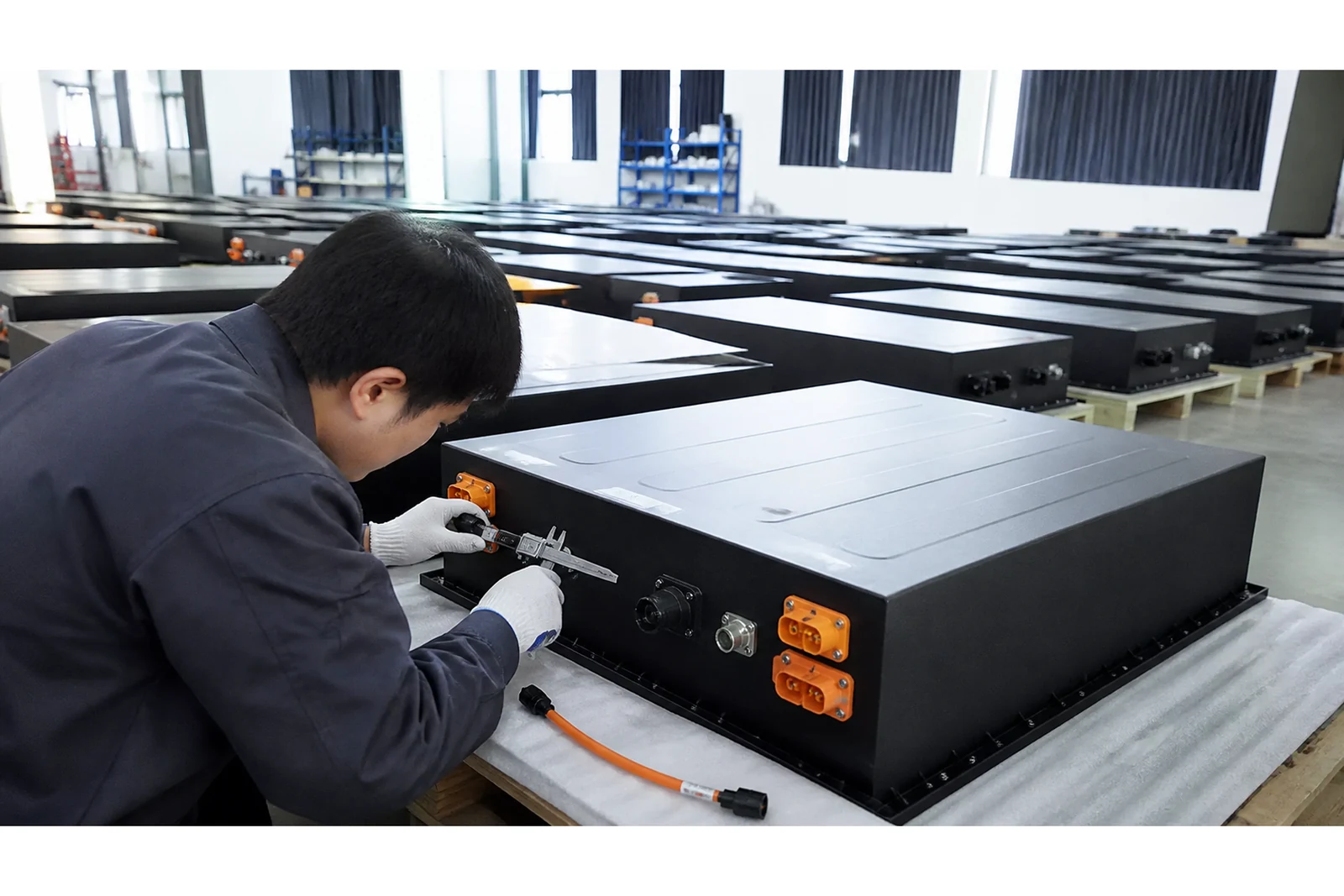
Grid interconnection requirements can affect reactive-power capability, voltage and frequency response, protection settings, fault behavior, metering, communications, ramp rates, and model validation. These conditions should enter equipment selection and software design early. A late discovery may require converter, transformer, relay, or controller changes after manufacturing is already complete.
System designers should maintain a traceable map from each interconnection requirement to the responsible device, setting, calculation, and test. The map should also show what happens when the plant is partially available. A 100 MW command means little if the current online blocks, thermal state, or grid limit can only support a smaller value; the controller must report and respect the active constraint.
Safety Is Layered Across Product and Site
Connect Hazard Evidence to the Installed Configuration
Battery safety begins with cell and module behavior, but it extends through detection, thermal management, electrical isolation, ventilation or pressure strategy, fire response, spacing, access, and emergency coordination. Test reports need to be matched to the actual cell, module, enclosure, protection method, and installation assumptions. A report for one configuration should not be treated as evidence for every derivative layout.
UL 9540A describes test methods that examine thermal-runaway behavior at several levels. Local codes, authorities, insurers, utilities, and project contracts determine which evidence is required for a particular installation. The engineering team should create an evidence register that names the document, tested configuration, limits, revision, open deviation, and approving party without implying certification where none has been verified.
Design Site Conditions Into the Operating Envelope
Heat, humidity, dust, salt exposure, altitude, flooding risk, wind, seismic demand, and access constraints can change continuous output and maintenance needs. Site safety controls should coordinate drainage, grounding, lightning protection, fencing, emergency access, separation, signage, lighting, isolation, and responder information. Thermal alarms should feed plant dispatch rather than remain isolated maintenance messages.
The design should document auxiliary consumption and cooling performance at the expected ambient range. If one block derates, the controller can reduce its contribution while keeping other blocks within their limits. If a shared auxiliary fails, the plant should move to a defined safe state. These behaviors belong in the control narrative and hazard review, not only in operator training.
Commissioning Must Prove Integrated and Degraded Modes
Build Acceptance From a Requirements Matrix
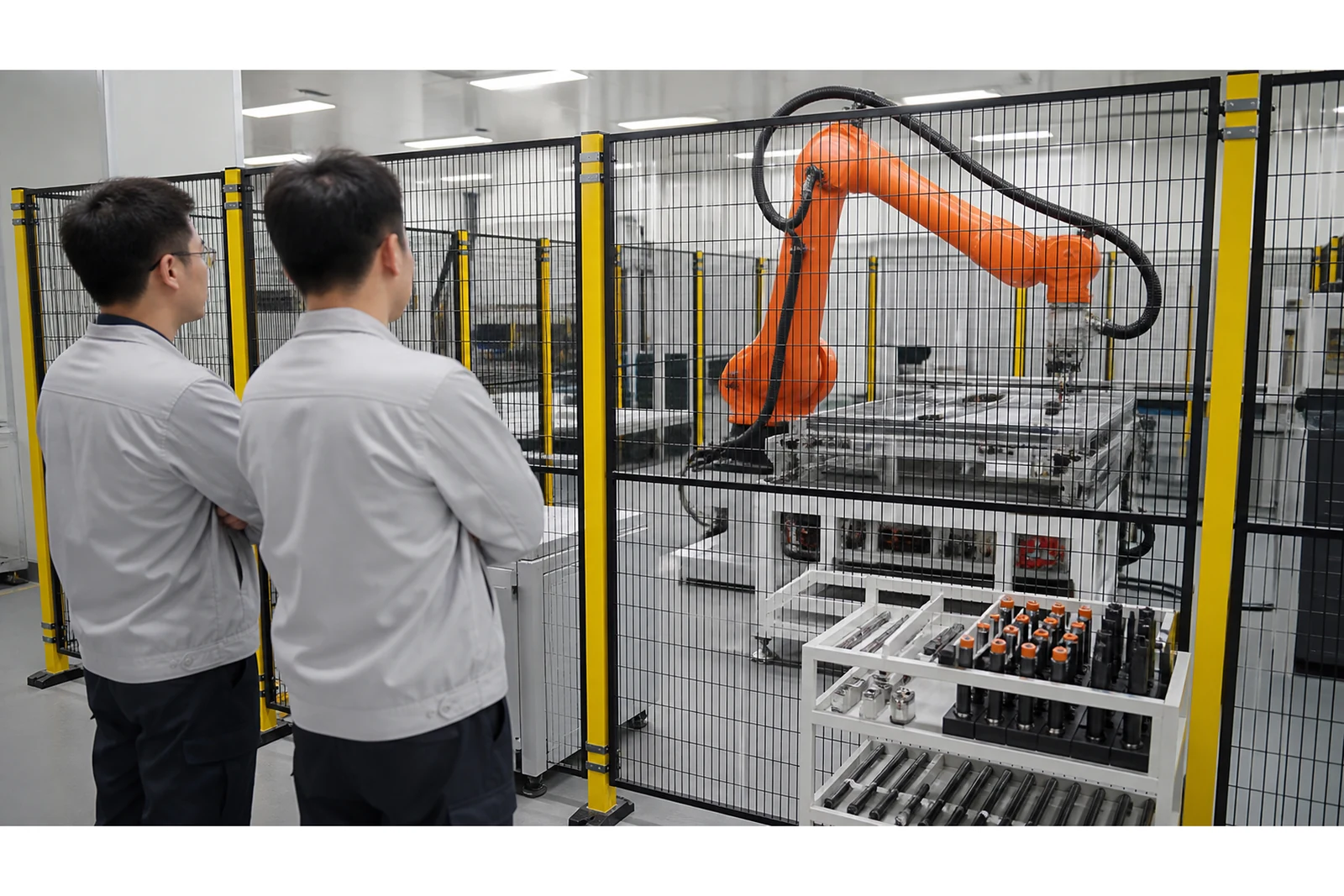
Factory tests can verify assembly, insulation, local protection, communications, parameters, alarms, and functional sequences. Site tests add installed cabling, grounding, switchgear, transformers, relays, networking, metering, and grid interfaces. Begin with equipment identity and configuration control, then link every test to its requirement, method, expected result, instrument, owner, and retained record. The company and production overview gives manufacturing context, but project records prove the delivered configuration.
Test Failure Responses Before Commercial Operation
Normal power following is not enough. Acceptance should remove a block, interrupt a communications path, simulate stale measurements, trigger approved alarm conditions, test emergency-stop propagation, and verify restoration sequencing within safe procedures. Operators need to see the remaining power and energy rather than the original nameplate total.
Trend files should reconcile controller commands, metering-point response, block contribution, state estimates, alarms, and timing. Deviations need owners and closure evidence. Well-structured commissioning turns the battery dispatch strategy and grid interconnection requirements into observed behavior instead of leaving them as untested prose.
Lifecycle Readiness Preserves the Original Grid Function
Storage capability changes with cycling, calendar age, temperature, maintenance, firmware, and component replacement. A lifecycle plan should define performance baselines, capacity checks, state-estimation review, alarm analysis, spare strategy, firmware control, cybersecurity ownership, and end-of-life responsibilities. It should also reserve the drawings, settings, model files, and test data needed to evaluate future changes.
A maintained evidence chain—from design assumptions to factory records, site acceptance, operational trends, and change control—makes performance explainable years after energization. It also helps distinguish a temporary operational limit from permanent degradation and keeps maintenance decisions tied to the service the asset was built to provide.

Frequently Asked Questions
What makes a battery storage project utility scale?
The term generally describes a grid-connected asset sized and controlled to provide services at network or large-project level. Capacity alone is not a complete definition. Connection voltage, metering point, dispatch authority, protection, market role, and operating agreement all help define the project's utility-scale character.
Is a higher MWh rating always better?
No. The useful rating is the energy that can be delivered within the required power, time, state-of-charge, efficiency, temperature, reserve, and end-of-life constraints. Extra nameplate energy may add cost and auxiliaries without improving the service if the connection or duty cycle cannot use it.
When should grid interconnection requirements be finalized?
They should be developed early enough to guide converter, transformer, protection, metering, communications, and control decisions, then controlled as studies and agreements mature. Final settings and acceptance criteria must reflect the approved installed configuration.
What safety evidence should a project team request?
Request evidence appropriate to the selected technology, tested configuration, local code, authority, insurer, and contract. Review electrical, thermal, fire, environmental, structural, and operational documents together with site safety controls and emergency procedures. Confirm scope and revisions instead of relying on a certificate name alone.
What is the most important commissioning output?
A traceable acceptance record is more useful than a single pass label. It links requirements to approved settings, measured results, deviations, closure evidence, and operational baselines. The technical article archive can support continuing education, while controlled project records remain the source for actual plant decisions.
A grid-ready Utility Scale Battery Energy Storage System is therefore defined by verified capability rather than container count. Its power and energy match the duty cycle, controls respect every operating limit, safety evidence fits the installed configuration, and commissioning proves normal and degraded behavior. That integrated view gives owners, EPC teams, operators, and grid stakeholders a common basis for judging whether the asset can perform as intended.
 Which Design Logic Makes A Microgrid Energy Storage Solution Resilient?
  Address: A401, Junxu Junchuang Park, 03A Qingyi Road, Nanhai District, Foshan City, Guangdong Province, China