



 Home
Home
Solar And Battery Storage Follow Priorities Set By The Operating Mode
Solar and battery storage operate according to priorities that decide when available electricity serves loads, charges the battery, remains in reserve or is exported. Equipment capacity sets important limits, but the operating mode determines how that capacity is used. Two installations with similar hardware can therefore behave differently at the same moment. Understanding the priority rules makes the system easier to interpret during ordinary operation, changing weather and an interruption of the grid supply.
Start With The Service The System Is Currently Providing
An operating mode defines the service being pursued. Solar self-consumption, demand reduction and backup reserve may request conflicting actions. A strategy needs priorities and conditions for changing modes.
Distinguish A Goal From An Immediate Command
Reducing grid imports is a goal; requesting a certain battery discharge power is a command. The command depends on measured demand, available generation, battery state and equipment limits. A system can pursue the same goal with different actions as conditions change. It may charge at midday, discharge later and remain idle when the required reserve has been reached. An idle battery is therefore not automatically a malfunction.
The U.S. Department of Energy describes storage as a way to use energy at a different time from generation. That general capability does not specify the priority rules for a particular site. The Hoyinno EMS description lists monitoring and strategy-control functions; which functions are enabled and how they interact must be established for the actual system. A feature list is a starting point for understanding the controls, not an operating schedule.
Separate Supervisory Decisions From Protective Limits
An EMS can request charge or discharge, but conversion and control equipment must respect battery and converter limits. Temperature, an unavailable module or a protective restriction can override an economic objective. A schedule cannot create energy or make disconnected hardware available. Interpret both the requested action and active limit.
Follow Self-Consumption Through A Changing Day
Self-consumption uses more locally generated electricity on site. Generation can serve loads directly; the battery handles eligible surplus or later deficit within the system arrangement.
Charging Requires Both Surplus And Permission
When solar output exceeds the demand that the system is serving, the remaining electricity may be available for charging. Charging still depends on the battery's allowable state, converter power and control settings. If the battery is full or restricted, electricity may be exported where permitted or generation may be curtailed. Adding battery capacity does not automatically eliminate curtailment when a different limit remains binding.
A reserve can cause grid import even while charge remains. This may be intentional: the key is energy available to the current mode, not whether the display is above zero.
Understand Why Reserve Changes The Available Choices
Reserve holds energy for a future need, reducing what routine operation may use today. The appropriate tradeoff depends on the intended service and should be explicit.
Reserve Is A Policy Within A Physical Energy Limit
Usable energy and reserved energy are different concepts. Usable energy reflects the portion that the equipment can make available under its specified conditions. A reserve setting further limits how much of that energy a routine mode may spend. Conversion losses and auxiliary consumption also affect what reaches the load. These quantities should be defined at a consistent measurement boundary before a displayed percentage is converted into an expected operating duration.
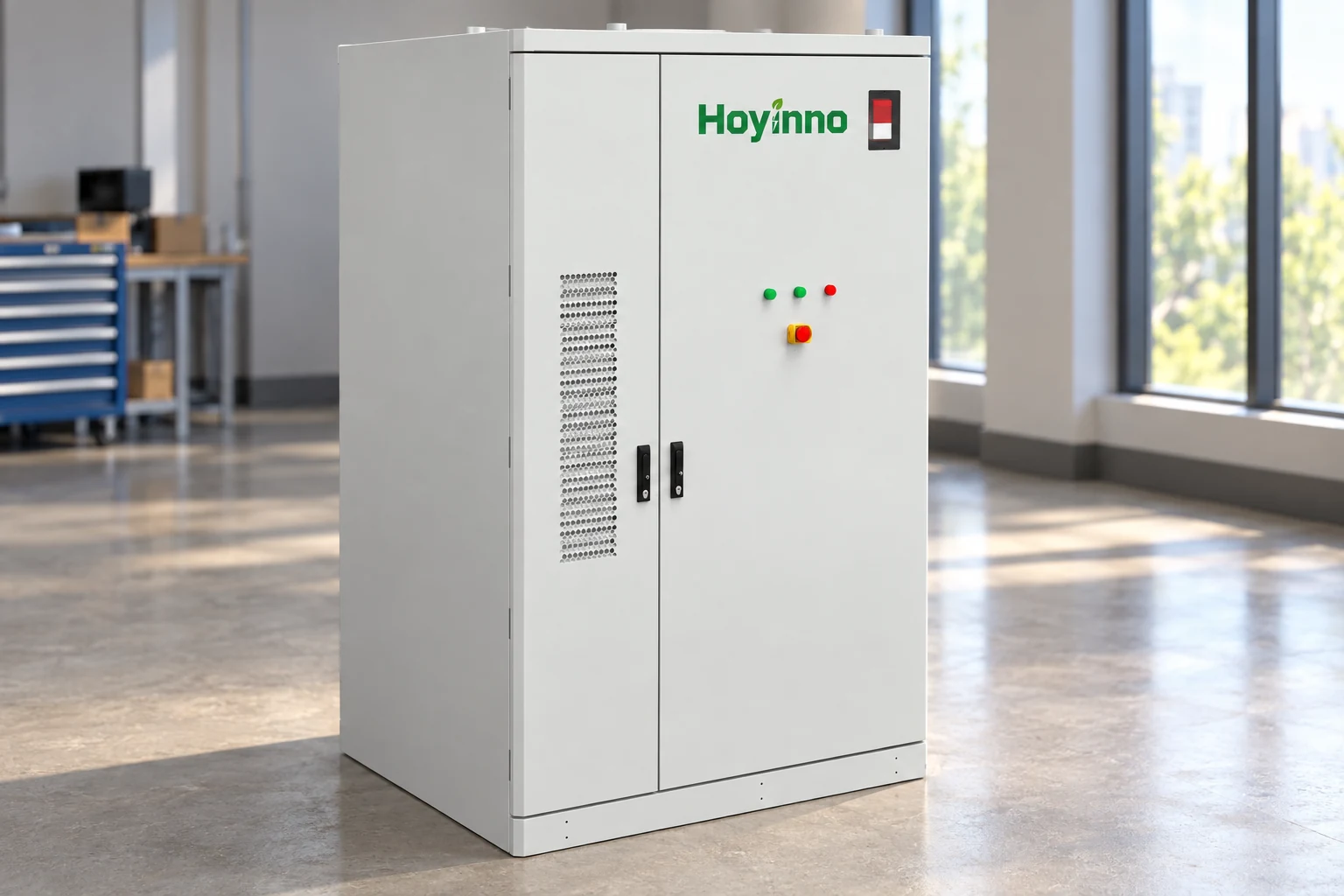
Consider an illustrative system that has enough stored energy for a planned evening service only when little is held back. Increasing its reserve without changing generation, storage or demand may shorten that service. This example describes a tradeoff, not a prediction for a Hoyinno product. The 418 kWh cabinet product page identifies a hardware offering; a project calculation still needs the applicable usable-energy basis, operating conditions and system design.
If forecast sunlight does not arrive or demand increases, the strategy needs a fallback. Solar and battery storage cannot guarantee future energy from a forecast alone.

Read The Mode Matrix Before Interpreting A Dashboard
A mode matrix connects an objective, its enabling conditions and remaining limits. These examples explain concepts and require adaptation to the actual equipment and connection agreement.
| Operating Objective | Typical Control Question | Limit That Still Applies |
|---|---|---|
| Increase solar self-consumption | Can current surplus charge the battery for later site use? | Charge power, energy headroom and connection constraints |
| Reduce a demand peak | Can discharge reduce the measured import during the relevant interval? | Available power, stored energy and measurement timing |
| Preserve backup reserve | Should routine discharge stop to retain energy? | Reserve policy and actual usable capacity |
| Operate during an outage | Can the designated loads be supplied on an intentionally isolated system? | Approved topology, inverter capability and load limits |
| Recover after the event | How should reserve be restored while serving ongoing demand? | Available charging source, import limits and dispatch priorities |
Demand Management Depends On Measurement Context
A demand-management objective responds to a defined measurement point and interval. An instantaneous power reading alone may not explain whether a scheduled action achieved the intended service. Meter location, sign convention and timestamps should be understood before interpreting a trend. This is an operational explanation rather than a financial forecast: savings depend on the applicable tariff and site evidence, which cannot be inferred from a generic mode name.
If an important load is outside the meter boundary, controls may respond to incomplete information. The engineering service scope can help clarify metering integration, which drawings and commissioning records must confirm.

Treat An Outage As A Different Operating State
An outage requires an appropriately designed supply path, isolation, inverter functions and controls. Adding a battery to a grid-following installation does not automatically enable independent operation.
Distinguish Stored Energy From An Energized Supply Path
DOE's inverter guidance distinguishes equipment that follows an external grid reference from equipment capable of establishing one. The complete installation must also provide the intended supply path and protection. A battery may contain energy while designated loads remain disconnected, or a converter may be unable to support a particular load event. Those are different limitations from running out of stored energy and should be recorded separately.
Critical-load scope matters as much as total capacity. The system may be designed to support selected circuits rather than every connected load. Starting events, load steps and permitted interruptions need consideration within the actual engineering design. The off-grid solution description provides application context, but it does not prove that an existing grid-connected project has the same capabilities or configuration.
Recovery is another state. When the grid returns, the installation follows its approved reconnection sequence and may need time and energy to restore reserve. A battery discharged during an event cannot immediately promise the same reserve for a second event. Ordinary loads, charging limits and available solar all influence recovery. This explains why resilience cannot be reduced to a single capacity figure.
Use Telemetry To Explain What The System Actually Did
Operational data should connect the active mode, requested action, measured response and restrictions. Charge percentage alone cannot explain an idle battery or reduced output.
Keep Commands, Limits And Measurements On One Timeline
Compare the active mode, reserve target, requested converter power, measured power, battery availability and relevant alarms using aligned timestamps. A missing response may reflect a communication interruption, an unavailable component or a protective restriction. The first task is to identify the governing condition, not to assume that increasing a dispatch command will solve the problem. Work on live electrical equipment belongs to qualified personnel following the site's procedures.
The operation and maintenance service information is relevant to record review and escalation. Define who can inspect events, who may change settings and how a change is recorded. Remote access should not blur responsibility for operational decisions. When settings are altered, preserve the previous configuration and the reason so later behavior remains explainable.
Judge Combined Operation By A Sequence Of States
Follow the transitions from rising generation through charging limits, reserve, an event and recovery. Identify the condition and governing rule at each step; one setting cannot maximize every service simultaneously.
Solar and battery storage are understandable when energy availability, converter limits and dispatch priorities are considered together. The same hardware can support different services within its approved design, but each service uses a share of finite capability. Clear operating rules and traceable observations explain that allocation more reliably than a single headline capacity or an unexplained dashboard percentage.
Frequently Asked Questions
Why Might A Battery Stay Idle While The Site Imports Power?
A reserve, schedule, power limit or active equipment restriction may prevent discharge. The correct explanation requires the current mode and event record. Stored charge alone does not establish that energy is available for the present objective.
Does All Solar Electricity Need To Pass Through Storage?
No. Depending on the system arrangement, generation can serve loads directly while the battery handles an eligible surplus or later deficit. The electrical connection and control strategy determine the paths. Storage is not a mandatory intermediate step for every unit of solar energy.
Does Adding A Battery Automatically Provide Backup?
No. Backup depends on the complete installation, including inverter capability, isolation, controls and designated loads. The presence of a battery or a cabinet's rated energy cannot establish that the site can operate during a grid outage.
Can A Higher Reserve Reduce Everyday Discharge?
Yes. Holding energy for a later event can leave less available for routine use. That tradeoff may be intentional. The reserve policy should be assessed alongside the required service, charging opportunities and actual usable capacity.
What Makes Two Similar Systems Behave Differently?
Different loads, solar availability, mode priorities, reserve settings, connection limits and equipment availability can produce different actions. Comparing behavior requires those conditions to be aligned. Similar cabinet appearance or nominal capacity is not enough.
The operating mode describes the current purpose; measured conditions and protective limits determine what is possible. Reading both together explains when stored energy is used, held back or unavailable, and why the system's behavior changes over time.
 What Losses Occur In Solar Power And Battery Storage?
  Address: A401, Junxu Junchuang Park, 03A Qingyi Road, Nanhai District, Foshan City, Guangdong Province, China





